Engineered cold-formed fasteners delivering high clamp retention, galvanic isolation, and environmental sealing across demanding clean energy applications.
Analyzing structural clamping mechanics, environmental stress crack resistance, and electrochemical challenges across utility clean tech.
In modern utility-scale clean energy systems—spanning photovoltaic (PV) solar racking, battery energy storage systems (BESS), electric mobility charging megastructures, and onshore/offshore wind nacelles—fasteners are no longer treated as passive commodity C-parts. Instead, global engineering procurement teams designate them as mission-critical structural nodes. A minor clamping failure in an automotive lithium-ion battery pack can cause catastrophic thermal runaway; a sheared flange bolt in an isolated desert tracker field can cause millions of dollars in downtime.
The transition toward higher operating voltages (such as the shift from 400V to 800V/1000V architecture in EV powertrains and utility PV string inverters) fundamentally changes the operating environment. Fasteners must now survive simultaneous intense harmonic resonance, dynamic thermal expansion gradients (-40°C to +125°C), high shear forces, and severe atmospheric salt-mist corrosivity (ISO 12944 C5-M / CX environments). Modern OEM fastener factories must integrate advanced multi-station cold-forming metallurgy, proprietary anti-loosening thread geometries, and inert barrier chemical coatings.
Utility solar arrays and wind platforms require fasteners to maintain clamping force integrity across 25 to 30 years of continuous outdoor exposure without maintenance intervention, requiring advanced micro-layer inorganic zinc-flake coatings exceeding 1,500 to 2,000 hours in neutral salt spray testing (ASTM B117).
Battery enclosures and busbar terminal joints require fasteners with strict electromagnetic and electrical characteristics: either absolute electrical insulation (via specialized inorganic polymer topcoats) to prevent stray current arching, or controlled milliohm contact resistance for ultra-low impedance grounding circuits.
In electric mobility and floating offshore solar, reducing deadweight directly expands system efficiency. Cold heading factories are moving from conventional carbon steels to thin-walled hollow fasteners, high-strength A4-80 stainless grades, titanium alloys, and high-tensile 7075 aluminum cold-formed configurations.
How Tier-1 renewable system integrators, EPC contractors, and automotive battery pack OEMs evaluate fastener manufacturing plants.
Global procurement teams demand automotive-grade production part approval processes (PPAP Level 3), comprehensive control plans, FMEA documentation, and material traceability back to the original steel wire rod heat melt number.
High-speed automated robotic installation cells cannot tolerate a single misshapen head or damaged thread. OEM factories must implement 100% 360-degree multi-camera laser optical sorting machines delivering <50 PPM (or <10 PPM on critical drives).
Procurement teams evaluate coefficient of friction (μtot) stability. Fasteners must deliver tight torque-tension dispersion (±0.02 μ window) using pre-applied chemical lubricants to eliminate over-tightening fractures or under-torqued joints.
With stringent global regulations, fasteners must comply with full International Material Data System (IMDS) declarations, EU RoHS 2011/65/EU, REACH SVHC declarations, and the Carbon Border Adjustment Mechanism (CBAM) embodied carbon metrics.
Addressing vibration-loosening, galvanic cell corrosion, and hermetic sealing across high-growth clean energy verticals.
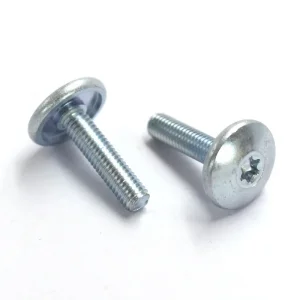
Utility solar fields face wind aeroelastic flutter and torsional whipping. Solutions incorporate self-grounding Serrated Flange Lock Screws that break through anodized aluminum oxide films to guarantee electrical bonding, combined with Delta-Protekt or Dacromet zinc-flake finishes that prevent hydrogen embrittlement while delivering over 1,500 hours of salt spray protection without white rust formation.
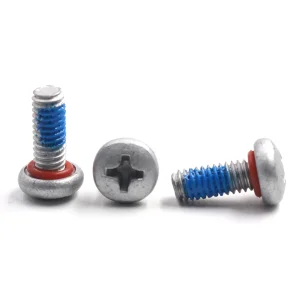
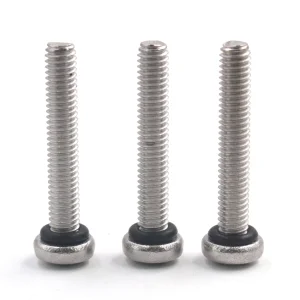
Battery enclosures require high IP67/IP68 ingress protection against fluid entry and internal gas expansion. Fasteners feature molded under-head EPDM/fluorosilicone O-rings and micro-encapsulated polyamide (Blue Nylon Patch) thread-locking patches. These counter road vibrations, resist chemical electrolyte exposure, and prevent loss of clamp load across 10,000+ thermal charge-discharge cycles.
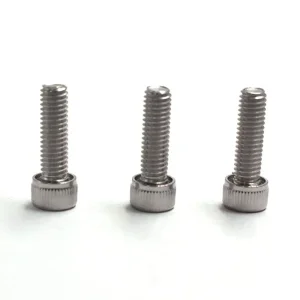
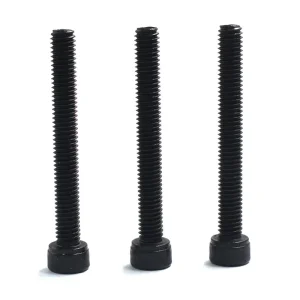
Offshore and onshore wind generation stations endure cyclic aerodynamic loads. We manufacture high-tensile Class 10.9 and 12.9 Socket Head Cap Bolts and Studs using clean-melt vacuum-degassed alloy steels (42CrMo4 / SCM435). Induction tempering with controlled de-hydrogenation baking cycles ensures freedom from delayed stress corrosion cracking (SCC).
A reference architecture for materials, surface treatments, and international standards for new energy engineering.
| Material Classification | Common Base Alloys | Yield / Tensile Strength | Surface Treatment Options | Primary Sector Application |
|---|---|---|---|---|
| Austenitic Stainless Steel | AISI 304 (A2-70), AISI 316 / 316L (A4-80) | 450 – 600 MPa / 700 – 800 MPa | Chemical Passivation, Electropolishing, Blue Nylon Locking Patch | Coastal PV Racking & Marine Battery Enclosures |
| High-Tensile Alloy Steel | SCM435, 42CrMo4, 35CrMo, 10B21 Boron Steel | 940 – 1100 MPa (Class 10.9 / 12.9) | Geomet 321/500, Delta Protekt, Zinc-Nickel (Zn-Ni) Plating | Wind Turbine Flanges & Inverter Frames |
| Corrosion-Resistant Carbon Steel | C1022A, 1018A, Low-Carbon Wire Rod | 600 – 850 MPa (Case Hardened) | Cr3+ Zinc Plating, Black Oxide, Mechanical Galvanizing | Sheet Metal Enclosures & Control Cabinets |
| Thermoplastic Thread-Forming | Austempered Carbon Steel, SS302HQ | Surface Hardness HV 450 – 650 | Zinc Trivalent with Integral Wax Lubrication Topcoat | BMS Module Plastic Cassettes & Connectors |
| Duplex & Super-Alloys | 1.4462 (Duplex 2205), Inconel 718 | ≥ 650 MPa / ≥ 900 MPa | Native High-Purity Micro-Passivated Surface | Offshore Wind Substructures & Hydrogen Storage |
Protecting mission-critical assemblies through multi-stage quality verification, metallographic validation, and localized supply buffers.
High-strength electroplated fasteners run the risk of hydrogen-induced delayed fracture. Our OEM facility uses mechanical zinc plating and non-electrolytic zinc flake dip-spin systems. When electroplating is required, computerized automated de-hydrogenation baking furnaces bake parts at 200°C±5°C for 6 to 14 hours within 1 hour of acid processing, verified through sustained load testing (ASTM F1940).
Unlike machined bolts where thread cuts sever steel grain lines, our multi-station cold heading and planetary thread rolling processes reshape metal grains into continuous, uninterrupted flow lines matching the thread profile. This increases shear fatigue endurance limits by 30% to 45% under continuous harmonic road vibration and gust loads.
To insulate gigafactories from cross-border supply chain shocks, we offer Vendor Managed Inventory (VMI) frameworks, consignment warehousing near major industrial clusters, and synchronized Kanban releases. Consignment lots are backed by automated barcoding, material certs (EN 10204 3.1), and complete batch trace codes down to the cold-header operator shift.
Pioneering sensorized telemetry, green cold-forming, and advanced nano-composite surface chemistry.
Development of piezoelectric and RFID-embedded bolting systems. These integrated fasteners monitor residual clamping force and acoustic emissions in real-time, sending data directly to SCADA systems to locate loosened solar tracker joints or wind blade root issues before mechanical failure occurs.
In step with global carbon footprint reduction and European CBAM rules, our foundries are shifting to hydrogen-reduced direct reduced iron (DRI) wire rod. Combined with energy-efficient electric arc furnaces (EAF), this cuts the embodied CO2 per metric ton of cold-formed product by over 62%.
Replacing traditional chrome plating with graphene-infused organic-inorganic composite coatings. These nanotech surface treatments self-heal minor surface scratches during automated pneumatic driver bit engagement, maintaining full galvanic isolation against aluminum sheet profiles.
Direct technical answers addressing validation, metallurgy, coatings, anti-vibration measures, and PPAP workflows.
When stainless steel (A2/A4) contacts aluminum in coastal or humid environments, the potential difference (approx. 0.50V) accelerates aluminum pitting. We solve this by applying micro-encapsulated non-conductive polymer topcoats, zinc-nickel plating with inert silicate sealers, or pairing the fastener with pre-assembled EPDM/nylon dielectric isolation washers to prevent metal-to-metal galvanic contact.
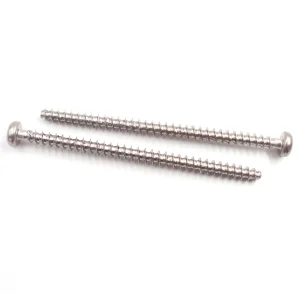
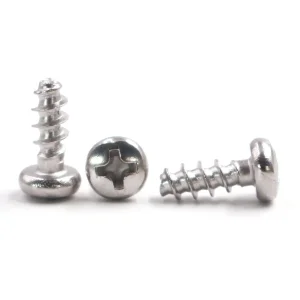
PT (thread-forming) screws use an optimized 30° profile thread angle instead of a conventional 60° machine thread. This reduces radial bursting stresses in brittle plastic bosses (e.g., PA66-GF30, PBT, Polycarbonate), creates larger shear areas, and raises stripping torque relative to drive torque. As a result, automated assembly tools can run at higher speeds without stripping plastic threads.
The pre-applied polyamide (nylon) patch is permanently bonded to a specific band of screw threads. When mated with an internal thread, the nylon compresses elastically, exerting continuous radial prevailing torque. This prevents rotational back-off during dynamic highway vibration (tested to DIN 65151 Junkers vibration standards) while still permitting intentional removal during pack servicing.
For custom cold-formed designs, tool design and pilot production typically take 3 to 4 weeks. Full PPAP Level 3 packages—including IMDS submission, 5-piece dimensional ballooned prints, Process Capability (Cpk ≥ 1.67) studies, Gage R&R, Control Plans, and material certifications—are generated during pre-series production and delivered within 10 business days of first-article sampling.
We use non-electrolytic zinc flake coatings (such as Geomet and Delta-Protekt) for high-tensile parts, completely eliminating acid pickling and electro-deposition currents. Where zinc electroplating is specified by the customer, parts undergo an immediate post-plate de-hydrogenation bake (200°C for up to 14 hours), followed by process validation per ASTM F1940 and DIN 50969-2.
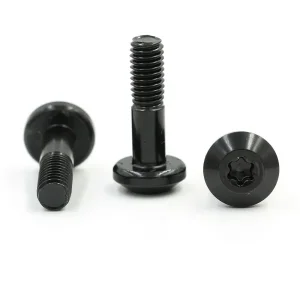
Yes. We manufacture customized security head styles including Pin-in-Torx (Torx TR), triangular recesses, one-way clutch heads, and custom proprietary 5-lobe designs. These deter unauthorized access and vandalism to public chargers, commercial solar inverters, and utility meters, while matching hardened installation bits are supplied with production orders.
Browse our precision-manufactured production lines for thin sheet metal, composite structural frameworks, and outdoor IP68 enclosures.