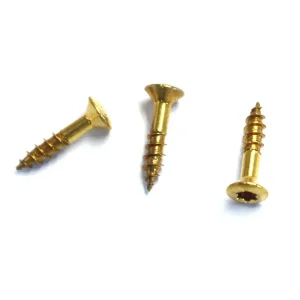
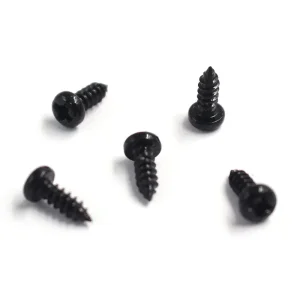
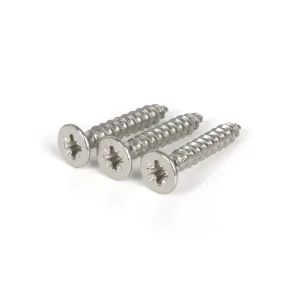
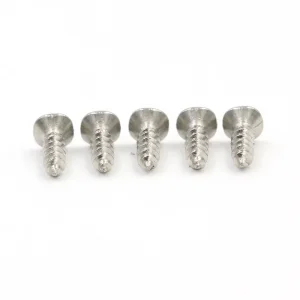
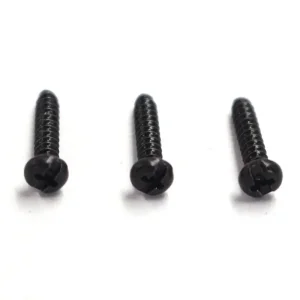
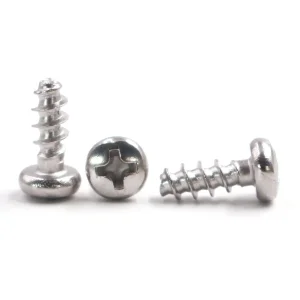
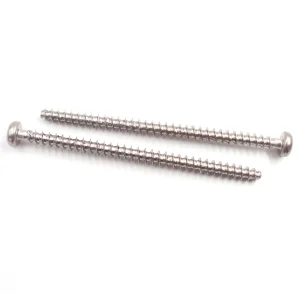
Direct from our Dongguan, Shaoguan, and Wuhan facilities: specialized thread-forming profiles, anti-loosening TP/PT thread geometries, countersunk recesses, and multi-material fastening fasteners engineered to streamline high-speed automated lines.
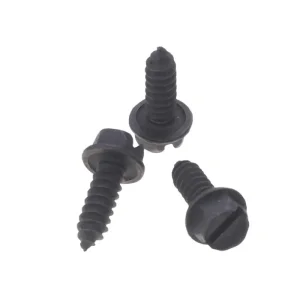
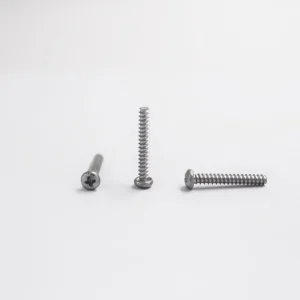
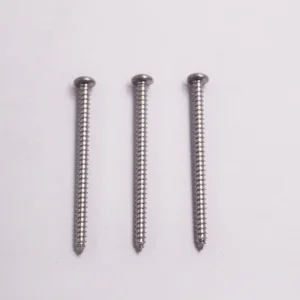
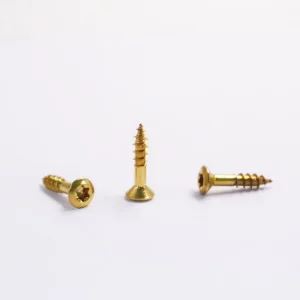
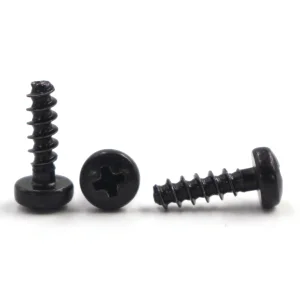
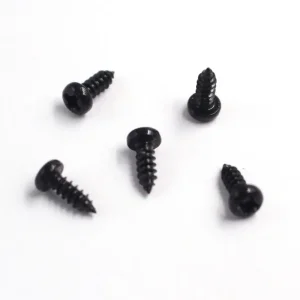
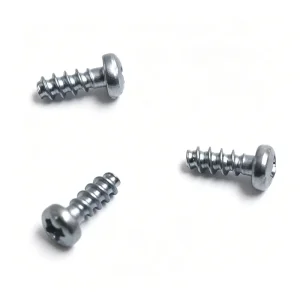
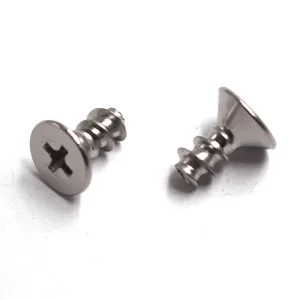
In modern industrial manufacturing, self-tapping screws (often incorporating specialized thread-forming geometries like PT® and trilobular cross-sections) represent far more than simple mechanical fasteners. They serve as primary enablers of automated lightweight joining, zero-tap assembly lines, and cyclic fatigue integrity.
Traditional mechanical fastening mandates secondary or tertiary operations: drilling, punch deburring, tapping, washing chips, and applying chemical thread-lockers. In automotive unibodies and consumer smart hardware, thread-forming self-tapping screws create zero-clearance mating threads directly in ductile substrates, slashing per-joint cycle time by upwards of 40% while preventing contamination from metal shavings.
The global precision industrial fastener market exceeds $85 billion USD, with self-tapping variants outpacing standard machine bolts at a CAGR above 5.6%. Key drivers include electric vehicle (EV) battery pack enclosures, renewable solar racking frames, IoT terminal micro-assemblies, and multi-polymer aerospace ducting requiring high pull-out resistance with lower driving torques.
Modern OEM supply chains demand stringent adhesion to IATF 16949 protocols, PPAP Level 3 documentation, and sub-10 PPM defect rates. Self-tapping screws operating in active structural zones must combine ductile core characteristics (to absorb dynamic shock loads) with induction-hardened case layers that penetrate hardened aluminum die-castings and ultra-high-strength steel sheets.
As advanced lightweight composites, thin-gauge sheet metals, and automated robotic torque-monitoring workcells replace manual assembly, self-tapping screw design has transitioned into computational mechanics.
Traditional 60° thread angles cause extreme radial bursting stresses when driven into thermoplastics. The 30° narrow profile allows deeper material penetration, maximizes axial shear volume, reduces driving torque by up to 35%, and virtually eliminates boss wall cracking.
Thread-forming screws featuring a tri-roundular cross section form internal mating threads via plastic deformation rather than chip generation. Cold work-hardening occurs along the grain structure of the female thread, boosting stripped-thread threshold torques significantly.
Modern applications require chemical integration. By pre-applying polyamide micro-encapsulated thread lockers or integrated EPDM/under-head O-ring seals, our factory supplies parts that achieve gas/liquid ingress protection (IP67/IP68) with no hand assembly.
To eliminate catastrophic hydrogen embrittlement in electroplated carbon steels, our vacuum-assisted, atmosphere-controlled carburizing and de-embrittlement baking systems ensure a surface hardness of 550–700 HV with a resilient ductile core of 280–390 HV.
| Classification | Thread Geometry | Primary Substrate Compatibility | Driving Mechanism | Failure Mode Safeguard |
|---|---|---|---|---|
| Thread-Cutting (Type F / 1 / 23) | Standard 60° with chip-cavity flutes | Heavy steel sheet, aluminum castings, zinc alloys | Material displacement & evacuation | Relieves tapping friction, prevents core seizure |
| Thread-Forming (Trilobular / TT) | Trilobular profile with relief lobes | Ductile non-ferrous metals, sheet steel ≤ 6mm | Cold plastic flow deformation | Prevents stripped internal threads; high retention |
| Thermoplastic Optimized (PT / TP) | 30° included angle, wide pitch spacing | ABS, Polycarbonate, Polyamide, Polypropylene | Radial stress reduction, deep plastic engagement | Zero boss splitting; high strip-to-drive torque window |
| Self-Drilling / Teks® Point | Integrated spoon / fluted drill tip | Structural hollow beams, un-prepunched sheet metal | High-RPM cut followed by thread extrusion | Eliminates hole misalignments; fast single-step cycle |
| High-Low Dual Thread | Alternating high & low crest heights | Low-density composites, recycled plastics, softwoods | Axial compression & differential shear plane | Increases pull-out strength; minimizes material breakout |
A fastener's true test occurs within demanding real-world installations. YH Fastener engineers customized self-tapping hardware configured precisely to the chemical, thermal, and mechanical stresses of modern industrial sectors.
Electric mobility introduces complex thermal cycles and high vibration profiles. Our SUS304/SUS316 and Class 8.8/10.9 thread-forming fasteners secure cast-aluminum cooling trays, busbar distribution nodes, and interior cockpit modules. Utilizing organic multi-layer zinc flake coatings (Geomet® / Magni®), they endure over 1,500 hours of neutral salt spray (ASTM B117) without red corrosion.
Micro-fasteners (M0.8 to M2.5) are crucial for high-density smartphone unibodies, 5G outdoor base stations, and laptop chassis. Our ultra-thin head Torx PT tapping screws provide low-profile clearances for magnetic shielding and display stacks. We deliver tight drive recess tolerances, preventing automated vacuum feed nozzle drops and screwdriver cam-out.
In high-vibration robotic arm joints, PLC control cabinets, and conveyor tracks, screw back-out leads to equipment downtime. Our pre-applied micro-encapsulated polyamide nylon patches provide prevailing torque resistance. This counteracts dynamic transverse oscillation without stripping tapped composite substrates.
Across our 20,000 m² production facilities in Dongguan, Shaoguan, and Wuhan, we maintain complete control over raw-material metallurgy, multi-die cold heading, precision thread rolling, controlled-atmosphere heat treatment, and 100% optical inspection.
Raw wire rods (1018A, 1022A, 10B21, SUS302, SUS304, SUS316) undergo incoming spectral chemical analysis, eddy-current crack detection, and tensile verification before release to headers.
High-precision multi-station cold headers form heads, collars, and drive recesses (Phillips, Torx, Slotted, Tamper-proof) without disrupting internal metallurgical grain structure.
High-hardness flat and cylindrical dies form precision lead threads, trilobular profiles, and PT angles. Rolling work-hardens root radiuses, delivering superior fatigue life over cut threads.
Atmosphere-controlled mesh-belt furnaces govern carbon potential (±0.02% C) for consistent case depth. Computerized tempering guarantees core ductility and eliminates structural brittleness.
Automated lines apply RoHS-compliant yellow zinc, black oxide, trivalent clear zinc, nickel, Geomet, or Dacromet coatings, followed immediately by 200°C+ dehydrogenation baking.
Multi-camera laser glass-plate sorting units inspect 100% of fastener runs at speeds over 800 pcs/min. Fasteners with head runout, damaged threads, or dimensional variances are rejected, achieving sub-10 PPM targets.
Supplying multinational manufacturing enterprises requires more than cold-heading capacity. It demands comprehensive technical risk mitigation, automated assembly compatibility, and predictable supply-chain logistics.
We configure head configurations—including Pan, Countersunk Flat, Hex Washer, Oval, Truss, and Ultra-thin Wafer—paired with precision Phillips, Torx (Six-Lobe), Pozidriv, Hex Socket, or Tamper-Proof Pin-Torx drives. We engineer specific drive recess depths to optimize torque transfer and extend driver bit lifespans in continuous automatic feeding systems.
Our in-house R&D application engineering department analyzes customer 2D component drawings, 3D STEP models, and joint substrate data within 24 hours. We evaluate boss diameters, hole cored-taper specifications, clamping torque-to-yield values, and recommend thread profiles to prevent stripping.
Exporting to over 60 countries across North America, Europe, Southeast Asia, and Latin America, YH Fastener provides Vendor Managed Inventory (VMI), blanket purchase agreements, and regional buffer warehousing. Our logistics support minimizes inventory carrying costs while ensuring consistent, uninterrupted production.
Authoritative insights addressing drive torques, hole dimensions, metallurgy, and material selection for procurement teams and mechanical design engineers.
Thread-forming screws (such as trilobular or PT geometries) displace the parent material through plastic flow without creating chips. This maintains the structural grain flow of the host substrate, increases pull-out strength, and prevents debris contamination. Thread-cutting screws (e.g., Type F, 1, or 23) incorporate sharp cutting slots or flutes that slice and evacuate chips from the parent material, making them well-suited for brittle metals, thick cast irons, and non-ductile thermoset materials where displacement might otherwise trigger severe hoop stresses and boss cracking.
Boss design requires balancing the Drive Torque (Td) and Stripping Torque (Ts). As a general engineering baseline, the hole diameter in thermoplastic bosses should approximate the screw’s thread pitch diameter (roughly 0.8 × Nominal Outer Diameter). The outside boss wall diameter should measure 2.0 to 2.5 times the screw's nominal diameter to withstand outward hoop stresses. Furthermore, our application engineers review mold draft angles to ensure the bottom of the cored boss does not constrict the screw point and cause premature torque-out.
Electroplated carbon steel self-tapping screws (hardened to ≥320 HV / 32 HRC) risk catastrophic delayed brittle fracture if atomic hydrogen becomes trapped during acid pickling or electro-deposition. YH Fastener minimizes this risk through: (1) strictly regulated acid-inhibited cleaning cycles, (2) mandatory dehydrogenation baking at 200°C–220°C for 4 to 12 hours immediately post-electroplating (prior to passivation), and (3) regular destructive wedge-tensile and sustained-load embrittlement testing per DIN EN ISO 15330 protocols.
Standard austenitic stainless steels (SUS304/SUS316) work-harden rapidly, but lack the surface hardness needed to penetrate structural carbon steel sheets without galling or thread stripping. For steel-sheet tapping where corrosion resistance is essential, we offer two solutions: (1) specialized martensitic stainless grades (e.g., 410, hardened up to 40–45 HRC with passivated finishes), or (2) Bi-Metal tapping screws, where an induction-hardened alloy carbon steel drill/forming tip is friction-welded directly to an austenitic 304/316 shank and head.
Every production batch shipped from our Dongguan, Shaoguan, or Wuhan facilities includes complete quality verification packages: Material Test Reports (MTR 3.1) tracing original heat lots, Plating Thickness Measurement Reports (X-ray Fluorescence), Micro-Vickers Case & Core Hardness Depth profiles, Salt Spray Test Reports, Dimensional Optical Sorting logs, and full Level 3 PPAP documentation (including control plans, PFMEA, and dimensional bubble charts) for tier-1 automotive orders.
Explore our specialized metric, high-tensile, countersunk, and low-stress thread-forming assemblies designed for electronics, furniture manufacturing, thin metal housings, and structural enclosures.