Engineered cold-formed fasteners produced under zero-defect quality controls for mechanical assemblies, tooling fixtures, and high-vibration industrial applications.
Analyzing high-velocity shearing dynamics, micro-yield preloads, and drive recess geometries in modern CNC indexing operations.
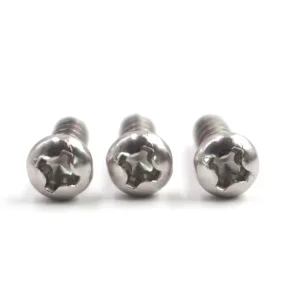
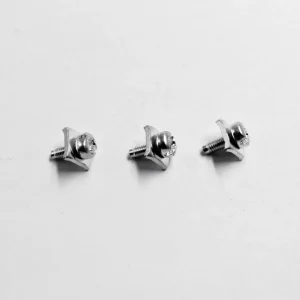
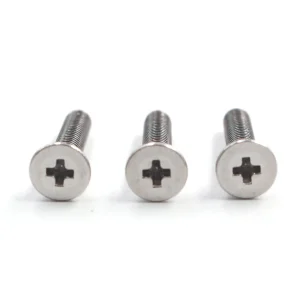
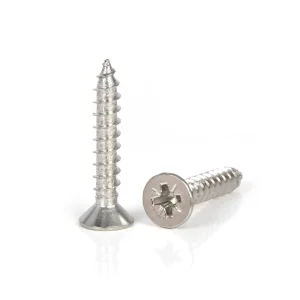
In high-speed CNC milling, turning, and boring systems, the carbide insert screw serves as the fundamental mechanical bridge between an indexable cutting insert and the toolholder pocket. While traditionally classified as simple hardware, modern multi-axis machining has elevated this component into a critical engineering interface. Under extreme spindle speeds—frequently exceeding 15,000 RPM—and intense interrupted cutting cycles, indexable insert screws are subjected to compound forces: severe transverse shear, fluctuating dynamic fatigue, cyclical thermal shock ($>800^\circ\text{C}$ at the tool-chip interface), and centrifugal radial pull.
A minor deviation in thread concentricity, pitch profile, or under-head countersunk angle ($60^\circ$ standard vs. $40^\circ-55^\circ$ customized geometries) introduces catastrophic tool assembly runout. This imbalance accelerates insert crater wear, induces chattering harmonics, degrades surface roughness ($Ra$), and can cause catastrophic fastener fracturing inside the tool pocket—yielding thousands of dollars in spindle downtime and damaged workpieces. As an established carbide insert screws supplier, Yu-Huang Electronics Dongguan Co., Ltd. (YH Fastener) has engineered specialized cold-heading and precision thread-rolling methodologies to resolve micro-clamping instability across global CNC tooling ecosystems.
The global metal cutting sector is undergoing rapid transformation governed by lightweight aerospace composites, hardened exotic alloys (Inconel, Hastelloy, Monel), and autonomous lights-out manufacturing. These operational parameters require carbide insert screws to transition from conventional metric fasteners into micro-engineered fastening units.
Traditional Phillips and standard Hex drives fail under high tightening torques due to cam-out and corner rounding. The industry has standardized on Torx Plus (IP) and six-lobe configurations, allowing a true $0^\circ$ drive angle to transfer up to 25% higher seated clamp torque without recess deformation.
Direct contact between high-alloy steel screws and hardened toolholder pockets frequently leads to fretting corrosion and microscopic thread cold-welding. PVD titanium carbo-nitride (TiCN), molybdenum disulfide ($MoS_2$), and ultra-thin fluoropolymer films protect threads while stabilizing torque-tension friction coefficients ($\mu = 0.10 - 0.14$).
Modern indexable cutters require clamping pressures up to 1,400 MPa without thread elongation. SCM435, 40CrMoV, and specialized vacuum-degassed tool steels guarantee exceptional tensile properties, core elasticity, and impact resistance during severe interrupted face milling operations.
Why Tier-1 toolholders, medical implant machinists, and automotive tier suppliers evaluate carbide insert screws based on Total Cost of Ownership (TCO) rather than unit piece price.
Enterprise procurement directors in Germany, the United States, Japan, and South Korea face increasing supply chain vulnerability. A carbide insert screw is historically ordered in batches of hundreds of thousands, yet a single stripped fastener recess or deformed shank can halt an automated robotic production cell, ruining an engine block or jet turbine casing worth tens of thousands of dollars.
Consequently, global corporate procurement requirements have transitioned from basic catalog ordering to rigid Supplier Quality Engineering (SQE) audits. International buyers actively mandate:
Mill test certificates (MTC) according to EN 10204 3.1 verifying exact spectral chemistry, grain size (ASTM E112 Grade ≥ 7), and absence of internal voids or non-metallic inclusions.
Batch-level destructive shear and torsion testing ensuring screws withstand 140% of nominal clamping torque without head-to-shank shear or stripped socket recesses.
High-speed glass-dial multi-camera optical sorters screening 100% of finished lots for thread pitch, total runout, head countersink concentricity, and drive depth to achieve < 15 PPM defect rates.
Mandatory baking within 4 hours post-acid pickling or electroplating at $200^\circ\text{C}\pm 5^\circ\text{C}$ for 8 to 24 hours, conforming to ASTM F1941 to eliminate micro-cracking risks under sustained preloads.
| Performance Parameter | YH Fastener Precision Specification | Standard Commercial Grade | Operational Engineering Benefit |
|---|---|---|---|
| Base Metallurgy | SCM435 / H13 / 40CrMoV Vacuum Degassed Alloy | Standard Carbon Steel / 10B21 | Prevents catastrophic fatigue fracturing under high cyclic load |
| Tensile Strength ($R_m$) | 1220 – 1400 MPa (Class 12.9 / 14.9 Execution) | 800 – 1000 MPa (Class 8.8 / 10.9) | Permits maximum insert clamping preload without thread necking |
| Surface Hardness | HRC 43 – 48 (Through-Hardened & Tempered) | HRC 28 – 34 | Superior resistance to drive recess stripping and thread galling |
| Thread Concentricity | ≤ 0.008 mm TIR (Rolled post-heat treat) | ≤ 0.030 mm TIR | Eliminates micro-runout on indexing cutters, improving tool life |
| Drive Engagement | Torx Plus® (IP6 – IP25) & Custom 6-Lobe | Generic Phillips / Standard Hex | Zero cam-out, true vertical seating, extended driver bit longevity |
| Surface Finishing | Micro-Black Oxide, PVD TiN/TiCN, Solid Lubricant | Commercial Zinc Plating | High thermal durability ($>650^\circ\text{C}$), uniform friction control |
How YH Fastener integrates smart industrial networks, advanced multi-station cold heading, and vertically integrated heat treating across 20,000 m² of smart facilities.
In the global procurement equation, supply resilience has surpassed isolated labor costs as the dominant decision driver. China’s advanced industrial corridor—anchored by Dongguan’s precision engineering cluster—has evolved from labor-intensive assembly into a benchmark for automated Industry 4.0 manufacturing. YH Fastener (Yu-Huang Electronics Dongguan Co., Ltd.) operates three distinct manufacturing campuses located in Dongguan, Shaoguan, and Wuhan, collectively spanning over 20,000 square meters.
This geographic and operational scale provides global buyers with distinct supply security advantages:
By conducting raw material wire drawing, multi-station progressive cold forming, thread rolling, computer-controlled protective atmosphere mesh-belt heat treatment, and surface coating within unified facilities, YH Fastener eliminates subcontractor latency and guarantees lot-to-lot consistency.
Custom carbide insert screws with specialized angles or unique undercut reliefs require dedicated heading dies. Our in-house EDM, CNC wire-cutting, and micro-grinding toolrooms engineer custom cold-heading dies in days rather than months, accelerating new product introduction (NPI) cycles.
Our raw material warehouses maintain rolling stocks of vacuum-degassed alloy steel wire rods. Dual-grid power redundancy and diversified manufacturing sites across Guangdong and Hubei provinces ensure that regional supply chain disruptions do not interrupt delivery schedules.
Real-world engineering analyses demonstrating how specialized insert screws withstand rigorous machining environments.
Challenge: Severe chip crowding, poor thermal conductivity, and intensive harmonic vibration cause standard M2.5 Torx screws to work loose within 40 minutes of continuous cutting.
Solution: YH Fastener Class 12.9 Torx Plus screws with high-temperature molybdenum anti-seize coating and micro-flat under-head contact surfaces, preserving stable seated clamp tension across 8-hour continuous shifts.
Challenge: Micro-diameter inserts (M1.2 to M1.8 screws) in surgical bone screw machining experience head deformation when machine operators manually index worn inserts.
Solution: Deep-recess cold-formed Torx Plus (IP6) screws with controlled core ductility (HRC 42-45), offering positive bit retention that prevents head stripped failures in constrained machining spaces.
Challenge: Heavy interrupted cuts in cast-iron engine casing machining exert massive cyclic transverse shear directly against insert screw shanks, resulting in fatigue fracturing at the first engaged thread.
Solution: Radiused thread root geometries rolled after heat treatment, redirecting stress concentrations and extending dynamic fatigue life by over 300% under severe interrupted milling.
Challenge: Thermal expansion during high-speed finishing cuts causes micro-fretting between the insert countersink and screw, causing insert shift and mirror finish imperfections.
Solution: Micro-ground 60-degree precision bevel heads ensuring 98%+ surface area contact with the insert pocket, preventing micro-shifting under multidirectional toolpaths.
Key technical insights on tolerances, metallurgy, anti-loosening mechanisms, and drawing customizations addressed by our application engineers.
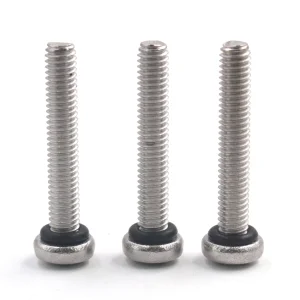
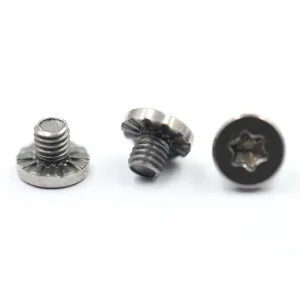
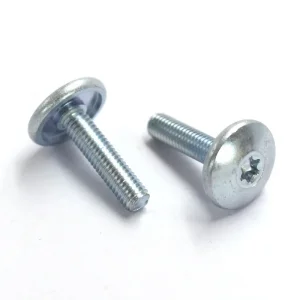
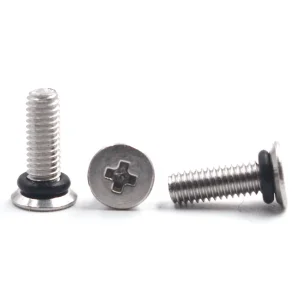
Discover our precision line of sealing screws, Torx machine fasteners, and custom engineered fasteners designed for mission-critical mechanical systems.
Send our senior application engineers your 2D engineering drawings or target insert pocket specifications. We provide feasibility reviews, full material recommendations, and DFM analysis within 24 hours.
