Direct factory execution from our 20,000 m² cold heading and multi-spindle machining complex. Every part represents full metallurgical verification, rolled threads, custom drives, and strict optical dimensional validation.
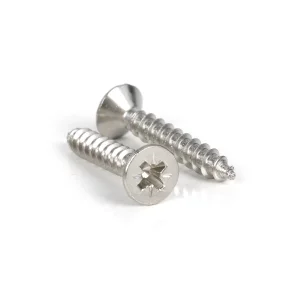
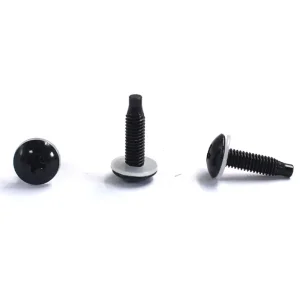
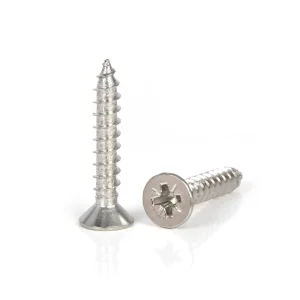
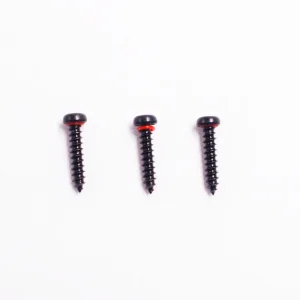
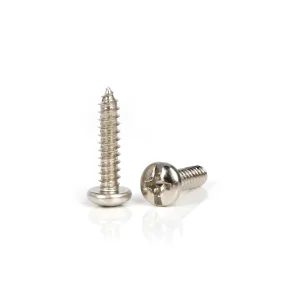
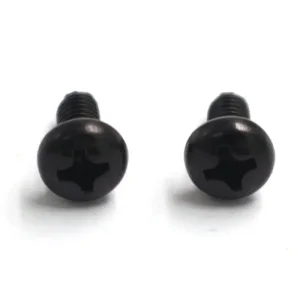
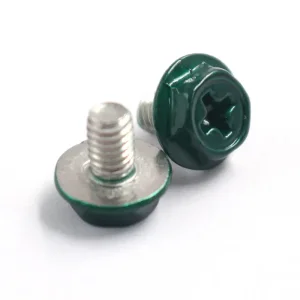
A captive screw is an engineered fastener designed to remain permanently held within a panel, bracket, or chassis even after being completely disengaged from its mating female thread. Unlike standard screws that detach freely upon unthreading, captive screws eliminate loose hardware hazards, protect delicate circuitry against Foreign Object Debris (FOD), and accelerate field serviceability across high-reliability equipment.
Manufactured with a reduced unthreaded shank diameter smaller than the major thread diameter. Once threaded through a pre-tapped panel or retained with an internal circlip, the wider rolled thread cannot slip out through the clearance hole.
Integrates a stainless steel compression spring contained within a metal or plastic ferrule. When unthreaded, the internal spring automatically retracts the screw point flush into the ferrule housing, protecting adjoining panels during sliding extraction.
Designed to install permanently into ductile sheet metal via standard hydraulic press insertion. The undercut serration displaces panel metal cold, flowing it into an annular groove to guarantee extraordinary push-out and torque-out resistance.
For tier-1 automotive systems, hyperscale data center operators, and medical OEMs, fastener procurement transcends unit pricing. Top purchasing departments evaluate manufacturing partners on total process control, traceable metallurgy, and statistical capability metrics.
Enterprise buyers require robust production part approval process documentation (PPAP). At YH Fastener, we deliver full IMDS registration, Gage R&R, Process Failure Mode Effects Analysis (PFMEA), and verified CPK values > 1.67 for critical shank diameters and thread pitches.
Stainless steel captive screws (A2-70, A4-80, 316L) frequently encounter cold welding (galling) when threaded into matching stainless tapped inserts. We apply proprietary anti-friction coatings, microscopic molybdenum disulfide, or tailored silver plating to safeguard continuous torque stability.
Manual sampling is incapable of guaranteeing parts per million (PPM) thresholds required by modern robotic pick-and-place lines. High-speed multi-camera optical sorters inspect head concentricity, recess depth, shank runout, and thread pitch on every single unit.
Fastener assemblies must withstand strict environmental scrutiny. All raw wire coils and surface treatments undergo strict chemical spectrometry for RoHS 3 (EU 2015/863), REACH SVHC 235+, and DFARS Section 252.225-7014 compliance for specialty metal verification.
Captive screws serve as the unsung structural guardians of mission-critical systems. Discover how our customized retention hardware addresses extreme vibration, hermetic sealing, thermal cycling, and safety regulations across diverse engineering domains.
19" server racks, blade switches, and edge AI compute chassis. Spring-loaded captive screws enable rapid hot-swap module replacement while preventing loose screws from grounding motherboards.
Line Replaceable Units (LRUs), flight radar fairings, and cockpit instrumentation require NAS/MS-equivalent captive screws engineered from titanium or 17-4PH stainless steel to eliminate FOD risk in flight.
Magnetic resonance imaging (MRI) gantries, automated blood analyzers, and surgical consoles utilize non-magnetic AISI 316L captive screws resistant to aggressive autoclave sterilization and chemical washdowns.
EV battery pack service lids, SiC motor controllers, and onboard chargers deploy high-torque captive screws with integrated micro-encapsulated threadlockers to survive 50G vibrational abuse.
Conforming strictly to EU Machinery Directive 2006/42/EC Annex I, ensuring guards and maintenance hatches keep fasteners joined to protective shrouds whenever technicians perform line retooling.
Optimal captive screw design demands balancing tensile modulus, yield strength, galvanic compatibility, and surface hardness. Our in-house heat treatment and electroplating lines deliver custom metallurgical combinations tailored precisely to client drawings.
| Material Grade | Tensile Strength (MPa) | Corrosion Resistance | Compatible Surface Treatments | Primary Industrial Use Cases |
|---|---|---|---|---|
| AISI 304 (A2-70) | 700 - 850 | Excellent atmospheric and mild chemical durability | Passivation (ASTM A967), Electropolishing, Black Oxide | Consumer electronics enclosures, IT server chassis, telecom cabinets |
| AISI 316 / 316L (A4-80) | 800 - 1000 | Exceptional resistance to chlorides, marine salt spray, acids | Ultrasonic Passivation, MoS2 dry film coating | Marine electronics, outdoor naval radar, pharmaceutical processing |
| Medium Carbon Alloy (10B21) | 800 - 1040 (Class 8.8/10.9) | Substrate requires sacrificial barrier electroplating | Zn-Ni (12-16% Ni, 1000+ hrs salt spray), Geomet, Dacromet | Automotive structural subframes, heavy machine guards, EV inverters |
| Grade 5 Titanium (Ti-6Al-4V) | 900 - 1100 | Virtually impervious to seawater, galvanic and bio-fluids | Type II Anodizing, Diamond-Like Carbon (DLC), TiN | Commercial aviation avionics, military defense pods, satellite payloads |
| Aluminum 6061-T6 / 7075-T6 | 310 - 570 | High strength-to-weight ratio, anodized barrier | MIL-A-8625 Type II & Type III Hardcoat Anodizing (Multi-color) | Lightweight drone gimbals, optical systems, handheld diagnostic meters |
Accelerating cold heading tooling capabilities for M1.0 to M1.6 micro-scale captive screws. Designed for augmented reality (AR) smart glasses, surgical endoscopes, and wearable defense sensors where every gram and millimeter counts.
Prototyping captive assemblies with integrated micro-NFC/RFID chips within the screw head cavity. Facilitates automated lifecycle inspection, counterfeit verification, and maintenance log tracing in aerospace digital twins.
Advanced floating captive screws that incorporate 1.5 mm to 2.5 mm of radial play within their retention ferrule. Solves hole-pattern tolerance stack-up across large multi-bend stamping assemblies and injection-molded battery covers.
The global industrial fastener market is undergoing rapid evolution. While North American and European enterprises establish dual-sourcing programs and regional assembly plants, the unmatched manufacturing cluster in Dongguan, China remains the global epicentre for high-volume precision tooling, raw material supply velocity, and cold heading efficiency.
Our 20,000 m² primary production base in Dongguan benefits from immediate co-location with raw wire drawing mills, specialized heat treatment facilities, certified plating lines, and carbide tooling fabrication. This dense supply cluster compresses custom tooling cycles from months down to 7 to 10 working days.
While Western manufacturers often resort to slow, subtractive CNC machining for captive screws resulting in 65% raw scrap waste, YH Fastener utilizes multi-station high-speed cold heading headers. This cold forming achieves continuous grain structure, quadrupled tensile strength, and generates unmatched cost savings passed directly to OEM procurement.
To safeguard international production lines against freight volatility, YH Fastener operates dedicated consignment stocking, Vendor-Managed Inventory (VMI), and Just-In-Time (JIT) delivery protocols for tier clients across North America, Germany, Japan, and Southeast Asia.
Engineers and procurement directors cannot afford line stoppages caused by inconsistent fastener dimensions, brittle head fracture, or unexpected plating contamination. YH Fastener implements an uncompromising quality assurance architecture from wire intake to port loading.
Full automotive quality management compliance ensuring strict defect prevention, lot traceability, error-proofing poka-yoke systems, and continuous reduction of process variation across every batch.
Direct engineering alignment with Directive 2006/42/EC, ensuring our captive fastening assemblies satisfy legal mandates for protective guard retention on machinery exported to the European Union.
In-house cyclic corrosion test chambers verify neutral salt spray (NSS) endurance from 48 hours to over 1,500 hours without red rust, confirming plating layer thickness via X-ray fluorescence spectrometry.
Multilingual senior fastener application engineers provide round-the-clock DFM (Design for Manufacturability) feasibility reviews, 2D/3D CAD validations, and rapid sample prototyping within 5-7 days.
Direct, highly specific engineering insights for chief mechanical engineers, sourcing leads, and DFM specialists specifying captive fasteners.
A standard screw possesses a uniform full or partial shank diameter equal to or slightly larger than its thread pitch minor diameter, allowing it to drop freely through clearance holes upon unthreading. In contrast, a captive screw is engineered with an undercut, reduced shank (smaller than thread major diameter) or incorporates a permanent retaining ferrule, spring, or split washer. This mechanical architecture traps the screw physically within its host panel or bracket, preventing loose fastener drop, eliminating Foreign Object Debris (FOD), and accelerating field servicing.
Annex I, Clause 1.4.2.1 of EU Machinery Directive 2006/42/EC mandates that fixed guards and protective doors must remain attached to the machinery or to the guard itself when opened or dismounted. Conventional screws can be misplaced by line workers, frequently leading to machines operating with missing guards. Captive screws solve this legal requirement permanently by ensuring that when guards are removed for maintenance, the fastening hardware remains irrevocably retained within the shroud structure.
There are four predominant mounting architectures: Self-Clinching (pressing a serrated ferrule into a ductile sheet metal hole under controlled hydraulic pressure, causing metal to cold-flow into an undercut groove); Flare-Mounted (flaring a thin tubular shank on the backside of punched holes, optimal for hard or non-ductile panels); Floating Retainer Cage (snapped into square or elongated panel cutouts to provide lateral float for hole alignment); and Direct Thread-In Retaining Rings (circlip or E-clip installed over the reduced unthreaded neck after passing through a plain clearance hole).
Galling is an adhesive wear phenomenon caused by high frictional contact pressure breaking down oxide films between identical austenitic stainless alloys (such as 304 against 304). We eliminate galling by: 1) Pairing dissimilar alloys or hardness levels (e.g., cold-worked 316 screws into bronze or work-hardened nitronic inserts); 2) Applying microscopic dry film lubricants such as molybdenum disulfide (MoS2) or fluoropolymer coatings; and 3) Electroless nickel or silver plating on the thread surface to drastically lower friction coefficients during high-speed torque engagement.
Yes. In addition to manufacturing equivalents for standard catalog series (such as Southco, PEM, and Accuride standards), over 65% of our production consists of completely custom, build-to-print designs. We support STEP, IGES, DXF, and DWG file submissions. Our DFM engineering team evaluates tolerances, recommends optimal cold heading vs. multi-axis CNC production paths, develops internal dies, and supplies FAI (First Article Inspection) samples with dimensional balloon drawings within 7 to 10 days.
For standard material cold-headed captive screws (carbon steel, 304/316 stainless steel), prototyping batches start from 1,000 to 5,000 pieces depending on tooling availability. High-volume production runs operate with MOQs typically between 10,000 and 50,000 units to maximize cold-heading speed efficiencies. Tooling and initial sample lead time is 7-12 days; mass production runs ship in 2-3 weeks following sample sign-off, supported by express air freight or consolidated ocean container logistics.
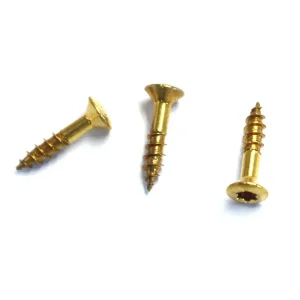
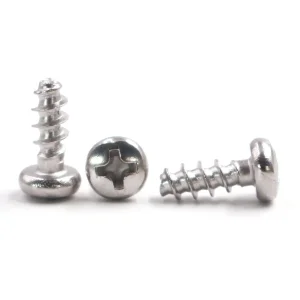
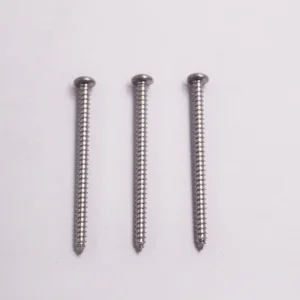
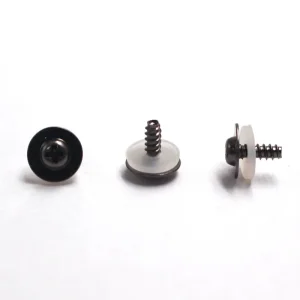
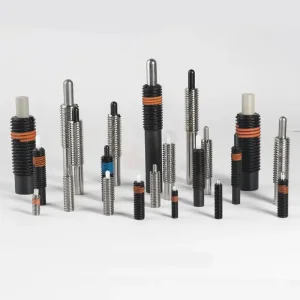
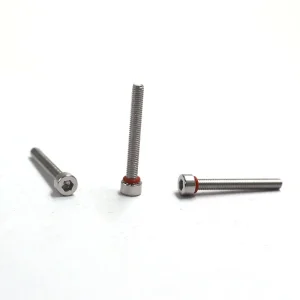
Explore additional precision manufacturing capabilities from YH Fastener, encompassing integrated O-ring sealing bolts, specialized SEMS combination washers, mechanical spring plungers, and heavy-duty plastic tapping fasteners.
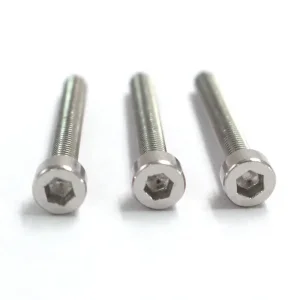
Send your 2D engineering drawings (PDF/DWG) or 3D CAD models (STEP/IGES) today. Our chief application engineers will return a complete Design for Manufacturability (DFM) review, tolerance analysis, and transparent volume quotation within 24 hours.
