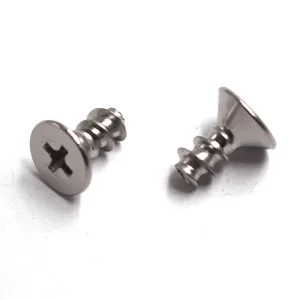
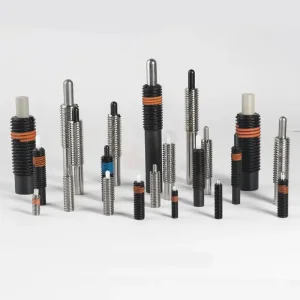
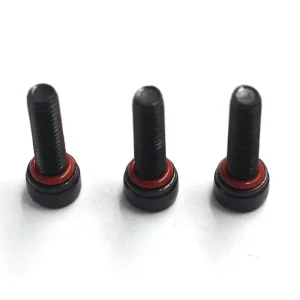
Industrial-grade fastener portfolio engineered for mechanical robustness, thermal tolerance, and flush aesthetic profiles.
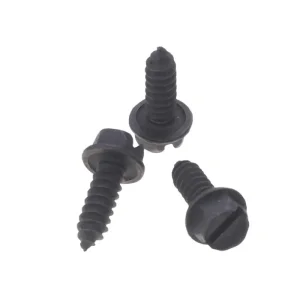
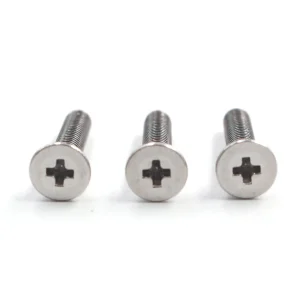
In automated high-speed assemblies, the countersunk (flat head) tapping screw remains the bedrock of structural fastening across automotive sub-assemblies, precision consumer electronics, industrial enclosures, and energy infrastructures. Its low-profile, flush mating plane eliminates mechanical interference, while carbon steel's hardening properties offer unmatched dynamic torque transfer.
By leveraging multi-station cold-heading rather than material-subtractive turning, carbon steel grain boundaries align continuously along head-to-shank transitions. This eliminates micro-cleavage risks under high cyclic vibration and ensures maximum shear resistance.
Utilizing precision carbonitriding, our carbon steel countersunk tapping screws achieve a case depth of 0.05–0.20 mm (HV 450–750 Min), keeping a ductile, energy-absorbing core (HV 240–390) that mitigates sudden catastrophic hydrogen-assisted cracking or mechanical shear.
Formulated with exact 90° or 100° countersink geometry, our tooling ensures rigorous driver recess concentricity. This prevents cam-out failure, eliminates automated feeder jams, and delivers clean surface transitions without secondary deburring.
Addressing structural fastening demands across mission-critical sectors through precision manufacturing and custom alloy selection.
In vehicle interiors, HVAC modules, and dashboard frames, flush-mounted countersunk tapping screws prevent cabin component interference. Carbon steel delivers high tensile clamping force with salt spray resistance exceeding 720+ hours via eco-friendly Geomet and zinc-nickel finishes.
Micro-diameter tapping screws (M1.2–M2.5) feature tight driver recesses (Phillips, Torx, or Tamper-Proof). Controlled tapping threads engage securely in cast magnesium, ABS, and aluminum-zinc alloys without damaging thin boss walls.
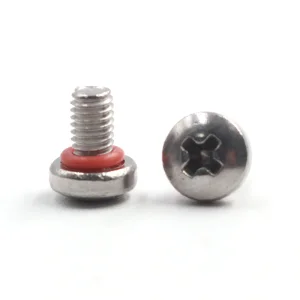
Control cabinets and solar junction interfaces require flush grounding joints and vibration-proof panel assembly. Pre-applied microencapsulated adhesives and precise under-head countersink tapers secure panels under persistent thermal cycling.
In-depth technical breakdown of mechanical properties, thread cutting profiles, and surface treatment combinations available for OEM development.
| Dimensional Standards | DIN 7982, DIN 965, ISO 7049, ISO 14586 (Torx flat), ASME B18.6.3, JIS B1055, or custom customer blueprints. |
|---|---|
| Base Materials | Low Carbon Steel (1018, 1022A), Medium Carbon Steel (1035, 1045), Alloy Steel (SCM435), Boron Steel (10B21) for severe structural clamp limits. |
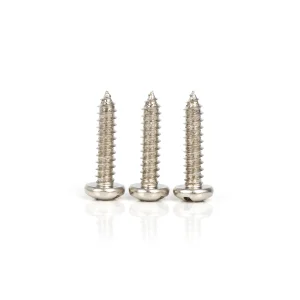
| Thread Geometry | Type AB (wide spacing, self-aligning), Type B (blunt tip for plastics/castings), Thread Cutting (Type 1, 23, 25 with relief flutes), and High-Low anti-stripping profiles. |
| Head & Recess Forms | Flat Countersunk (90°, 100°, 82°), Oval Countersunk, Torx (Six-Lobe), Phillips Cross Recess, Pozi, Tri-Wing, and Custom Tamper-Resistant variants. |
| Heat Treatment Matrix | Continuous mesh-belt furnace carbonitriding, precise case hardening depth monitoring, controlled de-embrittlement baking (min. 4 hours at 200°C–220°C post-plating). |
| Anti-Corrosion Coatings | Clear/Yellow/Black Zinc Trivalent (RoHS Compliant), Zinc-Nickel Alloy (1000+ Hrs Salt Spray), Dacromet, Geomet, Phosphate & Oil, Black Oxide, Micro-Sealing Finishes. |
Backing your lean supply chain through multi-gate quality checkpoints, certified test reports, and dedicated localized logistics support.
High-speed optical visual sorting systems inspect 100% of headed and plated fasteners for head dimensions, thread pitch integrity, driver depth, and surface fissures.
We provide comprehensive Level 3 PPAP documentation, including IMDS registration, raw material heat certifications, torque-tension curves, and micro-hardness testing reports.
Every passivation, sealant, and lubricant applied is third-party certified lead-free, cadmium-free, and hexavalent chromium-free, adhering strictly to global eco-regulations.
Supporting Vendor Managed Inventory (VMI), safety buffer stocking, and multi-tier customs clearing for Tier-1 contract manufacturers across Europe, NA, and Southeast Asia.
Explore customized metric and imperial fasteners manufactured to tight tolerances across our automated heading and rolling centers.
Addressing core technical questions from design engineers, purchasing managers, and automated assembly specialists.
Self-tapping screws (thread-forming) displace the mating material (typically thin sheet steel, soft aluminum, or ductile thermoplastics) through cold-work plastic deformation without creating metal filings. In contrast, thread-cutting tapping screws possess built-in chip flutes or cutting edges designed to slice clean internal threads within harder, brittle substrates like cast zinc, thick thermoset plastics, or cast iron castings.
Acid pickling and electroplating introduce atomic hydrogen into high-tensile carbon steel matrices. We eliminate hydrogen embrittlement risks by operating strictly under ISO 4042 parameters: keeping acid-pickling cycles to an absolute minimum and running mandatory de-embrittlement thermal baking processes at 200°C–220°C for 4 to 12 hours immediately following plating.
While stainless steel (e.g., 304, 316) offers inherent corrosion resistance, standard austenitic grades cannot achieve high surface hardness through conventional heat treatment. When tapping into steel or harder alloy sheets, stainless threads are prone to galling, thread stripping, or head shear. Carbon steel can be surface carburized/carbonitrided to HV 450–750, providing the knife-edge hardness needed to pierce and form mating threads without yielding.
Countersink angle matching is paramount: standard metric screws use a 90° countersink angle, whereas inch-standard screws typically utilize 82° or 100°. The mating chamfer depth should allow the screw head's outer diameter to sit flush or 0.05–0.15 mm below the mating surface to prevent snags in dynamic assemblies. Hole pilot diameters must be tightly calculated against substrate thickness to prevent split bosses or thread stripping.
Yes. With our in-house tooling division, we routinely fabricate custom non-standard countersunk fasteners. This includes low-profile flat heads, specialized Torx-Plus tamper-resistant drives, undercut flat heads for thin sheet metal, integrated micro-rib under-head locking features, and proprietary patch/washer retention combinations.