Engineered self-tapping, sealing, and structural machine components running directly on verified progressive headers in Dongguan, Shaoguan, and Wuhan facilities.
From low-carbon rudimentary thread forming to carbon-boron metallurgical engineering, the global supply chain has shifted toward high-yield, micro-alloyed fasteners that eliminate tapping and drilling cycles in multi-material joins.
Modern carbon steel self-tapping fasteners rely on 1022A, 10B21, and 10B22 cold-heading wire. The strategic introduction of boron maximizes hardenability, ensuring core toughness while achieving case hardness ratings up to HV 550–700 without brittle failure risks.
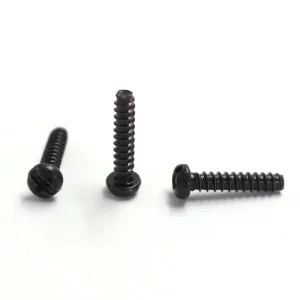
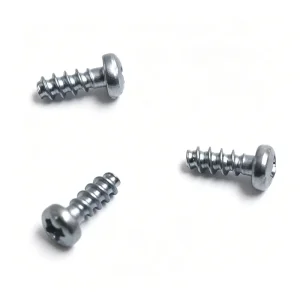
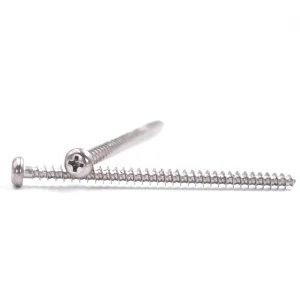
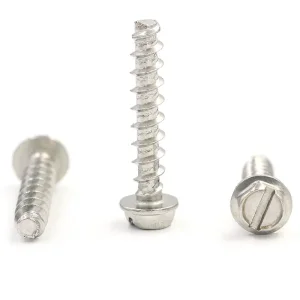
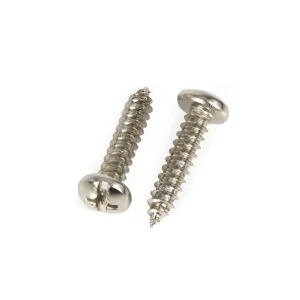
Tapping into thin-walled sheet steel, thermoset plastics, or light alloys demands specialized thread profiles. Trilobular (thread-forming) profiles compress parent materials elastically rather than cutting chips, minimizing installation torque and maintaining high strip-to-drive ratios.
High-tensile carbon steel subjected to acid pickling and electroplating risks catastrophic delayed fracture. Leading Chinese plants incorporate strict baking schedules (200°C–220°C for 4 to 8 hours) immediately post-electroplating to evacuate interstitial hydrogen atoms.
Purchasing teams at automotive OEM and multinational industrial conglomerates have moved past unit-cost comparisons. True vendor evaluation centers on total installed assembly cost, automation reliability, and defect mitigation.
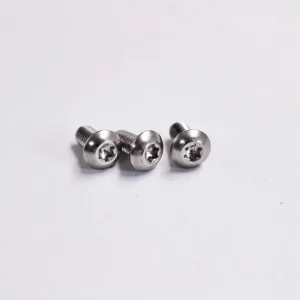
High-speed robotic screwdrivers demand fasteners with strict dimensional tolerances (±0.03mm). Burr-free Torx and Phillips drives prevent robotic feeder jams, eliminating assembly stoppages.
Buyers require Level 3 PPAP documentation, including raw material heat numbers, microhardness profiles, case depth measurements, and automated 100% optical sorting verification data.
Global environmental mandates prohibit hexavalent chromium (Cr6+). Fasteners must utilize Cr3+ passivation, Zinc-Nickel coatings, or organic Geomet/Dacromet finishes capable of enduring 720 to 1,500 hours of neutral salt spray without white or red rust.
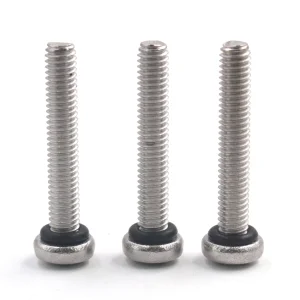
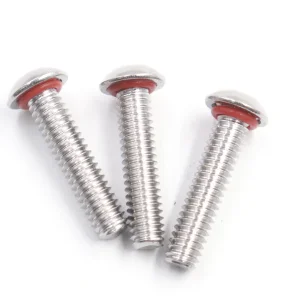
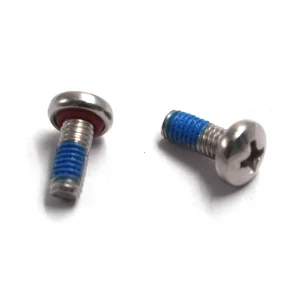
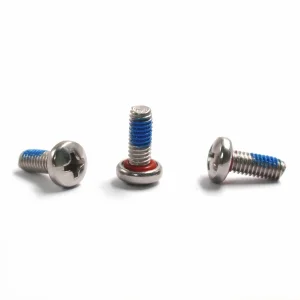
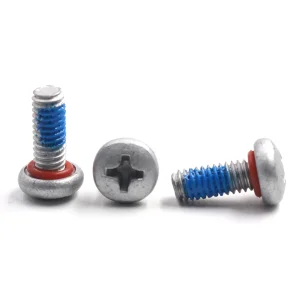
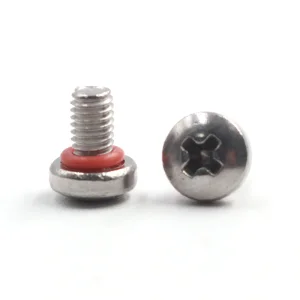
Sourcing strategies favor components that perform dual duties—such as screws with integrated EPDM bonded washers, pre-applied nylon microencapsulated patches, or captive floating washers (SEMS)—to consolidate bill of materials.
Targeted manufacturing solutions for harsh environment assemblies across electric mobility, industrial electrical infrastructure, and high-density consumer electronics.
| Application Sector | Material & Fastener Configuration | Surface Treatment / Sealing | Engineering Core Problem Solved |
|---|---|---|---|
| New Energy Vehicles (EV) | 10B21 Boron Steel, Torx Pan Head PT Thread-Forming | Zinc-Nickel Alloy (12-15% Ni) + Integrated EPDM O-Ring | Prevents galvanic degradation against aluminum battery packs while providing IP67 waterproof hermetic isolation. |
| Outdoor Junction Boxes & Power Grids | Carbon Steel C1022A Case-Hardened Hex Washer Head | Mechanical Galvanizing or Ruspert + EPDM Vulcanized Washer | Survives severe UV, thermal expansion cycling, and marine airborne chlorides without thread micro-fretting. |
| Telecommunications & Server Racks | AISI 1018 / 1022 Carbon Steel Trilobular Thread Rolling | Black Zinc or Eco-friendly Black Trivalent Passivation | Grounding continuity without tapping chips contaminating internal printed circuit boards (PCBs). |
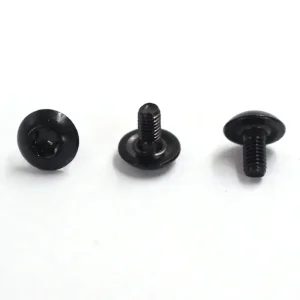
| Precision Electronics & Wearables | Medium Carbon Steel / Stainless 304 Ultra-Thin Waist Head | Electroless Nickel Plating + Pre-Applied Blue Nylon Patch | Zero back-out looseness under high-frequency operational vibration in ultra-thin profile enclosures. |
Yu-Huang Electronics executes full-process quality control across 20,000 square meters of production infrastructure in Dongguan, Shaoguan, and Wuhan, backed by global automotive and environmental certifications.
Every manufacturing step follows strict APQP, FMEA, and SPC protocols. From incoming rod spectroscopy to multi-stage cold-heading inspections, our plants run under verified automotive supply chain conditions.
Custom punch dies, header pins, and thread-rolling dies are fabricated in-house to maintain micron-level consistency. Automated rotary glass plate optical inspection systems check 100% of dimensions at up to 800 parts per minute.
Delivering to more than 60 countries across North America, Europe, and Asia-Pacific. We support custom barcode packaging, automated KANBAN replenishment, VMI (Vendor Managed Inventory), and DDP logistics terms.
The convergence of Industry 4.0 automation and lightweight multi-material joining is reshaping self-tapping fastener engineering through three clear technological trajectories.
Transitioning from periodic manual sampling to in-die piezoelectric sensor monitoring. Acoustic feedback detects heading stress variations, die wear, and micro-cracking in real time, stopping non-conforming blanks from ever reaching thread-rolling machines.
For ultra-high-strength automotive steels (UHSS) and multi-material aluminum-steel hybrid car bodies, next-generation fasteners feature high-speed friction-spin melt tips that create their own extruded bushing prior to tapping, eliminating pre-punched pilot holes.
Eliminating heavy-metal baths completely via dry electrostatic zinc flakes and thin-film nanoceramic barriers. These reduce processing energy consumption by 35% while providing self-lubricating properties with controlled friction coefficients (μ = 0.10–0.15).
In-depth answers addressing metallurgical specifications, hydrogen embrittlement validation, thread-geometry selection, and custom drawing lead times.
Thread Forming screws (like PT or trilobular fasteners) displace material without cutting chips, making them ideal for thermoplastics and ductile sheet metals where strong retention is needed. Thread Cutting screws feature cutting flutes that carve out mating threads, ideal for rigid, brittle plastics or cast metals. Thread Drilling (self-drilling) screws have an integrated fluted point that bores a pilot hole and taps threads in a single continuous drive operation.
Any electroplated carbon steel fastener hardened past 320 HV or Class 8.8 equivalent undergoes controlled de-embrittlement baking. Parts are transferred into convection ovens within 4 hours of electroplating, baking at 200°C–220°C for at least 4 to 8 hours depending on nominal diameter. Compliance is confirmed via stress-rupture testing under tightening torque for 48 hours without fracture.
Yes. Our in-house tooling division engineers multi-station header dies and thread rolling dies directly from client 2D drawings (DWG, DXF, PDF) or 3D CAD models (STEP, IGES). We routinely produce custom security drives (Torx Plus tamper-proof, triangular, five-lobe), metric/inch combination threads, and custom under-head seal grooves.
Standard design feasibility reviews are returned within 24 hours. Custom die tooling and first-article prototype samples are completed in 7 to 10 working days. Full mass-production runs typically take 2 to 4 weeks depending on batch volume, secondary heat treatment schedules, and special plating requirements.
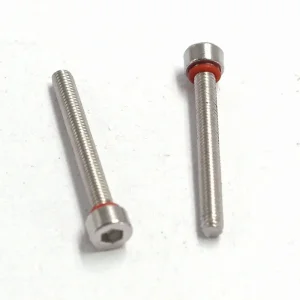
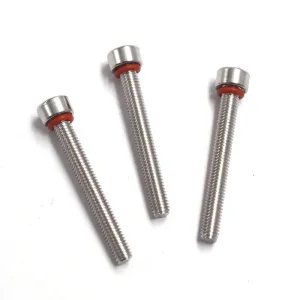
Pre-applied microencapsulated nylon patches supply prevailing torque against joint vibration, exceeding DIN 267-27 anti-loosening standards without damaging internal thread mating. For sealing, vulcanized EPDM or under-head fluorosilicone O-rings compress during clamp preload, achieving IP67/IP68 hermetic seals that isolate joints against moisture, oils, and gases.
Specialty thread-forming, waterproof sealing assemblies, and vibration-proof fasteners produced to global ISO/DIN/JIS/ANSI standards.