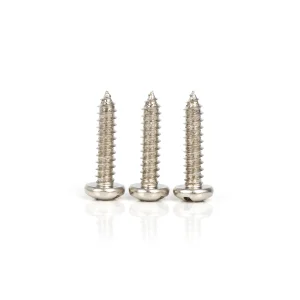
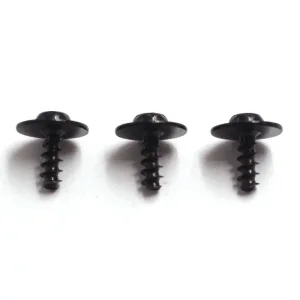
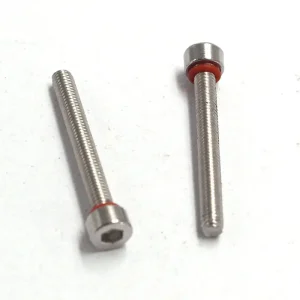
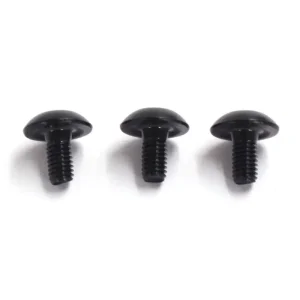
Explore our high-speed, automated assembly solutions. Each screw features pre-assembled, free-spinning captive washers designed to eliminate loose components, accelerate takt times, and ensure consistent clamp-load retention under extreme automotive vibration cycles.
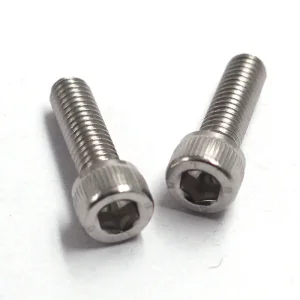
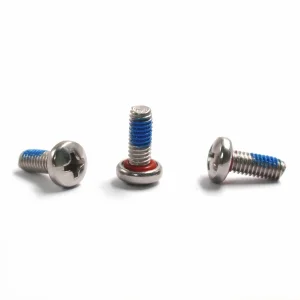
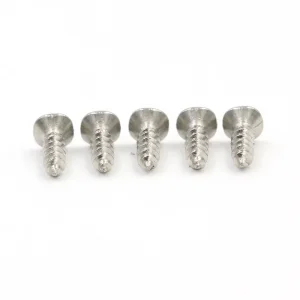
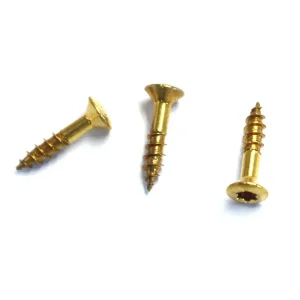
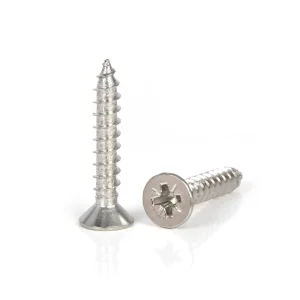
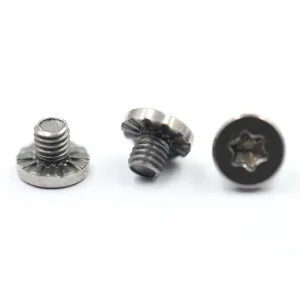
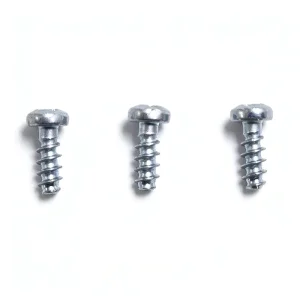
SEMS screws (derived from "Pre-asSEMbled" screws and washers) represent an indispensable class of engineered fasteners in automotive Tier-1 manufacturing. By permanently integrating single, double, or multi-component washer geometries onto the unthreaded screw blank prior to thread rolling, the resulting fastener provides superior structural preload control and friction management.
The washer internal diameter is engineered specifically to be larger than the screw shank diameter prior to rolling, yet substantially smaller than the rolled major thread diameter (d_maj). This guarantees that the washer remains captive without restricting free axial rotation, eliminating assembly line component dropouts and automated feeder jams.
Achieving predictable clamp force (F_M) depends critically on managing under-head bearing friction (μ_b) and thread friction (μ_th). Through automated chemical immersion, zinc-nickel plating, and micro-encapsulated topcoats, our automotive SEMS screws guarantee a tight friction window of μ = 0.12 ± 0.02 according to ISO 16047 and VDA 235-101.
Automotive powertrains and electronic control units undergo substantial thermal expansion differential (Δα). By incorporating conical spring (Belleville), curved, or serrated toothed washers, our SEMS assemblies provide essential joint compliance, storing elastic strain energy that prevents looseness caused by settling and thermal relaxation.
In high-volume automotive manufacturing, supplier selection dictates both assembly line efficiency and long-term joint safety. Operating within the Greater Bay Area industrial corridor (Dongguan, Shaoguan, and Wuhan), our manufacturing facilities deliver unmatched economies of scale, rigorous metallurgic control, and full supply chain integration.
Every cold-heading coil wire (ranging from SCM435, 10B21, 35K, to SUS304 and SUS316 austenitic stainless steel) is procured directly from certified primary mills (such as Baosteel and Xingtai Iron & Steel). Incoming lots undergo 100% spectral chemical analysis, eddy-current surface crack detection, and spheroidal annealing checks to ensure absolute microstructural homogeneity.
By controlling wire drawing and phosphate skin-pass coating in-house, we eliminate heading-seam defects and micro-fissures in high-stress head-to-shank transitions (radii according to DIN 962 / ISO 4759-1 standards).
Our plant operates advanced multi-station high-speed progressive cold-heading machinery capable of producing complex automotive geometry variants: Torx (Hexalobular), Phillips-Tamper, external hex flange, and low-profile wafer heads with integrated under-head undercut recesses.
Automated inline washer assembling units feed flat (DIN 125 / ISO 7089), spring (DIN 127), internal/external tooth (DIN 6797 / DIN 6798), and Belleville conical spring washers at speeds of 250 to 500 parts per minute prior to high-precision thread rolling, guaranteeing captive integrity with zero risk of mechanical detachment.
For high-tensile property classes (Property Class 8.8, 9.8, 10.9, and 12.9 according to ISO 898-1), precision heat treatment is paramount. Our mesh-belt continuous quenching and tempering furnaces operate under protective endothermic atmospheres, fully certified to AIAG CQI-9 special process requirements.
Immediately following acid pickling and electro-galvanic surface processing, fasteners undergo mandatory hydrogen de-embrittlement baking at 200°C–220°C for 4 to 24 hours (governed by DIN 50969 and ISO 15330 stress-rupture testing), eliminating the risk of catastrophic delayed brittle fractures under vehicle operational load.
Automotive automated nut-running robotic cells will fault out if a single deformed thread or missing washer enters the feed chute. To maintain a defect rate < 15 PPM (parts per million), 100% of finished automotive SEMS inventory passes through multi-camera glass rotary sorting machines.
Sensors inspect 18 discrete parameters in milliseconds: total length, thread pitch, head concentricity, recess depth, washer presence, washer free-spin clearance, burrs, and metallurgical case-depth via eddy-current probes.
The transition toward New Energy Vehicles (NEVs), intelligent cockpits, and lightweight multi-material chassis architectures is reshaping automotive fastener engineering. Fasteners are no longer simple mechanical connectors; they are engineered multifunctional nodes fulfilling electrical conductivity, environmental sealing, and galvanic isolation roles.
Electric vehicle traction battery enclosures require hermetic IP67/IP69K sealing against moisture, electrolyte fumes, and dust ingress. Traditional liquid gaskets often suffer displacement under automated driving vibration.
Macro Engineering Solution: Development of SEMS screws pre-assembled with vulcanized EPDM or fluorosilicone sealing rings mechanically bonded into an engineered head recess. Under torque, the captive elastomer compresses symmetrically without extrusion, providing sustained dielectric isolation and zero leak-path over 10-year vehicle life cycles.
Lightweight vehicle bodies combine high-strength steel (UHSS), magnesium die-castings, carbon-fiber reinforced polymers (CFRP), and extruded 6000-series aluminum. Coupling carbon steel screws directly with aluminum creates aggressive galvanic corrosion cells.
Macro Engineering Solution: Multi-layer Zinc-Nickel (Zn-Ni 12-15% Ni) electroplating paired with high-molecular non-conductive passivates and organic topcoats. SEMS screws feature wide-diameter non-conductive captive washers that isolate electrical potential differentials, maintaining structural integrity past 1,500 hours of neutral salt spray testing (ASTM B117).
With high-performance computing (HPC) domains, LiDAR sensors, millimeter-wave radar, and automotive camera modules operating in close proximity, Electromagnetic Interference (EMI) and Radio Frequency Interference (RFI) must be grounded reliably through chassis contact points.
Macro Engineering Solution: SEMS screws fitted with internal or external claw-toothed lock washers (DIN 6798). During installation, the hardened teeth bite through anodized oxide coatings or e-coat paint on bracket surfaces, establishing micro-ohm contact resistance for robust electrical grounding and noise suppression.
| Washer Combination Type | Primary DIN / ISO Reference | Primary Automotive Function | Typical Automotive Vehicle Location | Preload Retention Index |
|---|---|---|---|---|
| Conical Spring (Belleville) SEMS | DIN 6908 / ISO 10673 Form S/VS | High spring force compensation against thermal relaxation | Exhaust manifolds, turbocharger brackets, EV busbars | Ultra High (>95%) |
| Double Washer (Spring + Flat) SEMS | DIN 6905 / DIN 6907 Combination | Load distribution across soft metal + anti-loosening spring | Alternator brackets, starter motors, transmission housings | High (85-90%) |
| Serrated Tooth (External/Internal) SEMS | DIN 6906 / DIN 6907 Tooth | Paint-piercing electrical grounding & anti-vibration lock | Inverter ECU chassis, ADAS sensor mounts, battery casing ground | Moderate-High |
| Integrated Elastomer O-Ring SEMS | Custom OEM / ISO 6149 Interface | IP68/IP69K environmental gas & liquid hermetic seal | EV battery cover trays, coolant distribution manifolds | Sealing Focused |
| Plain Flat Washer (Wide OD) SEMS | DIN 6902 / ISO 10644 Form A/B | Stress redistribution over slotted plastic or aluminum holes | Automotive door modules, instrument panel frames, plastic trims | Moderate (Stress Relief) |
SEMS screws find diverse application throughout commercial and passenger vehicle platforms. Because vehicle systems operate in vastly differing environmental, mechanical, and electrical conditions, specific head geometries, materials, and washer pairings must be specified for each critical joint.
Within integrated e-Axles, inverters, and reduction gearboxes, fasteners operate in continuous oil-spray environments while exposed to electromagnetic high-frequency vibration.
Specification: Property Class 10.9 Torx pan-head SEMS with case-hardened conical Belleville washers. Pre-applied nylon micro-encapsulated locking patches (such as Scotch-Grip or Precote 85) ensure double mechanical and chemical locking against dynamic reverse harmonics.
Lithium iron phosphate (LFP) and nickel manganese cobalt (NMC) battery pack internal modules rely on copper busbars carrying direct current upward of 400A–800A.
Specification: SUS304 or Class 8.8 tin-plated / silver-plated pan-head SEMS fitted with captive copper or brass flat washers. The captive interface ensures low contact resistance (< 0.5 mΩ) preventing localized thermal accumulation while eliminating loose assembly washers that could cause short circuits.
Modern electrical architectures require dozens of critical negative grounding points connected to the vehicle unibody steel frame or cast subframes.
Specification: Hexagon head SEMS with aggressive external star tooth captive lock washers. Finished with high-durability Dacromet or Geomet 500B with an integrated lubricating topcoat to ensure paint-scratching grounding performance combined with over 720 hours salt spray resistance.
Instrument clusters, display mounts, center consoles, and acoustic insulation panels feature soft thermoplastics (ABS, PC-ABS, PP) vulnerable to local creep cracking under bolt bearing stress.
Specification: Low-profile cross-recess or Torx pan-head self-tapping thread-forming SEMS screws with oversized, smoothed outer diameter flat washers to reduce localized contact pressure under 25 MPa, completely mitigating interior rattles and squeaks.
Forward-facing cameras, ultrasound sensors, and LiDAR brackets must preserve absolute positional alignment without micro-angular movement during rough road traversal.
Specification: Precision cold-formed stainless steel 304/316 or anti-magnetic A2-70 Torx drive SEMS screws with captive spring-washer/plain-washer combinations, maintaining calibration offsets below 0.05 degrees across the full -40°C to +105°C operating range.
Underbody panels are subject to high-velocity stone chipping, standing road water, winter de-icing salts (magnesium and calcium chloride), and wind turbulence.
Specification: Carbon steel Class 8.8 with thick zinc-flake coating (black or silver finish) and an integrated extra-wide captive flange washer, allowing rapid air-gun disassembly during maintenance while preventing washer loss in repair bays.
In the automotive supply ecosystem, parts failure directly translates to vehicle recalls. YH Fastener strictly adheres to international automotive quality management systems, managing risk across the entire product lifecycle via the Five Core Tools: APQP, FMEA, MSA, SPC, and PPAP.
For all automotive OEM and Tier-1 custom projects, we deliver comprehensive Production Part Approval Process (PPAP Level 3) validation packages prior to serial mold release. This includes:
To service European, American, and Japanese vehicle manufacturers, our operational management reflects German VDA 6.3 standards across stages P2 through P7:
Global procurement teams at automotive OEMs and contract manufacturers evaluate component cost through a holistic lens. The initial invoice purchase price of an automotive fastener represents less than 15% of the total cost of fastening; assembly labor, feed downtime, and quality re-work dominate total joint expenditure.
Manual assembly of loose flat and spring washers requires two hand actions per fastening point. SEMS screws eliminate loose washer handling completely, reducing operator cycle time by 2.5 to 4 seconds per fastener, or unlocking full automation via magnetic vacuum nut-runners without feed line stalls.
A single SEMS part number replaces three discrete inventory line items: the machine bolt, the spring lock washer, and the flat washer. This consolidation slashes purchase order overhead, warehouse shelf bins, supplier audits, and invoice processing costs across enterprise ERP systems.
In high-liability areas such as steering column linkages, brake calipers, and battery trays, an operator missing a split lock washer causes joint relaxation and critical safety failures. SEMS fasteners provide absolute structural assurance that every required washer geometry is securely torqued into the joint.
Comprehensive engineering clarifications on captive mechanics, thread tolerances, friction management, and manufacturing specifications for automotive design engineers and global procurement managers.
The manufacturing process relies on an engineered sequence. The screw blank is cold-headed with an unthreaded shank diameter precisely calibrated to the thread pitch diameter (d_pitch). The washer is manufactured with an internal hole diameter (d_hole) slightly larger than this shank diameter, allowing it to slide freely onto the blank. The assembly is then transferred into a high-speed cylindrical or flat thread-rolling die machine. During rolling, material is displaced outwardly to form the major thread diameter (d_maj). Because d_maj is substantially larger than d_hole, the washer becomes permanently captive under the screw head while maintaining free axial rotation.
Automotive joint integrity under dynamic shear vibration is predominantly evaluated using the Junkers Transverse Vibration Test according to DIN 65151 / ISO 16130. During this test, a bolted joint assembly is subjected to cyclical transverse displacements perpendicular to the bolt axis at 12.5 Hz. A dynamic load cell plots clamp load retention over 1,000 to 2,000 cycles. Standard machine screws lose 100% preload rapidly; high-performance SEMS screws equipped with conical Belleville or serrated lock washers preserve between 75% and 92% of their initial tightening clamp load.
Hydrogen embrittlement poses severe risk in fasteners hardened above 320 HV (Class 8.8 and higher, particularly Class 10.9 and 12.9). At YH Fastener, we mitigate this risk through several controls: first, utilizing non-electrolytic zinc flake coatings (such as Geomet, Dacromet, or Magni) that do not generate nascent hydrogen during application; second, when electroplating zinc or zinc-nickel is mandatory, parts undergo immediate baking at 200°C–220°C for 4 to 24 hours within 1 to 4 hours of plating. Batch validation is conducted per ISO 15330 via sustained load wedge-tensile testing under 75% ultimate tensile strength for 48 consecutive hours with zero fracture.
For automated robotic torque-controlled or torque-angle assembly lines, YH Fastener controls the coefficient of friction strictly within μ = 0.12 to 0.18 (standard target μ = 0.14 ± 0.02) in compliance with VDA 235-101 and ISO 16047. This is achieved through proprietary chemical immersion topcoats and automated wax/lubricant dosing (such as Gleitmo or Torq-Tite). This tight friction window prevents automated driver stall-outs, thread stripping in cast aluminum housings, or insufficient clamping force.
Yes. Double-washer SEMS screws (often designated under DIN 6905 or DIN 6907 combinations) are widely used in automotive powertrain and chassis manufacturing. In this configuration, a helical spring split washer or conical washer is positioned adjacent to the screw head, followed by a wide-diameter plain flat washer beneath it. The flat washer spreads the clamp load across softer mating surfaces (such as plastic brackets or aluminum alloy housings), preventing surface damage, while the spring washer maintains elastic compliance against joint loosening.
Stainless steel SEMS (SUS304 / A2-70, SUS316 / A4-80) offer intrinsic, uniform corrosion resistance throughout the fastener body without relying on a surface barrier layer, making them suitable for exposed exterior trim, exhaust sensors, and marine environments. However, stainless fasteners have lower yield strengths compared to Class 10.9 alloy steel and are prone to thread galling during high-speed automated installation if not properly coated with anti-seize waxes. Coated carbon steel (Class 8.8, 10.9, 12.9 with Zn-Ni or zinc flake) delivers much higher yield strengths and clamp loads, ideal for structural and powertrain joints, but relies on coating integrity to prevent base-metal corrosion.
For custom automotive SEMS screws built to 2D/3D client prints, standard production MOQs range from 50,000 to 200,000 pieces depending on thread diameter (M2 to M12). Prototype tooling and PPAP Level 3 initial sample inspection reports (ISIR) are typically delivered within 15 to 25 business days. Full-scale containerized volume production runs ship within 4 to 6 weeks. Blanket order release arrangements with localized consignment inventory buffer stock are available for qualified long-term Tier-1 supply contracts.
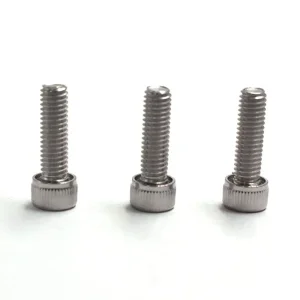
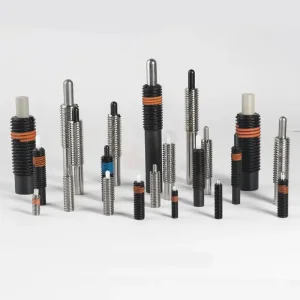
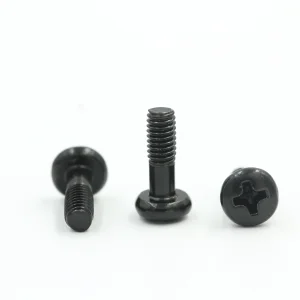
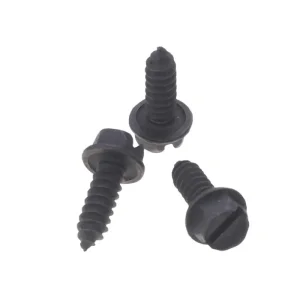
Explore our specialized range of high-precision machine screws, spring plungers, multi-head self-tapping fasteners, and IP67 waterproof sealing assemblies. Built to international standards (DIN, ISO, ASME, JIS) and custom OEM mechanical blueprints.