Precision Cold-Forging, Advanced Thread-Forming Geometries, and High-Throughput Manufacturing for Global Thermoplastic Assembly and Heavy-Duty Structural Enclosures.
Engineered to mitigate boss burst, optimize thread engagement, and deliver superior pull-out resistance across mission-critical assemblies.
A deep dive into thread geometry mechanics, radial hoop stress mitigation, and cold-forged carbon steel microstructures.
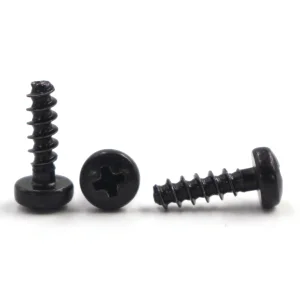
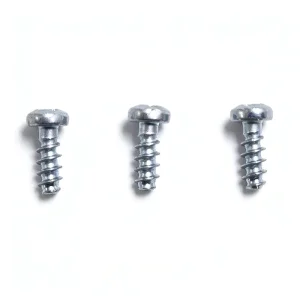
Traditional 60° tapping fasteners exert intense radial forces, inducing micro-cracks in low-ductility polymers. The specialized 30° profile of the PT screw redirects displacement axial-wise:
Fabricated from premium cold-heading quality (CHQ) carbon steel grades (1018, 1022A, 10B21), subjected to modern vacuum carburizing and tempering:
Thermoplastics exhibit viscoelastic flow and relaxation under sustained thermal cycling. PT thread design traps polymer mass inside wide thread pitches:
How Tier-1 automotive integrators, renewable energy engineers, and consumer electronics OEMs are rethinking fastener standardization.
High-voltage battery enclosures, inverter control brackets, and BMS housings increasingly rely on lightweight glass-fiber reinforced polymers (GF-PBT, PA66-GF30). Procurement requirements mandate:
Rugged outdoor 5G micro-stations and smart utility gateways demand high mechanical strength at miniaturized scale (M1.4 to M3.0 sizes):
Factory automation actuators, conveyor sensors, and lightweight end-effectors combine metal brackets with engineering plastics:
Combining Dongguan's manufacturing agility with IATF 16949-certified quality systems to protect global enterprise supply channels.
Automated high-speed multi-station headers shape carbon steel wire without cutting grain lines, ensuring maximum head-to-shank structural integrity.
High-precision cylindrical dies generate continuous PT profiles, smoothing root radii to prevent micro-notches that could propagate fatigue cracks.
High-resolution CCD optical vision machines verify 100% of fastener pitch, recess depth, shank straightness, and total length at 800 pcs/min.
From raw coiled steel heat numbers to furnace quenching logs and electroplating bath telemetry, all metrics are stored digitally for over 10 years.
Standardized parameters, test thresholds, and material capabilities engineered for precision assembly validation.
| Engineering Parameter | Technical Baseline / Specification Standard |
|---|---|
| Standard Thread Form | PT Profile (30° Flank Angle, Asymmetric Deep Pitch Geometry) / WN 1412 / WN 1411 Standard |
| Material Grades | AISI 1018, 1022A, 10B21 Boron Steel, SCM435 Alloy Steel, SUS304 / SUS316 Stainless Options |
| Drive Mechanism | Phillips Cross Recess (Type H), Pozi (Type Z), Torx / 6-Lobe Tamper-Resistant Security Drives |
| Surface Protection | Eco-friendly Trivalent Zinc (Clear/Yellow/Black), Zinc-Nickel Alloy (12-15% Ni), Electrophoresis, Geomet, Dacromet |
| Heat Treatment | Continuous Mesh-Belt Controlled Carburizing, Carbonitriding, Deep Quenched & Stress Relief Tempering |
| Case / Core Hardness | Surface Case: 450 - 550 HV0.3 | Core Hardness: 280 - 380 HV10 (28 - 38 HRC) |
| Substrate Compatibility | Thermoplastics: ABS, PA6, PA66-GF30, PC, POM, PBT, Polypropylene, PMMA, and Composite Polymers |
| Quality Certifications | IATF 16949:2016, ISO 9001:2015, ISO 14001:2015, PPAP Level 3 Compliant, Full Optical Sorting |
Selecting the optimal fastener drive, heat treatment, and finish profile based on resin characteristics.
Characterized by notch sensitivity and lower elastic limits. PT screws eliminate dangerous stress spikes:
These polymers possess high toughness and friction coefficients during dynamic thread forming:
Abrasive glass fibers rapidly dull conventional carbon steel tapping threads, leading to high torque:
Direct technical answers addressing validation, tooling life, fastener design, and international logistics.
Standard self-tapping screws utilize a 60° flank angle which generates high outward radial stress, frequently causing structural boss rupture in thermoplastics. The Phillips PT screw features a specialized 30° flank profile that directs forces axially. This reduces hoop stress by over 45%, increases thread contact depth, and delivers significantly higher strip-to-drive torque ratios.
High-strength carbon steels can absorb atomic hydrogen during acid pickling and electroplating, resulting in catastrophic brittle failures under tension. Our production line applies strict electroplating baking cycles (200°C - 220°C for 4 to 8 hours immediately post-plating) and uses fine-grain Boron/1022A steels to de-gas hydrogen, guaranteeing zero delayed fractures in high-stress assemblies.
Yes. Under our IATF 16949 quality system, we supply complete PPAP Level 3 packages including Design/Process FMEA, Control Plans, Process Capability Studies (Cpk ≥ 1.67), Material Mill Certificates, Plating Thickness Salt Spray Reports, IMDS submissions, and Full Dimensional Measurement layouts.
The ideal pilot hole diameter generally corresponds to 0.8 × nominal screw diameter for unfilled plastics (ABS, PC), and up to 0.85 × nominal diameter for glass-filled polymers (PA66-GF30) to compensate for shear resistance. The external boss diameter is normally calculated as 2.0 to 2.5 × the screw's outer diameter. Our application engineering team delivers FEA stress projections for custom mold designs.
Browse our expanded catalog of factory-direct fasteners designed for machinery, outdoor electronics, and consumer hardware.