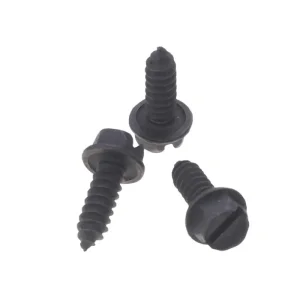
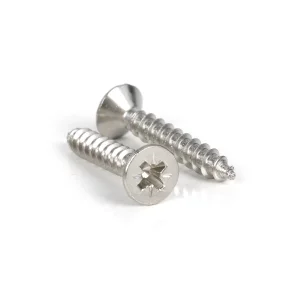
Industrial-grade screws engineered to strict hole diameters, pitch engagements, and substrate yield specifications.
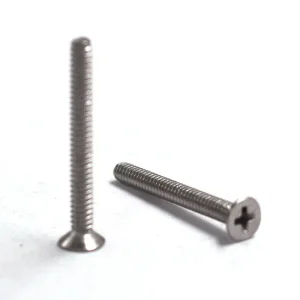
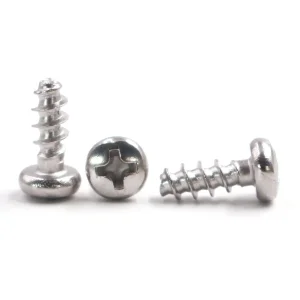
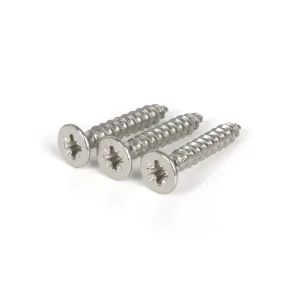
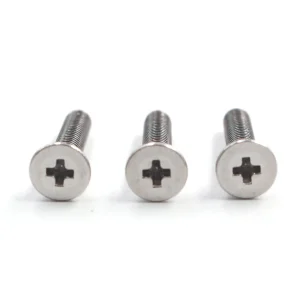
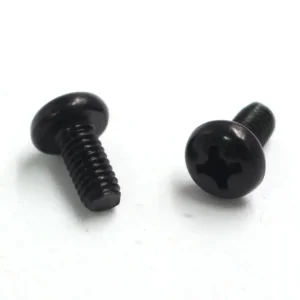
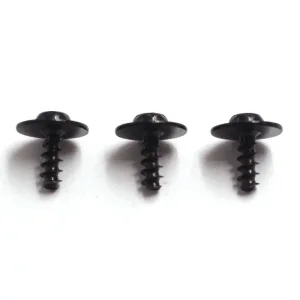
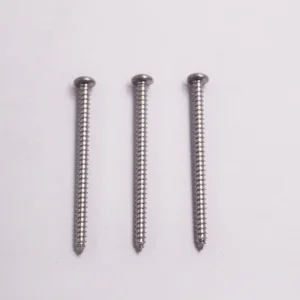
Accurate pilot hole specifications govern clamping yield, drive torque margins, stripping resistance, and cyclic fatigue life in high-volume automated fastening systems.
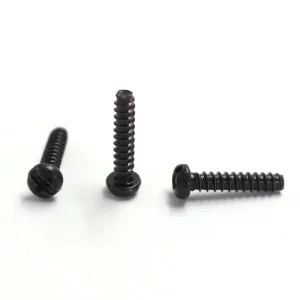
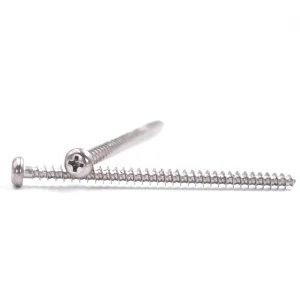
Thermoplastics such as ABS, PC, and PA66 require specialized 30° flank angle threads (e.g., PT screws). Standard pilot holes must match core pitch dimensions to avoid radial hoop stresses that cause environmental stress cracking (ESC). A factory recommendation for core pilot diameter typically sits at 0.8 × nominal screw diameter.
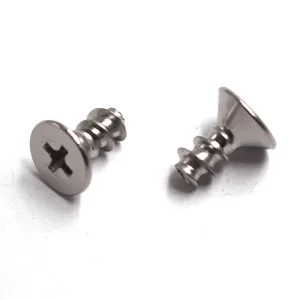
For thin sheet metal, selecting the correct punched or laser-cut pilot hole ensures proper material flow during thread forming. Under DIN 7981/7982 standards, insufficient pilot dimensions result in excessive driving torque, thread galling, and screw shank shearing before achieving proper clamp load.
Factory pilot-hole guidelines maintain a minimum 1:3 ratio between Installation Drive Torque ($T_d$) and Strip Torque ($T_s$). In precision automated screwdriving, this window prevents tool stalling while eliminating joint thread pull-out across million-unit OEM assembly runs.
| Nominal Size | Fastener Thread Type | Substrate Material | Recommended Pilot Diameter (mm) | Hole Depth Tolerance | Engineering Benefit |
|---|---|---|---|---|---|
| M2.0 | PT Thread Forming (30° Angle) | ABS / Polycarbonate | 1.60 ± 0.04 | 1.8 × Dia (3.6mm Min) | Eliminates micro-cracks in thin electronic casings |
| M3.0 | ISO Metric Fine / Coarse | Die-Cast ADC12 Aluminum | 2.50 + 0.05 / -0.00 | 2.0 × Dia (6.0mm Min) | Maximizes shear plane engagement in structural alloys |
| M3.5 | DIN 7981 / 7982 Type C | Cold Rolled Steel (SPCC 1.2mm) | 2.90 ± 0.05 | Through Hole | Balances thread-engagement surface without bit cam-out |
| M4.0 | High-Low Anti-Loosening Thread | Glass-Filled Polyamide (PA66-GF30) | 3.25 ± 0.05 | 2.2 × Dia (8.8mm Min) | Resists severe vehicular vibrational harmonics |
How Yu-Huang Fasteners leverages multi-site manufacturing to offer agile, end-to-end control from raw rod metallurgy to international multi-modal shipment.
Our tri-site infrastructure integrates 20,000 m² of specialized workshops. Dongguan specializes in high-precision micro screws for consumer electronics; Shaoguan manages high-tonnage multi-station cold heading for structural fasteners; Wuhan provides immediate support for automotive tier-1 ecosystems.
Unlike trading entities, our factories handle wire rod spheroidizing annealing, multi-die cold forming, high-speed thread rolling, heat treatment hardening, electrolytic plating (RoHS compliant), patch dispensing, and 100% CCD optical sorting within a unified quality framework.
Global procurement teams benefit from enterprise-grade inventory scheduling, barcoded batch tracking, PPAP Level 3 documentation, material test reports (MTR), and salt spray corrosion test verification according to ASTM B117 protocols.
Engineered for localized regional manufacturing standards, stringent chemical directives, and mission-critical hardware environments.
Compliance with IATF 16949 enables direct supply for electric vehicle battery enclosures, dashboard structural assemblies, and sensor module brackets requiring tight pilot-hole specifications to avoid relaxation under continuous harmonic resonance.
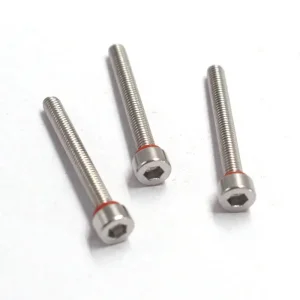
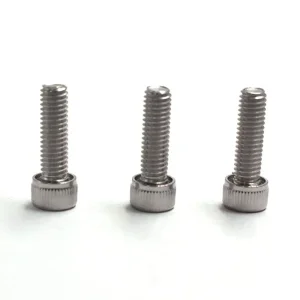
Under-head elastomer O-ring fasteners and 304/316 grade stainless steel screws guarantee leak-free containment and resistance to sterilization fluids in portable diagnostic monitors, meeting FDA bio-inertness and CE regulatory guidelines.
Every shipment is backed by chemical analysis certifying full conformity to EU RoHS Directive 2011/65/EU and REACH (EC 1907/2006). Surface finishes are strictly hexavalent-chromium-free (Cr6+ Free) with eco-friendly trivalent passivation or micro-encapsulated coatings.
The industrial manufacturing sector is transitioning rapidly toward automated screwdriving, micro-toleranced geometries, and advanced surface finishes.
With industrial robotics dominating assembly floors, fastener lead chamfers and pilot-hole entrance tapers (60° to 90° countersink) are being engineered with tighter tolerances to eliminate cross-threading during high-speed feeder delivery.
Traditional cross-recess drives are systematically transitioning to Torx Plus and tamper-proof security pin geometries, providing up to 25% higher driving torque without bit cam-out or metal debris generation in cleanroom assemblies.
The elimination of manual thread-locking fluids has spurred massive adoption of pre-applied polyamide patches and anaerobic micro-encapsulated adhesives, activating only upon pilot-hole thread engagement for consistent prevailing breakout torque.
Answers to critical questions asked by procurement managers, mechanical engineers, and quality assurance leads.
A pilot hole that is too small leads to excessive insertion torque, thread stripping, galling, or shank failure. Conversely, an oversized hole decreases root flank engagement, significantly reducing pull-out strength and allowing premature joint loosening under dynamic load conditions.
Yes. Our in-house tooling and die workshops design and cut thread-rolling dies specifically matched to your custom mold bosses or stamped metal gauges, verifying optimal drive-to-strip torque ratios via laboratory test batches before mass production.
All three production bases in Dongguan, Shaoguan, and Wuhan are fully audited and certified under ISO 9001 (Quality Management), ISO 14001 (Environmental Management), and IATF 16949 (Automotive Quality Management System).
Our dedicated sales engineering department evaluates complete 2D/3D CAD models, dimensional prints, and material specifications within 24 hours, returning comprehensive DFM feedback, process routing, and competitive factory-direct pricing.
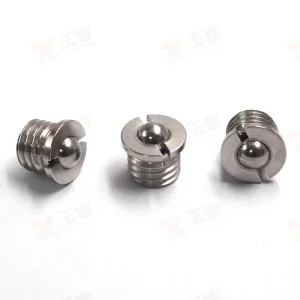
High-precision micro screws, multi-material fasteners, and specialized positioning plungers available for volume contract manufacturing.