Engineered cold-headed fasteners, micro-encapsulated thread profiles, and specialized industrial machine components factory-direct from Dongguan.
Analyzing modern mechanical self-loosening mechanisms, prevailing-torque engineering, and supply-chain efficiency standards.
Under repeated transverse vibration—as identified in standard Junker testing (DIN 65151)—conventional hex fasteners experience cyclical micrometric slipping at the thread flanks and bearing interface. Once transverse displacement overcomes frictional resistance, preload drops to near-zero within hundreds of cycles. Anti-vibration hex systems counter this by maintaining prevailing torque or utilizing mechanical interlocking wedges.
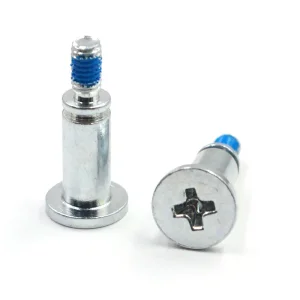
Modern wholesale anti-vibration hex bolts and screws incorporate mechanical deformation (all-metal crimped collars, ovalized lock nuts) or chemical coatings (pre-applied polyamide/nylon patches, micro-encapsulated anaerobic resins). These engineering treatments establish a controlled, resilient interference fit that guarantees specified locking torque even in unseated conditions.
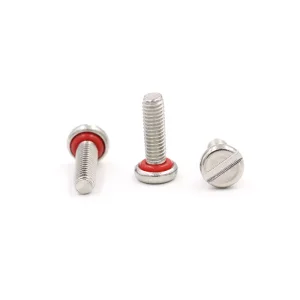
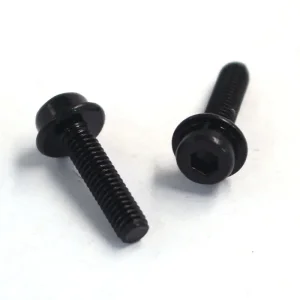
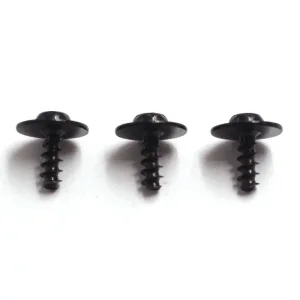
Serrated hex flange fasteners redistribute compressive clamping stress across a broader surface area while introducing directional teeth that embed microscopically into mating metal surfaces. Integrated SEMS configurations combine hardened conical spring washers (Belleville washers) directly onto the hex shank prior to thread rolling, guaranteeing perpetual dynamic elasticity.
The global demand for anti-vibration hex fasteners has accelerated exponentially due to rapid electrification in automotive transportation, high-speed rail infrastructures, offshore renewable energy installations, and heavy robotics. In mission-critical assemblies, fastener backout isn't merely a maintenance inconvenience—it represents catastrophic structural risk, unplanned downtime, and massive warranty liabilities.
Original Equipment Manufacturers (OEMs) and Tier-1 procurement teams across North America, Germany, Japan, and Scandinavia have shifted from generic standard fasteners (DIN 933 / ISO 4017) to specialized anti-loosening assemblies tailored to specific thermal cycles, galvanic conditions, and harmonic resonance frequencies.
Operating across Dongguan, Shaoguan, and Wuhan, Yu-Huang Electronics Dongguan Co., Ltd. (YH Fastener) demonstrates the undeniable operational efficiency of China’s mature precision fastener supply chain:
Understanding which anti-loosening technology suits a specific operational envelope is critical for industrial system designers:
| Fastener Architecture | Vibration Resistance (Junker Test) | Reusable Cycles | Temperature Range | Cost Efficiency |
|---|---|---|---|---|
| Pre-Applied Nylon Patch Hex Screw | Excellent (Maintains Prevailing Torque) | 3 to 5 Cycles | -50°C to +120°C | High (Best for High-Volume OEM Lines) |
| Serrated Flange Hex Bolt (DIN 6921) | Moderate to High (Depends on Surface Hardness) | Single to Low Reusability (Damages Mating Plane) | -60°C to +300°C | Extremely Economical |
| Captive Belleville Washer SEMS Screw | Superior (Continuous Clamping Preload Elasticity) | Multiple Reuses | -60°C to +250°C | High (Cuts Manual Assembly Labor) |
| Micro-Encapsulated Chemical Adhesive Patch | Maximum (Forms Cured Anaerobic Bond) | Single Use (Requires Re-application) | -40°C to +150°C | Moderate to Premium |
Where anti-vibration hex fasteners safeguard operational continuity across worldwide engineering disciplines.
Battery enclosures, drive inverters, and high-voltage busbars subjected to continuous harmonic roadway micro-vibrations and thermal expansion stress cycles.
High-speed pick-and-place end effectors, articulating six-axis robot arms, and pneumatic servo gantries vibrating under rapid acceleration and deceleration.
Bogie frames, braking system sub-assemblies, and heavy suspension links where dynamic axial shock loads require IATF 16949-grade lot traceability.
Structural tracker mounts, wind turbine pitch actuators, and transformer housings exposed to turbulent wind gust resonance and salt-spray corrosion.
Essential quality gates, material selections, and testing specifications required by tier-one supply chains.
Verify whether the assembly environment calls for Carbon Steel Class 8.8, 10.9, or 12.9, or austenitic stainless steels like SUS304 / SUS316. High-tensile hex bolts must have controlled decarburization depths and strict hydrogen embrittlement relief baking post-electroplating.
For nylon patch anti-vibration hex fasteners, specify the application wrap angle: standard 90°–180° patch for moderate prevailing torque, or complete 360° encapsulation when combined fluid sealing and maximum loosening resistance are required.
Global logistics demand zero grey-zone quality. Ensure your wholesale fastener manufacturer provides full 3.1 Material Test Reports, PPAP Level III documentation, RoHS/REACH statements, and calibrated optical sorting certificates for PPM defect rates below 10.
Expert engineering insights for procurement directors, product developers, and fastener specialists.
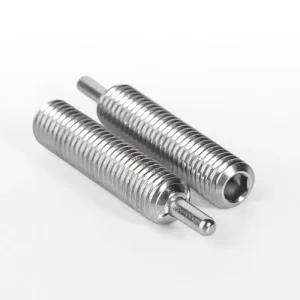
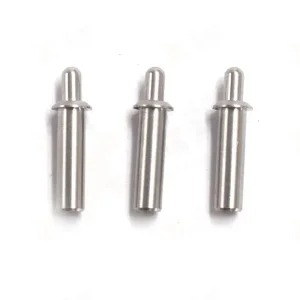
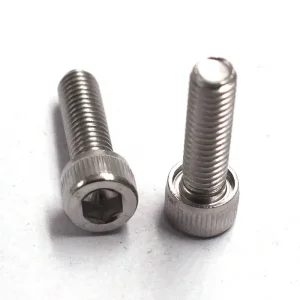
OEM customized spring plungers, precision metric socket screws, and advanced anti-loosening hardware built to global industrial standards.