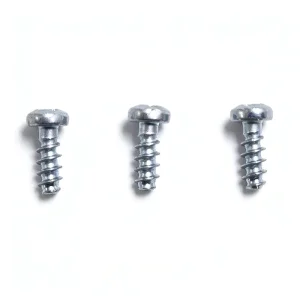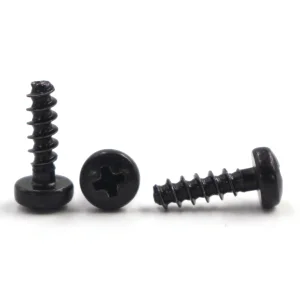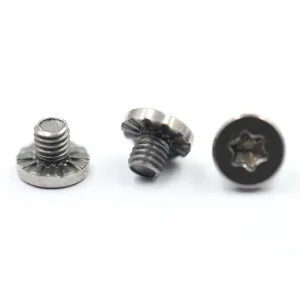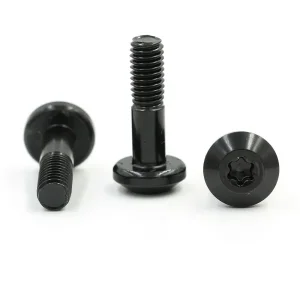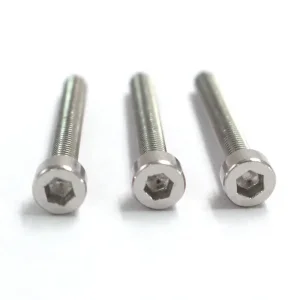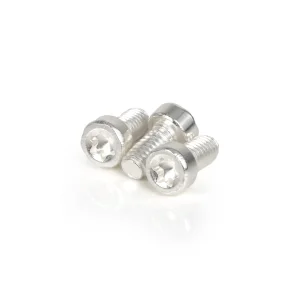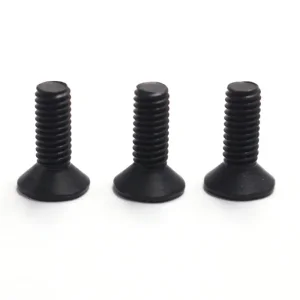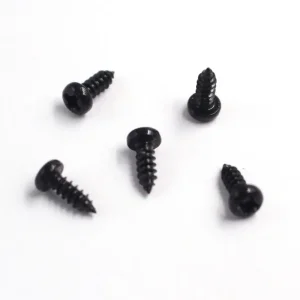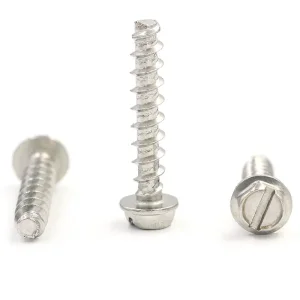
Dimensional tolerances verified via automated laser telemetry to guarantee zero-jam operation in multi-axis blow-feed and vacuum pick-and-place high-speed lines.
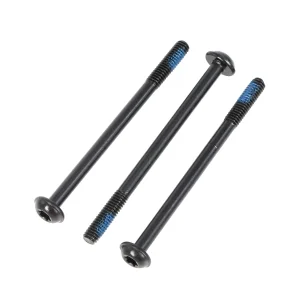
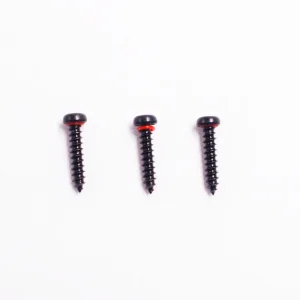
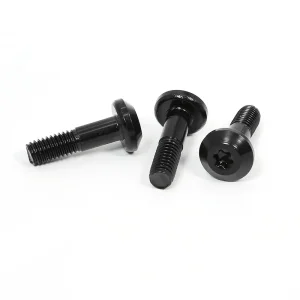
In the transition from manual batch processes to autonomous continuous production, automated fastening architecture sits squarely at the intersection of kinematic robotics, servo screwdriving, and material science.
High-speed automated production demands absolute shank straightness, flash-free recessed drives, and exact head concentricity. Any flashing or head angle variance above ±0.02mm creates feed-chute jamming, generating micro-stoppages that compromise Overall Equipment Effectiveness (OEE).
Modern semi-automatic and high-speed multi-axis lines utilize closed-loop DC electric nutrunners. Our precision fasteners feature strictly controlled thread profiles and friction coefficients (μ = 0.10 - 0.15), ensuring the angle-to-yield and torque-to-clamp slope correlates precisely with algorithmic tightening strategies.
High-speed driving (exceeding 1200 RPM) triggers localized frictional heat that induces galling, particularly in austenitic stainless steels (SUS304/SUS316). We utilize specialized dry-film wax coatings and customized zinc-nickel thermal treatments to resist surface degradation during instantaneous torque ramp-up.
Selecting the optimal manufacturing layout requires balancing batch changeover agility, capital investment (CAPEX), cycle time constraints, and quality assurance topologies.
| Evaluation Parameter | Manual Fixtured Stations | Semi-Automatic Hybrid Workcells | High-Speed Autonomous Lines |
|---|---|---|---|
| Cycle Time per Fastener | 3.5 – 6.0 seconds | 1.2 – 2.0 seconds | 0.3 – 0.8 seconds (Synchronous / Multi-spindle) |
| Fastener Delivery Method | Manual pick-and-orient / Magnetic tray | Pneumatic blow-feed / Handheld screw presenter | Fully integrated multi-track vibratory / step feeder with vision check |
| Torque & Clamping Control | Pneumatic clutch / Mechanical slip check | Digital transducer DC tools with P/F signaling | Multi-channel synchronous servo drives with continuous angle-torque curve logging |
| Process Error Handling (Poka-Yoke) | Operator vigilance (High risk) | Light curtains, part seating sensors, thread runout detection | AI optical vision inspection, real-time depth profiling, automated eject chutes |
| Fastener Geometric Sensitivity | Tolerant of minor burrs and length variances | Moderate; requires DIN/ISO Class 6g thread accuracy | Extremely sensitive; requires 100% optical sorting, burr-free recesses, Cpk > 1.67 |
| Optimal Production Volume | < 50,000 units/year (High-mix, low-volume) | 50,000 – 500,000 units/year (Flexible platforms) | > 500,000 units/year (Standardized mass production) |
Operating a multinational manufacturing footprint across North America, Europe, and Asia requires strict adherence to international material safety standards and robust supply chain resilience.
Our production facilities maintain complete compliance with IATF 16949 standards. For OEM assembly line integration, we provide full Production Part Approval Process (PPAP) Level 3 documentation, including Failure Mode and Effects Analysis (FMEA), Process Flow Diagrams, and Control Plans that protect against assembly stoppages.
Every alloy heat, coating chemistry, and organic thread-locking compound is thoroughly screened for environmental and human safety. Full compliance is maintained with EU RoHS Directive 2011/65/EU and REACH (EC 1907/2006) SVHC declarations, securing smooth customs clearance and regulatory compliance for tier-one exporters.
Through our distributed regional staging hubs and international logistics partnerships across the US, Germany, Mexico, and Vietnam, we support Vendor Managed Inventory (VMI) and Kanban two-bin replenishment models, drastically reducing transit lead times and line disruption risks.
Precision fasteners represent under 1% of total bill-of-materials cost, yet account for over 45% of unexpected production downtime when feeder jams occur. Below are three engineered deployments resolving complex assembly bottlenecks.
Challenge: An automated chassis enclosure line was experiencing a 2.4% jamming rate during pneumatic blow-feed insertion of M2.5 fine-thread screws, halting the robotic line multiple times per shift.
Solution: We engineered custom radius-lead pilot tips on our fine-thread stainless screws and instituted 100% optical sorting for drive concentricity, completely eliminating blow-tube jams and raising station throughput by 18%.
Challenge: High-speed screwdrivers fastening battery casing covers encountered stripping in cast aluminum housings, alongside sealing failures against IP67 ingress testing.
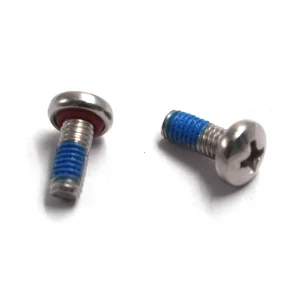
Solution: Provided SEMS pre-assembled sealing fasteners incorporating vulcanized EPDM/aluminum composite washers with pre-applied microencapsulated thread-locking chemical patches. Clamp loads remained rock-solid across 2,000 thermal vibration cycles.
Challenge: Semi-automated robotic arms frequently cammed out while installing micro self-tapping screws into delicate glass-filled polycarbonate housings, resulting in cosmetically rejected products.
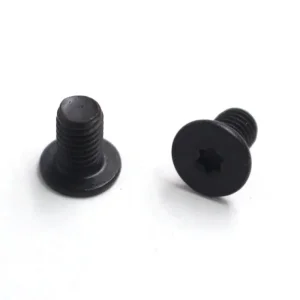
Solution: Shifted driver recess specifications from traditional Phillips to deep-engagement Torx Plus (six-lobe) drive heads paired with special thread-forming profiles for engineered plastics. Driver bit life improved by 400%, and cam-out fell to zero.
The convergence of generative edge computing, embedded sensors, and advanced cold-heading metallurgy is defining the next generation of smart manufacturing lines.
Integrating micro piezo-resistive thin films into fastener heads allows continuous structural clamp-force monitoring throughout assembly lifecycle and field service, feeding digital twins real-time joint stress telemetry.
Edge AI controllers evaluate seating torque curves at microsecond intervals, self-adjusting motor RPM in real-time to prevent thread galling, compensate for thermal expansion, and eliminate stripping risks across composite stacks.
Deployment of advanced multi-principal component alloys for high-strength miniature fasteners, delivering exceptional tensile strengths (> 1400 MPa) while eliminating hydrogen embrittlement susceptibility entirely.
Laser micro-engraving of serialized 2D matrix identifiers directly onto sub-millimeter screw heads, creating unbroken end-to-end auditability from raw wire rod coil through final field recycling stages.
Direct answers from our senior application engineers on feeder reliability, torque repeatability, surface friction variables, and non-standard custom tool paths.
Feeder jams almost always stem from three root causes: drive recess burrs, inconsistent head diameter to shank ratios, or unmanaged plating thickness. We prevent this by enforcing strict head-to-shank concentricity tolerances within ±0.02mm, deburring through high-energy centrifugal polishing, and running 100% optical laser sorting to eliminate undersized, oversized, or deformed parts before final packaging.
Liquid anaerobic thread-lockers require dispensing systems on the line that are prone to nozzle clogging, inconsistent droplet volume, and outgassing during UV curing. Pre-applied nylon patches (such as blue polyamide 360° or 180° patches) provide permanent, dry, prevailing-torque anti-loosening performance right out of the box. They eliminate fluid dispensing from assembly lines and deliver consistent re-usability up to 5 cycles.
Traditional Phillips recesses possess deliberate natural cam-out tendencies designed originally for manual hand driving to prevent overtightening. In automated robotics, cam-out causes bit wear, burr formation, metal particulate shedding (catastrophic inside cleanrooms or battery modules), and stripped heads. Modern high-speed cells universally specify Torx (hexalobular) or Torx Plus drives, which offer a 0° drive angle that minimizes radial stress and delivers 100% torque transmission without axial down-force.
Yes. We operate complete multi-station cold-heading, high-speed thread-rolling, and secondary precision CNC machining capabilities across our 20,000 m² production footprint. We regularly engineer custom non-standard fasteners directly from STEP/IGES 3D models and 2D engineering drawings, covering specialty head geometries, captive washers, stepped shoulders, under-head sealing grooves, and custom metric/imperial thread pitches.
Clamping load accuracy is directly tied to the coefficient of friction (μ). Our in-house electroplating, passivation, and coating lines implement strict baths control, followed by automated torque-tension test bench audits conforming to ISO 16047. We control total friction within strict windows (typically μ = 0.12 ± 0.02) utilizing calibrated micro-waxes and topcoats, ensuring torque specs translate into predictable clamp force.
High-durability fasteners manufactured for demanding mechanical housings, structural frameworks, outdoor IP-rated equipment, and precision jigs.