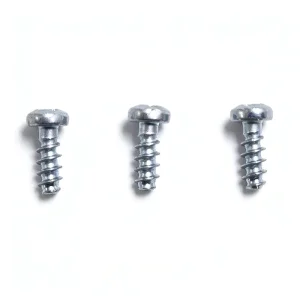
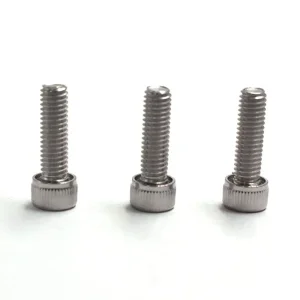
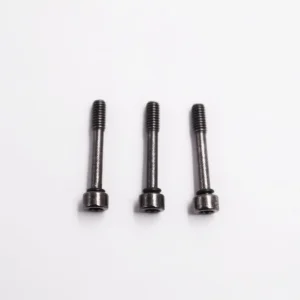
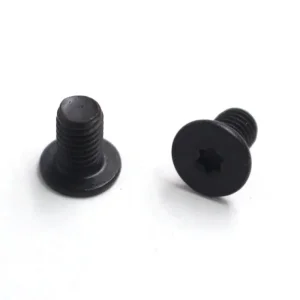
Engineered cold-headed tamper-evident fasteners and matched security tooling manufactured under strict IATF 16949 / ISO 9001 quality controls.
A technical review on why cabinet anti-tamper screws act as the deterministic perimeter defense for modern electrical, edge computing, and utility architectures.
Electronic smart locks and network alarms are completely vulnerable if standard fasteners allow unauthorized perimeter removal. Tamper-proof fasteners eliminate low-effort bypass vectors by incorporating non-standard lobe geometry, center-reject pins, and proprietary anti-cam drives that defy extraction without controlled, serialized tooling.
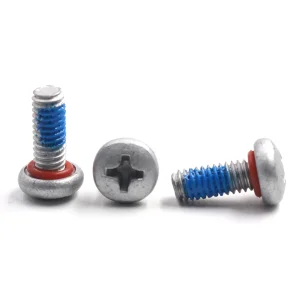
Outdoor utility cabinets, rail transit signal boxes, and renewable battery banks experience constant harmonic vibration. High-integrity anti-tamper cabinet screws incorporate micro-encapsulated chemical threadlocking (e.g., nylon patch pre-applications) to prevent back-off while withstanding dynamic shear forces exceeding Grade 8.8 and 10.9 ratings.
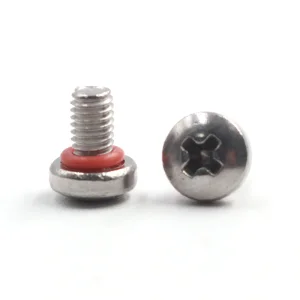
Outdoor enclosures demand IP66, IP67, and IP68 hermetic ratings. Custom tamper fasteners with integrated under-head vulcanized EPDM or fluorosilicone O-rings stop moisture ingress directly at the thread penetration point, preventing crevice corrosion and galvanic mismatch between stainless fasteners and zinc-coated steel or aluminum frames.
From smart grid conversions in North America to hyperscale edge deployments across Western Europe, the market requirement for specialized security fasteners has transitioned from optional safety hardware to a regulatory mandate.
Unattended micro data centers deployed along public fiber corridors require micro-fine stainless security screws to secure outer access doors, server blade retention bays, and cooling intakes against physical intrusions.
Revenue protection regulations across North America and the EU enforce strict anti-tampering mechanical barriers on electricity, gas, and water distribution cabinets to eliminate utility diversion and unmetered taps.
High-voltage DC fast-charging units in unprotected parking areas rely on high-tensile tamper-proof machine screws to seal control boards and prevent public exposure to lethal 400V–1000V DC bus rails.
Small-cell and macro remote radio units installed in open street positions utilize tamper-evident, captive screws to secure mast-mounted radio units and optical distribution interfaces against opportunistic copper theft.
Specific field conditions determine the baseline mechanical characteristics, metallurgical grade, and plating treatments required for mission-critical cabinet installations.
Cabinet installations within 5 miles of sea lines encounter high-humidity, marine salinity mist. We formulate anti-tamper machine fasteners from austenitic SS316/A4-70 alloys, finished with secondary electro-polishing and proprietary passivation layers delivering over 1,200 hours of neutral salt spray (ASTM B117) resistance without surface oxidation or thread galling.
Subway tunnels and wayside signal boxes are subjected to violent brake-dust particulate air currents and intense low-frequency vibrations. Our custom locking assemblies combine security Torx heads with pre-applied nylon patches (DIN 267-28 standard), creating a permanent micro-resilient mechanical wedging action across the thread flanks that preserves dynamic clamp loads.
Server cabinets housing colocation servers mandate dual-level physical authentication. By integrating high-precision undercut heads with custom pin-recess key patterns, we provide enterprise facility operators with strictly segregated key distribution codes, blocking unauthorized hot-swapping or physical data tap intrusions within multi-tenant racks.
Leveraging deep industrial clusters across Dongguan, Shaoguan, and Wuhan to deliver unmatched lead-time agility, cold-heading tool longevity, and zero-defect quality systems.
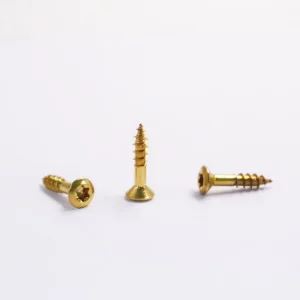
Producing complex, custom anti-tamper head geometry (e.g., snake-eye, pentalobe, tri-groove, or custom proprietary internal broaches) through multi-station progressive cold heading preserves metal fiber flow lines, yielding vastly superior shear ratings over parts made via material-subtractive CNC methods.
Located in the heart of China's premier advanced hardware manufacturing belt, our factory maintains pre-negotiated allocations of Japanese and domestic surgical-grade wire rods (304, 316, 410, SCM435, carbon steel). Continuous spectroscopic analysis verifies raw material chemistry before cold extrusion.
Automated high-speed laser optical sorting platforms inspect 100% of finished lots for total shank runout, thread pitch, head height, and recess pin alignment. This automated process protects OEM high-speed automatic screw-driving feeders from jamming on cabinet assembly lines.
A forward-looking architectural overview of intelligent fastening solutions, surface treatments, and closed-loop security protocols for 2026 and beyond.
Ongoing R&D protocols explore cold-formed recessed heads embedded with passive high-frequency micro-chips. Field technicians verify authenticity and log routine maintenance intervals through an encrypted handheld scanner prior to engaging physical tools, ensuring real-time auditability.
Replacing traditional hexavalent chromate passivation with zinc-nickel (12-16% Ni) composite layers and silane topcoats. This provides extreme galvanic resistance in harsh conditions, ensuring compliance with RoHS, REACH, and California Proposition 65 directives without degrading thread tolerances.
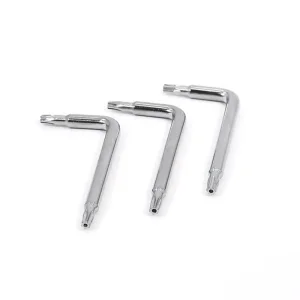
Moving past standard security torx or hex pin systems, our CAD/CAM tool manufacturing division provides tier-1 clients with proprietary drive geometries calculated via algorithmic tooth curvature. These matched drive bits are sold exclusively under authorized corporate security protocols.
Enterprise procurement requires verified transparency, zero regulatory ambiguity, and responsive cross-border logistics backing every high-volume purchase order.
Every shipment is serialized with full heat-batch traceability. Material test reports (EN 10204 3.1) detail exact chemical compositions, tensile strength, yield limits, core hardness (Rockwell C / Vickers), and micro-layer coating thickness verified via X-ray fluorescence.
Our application engineering teams offer 24-hour drawing reviews, 3D STEP file validations, and joint stress simulations to prevent under-head shearing or sheet-metal strip-out. We supply fully functional prototypes within 7 to 10 working days.
We provide Vendor Managed Inventory (VMI) frameworks and regional warehousing support across Europe and the Americas. Maintain safety buffer stocks with flexible Incoterms (FOB, CIF, DDP) directly to your production lines, mitigating geopolitical transport variances.
Key technical and logistical inquiries answered directly by our senior fastener engineering team.
For applications requiring high automated installation torque without cam-out, Security Torx with Pin (Torx TR) and Custom Pentalobe with Center Post provide the highest torque-transmission efficiency. The straight-wall lobe design transfers tangential drive forces cleanly, unlike slotted or Phillips drives which tend to push the driver bit up and slip under high loads.
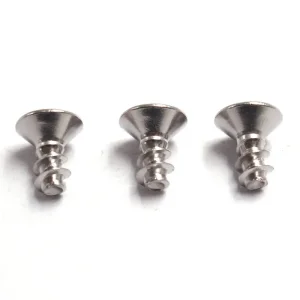
Stainless steel fastener galling (cold-welding) occurs when surface oxides break down under frictional heat. We eliminate galling by applying dry-film anti-friction lubricants (such as MoS2 or specialized fluoropolymer waxes), executing precision thread rolling to yield low surface roughness (≤ Ra 0.8), or specifying a differential alloy matrix (e.g., 316 screws driven into aluminum or galvanized steel with pre-applied nylon patches).
Yes. We regularly design, produce, and register proprietary cold-heading header punches for tier-1 telecommunication and utility clients. We manufacture both the proprietary tamper screws and matching driver keys/bits in-house, keeping tool drawings and bit distribution under NDA to protect field integrity.
Zinc-Nickel electroplating (12-16% Ni content) with a trivalent passivate and sealant is the premier choice. It easily exceeds 1,000+ hours of neutral salt spray testing while keeping total plating thickness within 8 to 12 microns. This preserves critical 6g / 6H thread tolerances and eliminates risk of fitment binding, unlike heavy hot-dip galvanizing.
For custom non-standard heads or drive geometries requiring dedicated heading dies, tooling fabrication and initial dimensional First Article Inspection (FAI) samples are delivered within 10 to 15 business days. Once first-article samples are approved, standard mass-production runs require 3 to 4 weeks depending on batch volume and secondary plating processes.
Explore our heavy-duty machine screws, sealing fasteners, self-tapping systems, and matched high-tensile security keys.