Engineered for automated bowl feeding, precision robotic fastening, and zero-defect industrial clamping. Explore high-performance self-tapping, machine, and sealing screw solutions.
Demystifying captive washer kinematics, thread-rolling deformation tolerances, preload preservation under cyclic dynamic loading, and multi-piece automated handling economics.
Preassembled washer fasteners—traditionally classified under the industrial SEMS nomenclature (derived from machine assembly machine patents)—utilize an unthreaded blank shank where the washer internal diameter (ID) exceeds the blank diameter but remains strictly smaller than the rolled thread major diameter (d_maj). Cold-thread rolling deforms the crests past the yield point, trapping the washer permanently beneath the bearing under-head while allowing free 360-degree rotation. This eliminates frictional binding, preserves clamping torque consistency, and guarantees that washers are neither misplaced nor omitted during ultra-fast robotic assembly sequences.
Under dynamic harmonic excitation, alternating thermal expansion, or continuous mechanical vibration, fastened joints suffer from relaxation and subsequent embedment relaxation. Integrating DIN 6796 or ISO 10670 Belleville conical spring washers directly into the screw provides constant axial elastic compensation. When torqued to flat, the elastic spring stores potential energy, exerting a continuous residual clamping load even when joint settlements occur. For high-density electrical grounding, external and internal tooth lock washers (DIN 6797) cut through non-conductive powder coats, oxidation, and anodized films to ensure low-resistance bonding.
Soft substrate materials—such as magnesium-aluminum die castings, polycarbonate, polyamides (PA66), and composite laminate PCBs—are vulnerable to localized surface crushing and stress cracking when subjected to conventional small-diameter fastener heads. Integrated wide-diameter flat washers (ISO 7089 / DIN 125) drastically enlarge the effective contact bearing surface (A_b), mathematically halving the contact pressure (σ = F/A). This prevents cold-flow deformation and surface cracking under clamping load while guaranteeing predictable torque-tension correlation factors (K-factors) during automated driver tightening.
A synthesis of vertically integrated cold heading clusters, advanced multi-station transfer dies, precision in-line washer threading, and rigorous quality gatekeeping.
Dongguan’s precision manufacturing corridor offers unrivaled supply chain velocity. From ultra-pure wire rod drawn from Baosteel (including 1018A, 1022A, SCM435, SUS304, and SUS316) to specialized high-speed stamping of spring steel washers (65Mn, SK5, SUS301) within a 30-kilometer radius, our production facilities eliminate transit latencies. Tooling shops capable of EDM wire-cutting micro-tolerances within ±0.002mm ensure custom punch and die turnaround within 48 to 72 hours, delivering an agile rapid-prototyping-to-mass-production pathway unattainable in decentralized markets.
Our workshops deploy automated multi-die cold-heading machinery coupled seamlessly with automatic high-speed washer assembly rolling equipment. Unthreaded blanks fall through vibrating bowl chutes where custom mechanical fingers nest single, double (split spring + flat), or custom wave washers onto the shank immediately before entering the flat-die thread rolling process. Operating at production rates exceeding 300 to 500 parts per minute per line, this integrated flow maintains mechanical dimensional concentricity, eliminates human error, and slashes piece-part labor overhead.
Supplying global tier-1 automotive and Fortune 500 electronics OEMs demands uncompromising metallurgical discipline. Every batch undergoes strict APQP and PPAP Level 3 documentation, accompanied by continuous SPC tracking of critical dimensions. In-house testing facilities feature automated micro-Vickers hardness testers, optical cross-sectional thread profile comparators, torque-angle analysis rigs, and full-spectrum salt spray environmental chambers conforming to ASTM B117 and ISO 9227 standards.
Automated screw-driving systems can jam when fed fasteners with mixed head styles, bent shanks, or missing washers, causing catastrophic stoppages on automotive and consumer electronics lines. Our facility operates 100% downstream high-speed multi-camera CCD optical sorting tables. High-resolution telecentric optical sensors scan 360 degrees of every part at up to 800 pieces per minute—verifying washer presence, washer free-spin clearance, thread pitch, head height, recess depth, and plating defects down to a strict < 15 PPM threshold.
Tailored fastener architectures engineered specifically for demanding environmental, structural, thermal, and electrical performance requirements.
Electric drive units, high-voltage battery enclosures, and busbar power distribution systems require fasteners that survive intense vibration while delivering electrical grounding continuity. Our custom SEMS assemblies combine external serrated lock washers and cupped conical washers with Zinc-Nickel (Zn-Ni) transparent or black passivation. These provide over 1,500 hours of neutral salt spray corrosion resistance without blistering, prevent galvanic degradation between copper terminals and aluminum castings, and maintain constant clamping torque under high thermal swing cycles (-40°C to +150°C).
Smartphones, wearable tech, and optical camera modules demand micro-fasteners down to M0.8 and M1.2 sizes. Loose washers at this scale are impossible for manual or robotic placement. YH Fastener produces micro-SEMS screws with integrated captive ultra-thin flat washers (0.15mm thickness) stamped from austenitic stainless steel 304 or 316. Coupled with high-torque Torx (six-lobe) or Torx Plus drives, these micro-assemblies eliminate cam-out damage, prevent stress fracturing on ultra-thin magnesium-aluminum chassis, and provide IP67/IP68 dust and water ingress sealing when configured with elastomeric gaskets.
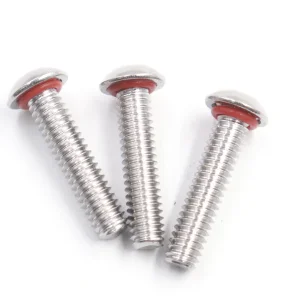
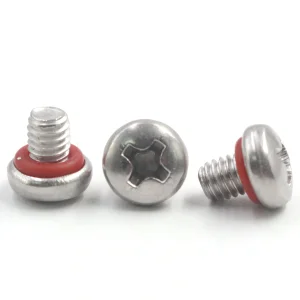
Photovoltaic string inverters and 5G remote radio heads (RRU) are deployed in extreme outdoor environments subject to coastal marine salt fog, UV exposure, and moisture ingress. We engineer stainless steel SUS316 / A4-70 pan-head machine screws fitted with captive EPDM or fluoroelastomer (FKM) sealing washers bonded to metallic backing rings. When torqued into extruded heatsinks, the elastomer undergoes controlled displacement, creating an airtight, hermetic barrier that stops water ingress along thread channels while isolating dissimilar metals to halt galvanic corrosion.
An engineering and financial breakdown illustrating assembly speed, total cost of ownership (TCO), and automated line reliability.
| Evaluation Parameter | Manual Multi-Piece Assembly (Screw + Loose Washer) | ODM Integrated Preassembled Fastener (SEMS) | Industrial Advantage & Impact |
|---|---|---|---|
| Assembly Line Throughput | Requires 2 to 3 discrete pick-and-place motions per joint. Slow cycle times (3.5 to 5.0 sec/joint). | Single-step feed and driving operation. Cycle time drops to 0.8 to 1.2 sec/joint. | +300% Assembly Velocity |
| Automated Feeder Jam Rates | Loose washers stick, stack, and tangle in vibratory bowl feeders, causing frequent downtime. | One-piece unit feeds reliably through standard blow-feed and magnetic auto-screwdrivers. | Zero Feeder Track Stoppage |
| Omission & Quality Defect Risk | Operators or pickers may inadvertently drop or omit split/flat washers, risking field recalls. | Captive washer is physically impossible to omit. 100% optical verification at factory gate. | Zero-Omission Defect Guarantee |
| BOM & Inventory Overhead | Separate part numbers for screws, split spring rings, and flat discs. Tripled procurement & bin costs. | Unified SKU across enterprise MRP/ERP systems. Simplified supply chain tracking. | -66% Purchasing Complexity |
| Clamping Force Uniformity | Variable friction surfaces caused by washer misalignment yield fluctuating torque-tension curves. | True perpendicular alignment ensures concentric bearing contact and consistent K-factor. | Optimized Joint Clamping Preload |
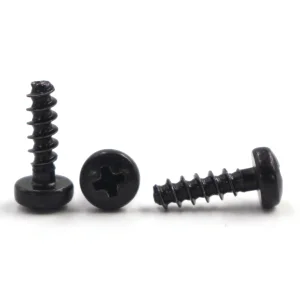
Engineered for PCB mounting, structural plastic housings, waterproof junction boxes, and critical industrial framing. Factory-direct supply shipped worldwide.
Key metallurgical, environmental, and automated assembly trends tracked by enterprise procurement directors and manufacturing leaders worldwide.
With increasing global enforcement of RoHS, REACH, and California Proposition 65 regulations, conventional hexavalent chromium surface treatments have been completely phased out. Current tier-1 procurement mandates specify non-electrolytic zinc flake coatings (such as Geomet and Magni), high-durability trivalent passivation, and thin-film electrodeposited Zinc-Nickel (12–15% Ni content). These modern coatings deliver over 1,500 hours of neutral salt spray protection without risking hydrogen embrittlement in heat-treated Class 8.8, 10.9, and 12.9 high-tensile assemblies.
In aerospace, performance EV drivetrains, and portable robotics, structural mass reduction drives component selection. Preassembled fasteners are shifting from standard carbon steel to high-tensile 7075-T6 aluminum, cold-drawn titanium (Grade 5 Ti-6Al-4V), and specialized high-copper alloys for electrical bus connections. Engineering these materials into captive washer configurations demands advanced finite element analysis (FEA) to manage spring rate mechanics, washer yield tolerances, and cold work hardening during high-speed rolling.
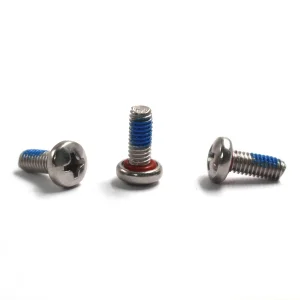
Demanding vibration profiles—such as those encountered on rail bogies, heavy construction drivetrains, and agricultural equipment—benefit from hybrid locking solutions. Pairing a mechanical captive washer (SEMS) with a microencapsulated chemical threadlocker or 360-degree polyamide (nylon) locking patch creates dual-stage anti-loosening security. The captive washer distributes surface pressure and maintains axial preload, while the anaerobic adhesive or prevailing torque patch prevents rotational backing even when clamp load is fully lost under extreme transverse shear forces.
In-depth technical answers addressing fastener design tolerances, metallurgical selections, automated feeder compatibility, and international procurement standards.
SEMS screws prevent loosening through precise mechanical alignment and dynamic spring compensation. In loose multi-piece assemblies, manual operator placement often results in washer eccentricity relative to the screw axis. This uneven alignment causes asymmetric bearing stress, non-uniform friction, and early joint relaxation under cyclic loading. In contrast, captive washer assemblies ensure true perpendicularity between the fastener head and the washer face. When configured with Belleville spring washers (DIN 6796) or wave washers, the captive spring remains centered, providing continuous axial tension that compensates for thermal expansion, surface embedment, and cyclic vibration.
The manufacturing window for captive free-spinning clearance relies on three critical dimensions: the unthreaded blank shank diameter (d_blank), the internal diameter of the washer hole (d_washer), and the rolled thread major diameter (d_major). Tooling engineers specify: d_blank < d_washer < d_major. The internal hole of the washer must clear the blank wire with a sliding fit tolerance of approximately +0.10mm to +0.25mm to allow smooth, uninhibited 360-degree rotation. When the blank passes through cold-thread rolling dies, displaced metal flows outward past the elastic limit to form the thread crests. Because d_major expands beyond d_washer, the washer is permanently captured under the head without thread interference.
Hydrogen embrittlement is a primary failure mode in hardened carbon and alloy steel fasteners (Classes 8.8, 10.9, 12.9, or core hardness exceeding 320 HV / 32 HRC) subject to acid pickling and electrolytic zinc/nickel plating. Atomic hydrogen diffuses into the steel’s crystal lattice, migrating toward high-tensile stress zones beneath the head and causing delayed brittle failure under service load. Our manufacturing protocol eliminates this risk through strict controls: (1) using mechanical cleaning or ultra-mild, inhibited acid pickling; (2) mandatory post-plating de-embrittlement baking at 200°C to 220°C for a verified 4 to 8 hours (dependent on strength grade) within 4 hours of plating; or (3) substituting electrolytic baths with non-electrolytic zinc flake coatings (e.g., Geomet, Dacromet), which are inherently free from hydrogen generation.
Yes. As an end-to-end ODM manufacturer, YH Fastener designs custom tooling for multi-element assemblies. Common dual combinations include an external tooth or split helical spring washer paired with a wide plain flat washer (DIN 6900 series standards). This configuration simultaneously protects soft substrates from surface damage while providing dynamic spring tension against back-off. We can integrate these washer packs with nearly any cold-headed style—including pan, hex flange, truss, socket cap, Torx button head, and countersunk configurations using specialized 90-degree undercut bevel captive designs.
Dongguan features an unmatched density of cold-heading machinery, specialized stamping sub-suppliers, tooling fabricators, heat-treatment facilities, and surface finishing lines operating within close proximity. This geographic concentration gives procurement managers three distinct advantages: (1) Rapid Lead Times: tooling alterations and bespoke dies are produced within 48 to 72 hours; (2) High Process Control: complete in-house management from raw wire drawing to final CCD optical sorting; and (3) Economies of Scale: massive purchasing volumes for high-purity wire rod (Baosteel, Walsin Lihwa) lower unit production costs by 20% to 35% compared to European or North American production bases.
Modern automated screwdriving machines (such as Weber, Deprag, or Atlas Copco systems) rely on pneumatic blow-feeding or magnetic vacuum pickup to deliver fasteners directly to the drive nosepiece. Loose washers cannot be fed this way, requiring separate, expensive pick-and-place robots and complex bowl tooling that frequently jam. Captive SEMS fasteners behave mechanically as a single integrated screw. They glide smoothly down feeder tubes without snagging, eliminate misaligned or inverted washer seating, prevent loose washers from dropping into sensitive battery modules or electronic housings, and enable high-speed automated cycle rates below 1.0 second per joint.
Provide these core parameters to receive an engineering review, feasibility assessment, and formal commercial quotation within 24 hours.
• Nominal thread diameter and pitch (Metric M1.0 to M12, or Unified UNC/UNF #0 to 1/2").
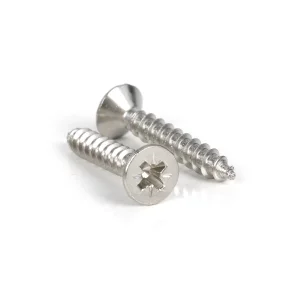
• Thread profile: Machine screw (ISO/DIN), PT thread forming for plastics, or sheet metal tapping.
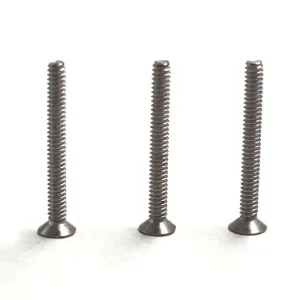
• Head configuration: Pan, button, hex flange, truss, or flat countersunk.
• Drive system: Phillips, Torx (six-lobe), Torx Plus, slotted, or tamper-resistant pin security.
• Washer style: Plain flat (DIN 125/ISO 7089), split lock ring (DIN 127), Belleville conical (DIN 6796), or serrated tooth (DIN 6797).
• Multi-washer stack: Combination spring + flat or custom sealing O-rings.
• Washer thickness and outside diameter (OD) bounds.
• Kinematic requirement: Free-spinning captive or high-friction staking.
• Core material: Carbon steel (Class 4.8, 8.8, 10.9), Stainless (304, 316, 410), or Brass/Aluminum.
• Surface coating: Cr3+ Blue/Yellow Zinc, Black Oxide, Nickel, Zinc Flake (Geomet), or Zn-Ni alloy.
• Salt spray rating: 48h to 1,500+ hrs neutral salt spray (ASTM B117).
• Supplemental locking: Nylon locking patch, precote adhesive, or under-head sealant.
