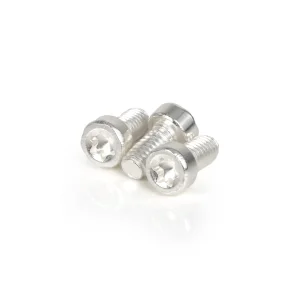
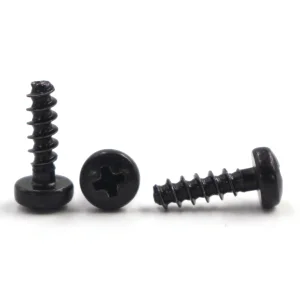
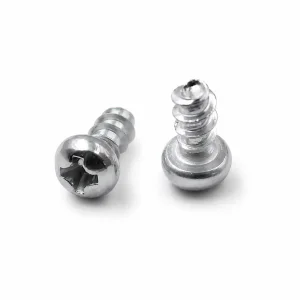
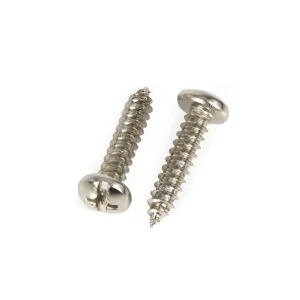
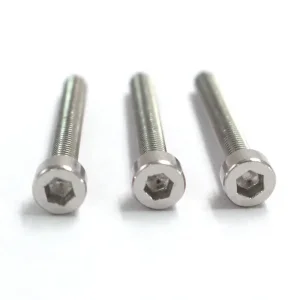
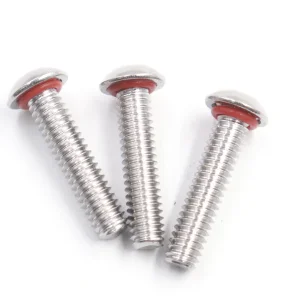
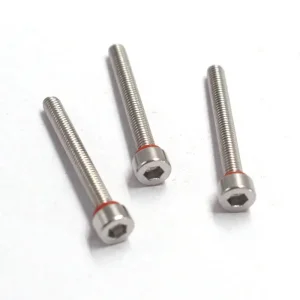
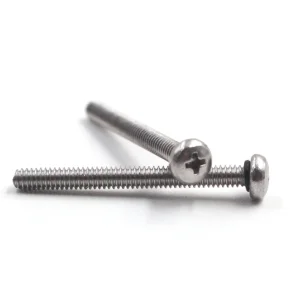
Explore our core product lines built on advanced cold-heading tooling, controlled thread pitch profiles, and tight micron-level concentricity tolerances.
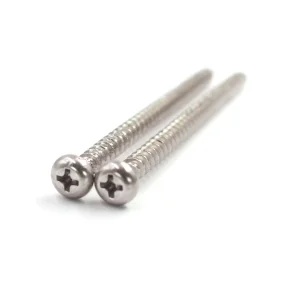
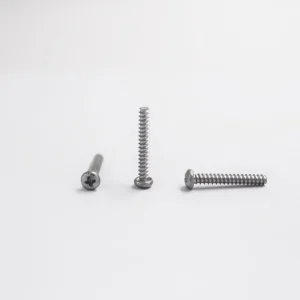
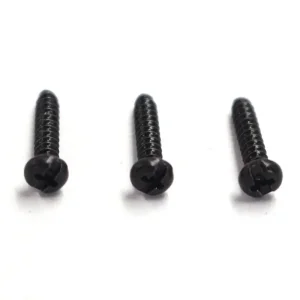
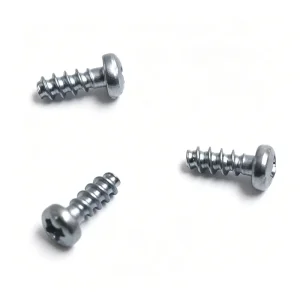
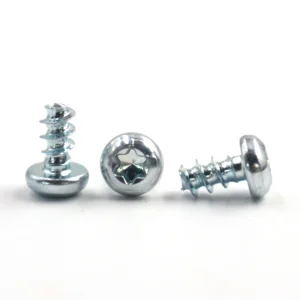
In advanced structural design, pan-head self-tapping screws (often standardized under DIN 7981, ISO 7049, or bespoke OEM prints) serve as vital mechanical links. The geometry combines a broad bearing surface with low-profile aesthetic dome contouring, eliminating secondary tapping while optimizing clamp preload.
Pan-head fasteners feature a flat under-head annular bearing face that distributes tension uniformly across clamped substrates. This reduces contact pressure on brittle thermoplastics (e.g., PBT, ABS, Polycarbonate) and ductile lightweight alloys, preventing surface micro-cracking and creep relaxation.
Thread-forming profiles (such as 30° flank angle PT screws and trilobular cross-sections) plastically displace mating polymer or soft non-ferrous metal without generating cutting chips. This preserves cleanroom sterility in electronics enclosures and ensures superior resistance against back-out torque.
From deep-recess Phillips and Pozidriv to Torx (6-Lobe) and tamper-resistant security pins, head recess geometry directly impacts driver bit engagement. Tight recess tolerances eliminate cam-out, prolong drive bit longevity, and facilitate automatic robotic feeder alignment on rapid production lines.
The worldwide mechanical fastening sector is experiencing a paradigm shift driven by e-mobility, compact consumer devices, automated manufacturing, and carbon neutrality regulations.
Electric vehicle (EV) battery packs and energy storage systems require self-tapping screws capable of grounding, sealing, and enduring intense harmonic vibration across multi-material structural joints.
Micro-screws down to M1.2 with custom pan-heads dominate smart wearables, 5G telecommunication antennas, and medical robotics, demanding strict flank accuracy and burr-free cold heading.
With Industry 4.0 automated screwdriving cells, dimensional variation leads to jam errors. Sourcing mandates now demand high CPK (>1.67) and zero-head-flash tolerances for bowl feeder compatibility.
Global environmental mandates (RoHS 3, REACH, Prop 65) necessitate eco-compliant passivations, trivalent chromium treatments, and zinc-nickel alloys offering 1,000+ hours neutral salt spray resistance.
For Tier-1 automotive integrators, Fortune 500 consumer electronics OEMs, and contract manufacturers, selecting an ODM supplier involves critical quality, risk, and total-cost-of-ownership (TCO) assessments.
OEMs require agile custom engineering: rapid 2D/3D drawing reviews within 24 hours, dynamic FEA pilot simulations, functional prototype tooling within 7–10 days, and seamless scaling from pilot lot to hundreds of millions of units.
Supply agreements require comprehensive documentation packages: Process Flow Diagrams, PFMEA, Control Plans, Gage R&R, Material Test Reports, Dimensional Inspection Records, and IMDS material submissions.
To support lights-out automated manufacturing, purchasers mandate 100% multi-camera laser optical sorting checking shank diameter, thread pitch, head height, and recess depth to guarantee a sub-50 PPM defect threshold.
Tailoring fastener metallurgy, drive interface, and sealing mechanics to demanding operational environments.
| Application Sector | Key Operational Challenge | Engineered Screw Configuration | Performance Benefit |
|---|---|---|---|
| New Energy Vehicle (EV) Battery Enclosures | Harsh thermal cycling, high shear stress, moisture and electrolyte gas intrusion. | SUS304 / SUS316 or Class 8.8 / 10.9 with pre-installed fluoro-rubber O-ring or under-head sealant. | IP67/IP68 hermetic sealing, galvanic corrosion isolation, high clamp retention under road vibration. |
| Electronics & PCB Shielding | Thin boss walls, low stripping torque threshold, static sensitive cleanroom assembly. | M1.6 to M3 Pan Head PT-thread with fine pitch and micro-encapsulated polyamide patch. | Prevents boss hoop stress cracking; ensures vibration-proof retention without manual adhesives. |
| Automated Industrial Robotics | Dynamic rotational inertia, continuous cyclic shock loading, automated tool changes. | Case-hardened alloy steel with deep Torx Plus recess and Geomet / Dacromet coating. | Eliminates driver bit slippage; delivers predictable clamp load without hydrogen embrittlement. |
| Telecom & Outdoor Infrastructure | Saline marine atmosphere, UV degradation, thermal expansion mismatches. | Austenitic Stainless SUS316 with specialized passivation or multi-layer Zinc-Nickel finishing. | Surpasses 1,500 hours neutral salt spray testing without red rust or mechanical binding. |
| Precision Plastic Housings (Medical/Home) | Frequent servicing or battery changes leading to internal thread stripping. | Trilobular cross-section pan-head screws with 30° profile angle and hardened lead thread. | High strip-to-drive torque ratio (over 4:1), allowing reliable field re-assembly. |
Comparing standard configurations to optimize assembly throughput, clamp force consistency, and joint lifecycle durability.
Carbon Steel (1018/1022A): Case hardened (Surface HV 450–750, Core HV 270–390) for swift penetration in sheet metal.
Austenitic Stainless (304/316): Premium chemical corrosion and acid resistance, non-magnetic option for sensitive sensor enclosures.
Drive Torque (Td): Low seating resistance reduces operator fatigue and tool power consumption.
Strip Torque (Ts): High failure threshold prevents boss burst or stripped threads. Our optimized thread pitch achieves a wide safety operational window (Ts/Td > 3.5).
Nylon/Polyamide Patches: Pre-applied prevailing torque patch maintains preload even under severe axial vibration.
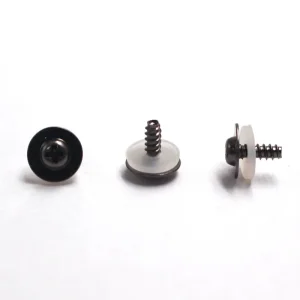
SEMS Assemblies: Integrated captive conical spring or tooth lock washers prevent backing out while saving factory line manual assembly time.
Integrated quality systems and end-to-end operational visibility ensuring compliance with global manufacturing standards.
Certified under IATF 16949:2016 (Automotive Quality Management), ISO 9001:2015, and ISO 14001:2015. Complete lot-level traceability maintained from raw wire rod coil through cold forging, tapping, heat treatment, and surface finishing.
To insulate overseas OEMs against logistics bottlenecks, we provide Vendor Managed Inventory (VMI), safety buffer stocking agreements, and localized warehousing hubs across North America, Europe, and Southeast Asia.
Full adherence to EU Directive 2011/65/EU (RoHS 2 & 3), Regulation (EC) No 1907/2006 (REACH), and Conflict Minerals Reporting. Zero hazardous heavy metals; third-party SGS/TUV lab verification provided per production campaign.
Anticipating the mechanical assembly challenges of next-generation lightweight composites, multi-material stack-ups, and automated smart factories.
Integrating customer 3D CAD boss geometry into digital simulation algorithms to recommend ideal thread pitch, root diameter, and core drill diameters prior to steel mold cutting.
Formulating hybrid PTFE/micro-wax thin-film topcoats that lower thread-forming driving friction while eliminating fluid contamination risk in high-purity medical or cleanroom electronics.
Deploying multi-angle 360-degree vision cameras driven by deep learning algorithms to detect micro-recess burrs, internal thread pitch imperfections, and slight plating discoloration.
Integrating certified low-carbon circular steel and sustainable austenitic wire rod, pairing high mechanical yield strength with reduced Scope 3 carbon footprint documentation.
Direct answers addressing technical parameters, cold-heading tool manufacturing, boss sizing, and international logistics.
Complete your bill of materials with our proven lineup of SEMS combination fasteners, PT-thread plastic screws, and IP67/IP68 rated assemblies.