Explore initial standard and precision ODM hardware selections engineered for high-throughput assembly lines.
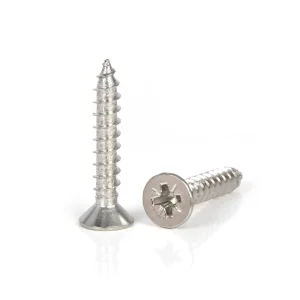
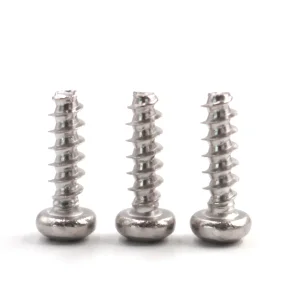
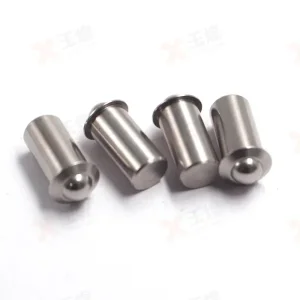
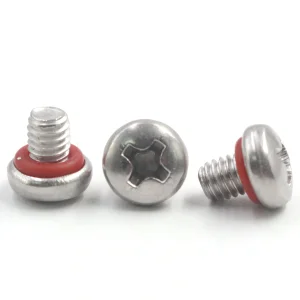
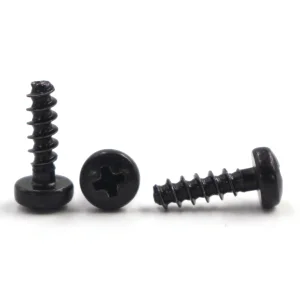
An in-depth analysis of captive washer mechanics, automated assembly advantages, and thread rolling kinematics under DIN 6900 and JIS B1188 engineering standards.
A SEMS screw (derived from "pre-as-SEMB-led" screw and washer) incorporates a permanently captive, free-spinning washer. The washer is mechanically collated onto an unthreaded shank blank prior to the thread rolling operation. As the flat or rotary dies form the metric thread profile, the outer thread major diameter expands beyond the washer inner diameter (ID), securing the washer indefinitely without inhibiting its operational rotational freedom.
Under cyclic mechanical vibration and dynamic thermal expansion, joint relaxation represents over 70% of structural fastener failures. By engineering helical split spring washers (DIN 127B) or conical Belleville spring washers (DIN 6796) directly under the screw bearing face, custom metric SEMS hardware provides sustained elastic energy storage, dynamically compensating for gasket seating creep and thermal differential contraction.
Automated blow-feed screwdriving systems and robotic multi-axis end-effectors require high geometric consistency. Loose washers frequently jam vibratory bowl feeder tracks, orient sideways in magnetic pickup tubes, or fall into delicate printed circuit boards (PCBs). SEMS fasteners eliminate separate washer dispensing completely, shortening takt time by up to 33% and eliminating operator assembly omission errors (Poka-Yoke).
When migrating from conventional two-piece fastener assemblies to integrated metric SEMS configurations, design engineers must audit the under-head radius transition ($r_{max}$) and thread runout ($a_{max}$). DIN 6900 specifications dictate precise shank necking to ensure that washer axial displacement does not cause binding against the screw bearing surface, maintaining a stable torque-tension relationship ($\mu_{tot} = 0.12 - 0.15$) across high-speed tightening operations.
Comprehensive metallurgical grades, head profiles, captive washer geometries, and anti-loosening configurations configurable for custom ODM fabrication.
| Component Parameter | Standard Metric Specification Range | ODM Engineering Options & Custom Variants | Primary Industrial Utility |
|---|---|---|---|
| Nominal Thread Diameter | M1.2 – M12 (Coarse & Fine Pitch per ISO 261) | Micro SEMS (M1.0, M1.4), Left-hand threads, Multi-start leads | Consumer optics, medical devices, electric vehicle powertrains |
| Screw Head Profiles | Pan (ISO 7045), Hex Flange (ISO 4162), Socket Cap (ISO 4762) | Low-profile Truss, Countersunk with cup washer, Fillister, Binding | Grounding terminal blocks, compact enclosures, chassis rails |
| Drive Recess Types | Phillips (Type H), Torx / 6-Lobe (ISO 10664), Hex Socket | Torx Plus® (Autosert), Pozi-drive, Security Pin, Slotted Combo | Cam-out elimination in automated high-torque assembly cells |
| Captive Washer Units | Flat (DIN 125A), Split Spring (DIN 127B), Tooth Lock (DIN 6797) | Double Washer (Flat + Spring), Belleville (DIN 6796), Square Cone | Thermal cycle compensation, paint-piercing grounding conductivity |
| Base Metallurgy | Carbon Steel (Class 4.8, 8.8, 10.9), Stainless Steel (A2-70, A4-80) | Alloy Steel 12.9, SUS316L, Brass CW614N, Aluminum 7075-T6 | Structural shear loads, marine atmospheres, chemical processing |
| Surface Finishes & Topcoats | Zinc Electroplate (Cr3+ clear/yellow), Black Oxide, Nickel | Zinc-Nickel (Zn-Ni 12-15%), Geomet®, Dacromet, Nylon Patch Locking | 1000+ hour salt spray protection, precise thread friction control |
Single washer SEMS (typically flat or spring) balance cost and load distribution. Double washer SEMS (combining a helical spring lock washer stacked atop a hardened wide flat washer) provide dual functionality: the flat washer isolates soft clamp surfaces (such as aluminum castings or plastics) from galling, while the spring component stores elastic tension against joint relaxation.
Internal and external tooth lock SEMS (DIN 6797/6798) bite mechanically into mating surfaces upon tightening. This provides superior anti-vibration locking while cutting through non-conductive powder coats, anodized films, and passivation layers, establishing stable electrical grounding circuits in automotive and solar inverter housings.
For industrial electrical contactors and switchgear, square cone captive washer SEMS fasteners provide controlled deflection and uniform contact pressure across wide terminal lugs. These assemblies accommodate severe wire strands without extrusion, meeting UL 486A-486B wire pullout and thermal cycling standards.
Examining operational stress parameters, clamp load integrity, and performance metrics across mission-critical equipment ecosystems.
In high-voltage EV battery enclosures, busbar interconnections demand vibration-proof fastening that maintains micro-ohm electrical contact resistance. Class 8.8 and 10.9 metric SEMS fasteners featuring conical spring Belleville washers provide continuous axial clamp load under repetitive acceleration shocks and severe thermal fluctuations (-40°C to +125°C). High-conductivity silver or tin-plated copper captive washers are frequently co-engineered to optimize current density and prevent destructive galvanic reactions against aluminum battery terminals.
Outdoor masthead telecommunications electronics endure intense solar UV exposure, moisture ingress, and thermal fatigue. Metric SUS316 stainless steel SEMS screws configured with integral silicone or EPDM sealing washers establish IP67/IP68 environmental seals around cast-aluminum chassis bolt holes. Simultaneously, external tooth washer variants provide EMI/RFI shielding continuity across multi-segment cavity filters, ensuring stable signal attenuation down to micro-volt levels without separate grounding straps.
High-speed six-axis robotic arms and pick-and-place gantry systems generate harmonic rotational vibrations that cause standard fasteners to back out. Torx-drive Class 10.9 metric SEMS screws, enhanced with pre-applied polyamide (nylon) locking patches and pre-assembled double washers, lock into tapped motor housings. This integrated geometry protects against joint softening under harmonic frequencies while enabling rapid field maintenance without loose hardware falling into production machinery.
Utility-scale solar tracker structures face desert thermal extremes and corrosive agricultural or marine microclimates. Carbon steel metric SEMS assemblies protected by 12-15% Zinc-Nickel plating with specialized nano-ceramic topcoats provide over 1,500 hours of neutral salt spray resistance (ASTM B117) without red rust formation. The integral serrated washer bites into galvanized steel mounting rails to ground static electricity generated by wind dust accumulation.
How the Pearl River Delta's concentrated fastener ecosystem delivers rapid ODM tool prototyping, automated collation efficiency, and multi-facility capacity buffering.
The Dongguan hardware manufacturing cluster aggregates cold heading wire drawing mills, carbide die precision machining shops, automated washer stamping specialists, continuous atmosphere heat treatment plants, and automated plating lines within a 25-kilometer radius. This geographic density compresses raw-material staging and sub-tier logistics from weeks to hours, giving international procurement teams unmatched production velocity.
Custom SEMS designs require purpose-built heading punches, transfer fingers, washer feed escapements, and rolling dies. Leveraging high-speed 5-axis CNC electrical discharge machining (EDM) and optical profile grinding in-house, custom prototypes are formed, heat treated, and qualified via First Article Inspection (FAI) reports within 7 to 10 working days, sharply accelerating OEM program validation phases.
With manufacturing facilities anchored across Dongguan, Shaoguan, and Wuhan totaling over 20,000 m², production loads are load-balanced across multiple high-speed multistation cold headers (Kyoei and Sakamura platforms). This tri-site structure protects international OEM supply chains from regional disruptions, container port congestions, and localized energy constraints.
A strategic comparative analysis between localized domestic production, regional nearshoring corridors, and high-efficiency China manufacturing hubs.
| Procurement Dimension | Western Domestic Production (US / EU) | Nearshoring Corridors (Mexico / CEE) | Integrated China Hub (Dongguan Ecosystem) |
|---|---|---|---|
| Tooling & NRE Costs | Very High ($3,500 – $8,000 per custom heading/rolling die set) | Moderate ($2,200 – $4,500 per tool configuration) | Low – Highly Agile ($600 – $1,500 with rapid turnaround) |
| Micro SEMS Capacity (Sub-M2.5) | Severely Limited; restricted to select high-cost aerospace suppliers | Very Limited; heavy dependence on imported blanks or Asian tooling | Comprehensive high-volume automated lines running down to M1.0 |
| Collation Line Automation | Standard single-washer setups; double-washer lines often outsourced | Growing, but vulnerable to sub-component washer supply bottlenecks | Continuous automated multi-station collation with 100% vision checks |
| Volume Scalability (1M+ units) | Capacity constrained by wire allocations and high operator overheads | Moderate; subject to secondary finishing and plating bottlenecks | Massive scale; rapid ramp across parallel multi-station headers |
| Surface Finishing Ecology | High regulatory overhead; restricted options for advanced Zn-Ni alloys | Varying chemical processing maturity and inconsistent salt spray results | Eco-certified closed-loop plating with advanced 1500h+ corrosion coats |
Robust automotive-grade quality systems under IATF 16949, hydrogen embrittlement relief, and advanced defect screening technologies.
High-tensile metric fasteners (Class 8.8, 10.9, 12.9) and hardened spring steel washers (45-50 HRC) absorb atomic hydrogen during acid pickling and electroplating. Strict de-embrittlement baking procedures are executed within 4 hours of plating: 200°C–220°C for 8 to 24 hours per ISO 9588 specifications, followed by destructive wedge tensile and sustained load qualification testing.
To satisfy zero-defect mandates on high-speed robotic assembly lines (<10 PPM defect rate), 100% of finished SEMS screws pass through high-speed automated optical sorting platforms. Multi-camera glass-plate inspection machines instantly evaluate washer presence, washer free-spinning mobility, head recess completeness, thread pitch accuracy, and shank runout at rates exceeding 600 parts per minute.
For tier-1 automotive programs, complete Production Part Approval Process (PPAP) Level 3 documentation packages are provided: Design Failure Mode and Effects Analysis (DFMEA), Process Flow Diagrams, Process FMEA, Control Plans, Measurement System Analysis (Gage R&R), Initial Process Capability Studies ($C_{pk} \ge 1.67$), Material Certifications, and full International Material Data System (IMDS) registry.
All metallic and organic surface treatments fully comply with RoHS Directive (EU) 2015/863, REACH Regulation (EC) 1907/2006 (SVHC substance audits), and California Proposition 65. Surface conversion chemistries utilize strictly hexavalent-chromium-free ($Cr^{6+}$-free) trivalent passivations and PFAS-free micro-encapsulated friction control sealers.
Anticipating structural lightweighting, integrated IoT sensor capabilities, and environmentally neutral surface chemistry trajectories through 2030.
Precision collation of micro-metric screws down to M1.0 with captive micro-washers for wearable tech and medical implants. Expansion of ultra-thin Zinc-Flake and PVD coatings to eliminate thread galling while providing cleanroom Class 100 particulate compliance.
Development of hybrid captive assemblies pairing high-strength titanium or stainless steel screw shanks with engineered composite, PEEK, or elastomer washers. Delivers galvanic electrical isolation and continuous hermetic sealing up to 10 bar without secondary O-rings.
Direct micro-tagging and high-density 2D Data Matrix laser etching on miniature SEMS screw heads. Enables closed-loop automated tool feedback, automated real-time torque audit verification, and lifelong cradle-to-grave assembly traceability across aerospace and defense sectors.
Integration of nano-thin piezoelectric sensing elements embedded directly within captive washer structures. Provides continuous digital telemetry of joint clamp force, active preload degradation, and loosening alerts in autonomous commercial vehicles and offshore wind turbines.
In-depth responses covering design feasibility, torque-tension dynamics, captive collar tolerances, and ODM manufacturing economics.
The manufacturing process relies on an unthreaded blank shank diameter that is deliberately engineered smaller than the internal diameter (ID) of the washer, while the final rolled thread's major diameter is larger than the washer ID. The loose washer is placed onto the unthreaded screw blank during high-speed automated collation. The assembly immediately passes between flat or cylindrical thread-rolling dies. During rolling, the dies plastically displace the metal blank outward to create the thread crests. Because the thread crest outer diameter exceeds the washer's inner hole diameter, the washer is permanently captured on the blank's smooth neck section, capable of free rotation without separating during transport or automated feeding.
A captive washer directly influences the under-head bearing friction coefficient ($\mu_b$). Because the washer can remain stationary against the mating substrate while the screw head rotates against the washer top surface (or vice versa, depending on relative surface hardness and finish), galling of soft clamped surfaces like aluminum or copper busbars is eliminated. For precise engineering torque-tension calculations (using the formula $T = K \cdot F \cdot d$), friction coefficient testing per ISO 16047 is recommended. When specifying custom ODM SEMS, manufacturers can apply topcoats with integrated torque-n-tension lubricants (such as wax emulsions or dry film lubricants) to maintain total friction coefficients within a stable $\mu_{tot} = 0.10 - 0.16$ band.
Yes, but galvanic corrosion risks must be carefully evaluated based on the application's operating environment. Standard carbon/spring steel washers coupled with austenitic stainless steel screws (A2-70 / SUS304 or A4-80 / SUS316) create a galvanic cell in humid or coastal environments, leading to sacrificial corrosion of the steel washer. For harsh environments, we configure SEMS with precipitation-hardened stainless steel spring washers (such as SUS301 or 17-7PH), which provide high spring temper without galvanic vulnerability. Alternatively, specialized isolating coatings or sacrificial zinc-nickel platings can be applied to carbon washers.
While all three standards govern screw and captive washer assemblies, they vary across under-head shank transitions, washer thickness tolerances, and allowable unthreaded lengths. JIS B1188 is prevalent in Japanese consumer electronics and automotive assemblies, often specifying slightly smaller head profiles (e.g., small pan or JCIS profiles) and thinner, lighter-gage captive washers optimized for automated pick-and-place robots. DIN 6900 and ISO 10644 represent European and international norms, characterized by heavier washer cross-sections and distinct designations for washer types: DIN 6900-1 specifies flat washers, DIN 6900-2 specifies helical spring washers, and DIN 6900-3 details serrated tooth washers. Our factory routinely provides cross-standard tooling to execute OEM cross-references seamlessly.
Standard catalog configurations (e.g., DIN 7985 Phillips pan head with DIN 127B split spring washer) in common metric sizes (M2 to M8) carry minimal MOQs, often 20,000 to 50,000 pieces for standard carbon or stainless steels. For fully custom ODM projects requiring dedicated heading punches, unique thread pitches, or non-standard stamping dies for specialized washers, MOQs typically range from 50,000 to 100,000 pieces depending on part volume. Custom tooling fabrication and FAI sample submissions are completed within 7 to 10 working days, with mass production scaling within 15 to 25 days following PPAP approval.
Explore secondary product selections, including sealing screws, precision shoulder bolts, and multi-washer SEMS hardware.
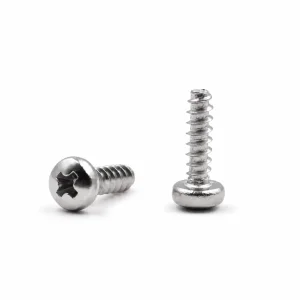
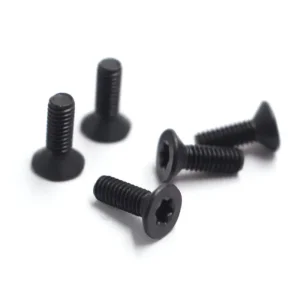
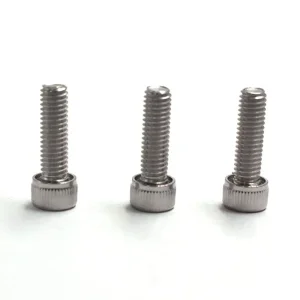
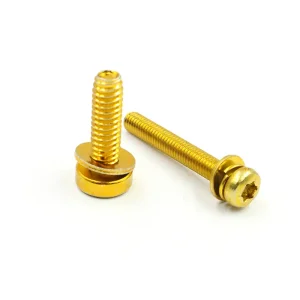
Submit 2D manufacturing prints, 3D STEP models, or target application specs. Our engineering review team will confirm tooling feasibility, GD&T stackups, alloy selections, and volume pricing.
