Explore precision-machined, multi-die cold-formed screws, self-tapping fasteners, and spring plungers engineered to DIN, ISO, and non-standard custom specifications.
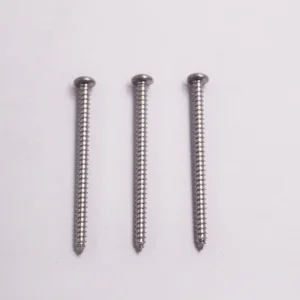
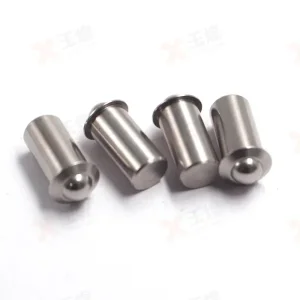
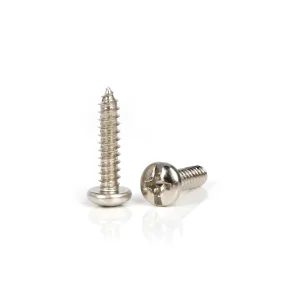
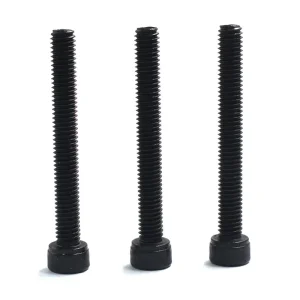
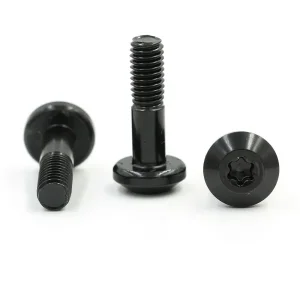
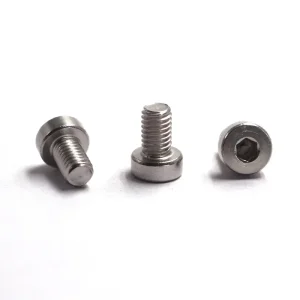
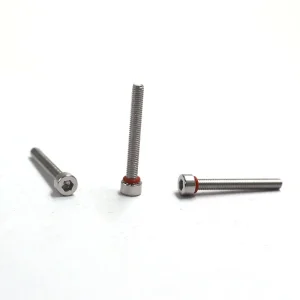
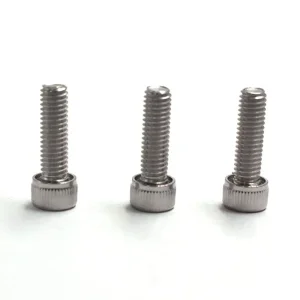
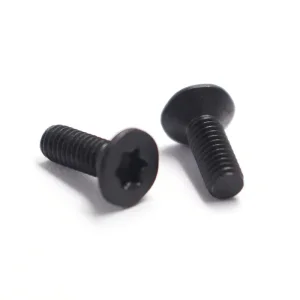
A deep-dive technical examination of the contact mechanics, torque transfer efficiency, and flush-surface geometry that separate hexalobular countersunk screws from traditional cross-recess fasteners.
Unlike Phillips or slotted drives which generate an upward axial separation force under torque, the hexalobular drive profile (ISO 10664) features a 15-degree drive angle. This near-perpendicular contact geometry eliminates radial slip and cam-out forces, reducing operator fatigue, eliminating surface slippage marks, and extending driver bit tool longevity by more than 1000% in automated assembly lines.
Flat countersunk heads (DIN 965, ISO 14581, ASME B18.6.3) sit entirely coplanar with the mating component substrate. Selecting the exact head angle—90-degree for European ISO/DIN, 82-degree for Imperial ANSI, or 100-degree for thin-sheet aerospace applications—is vital for mitigating stress concentrations at the head-to-shank transition junction and preventing premature fatigue fracture under cycling dynamic shear loads.
YU-HUANG employs high-speed multi-station cold headers instead of conventional screw-machining. This high-pressure plastic deformation preserves continuous, uninterrupted metallurgical grain flow along the screw head cone, through the transition radius, and down the rolled threads. This method delivers 25% higher tensile failure limits and significantly superior cyclic fatigue resistance.
How the Greater Bay Area’s integrated industrial supply chain, advanced multi-die heading capabilities, and localized metallurgical engineering provide global OEMs with unmatched agility, precision, and cost optimization.
Dedicated focus on cold heading, miniature fasteners, and specialized tooling.
Multi-plant capacity across Dongguan, Shaoguan, and Wuhan facilities.
Full automated CCD laser and optical glass disc sorting on high-volume runs.
Direct OEM & Tier-1 supply chains across North America, Europe, and APAC.
By producing tungsten carbide cold heading dies, punch pins, and thread-rolling dies in-house via Swiss Wire EDM and optical profile grinding, we shorten prototype lead-times from the standard 6 weeks to just 5 to 7 working days, accelerating engineering iteration cycles for rapid time-to-market.
Our localized cluster in Dongguan houses dedicated hydrogen atmosphere annealing furnaces, automated multi-station cold headers, high-speed rotary thread rollers, continuous mesh-belt hardening furnaces, and electroplating lines under unified IATF 16949 audit management for total trace-back control.
From carbon steels (1018, 1022A, 10B21) and alloy steels (SCM435 class 10.9/12.9) to austenitic/martensitic stainless (SUS304, SUS316, SUS410) and Grade 5 Titanium (Ti-6Al-4V), raw wire coils undergo 100% spectral chemical analysis and eddy-current surface flaw detection prior to cold heading.
As smart manufacturing, e-mobility, and consumer electronics design push beyond historic physical limits, fasteners must evolve to meet tighter geometrical clearances and rigorous environmental constraints.
Wearable devices, AR/VR optical frames, and micro-hinge mechanisms demand ultra-micro countersunk Torx screws down to M0.6 with T1 and T2 drive recesses. These miniature fasteners require cold heading punch tolerances within ±0.005mm and specialized vacuum pickup geometry for high-speed automated SMT assembly.
Modern high-speed robotic screwdriving lines operate under cycle times below 1.2 seconds per screw. Innovations such as the Torx Plus® and Torx Tap-Tite geometry feature vertical sidewalls with a lead-in radius that self-centers the motorized bit without stopping the spindle, slashing cycle times and bit wear.
Global environmental mandates (RoHS, REACH, PFAS-free) are eliminating hexavalent chrome and fluoropolymer sealers. Modern demand favors Zinc-Nickel electroplating (12-16% Ni) and micro-thin inorganic zinc flake coatings (Geomet / Magni) capable of withstanding 1,500+ hours of ASTM B117 salt spray without white corrosion.
Automotive body-in-white and aerospace drone designs combine magnesium alloys, carbon-fiber reinforced plastics (CFRP), and high-strength aluminum. Fasteners require tailored thermal expansion coefficients and specialized non-conductive barrier coatings to prevent catastrophic galvanic oxidation couples.
Public infrastructure, critical telecommunication 5G towers, and EV charging stations increasingly specify Torx Pin-in (Security Torx) countersunk screws. The central solid post prevents unauthorized removal with standard tools, protecting internal circuitry against vandalism and unsanctioned access.
Modern heading machines incorporate acoustic emission and real-time tonnage load monitors that detect wire cracked heads, broken punches, or micro-burrs in the hexalobular recess within milliseconds, preventing thousands of defective parts from ever entering downstream tumbling lines.
From high-vibration automotive battery housings to hermetically sealed optical sensors, countersunk Torx screws deliver zero-profile aerodynamic and mechanical clearances.
Used inside battery pack enclosures, busbar distribution plates, sensor brackets, and interior trim bezels. Flush countersunk installation prevents interference with adjacent pouch cells and thermal cooling jackets, while Torx drive geometry accommodates high pre-torque specifications without head distortion.
Essential for laptops, foldable tablet hinges, smartwatch frames, and camera optical mounts. Countersunk Torx screws (M0.8 to M2.0) sit completely flush inside aluminum, magnesium, and polycarbonate enclosures, providing an unblemished aesthetic contour and maximum internal volume for lithium-polymer batteries.
Linear guide rails, multi-axis robotic end-effectors, and CNC servo mounts demand zero protrusion along sliding paths. Countersunk flat heads ensure linear carriages clear the fastener head freely, while high-torque Torx interfaces permit repeated preventative maintenance re-torqueing without stripping.
Comprehensive engineering strategies to overcome countersink angular misalignment, vibration-induced loosening, and galvanic electrochemical degradation in demanding environments.
The Challenge: Angular mismatch between a 90° countersunk screw and an improperly chamfered hole causes one-sided contact. This eccentric load induces high bending moments at the head-to-shank underhead radius, causing cyclic fatigue shearing.
The Solution: YU-HUANG manufactures cold-headed countersunk screws with an engineered transition radius (R-type underhead fillet) and offers matching chamfer tool gauge recommendations to guarantee full cone contact.
The Challenge: Countersunk screws lack the elastic spring compliance of tall hex heads. Transverse vibration in machinery or vehicles causes rapid clamp load decay and back-off rotation within hundreds of cycles.
The Solution: We provide integrated anti-loosening technologies: 360-degree micro-encapsulated chemical threadlockers (DIN 267-27), pre-applied polyamide patches (DIN 267-28), or underhead serrated locking ribs that bite into mating chamfers without stripping.
The Challenge: Driving standard austenitic stainless steel (A2/A4) screws into cast aluminum or magnesium structures triggers intense electrochemical galvanic reactions, causing powdery sacrificial corrosion of the housing.
The Solution: YU-HUANG applies multi-layer engineered coatings: zinc-nickel electroplate with trivalent passivation, sealed with a high-resistance organo-ceramic topcoat that electrically isolates the fastener from the substrate.
Comprehensive compliance metrics required by tier-1 automotive, medical, and industrial electronics purchasing teams to validate structural reliability and supply chain accountability.
| Evaluation Parameter | Technical Benchmark / Standard | Quality Assurance Protocol & Method | Impact on Customer Assembly Line |
|---|---|---|---|
| Dimensional Tolerances | ISO 14581, DIN 965, ISO 4759-1 (Class A) | Laser micrometers & high-precision optical profile comparators | Guarantees 100% flush fit without manual deburring or clearance rework |
| Drive Recess Integrity | ISO 10664 (Hexalobular Drive Gauge GO/NOGO) | Calibrated penetrations depth pins & torsional fall-out testing | Eliminates automated bit slippage, reducing driver bit replacement frequency |
| Mechanical Strength | ISO 898-1 (Property Class 8.8, 10.9, 12.9) / ISO 3506 | Tensile proof load, wedge tensile, core & surface Vickers hardness (HV) | Prevents head shear under dynamic thermal expansion and high clamping torque |
| Corrosion Resistance | ASTM B117, ISO 9227 (Neutral Salt Spray NSS) | Continuous salt spray test chamber: 240h - 1500h without red corrosion | Ensures multi-year outdoor life for EV charging, automotive chassis, and marine gear |
| Hydrogen Embrittlement | ISO 15330 / ASTM F1940 | Mandatory post-plate thermal baking (200°C ±5°C for 4-8 hrs) + pre-stress test | Prevents spontaneous catastrophic delayed brittle fracturing in Class 10.9+ screws |
| Cleanliness & Particulates | VDA Volume 19 / ISO 16232 | Ultrasonic wash, cleanroom fluid particle counter & gravimetric assay | Protects delicate automotive ECUs, lidar sensors, and camera lenses from dust shorts |
Direct responses from our lead metallurgical and manufacturing engineers to resolve common design and procurement inquiries regarding countersunk Torx fasteners.
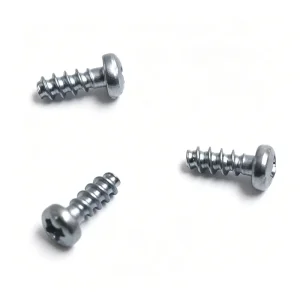
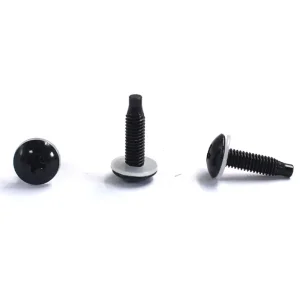
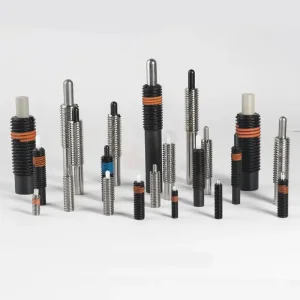
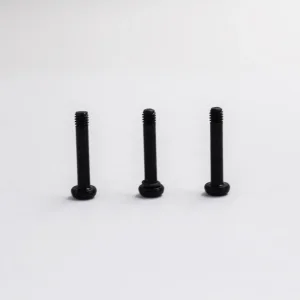
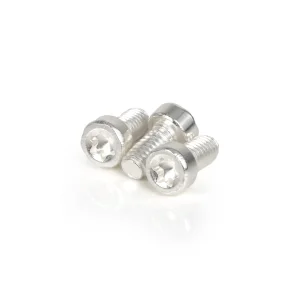
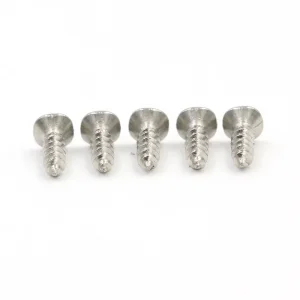
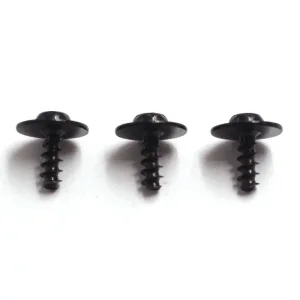
Review our specialized selection of precision-threaded machine screws, anti-tamper security fasteners, spring plungers, and self-tapping solutions for mass manufacturing.
Submit 2D CAD drawings (DWG/PDF) or 3D STEP models today. Our application engineering team will review tolerances, evaluate material manufacturability, and supply a comprehensive DFM review within 24 hours.
