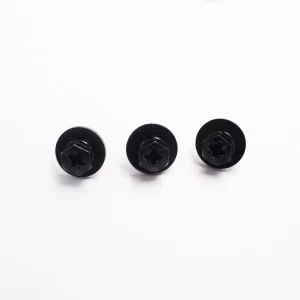
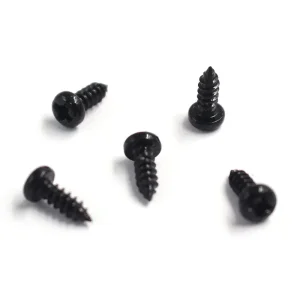
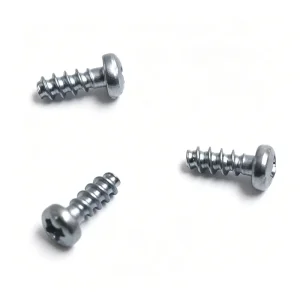
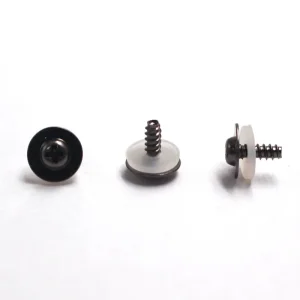
Engineered cold-headed fasteners developed under IATF 16949 and ISO 9001 certified clean-run facilities.
Overcoming plastic creep, boss dilation, and micro-cracking through 30° flank angle displacement engineering.
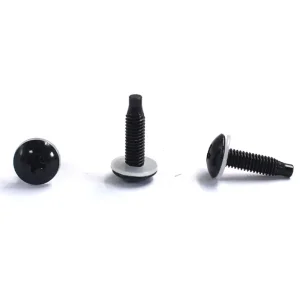
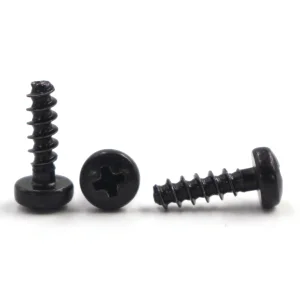
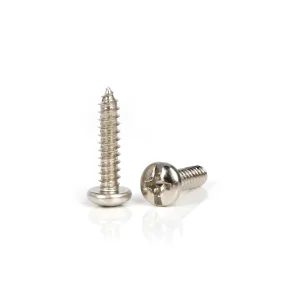
Standard self-tapping fasteners utilize 60° thread profiles that induce severe radial expansive stresses within injection-molded plastics. PT thread profiles employ a slender 30° flank angle, cutting radial bursting forces by up to 50% while converting installation torque into axial clamping force.
By narrowing the core shank and expanding thread pitch, the PT profile accommodates optimal volume for thermoplastic displacement. Material flows smoothly along the root radius without structural shearing, reducing micro-fractures in filled polyamides, PBT, and polycarbonates.
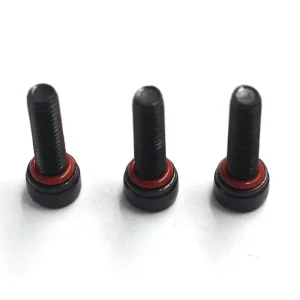
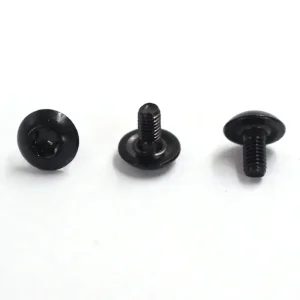
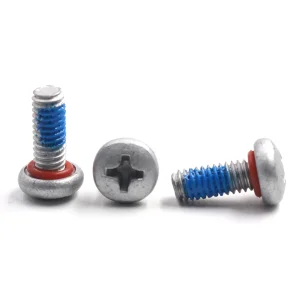
The low-profile cylindrical pan head design provides an expansive flat bearing plane. When assembled against thin-walled enclosures, it evenly distributes pre-load stress, eliminating surface sink marks, cracking at clearance points, and cyclic relaxation under vibration.
Comprehensive manufacturing capabilities for non-standard, OEM, and drawing-customized PT fasteners.
| Dimensional Range | Nominal diameters from PT 1.0, PT 1.4, PT 1.8 (Micro-electronics) to PT 2.0, PT 2.5, PT 3.0, PT 4.0, PT 5.0, PT 6.0; lengths up to 80mm. Custom aspect ratios on demand. |
|---|---|
| Base Materials | Cold-heading carbon steel (1018, 1022A, 10B21), Case-hardened Alloy Steel, Stainless Steel (Austenitic SUS304 / SUS316, Martensitic SUS410 hardened), Brass, and Aluminum. |
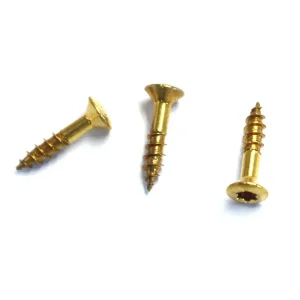
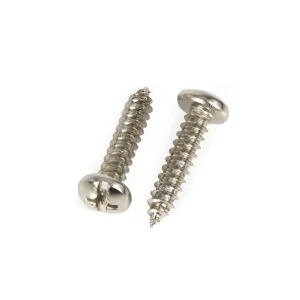
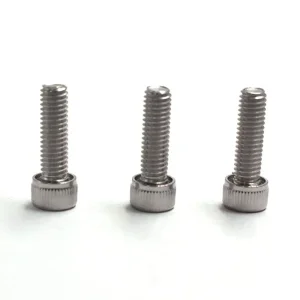
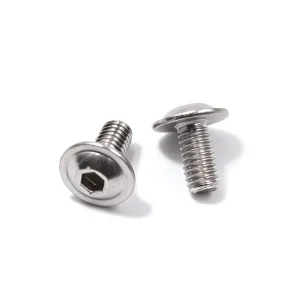
| Drive Geometries | Torx (6-Lobe / ISO 10664), Tamper-Proof Security Torx with Pin, Phillips (Cross Recess), Pozidriv, Slotted, Hex Socket, and Custom Anti-Tamper Triangular configurations. |
| Heat Treatment & Case Depth | Continuous mesh-belt carbonitriding furnace; Surface hardness: HV 450–750 (custom tailored to polymer matrix); Core hardness: HV 270–390; Case depth: 0.05–0.25mm per DIN 7500. |
| Surface Finishes & Passivation | Zinc (Clear, Yellow, Black trivalent passivation), Nickel, Black Oxide, Zinc-Nickel alloy (1000+ hrs salt spray to red rust), Dacromet, Geomet, PTFE fluoropolymer dry film, Nylon Patch. |
| Target Polymer Matrices | ABS, Polycarbonate (PC), Polyamide (PA6, PA66 with 15–50% Glass Fiber), PBT, POM (Acetal), PEEK, Polypropylene (PP), Polystyrene (PS), and bio-resins. |
Tailored fastening solutions meeting regional manufacturing standards and mission-critical operating environments.
Engine bay radar units, LiDAR casings, and battery management system (BMS) composite plastic trays endure high-frequency engine harmonic vibration and -40°C to 125°C thermal shocks. Custom PT pan head screws prevent thread stripping during automated multi-spindle assembly, maintaining reliable torque retention without chemical threadlockers.
Dialysis machines, surgical hand tools, and point-of-care analytical cartridges require biocompatible, non-shedding micro-fasteners. Precision passivated SUS316 stainless steel PT pan head screws (PT 1.2 to PT 2.0) eliminate plastic particulate flaking and deliver repeatable seating torque across polycarbonate housings.
In ultra-compact wearables, smart home routers, and handheld scanners, space restrictions demand small head heights and narrow boss diameters. PT pan head fasteners minimize boss outer-wall thickness requirements from the typical 2.5d down to 2.0d, freeing up PCB clearance and simplifying industrial mold design.
Combining vertically integrated manufacturing hubs with advanced cold heading engineering.
Operating over 20,000 m² of plant space across Dongguan, Shaoguan, and Wuhan, we provide full production continuity, rapid scale-up, and risk mitigation against regional logistical disruptions.
Complete domestic design and fabrication of cold-heading punches and thread-rolling dies reduce lead times for custom fastener prototypes from weeks down to 5–7 business days.
High-speed glass-plate laser sorting systems inspect dimensional runout, thread completeness, head concentricity, and contamination at up to 1,200 parts/min, maintaining PPM levels < 5.
With 30 years of export experience to over 60 countries, our plants support direct multimodal shipping via Shenzhen and Hong Kong ports with complete customs and tariff documentation.
Adapting joining technologies to sustainable engineering plastics, light-weighting targets, and digital traceability.
As consumer brands pivot to post-consumer recycled (PCR) plastics and polylactic acid (PLA) formulations, variable melt flows and brittle root dynamics challenge traditional screws. Our R&D team is refining variable-lead PT thread geometries to preserve strip-out safety margins in recycled polymers.
Next-generation smart enclosures require integrated electromagnetic shielding. We are developing selective under-head conductive coatings and serrated contact washers that break surface anodization or plastic dielectric layers to provide continuous chassis grounding.
To meet evolving EU Digital Product Passport (DPP) standards, each cold-headed batch is tied to an indexed raw material heat code. This enables downstream tier-one automotive and industrial suppliers to access chemistry, tensile strength, and metallurgical data via direct API queries.
Ensuring risk-free integration into European, North American, and East Asian production ecosystems.
Full support for automotive launch programs, including Process FMEA, Control Plans, Gage R&R, Dimensional Measurement Reports, and material testing certificates.
Every finish, plating bath, and raw material is strictly audited to ensure total freedom from hexavalent chromium (Cr6+), lead, cadmium, and SVHC candidate substances.
Our quality management infrastructure aligns with German automotive standard VDA 6.3, ensuring high-standard process capabilities across manufacturing, tooling maintenance, and change controls.
Localized technical assistance including boss hole diameter calculation, drive torque mapping, and torque-to-fail (TTF) destructive lab testing for customer substrate samples.
Essential design guidelines, material selection rules, and supply chain timelines for custom PT fasteners.
Comprehensive standard and custom components for industrial manufacturing, tooling, and electronic assemblies.