Precision-engineered self-tapping and thread-forming hardware cold-headed for high vibrational stability, reduced installation torque, and structural integrity across ductile metals, engineering polymers, and composite substrates.
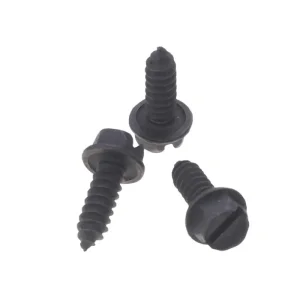
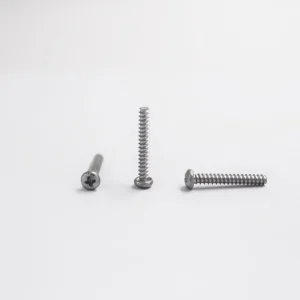
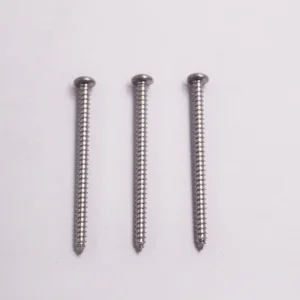
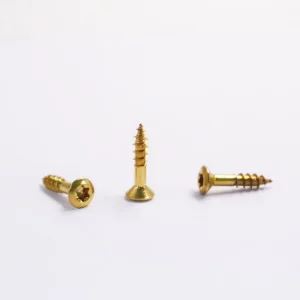
Lombardy stands as Italy's industrial backbone and one of Europe’s four motors for growth. The metropolitan area of Milan, extending through Monza-Brianza, Varese, and Bergamo, is characterized by ultra-specialized manufacturing sectors where self-tapping screw precision directly governs assembly line uptime, warranty liability, and structural fatigue resistance.
The manufacturing territory surrounding Milan is distinct in Europe: it is not dominated by monolithic single-product mega-factories, but rather by agile, high-technology Tier-1 and Tier-2 component suppliers, automated packaging machine builders (the Emilian-Lombard Packaging Valley), and the world-renowned Brianza furniture and design hub.
Globally, self-tapping fastener engineering is undergoing a paradigm shift from simple thread-cutting screws to advanced trilobular thread-rolling fasteners (DIN 7500) and specialized thermoplastic thread-forming geometry (PT thread geometry). This shift is accelerated by three planetary manufacturing drivers:
Specifying the correct self-tapping screw family is critical for preventing stripped boss threads, micro-fissuring in ductile alloys, and hydrogen-induced delayed fracture. Review the comparative engineering table below:
| Classification | Thread Geometry / Profile | Applicable Substrates | Dominant Milan Application | Key Mechanical Benefit | Quality Standard |
|---|---|---|---|---|---|
| Thread Forming (Trilobular) | Tri-roundular cross section (DIN 7500), 60° metric flank | Mild steel, wrought aluminum, cast Zn/Al alloys | Automotive Tier-1 bracketry, Milan robotic cells | Zero tap swarf; high prevailing back-out torque; eliminates spring washers | DIN 7500 / ISO 7085 |
| Thermoplastic PT-Thread | 30° narrow profile, widened pitch, optimized core | PA66, PBT, POM, ABS, polycarbonate, GF-polymers | Precision medical devices, Milan lighting fixtures, appliances | Low radial boss stress; minimizes plastic relaxation; superior strip-to-drive torque | WN 1412 / ISO 1478 |
| Type AB / B Thread Tapping | Spaced thread with gimlet or blunt cone point (60° flank) | Punched/drilled sheet metal (0.5mm - 2.5mm), plywood | HVAC cabinetry, metal furniture, electrical distribution panels | Fast initial bite into stamped prep-holes; high pull-out capacity | ISO 1481 / DIN 7981 |
| Thread Cutting (Type F / 1 / 23) | Machine screw pitch with single/multiple cutting flutes | Die-cast zinc, cast iron, heavy aluminum extrusions | Heavy industrial gearmotors, machine tool enclosures (Brescia) | True chip evacuation; low driving torque in heavy cross-sections | ANSI B18.6.4 / DIN 7513 |
| Bi-Metal Self Drilling | Case-hardened carbon steel drill tip welded to A2/A4 body | Heavy structural steel framing + external facade panels | Milan modern architectural envelopes (CityLife, Porta Nuova) | Drills, taps, and fastens in one operation with long-term atmospheric rust immunity | EN ISO 15480 |
High-strength case-hardened tapping screws (core hardness >320 HV, surface hardness >450 HV) electroplated with zinc risk catastrophic delayed hydrogen embrittlement. YH Fastener strictly executes automated de-embrittlement baking within 4 hours of pickling/plating at 200°C–220°C for 8 to 24 hours per ISO 15330 protocols, fully verified via wedge-load sustained torque testing.
Assembly failures on automated lines occur when the driving torque ($T_d$) encroaches upon the stripping torque ($T_s$). In Milan automated assembly lines, our thread geometry achieves a guaranteed torque safety ratio of $T_s / T_d \ge 3.0$. This accommodates pneumatic and servo electric driver shut-off variations without thread stripping or incomplete thread engagement.
To exceed UNI EN ISO 9227 standards, our surface engineering laboratory offers black oxide with inorganic sealers, Cr3+ trivalent blue/yellow passivation, mechanical zinc plating, and non-electrolytic zinc flake coatings (Geomet / Magni type) delivering 720 to 1,500 hours without red rust, completely eliminating galvanic reactions with light aluminum frames.
From robotic machinery in Sesto San Giovanni to bespoke luxury kitchen systems in Meda and Cantù, explore how customized thread geometries solve distinct engineering bottlenecks.
High-speed packaging machines for the pharmaceutical and food sectors generate constant vibrational harmonics. Traditional nuts and bolts loosen or drop washers into food packaging conveyors.
YH Solution: DIN 7500 trilobular stainless steel (A2-70) thread-forming screws. The triangular lobe cross section forms a zero-clearance mating thread with 100% flank contact, yielding superior prevailing locking torque without chemical threadlockers.
Brianza design ateliers require invisible, flush fasteners that can secure thin custom architectural aluminum extrusions directly into solid walnut or fire-retardant marine composite panels.
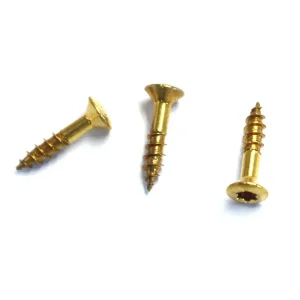
YH Solution: Countersunk Torx drive self-tapping screws with under-head ribs and fine-tuned type AB threads. The Torx recess prevents tool slippage that would ruin expensive veneers, while underhead ribs mill a clean countersink pocket.
Northern Italy’s expanding e-mobility tier-1 supply base requires sealing and vibration resistance when fastening thin aluminum die-cast housings to composite battery carrier trays.
YH Solution: M4 & M5 trilobular fasteners with integrated under-head EPDM sealing collars and pre-applied polyamide micro-encapsulated locking patches, meeting IP67 liquid ingress ratings under continuous vibration.
Procurement directors and supply chain managers in Northern Italy face port backlogs, tariff volatility, and the administrative burden of handling hundreds of fastener SKUs. YH Fastener bridges this gap with comprehensive engineering governance.
Every custom self-tapping fastener production run can be accompanied by complete PPAP Level 3 documentation, including 3.1 Raw Material Mill Test Certificates, Process FMEA, Control Plan, Dimensional Measurement Reports (via coordinate measuring machine), and Plating Thickness Verification per XRF spectrometry.
To safeguard automated multi-axis screw-driving lines from feed-jam downtime caused by mixed foreign parts or malformed threads, our facility operates high-speed glass disk optical sorting tables. We inspect head diameter, total length, shank straightness, drive recess depth, and pitch integrity down to zero PPM goals.
Through our global logistics network, we coordinate buffer stock agreements and door-to-door DDP shipments directly into warehousing hubs in Milan (Segrate, Rho, Malpensa logistics corridor) and northern distribution centers, shielding European partners from assembly line interruptions.
Direct answers to the most common metallurgical, dimensional, and regulatory questions submitted by Italian procurement engineers.
Thread-forming screws (such as trilobular fasteners) displace material plastically without cutting. This preserves the grain flow structure of the host metal, generates zero metallic chips (vital in electronics, food equipment, and hydraulics), and forms a close-tolerance mating thread that resists vibrational loosening. Thread-cutting screws have cutting edges and flutes designed to cut and evacuate material like a tap; they are primarily used in brittle materials like cast iron or thick, low-ductility zinc die-castings where forming would create excessive hoop stresses and crack the boss.
The theoretical hole diameter ($d_h$) is generally calculated based on the nominal screw diameter ($d$) and the thread pitch ($P$): $d_h \approx d - 0.85 \cdot P$ to $d - 0.90 \cdot P$ depending on the ductility of the alloy (e.g., AlSi10Mg vs. AlSi12). Because die-cast bosses possess a draft angle (typically 0.5° to 1°), hole sizing must be evaluated at both the top and bottom of the hole depth. We recommend a thread engagement length of $1.5 \times d$ in aluminum and $2.0 \times d$ in thermoplastics to ensure the screw shank yields before the internal thread strips.
Austenitic stainless steels (A2-70 / SUS304, A4-70 / SUS316) cannot be case-hardened using standard carburizing without losing their chromium corrosion-resistance layer. If driven directly into structural carbon steel, the screw threads will gall or strip. For tapping into hard sheet steel (>120 HV), YH Fastener provides two solutions: (1) Martensitic 410 stainless steel with induction-hardened threads and passivated finish, or (2) Bi-metal screws where a cold-headed A2/A4 head and shank is friction-welded to a hardened carbon steel tapping/drilling tip.
Direct contact between carbon steel/copper and aluminum induces rapid galvanic decay in humid or outdoor industrial atmospheres. We supply high-performance Zinc-Nickel alloy electroplating (12-15% Ni) with an inorganic topcoat, or multi-layer non-electrolytic zinc flake coatings (such as Geomet 321/500 or Magni 565). These coatings deliver over 1,000 hours of neutral salt spray resistance (ISO 9227) while maintaining an electrochemical potential compatible with aluminum, preventing galvanic pitting.
All our products are certified 100% free of SVHC substances above 0.1% w/w per EU REACH Regulation (EC 1907/2006) and compliant with RoHS 2011/65/EU and (EU) 2015/863 (strictly zero Pb, Cd, Hg, Cr6+, PBB, PBDE). Furthermore, to support our Italian and Milan partners with D.Lgs. 116/2020 environmental labeling laws, our export packaging includes clear alphanumerical recycling codes (PAP 20 for corrugated cartons, LDPE 4 for inner moisture-barrier bags).
For standard custom modifications (custom shank lengths, specific under-head serrations, or standard drive recess switches), prototype tooling and first-article samples with dimensional CMM inspection reports take 12 to 18 calendar days. Mass production runs generally range between 3 to 4 weeks depending on batch heat-treatment cycles and specialized multi-layer plating requirements.
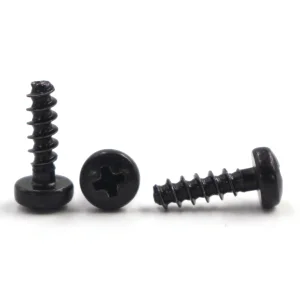
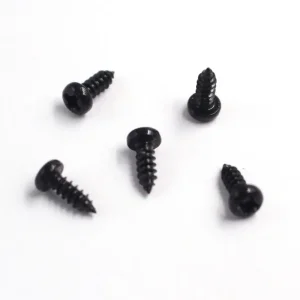
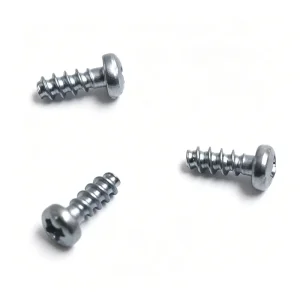
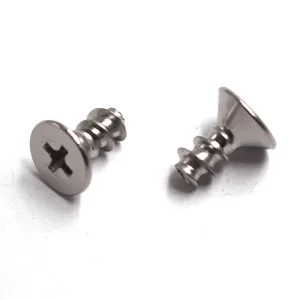
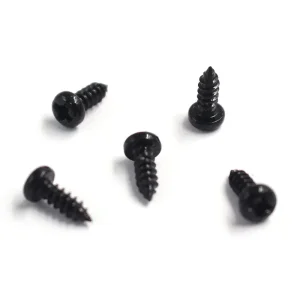
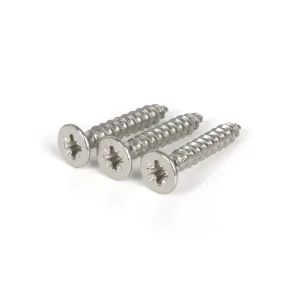
Explore our full cold-heading manufacturing range. From ultra-thin head Torx thread-forming fasteners for electronics to heavy-duty wood and metal tapping assemblies.
Upload your 2D CAD drawings (PDF, DWG, DXF) or 3D models (STEP, IGES). Our senior fastener application engineers will provide feasibility analysis, pilot hole recommendations, and a formal quote within 24 hours.
