
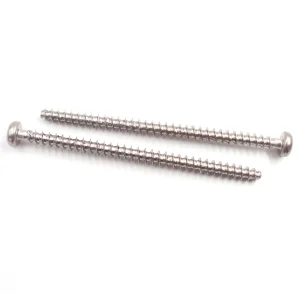
Thermoplastic Forming
View Product Specs
Engineered specifically for high-stress cyclic vibration, rapid thermal fluctuations across the Ethiopian Rift Valley, and lean assembly speed across Bole Lemi, Hawassa, and Kilinto Industrial Zones.
As the second-most populous nation in Africa and one of the fastest-growing economies in Sub-Saharan Africa, the Federal Democratic Republic of Ethiopia is aggressively executing its Ten-Year Development Plan (2021–2030) and the Homegrown Economic Reform Agenda. The focus has rapidly evolved from low-complexity agrarian output to advanced manufacturing, localized value-addition, and high-precision engineering.
With the Ethiopian government banning internal combustion vehicle imports to accelerate EV penetration, vehicle assembly plants in Addis Ababa, Bishoftu, and Adama require structural fasteners, nylon-patch locking screws, and class 8.8/10.9 bolts capable of resisting intense torsional fatigue caused by high-altitude gradients and varied road surfaces.
Following the liberalization of Ethiopia’s telecommunications market (Ethio Telecom and Safaricom Ethiopia) and the influx of electronic manufacturing inside Bole Lemi and Kilinto IPs, demands have surged for DIN 7982, M2–M4 fine-thread pan head screws, and corrosion-resistant fasteners for fiber-optic distribution boxes, 4G/5G towers, and smart meters.
The expansion of the Grand Ethiopian Renaissance Dam (GERD) and associated transmission corridors to Kenya, Djibouti, and Sudan requires severe-environment fasteners. Fasteners must deliver 1,000+ hours salt-spray resistance, zero galvanic degradation, and robust sealing against mineral-rich water and volcanic soil chemistry.
International Tier-1 contractors, engineering procurement management (EPC) syndicates, and multinational OEMs operating inside Ethiopia encounter distinct operational hurdles that standard consumer-grade fastener traders cannot resolve.
In modern lean manufacturing, fasteners represent less than 1% of the total bill of materials (BOM) cost, yet represent over 60% of potential mechanical failure modes. In Ethiopia, where localized spare-part logistics can take weeks from Port of Djibouti along the Ethio-Djibouti Railway corridor, a single stripped thread or delayed batch of self-tapping screws can halt an entire production line in Hawassa Industrial Park.
| Procurement Dimension | Standard Market Fasteners | YH Fastener Industrial Grade |
|---|---|---|
| Tensile & Shear Yield | Variable, uncontrolled annealing | 100% heat-treated to Class 8.8 / 10.9 / 12.9 |
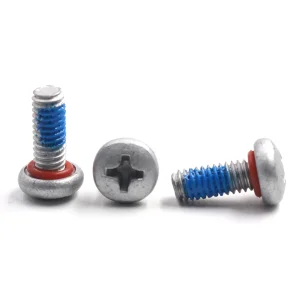
| Anti-Loosening Tech | Manual chemical threadlocker | Automated pre-applied 360° / 180° Nylon patch |
| Environmental Sealing | Unbonded flat rubber rings | EPDM / Silicone O-rings co-molded under head |
| Salt Spray Resistance | 24–48 Hours (White Rust) | 500–1,500+ Hours (Neutral Salt Spray ISO 9227) |
| Certification Audit | None or basic commercial invoice | IATF 16949, ISO 9001, RoHS, REACH, ES Compliance |
Engineering components in Ethiopia must withstand altitude shifts from 2,400 meters above sea level in Addis Ababa to sub-sea-level thermal depressions in the Afar Triangle. Fasteners experience intense UV degradation, wide thermal cycling (-2°C to +45°C diurnal range), and fine volcanic abrasive dust.
Designed specifically for agricultural equipment in Oromia and solar array installations across Tigray and Somali regions. Our flat-head and pan-head screws with integrated EPDM/Silicone elastomeric seals prevent fluid ingress up to 10 bar pressure, isolating joints from environmental slurry and high mineral concentrations.
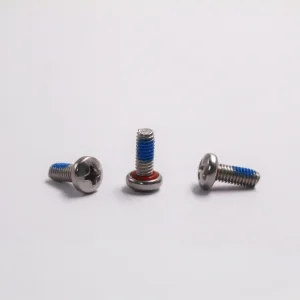
Mechanical vibration on rugged logistical arteries (Modjo-Hawassa expressway and secondary transport routes) causes threaded joint relaxation. Our factory-applied blue nylon patch delivers uniform prevailing torque (per IFI-124 / DIN 267-28), eliminating messy liquid adhesives and ensuring immediate joint reliability.
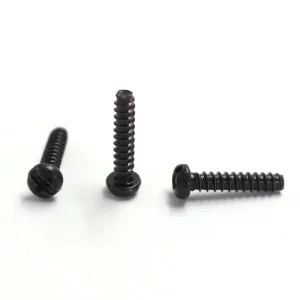
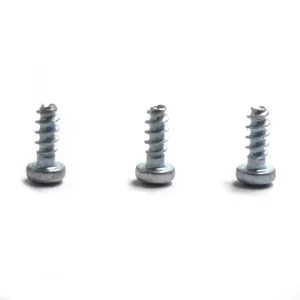
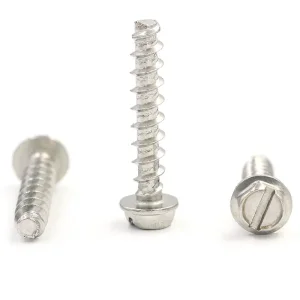
Traditional 60° thread-forming screws create excessive radial hoop stress, splitting delicate injection-molded casings manufactured from recycled polymers in local Ethiopian factories. Our proprietary 30° thread flank profile cuts cleanly into thermoplastics, maximizing pull-out strength while minimizing driving torque.
Operating across a multi-site manufacturing footprint exceeding 20,000 square meters (Dongguan HQ, Shaoguan, Wuhan), Yu-Huang Electronics enforces an uncompromising zero-defect paradigm governed by IATF 16949 automotive disciplines.
Every wire rod coil undergoes optical emission spectroscopy to verify strict carbon, chromium, nickel, and molybdenum content before heading, preventing brittle failure.
Precise grain-flow alignment along the critical junction of head and shank eliminates the stress concentrations common in cheap machined alternatives.
100% automated glass-plate vision machines inspect head diameter, recess concentricity, pitch consistency, and plating thickness at speeds up to 1,200 parts/minute.
Every shipment bound for dry ports like Modjo, Kality, or directly to your Ethiopian bonded warehouse includes certified documentation:
Executing successful commercial procurement in Ethiopia requires deep operational alignment with local institutional procedures, banking systems, and transport links.
We supply complete Pre-Export Verification of Conformity (PVoC) certificates and accredited laboratory test documents. Our components comply with Compulsory Ethiopian Standards (CES) and international equivalents (ISO, DIN, ANSI, JIS), ensuring unhindered clearance through Ethiopian Customs Commission checkpoints.
Navigating foreign currency allocations is critical in Addis Ababa. We accommodate confirmed Letters of Credit (L/C), Cash Against Documents (CAD) under central bank authorizations, and offshore multi-currency escrow settlement pathways, stabilizing procurement lines against macroeconomic liquidity adjustments.
We partner with premier freight forwarders operating the strategic maritime passage via the Bab-el-Mandeb Strait directly into the Doraleh Multipurpose Port (Djibouti), transitioning efficiently onto the electrified Addis Ababa-Djibouti Railway into Modjo and Comet Inland Dry Ports with minimal demurrage risk.
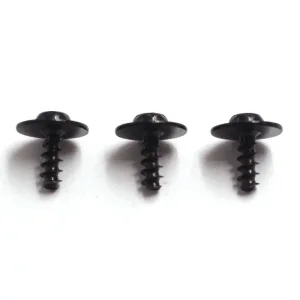
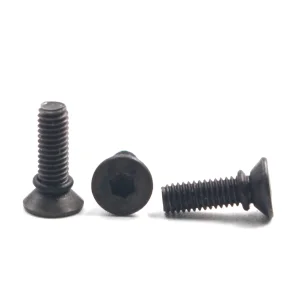
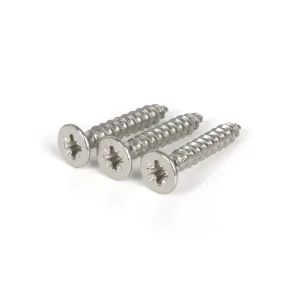
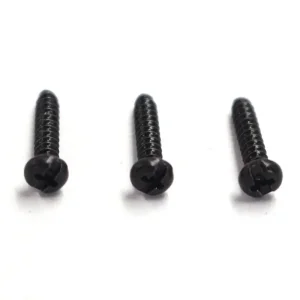
Engineered for consistency across plastic moulding, structural sheet metal enclosures, architectural hardware, and precision instrument panels.
Detailed engineering and commercial answers to simplify fastener sourcing, compliance, and integration for project engineers and procurement managers across East Africa.
Hydrogen embrittlement is a catastrophic failure mode in electroplated fasteners with hardness exceeding 320 HV (Class 8.8, 10.9, and case-hardened self-tapping screws). During acid pickling and electro-galvanizing, atomic hydrogen can penetrate the steel lattice.
For all structural and tapping fasteners shipped to Ethiopia, our production enforces an immediate baking process (within 1 to 4 hours post-plating) at 200°C±5°C for a verified duration of 4 to 12 hours depending on core hardness and diameter. Every production lot is verified through sustained preload torque testing (per DIN 50969) prior to packaging, ensuring zero delayed-brittle failures under high-altitude torsional service.
We provide full export-compliance documentation sets tailored for Ethiopian port clearance. These include:
Standard self-tapping screws (such as DIN 7981 or Type AB) feature a 60° thread profile designed for ductile sheet steel. When driven into injection-moulded thermoplastics (ABS, Polycarbonate, Polyamide, or PBT) commonly used in Ethiopian electronics and smart meter assemblies, the 60° profile creates high radial outward stresses that crack the boss, requiring costly glue repairs or scrap.
Our PT thread design employs a sharp 30° thread profile with an optimized pitch and recessed core. This profile slices through the thermoplastic matrix cleanly, converting driving torque into clamping force rather than lateral burst stress. It reduces driving torque by up to 35%, doubles strip-out resistance, and accommodates multiple maintenance insertion cycles without stripping the plastic boss.
We ship via multimodal sea-rail freight. Full Container Load (FCL) or Less than Container Load (LCL) consignments depart from Shenzhen, Guangzhou, or Ningbo ports directly to the Port of Djibouti via maritime shipping lines (e.g., Ethiopian Shipping and Logistics Services Enterprise - ESLSE, Maersk, or CMA CGM).
From the Doraleh Multipurpose Terminal in Djibouti, shipments transition directly onto the electrified Addis Ababa-Djibouti railway corridor, arriving at Modjo Dry Port (Ethiopia’s primary inland logistics hub) or Kality Dry Port within 48 to 72 hours of port offloading. We also manage air freight directly to Addis Ababa Bole International Airport (ADD) via Ethiopian Cargo for urgent trial-lot or prototype tooling programs.
Yes. Over 45% of our global output involves bespoke fastener geometries. If your Ethiopian manufacturing program requires custom shoulder diameters, captive washers (SEMS), non-standard head profiles, anti-tamper security recesses (Torx pin, triangular, snake-eye), or specialized coating layers, our engineering group conducts an initial DFM (Design for Manufacturability) feasibility review within 24 hours.
We build specialized heading dies, thread rolling dies, and secondary machining tooling in-house, supplying initial first-article inspection reports (FAIR) with full PPAP Level 3 documentation prior to batch manufacturing.
Partner directly with a certified manufacturer. Access high-precision fasteners, complete metallurgical traceability, and steady supply lines into the Ethiopian market.