Explore our core manufactured fastening systems engineered for mission-critical joints, vibration damping, and ingress protection across demanding global production lines.
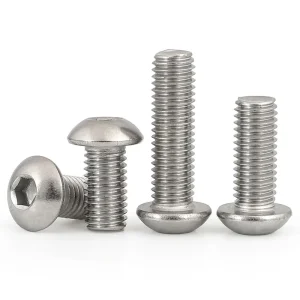
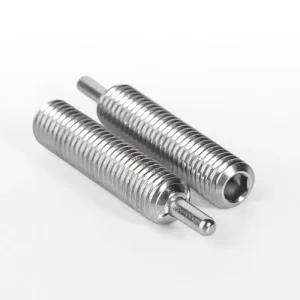
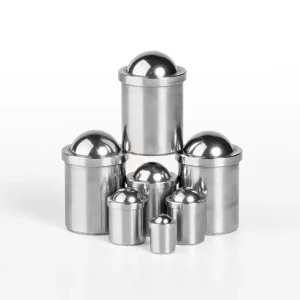
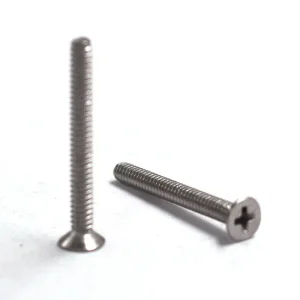
In modern high-value assembly, the intersection between anti-tamper security and self-tapping efficiency defines joint reliability, field lifecycle, and field warranty costs.
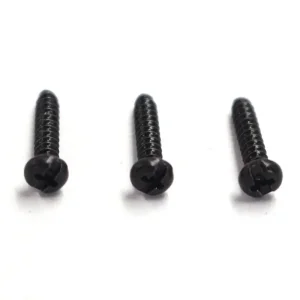
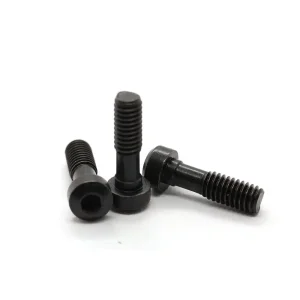
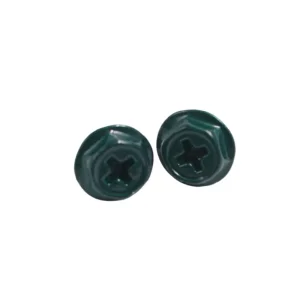
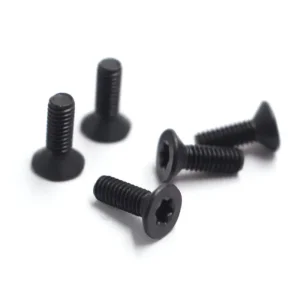
Engineered with non-standard security drive recesses—including Torx Pin (Pin-in-Torx), Hex Socket Pin, One-Way Slotted, and Tri-Wing profiles. These configurations eliminate unauthorized field disassembly, preventing user tampering while ensuring maximum cam-out resistance under automated, high-torque industrial feed systems.
Combining thread-cutting (Type F, Type D) and thread-forming (Type AB, Type B, Plastite-style) geometries. Through controlled multi-stage progressive cold heading and work hardening, the austenitic stainless threads cleanly tap into ductile metals, aluminum castings, and engineered composites without pre-tapping or swarf formation.
Fabricated from cold-heading quality AISI 304 (A2-70) and molybdenum-bearing AISI 316 (A4-80) wire rods. Subjected to full nitric or citric acid passivation conforming to ASTM A967/AMS 2700, delivering over 1,000+ hours in salt spray testing (ASTM B117) without galvanic or atmospheric pitting.
Why Tier-1 hardware procurers prefer YH Fastener’s integrated manufacturing chain over fragmented tier distributors.
Direct volume procurement partnerships with leading domestic stainless mills allow precise melt chemistry control (minimizing non-metallic inclusions and controlling carbon content). Raw coils undergo strict eddy current and chemical spectrographic analysis prior to wire drawing, ensuring exceptional heading ductility and core toughness.
Dedicated high-speed CNC EDM and micro-grinding workshops produce specialized tungsten carbide security heading dies in-house. This internal capability reduces tooling turnaround for custom drive recesses and bespoke pitch profiles from typical industry averages of 4 weeks down to under 5 business days.
Equipped with multidirectional laser and CCD glass plate optical sorting machines, inspecting every tapping screw for pitch diameter, recess concentricity, burrs, pin height, and drive depth at rates up to 800 pcs/minute. Designed to achieve single-digit PPM targets for automated robotic screwdriver stations.
Ensuring cross-border transparency, environmental safety certifications, and traceability across North American, European, and Asia-Pacific supply routes.
Strict third-party SGS/TÜV batch testing verifying non-detectable levels of heavy metals, restricted phthalates, and SVHCs according to EU Directive 2011/65/EU and Regulation (EC) No 1907/2006.
Full production part approval process documentation including Process Flow Diagrams, PFMEA, Control Plans, Gage R&R, and complete 3.1 Mill Test Certificates ensuring end-to-end heat-number traceability.
Comprehensive HS code classification guidance (e.g., 7318.14 self-tapping screws), bonded warehouse stocking models, and Certificate of Origin (CO, Form E, Form REX) issuance for tariff optimization.
Vendor-Managed Inventory programs offering localized buffer stocks, barcoded outer master cartons, blister packaging for assembly kits, and JIT dispatch to support dynamic production cycles.
Analyzing high-reliability fastened joints under intense mechanical, thermal, and public-access conditions.
Used to fix internal sensor covers, BMS housings, and busbar containment brackets. Austenitic stainless security screws eliminate dielectric contamination from metal plating flakes and resist high-voltage enclosure tampering during vehicle operation.
Exposed to severe weather, coastal maritime humidity, and opportunistic vandal attacks. Passivated 316 security tapping screws fasten camera domes, sensor arrays, and traffic management housings directly to extruded alloy poles without rust bleed.
Self-tapping action provides rapid automated assembly on die-cast zinc or aluminum alloy active antenna units (AAUs). Security pin-heads restrict roadside and roof-mount maintenance strictly to authorized telecom service providers with matched driver bits.
The transition toward lighter structural alloys, micro-miniaturization, and automated robotic line feed drives constant innovation in cold heading metallurgy.
| Parameter Category | Standard Specification Range | High-Performance / Custom Option | Engineering Benefit |
|---|---|---|---|
| Nominal Thread Sizes | M1.6 to M8 (#0 to 5/16") | Micro sizes down to M0.8; custom multi-lead threads | Adaptable from high-density micro-electronics to heavy structural brackets. |
| Austenitic Alloys | AISI 304 (A2-70), AISI 316 (A4-70) | AISI 316L, 310S, 410 Martensitic (case-hardened) | Balancing structural shear modulus against severe acid/alkali exposures. |
| Drive Profiles | Torx Tamper Pin, Hex Pin, Tri-Wing | Two-Way Snake Eyes, High-Security 5-Lobe Pin | Custom bit exclusivity protecting proprietary machinery warranties. |
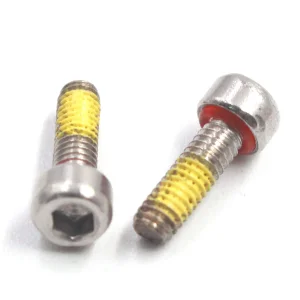
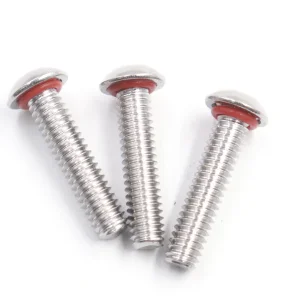
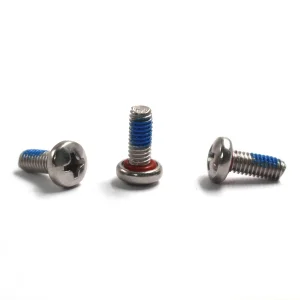
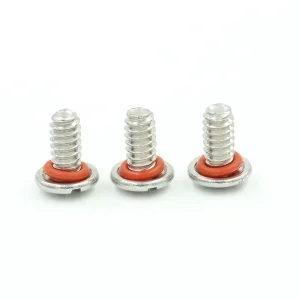
| Under-Head Sealing | Plain bearing surface, Serrated flange | Integrated vulcanized EPDM/Silicone O-rings; NYLOK patch | Combines anti-loosening vibration protection with IP67/IP68 hermetic seals. |
| Surface Passivation | Chemical Passivation (ASTM A967) | Electropolishing, Black Oxide, DLC (Diamond-Like Carbon) | Enhances aesthetic uniformity, anti-galling, and friction coefficient consistency. |
The industry shift toward magnesium and thin-gauge extruded aluminum requires specialized 30-degree and 40-degree thread profiles that reduce radial hoop stress, preventing housing fracture during direct driving.
Robotic vacuum suction and pneumatic blow-feed guns demand tight geometric head concentricity tolerances (within 0.05 mm) and strict magnetic deburring, eliminating jammed automation nozzles on smart assembly lines.
Global brands increasingly commission custom, patent-protected head recess shapes paired exclusively with factory-supplied Torx/Hex drivers to completely ring-fence third-party uncertified servicing.
Direct technical answers addressing metallurgical hardness, driving torque limits, non-standard tooling, and export logistics.
Austenitic stainless steels (such as 304 and 316) cannot be hardened by standard thermal quenching; their hardness is achieved via cold-work strain hardening during heading and thread rolling (reaching approximately HV 250–320). As a result, they tap into softer parent materials such as aluminum, brass, engineered plastics, and thin pre-punched light-gauge structural panels. When driving into harder carbon structural steels, we engineer case-hardened martensitic stainless steel (such as 410 or 420) or incorporate hardened drill-points with bi-metal welding technology.
Our tooling workshop optimizes drive depth ratios and internal flank angles (specifically in Pin-in-Torx and Tri-Wing profiles) to maintain true zero-degree drive angles. This maximizes surface-to-surface engagement between our CNC-machined driver bits and the screw recess, allowing high installation torque without axial push-out or head slippage.
Because we operate an internal die and tooling workshop in Dongguan, rapid prototyping for bespoke security screws typically takes 7 to 10 working days, including heading die fabrication, sample production, optical inspection, and full CMM dimensional validation. Production runs follow within 15 to 25 days depending on raw material stock and secondary surface treatment specifications.
For austenitic stainless grades (304, 316), hydrogen embrittlement is metallurgically negligible due to face-centered cubic crystal lattice behavior. However, for martensitic stainless grades (e.g., 410) or carbon steel sealing fasteners requiring acid pickling and electroplating, our facility mandates de-hydrogenation baking cycles within 4 hours of plating (typically held at 200°C–220°C for a minimum of 8 to 14 hours) conforming to ISO 4042 requirements.
Yes. We manufacture hardened S2 and Cr-V tool-steel security keys, Torx L-wrenches, and magnetic power screwdriver bits configured precisely to your fastener recess lots. Bundling both from one manufacturing source eliminates tolerance stacking, ensuring a smooth, slip-free drive fit on the line.
Explore complementary metric self-tapping screws, captive hardware, tool-free adjusters, and sealing screws for complete equipment bill-of-materials sourcing.