Explore factory-direct wholesale tapping screws, countersunk machine screws, and precision industrial hardware manufactured to DIN 7982, ISO 7049, and ASME B18.6.3 specifications.
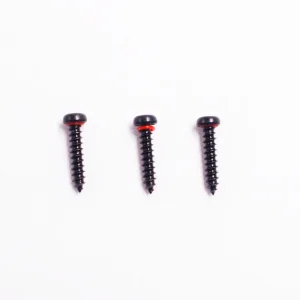
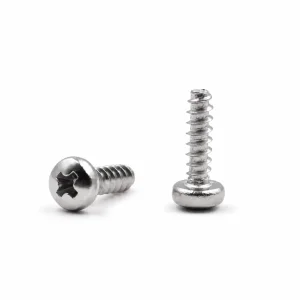
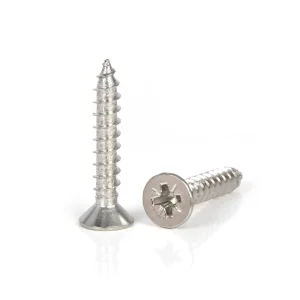
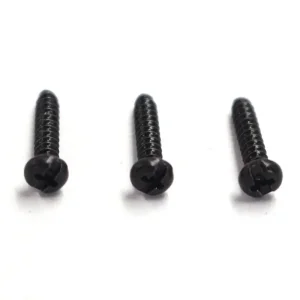
An authoritative white-paper analysis on cross-recessed countersunk thread-forming technology in modern high-speed automated manufacturing environments.
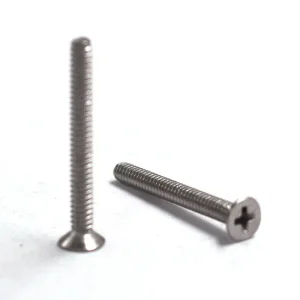
The Phillips drive (Type H recess) remains the premier global standard for automated mechanical assembly lines. Engineered with intentional self-centering dynamics, it minimizes bit slippage, protects high-speed robotic spindle tooling, and provides controlled torque-out thresholds to prevent workpiece thread strip-out in ductile metals and engineered resins.
Countersunk flat head architecture (82-degree standard in ASME/ANSI, 90-degree standard in DIN 7982 / ISO 7049) ensures critical flush mating. This surface coplanarity is mandatory in sliding rail mechanisms, aerodynamic automotive exterior assemblies, consumer device unibody casings, and tight chassis clearances where protruding fastener heads cause physical interference.
Thread-forming (Type AB, Type B) and thread-cutting (Type F, Type 23) screws eliminate preliminary thread tapping operations. In high-volume production, eliminating separate secondary tapping processes reduces tooling cycle times by up to 34%, cuts scrap rates from cross-threading, and generates zero metal chips in thread-forming applications.
At Yu-Huang Electronics Dongguan Co., Ltd. (YH Fastener), manufacturing efficiency is grounded in complete vertical integration. Located at the epicenter of China's world-leading precision engineering industrial cluster, our multi-facility infrastructure integrates continuous high-speed multi-station cold heading, high-precision thread rolling, controlled-atmosphere carburizing heat treatment, eco-compliant surface coating, and 100% optical sorting under one strictly managed quality umbrella.
While trading intermediaries outsource critical manufacturing stages across disjointed vendors, YH Fastener maintains end-to-end traceability from raw wire rod (certified 1022A carbon steel, 304, 316, and 410 stainless steel) to final seaworthy packaging. This vertically integrated control eliminates inter-factory freight transit delays, guarantees lot-to-lot dimensional consistency within ±0.02 mm, and accelerates non-standard custom tooling turnaround to as brief as 7–10 days.
Our factories operate strictly under ISO 9001:2015, ISO 14001:2015, and IATF 16949:2016 automotive quality management certifications. Every wholesale batch undergoes rigorous testing:
Tailoring head recess geometries, thread pitch, and surface engineering to exacting assembly demands.
Micro-countersunk Phillips tapping screws (M1.0 to M3.0) secure delicate PCB modules, shielding cans, and display chassis in smartphones, laptops, and telecom routers. Flush head seating prevents battery puncture hazards, while ultra-fine thread pitch preserves thread integrity within thin-walled magnesium-aluminum and polycarbonate housings.
Tier-1 automotive suppliers utilize custom flat head tapping screws to secure dashboard sub-frames, door trim cards, HVAC ductwork, and sensor brackets. Fasteners feature customized prevailing-torque patches or trilobular threads that actively suppress vibrational backing-out under continuous chassis vibration.
Refrigerators, commercial washing machines, and induction ranges demand high-speed automated assembly into pre-punched sheet metal panels. Flat head tapping screws ensure flush seams for gasket airtightness and aesthetics, while high-corrosion zinc-nickel coatings withstand internal condensation and cleaning detergents.
Evaluate design constraints between international cross-recessed countersunk tapping standards.
| Standard | Head Angle | Drive Recess | Thread Point Options | Common Materials | Primary Industrial Sector |
|---|---|---|---|---|---|
| DIN 7982 / ISO 7049 | 90° Countersunk | Phillips Type H (Cross) | Type C (Gimlet) / Type F (Blunt) | C1022A, A2-70 (304), A4-70 (316) | European Automotive & Machinery |
| ASME B18.6.3 | 82° Flat Countersunk | Phillips Type I / Cross | Type AB (Universal) / Type B | SAE 1018/1022, 18-8 Stainless, 410 | North American Industrial & HVAC |
| JIS B 1122 | 90° Flat Head | Phillips / JCIS Precision | Type 1, 2, 3 Thread Forming | Hardened Carbon Steel, SUS304 | Japanese Robotics & Consumer Hi-Tech |
| Custom OEM Specs | Custom 60° to 100° | Phillips / Torx / Combo | Pilot Point, High-Low, Trilobular | Custom Titanium, Brass, Alloy 435 | Aerospace, Medical & Defense Modules |
Key criteria procurement directors evaluate when selecting high-volume fastener partners.
High-Speed Automatic Bowl Feeders: Global assembly operations increasingly rely on automated air-blown or vacuum robotic screwdriving stations. Fasteners must meet microscopic dimensional sorting to eliminate bent shanks, oversized head burrs, and shallow recesses that halt robotic assembly cells.
Trilobular & High-Low Thread Geometry: Transitioning from conventional spaced threads toward triangular thread-forming geometries (such as Plastite and Taptite-compatible designs) reduces radial hoop stress in plastics and lowers drive torque while maximizing strip-to-drive torque ratios.
Hexavalent-Free Eco Coatings: Complete compliance with RoHS 3, REACH (SVHC), and global PFAS restrictions is mandatory. Advanced trivalent zinc with micro-encapsulated organic topcoats provides ultra-low friction coefficients (0.10–0.15 µ) for uniform clamping tension.
Complete PPAP Documentation: Automotive and medical OEM buyers mandate Production Part Approval Process (PPAP Level 3) packages, including Process Flow Diagrams, PFMEA, Control Plans, Measurement System Analysis (Gage R&R), and full 3.1 Material Test Reports.
Angle Mismatch Prevention: A frequent sourcing failure occurs when pairing ASME 82-degree countersunk screws into DIN 90-degree machined bevels (or vice versa). This results in uneven perimeter line contact, stress concentrations, and loose joints. Clear engineering drawings prevent these costly misalignments.
Buffer Inventory & VMI Agreements: To insulate global clients from geopolitical freight disruptions, YH Fastener provides safety stock warehousing across Dongguan and Hong Kong logistic hubs, enabling agile JIT (Just-In-Time) dispatch and sea/air freight consolidation.
Clear, authoritative technical answers from our senior fastener application engineers.
Thread-forming screws (DIN 7982 Type C / ASME Type AB & B) displace and cold-work the mating material to form internal mating threads without generating debris or swarf, making them optimal for ductile sheet metals and plastics. Thread-cutting screws (such as Type F or Type 23) feature integrated cutting flutes that slice threads into brittle castings, heavy steel plates, and thermoset plastics by producing small chips collected in designated relief flutes.
ASME/ANSI imperial standards mandate an 82° countersunk angle, whereas European (DIN/ISO) and Japanese (JIS) standards specify a 90° angle. Installing a 90° screw into an 82° countersunk pocket results in point contact at the top edge, causing head protrusion and incomplete clamp preload. Conversely, an 82° screw in a 90° recess contacts solely at the base of the head, causing extreme stress concentration and potential head detachment under dynamic load.
Case-hardened carbon steel screws (hardness >320 HV) undergo severe acid pickling and electro-galvanizing, absorbing atomic hydrogen that can cause delayed brittle fractures under static tension. YH Fastener enforces strict metallurgical baking within 1 to 4 hours post-plating in automated continuous ovens at 200°C–220°C for at least 4 to 8 hours, followed by pre-load torque testing per ASTM F606 to guarantee zero embrittlement failures.
Austenitic stainless steels (Grade 304 / 316) cannot be hardened by conventional heat treatment and remain relatively ductile (~200 HV); they are suitable for tapping into plastics and soft aluminum, but will strip when tapping into structural steel. For tapping into harder steels or thick aluminum, martensitic Grade 410 stainless steel is used, which can be hardened and tempered up to 40–45 HRC to withstand extreme thread-forming shear forces.
For standard stocked DIN/ISO/ASME items, shipments depart within 48–72 hours. For custom fasteners manufactured from customer 2D/3D drawings, tooling development takes 7–10 days, sample approval takes 3–5 days, and full mass production batches complete in 15–20 days. Our standard MOQ begins at 50,000 to 100,000 pieces depending on wire diameter, with flexible prototype evaluation batches available upon engineering review.
Expanded engineering lines manufactured across our Dongguan facilities for specialized mechanical and structural applications.
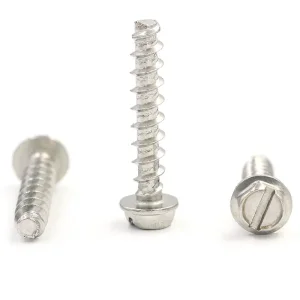
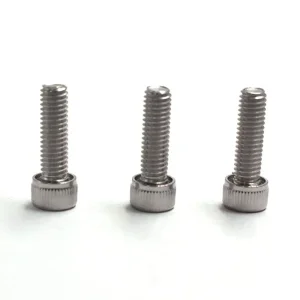
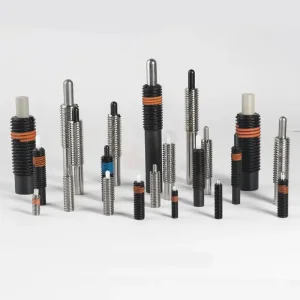
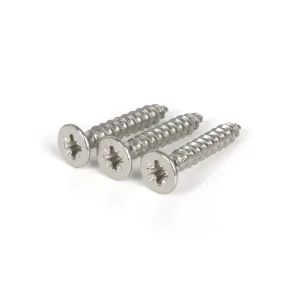
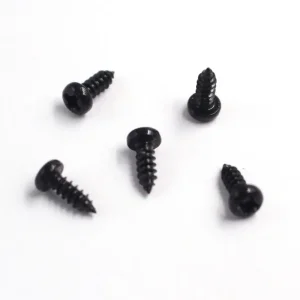
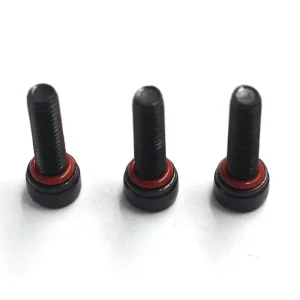
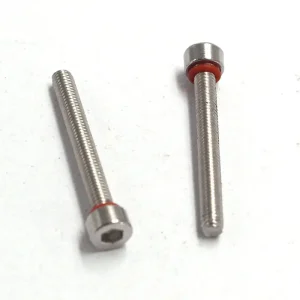
Whether you require standard bulk container shipments of DIN 7982 countersunk tapping screws or drawing-based custom cold-headed fasteners with micro-encapsulated nylon anti-vibration patches, our senior application engineers deliver comprehensive DFM feasibility assessments, PPAP Level 3 plans, and transparent factory-direct pricing within 24 hours.
Connect with Fastener Sales Engineers