Explore high-torque tolerance, corrosion-resistant, and vibration-proof fasteners produced under rigorous PPAP Level 3 compliance.
An engineering overview of global demand cycles, metallurgical evolution, and procurement dynamics across Tier-1 supply chains.
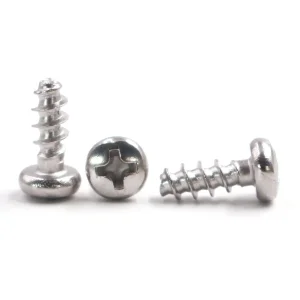
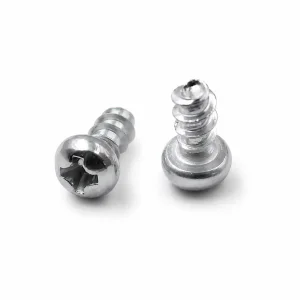
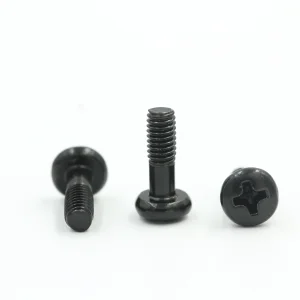
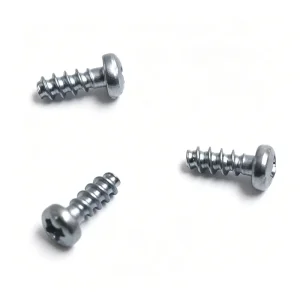
The Pan Head Phillips Screw (DIN 7985 / ISO 7045 / JIS B 1111 / ASME B18.6.3) represents one of the most mechanically ubiquitous fastening designs in modern engineering. Characterized by its low-profile rounded contour, high flat under-head surface area, and deep cruciform Phillips (Type H) recess, this fastener balances clamp-load distribution with aesthetic surface presentation.
Unlike countersunk or oval fasteners which require precision-beveled chamfers, the flat under-head bearing area of the pan head distributes axial preload uniformly over mating components. This critical mechanical attribute prevents compressive failure or indentation cracking in ductile thermoplastics, magnesium-aluminum cast alloys, and delicate copper-clad PCB motherboards.
In contemporary high-volume automated manufacturing, the cruciform recess delivers crucial engineering advantages: self-centering screwdriver positioning during rapid robot-arm feed cycles, predictable cam-out threshold torque curves that safeguard structural threads from overtightening, and universal field-service adaptability worldwide.
The international industrial fastener market exceeds $88 Billion USD annually, with precision cold-headed machine screws comprising nearly 22% of total transaction volume. In recent quarters, OEMs in North America, Germany, Japan, and ASEAN regions face a dual challenge: stringent supply chain traceability mandates (RoHS, REACH, Dodd-Frank Conflict Minerals) coupled with volatile pricing in austenitic stainless steel (SUS304/SUS316) and boron alloyed cold-heading rod stocks.
As precision manufacturing pivots toward Tier-1 smart factories, wholesale procurement strategies have migrated from transactional lowest-bid purchases to technical supplier partnerships. Direct-from-source manufacturers who combine in-house tooling wire drawing, continuous inert-atmosphere heat treating, and automated optical sorting ensure zero line-down events for mega-volume electronics and automotive assemblers.
How miniaturization, lightweight alloys, and sustainable surface metallurgy are reshaping standard screw specifications.
Consumer electronics, AR/VR optical modules, and surgical wearables demand pan head screws with shank diameters under 1.6mm. Controlling wire grain structure and forging micro-Phillips drives without tool chatter or head-shearing requires multi-stage micro cold heading machines operating within ±0.015mm tolerances.
Hexavalent chrome bans have transitioned wholesale production toward trivalent zinc-nickel (Zn-Ni) electroplating, zinc flake dip-spin coatings (Geomet/Dorken), and electrophoretic black finishes. These coatings endure 720 to 1,500 hours of ASTM B117 salt spray testing without red rust formation, satisfying EV chassis requirements.
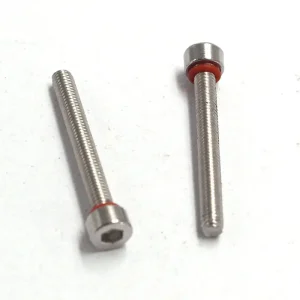
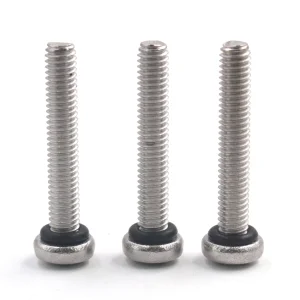
Automated assembly lines eliminate secondary manual liquid locking operations. High-speed 360-degree polyamide/nylon patch deposition and pre-formed elastomeric fluorosilicone under-head O-rings provide combined IP67/IP68 hermetic sealing and extreme vibration resistance right out of the bulk packaging.
From consumer electronics to mission-critical automotive ECUs, pan head screws deliver tailored performance.
In PCB carrier boards, server rack blades, and smartphone chassis, stainless steel 304/316 pan head screws provide rigid clamping against grounded chassis ground tracks. The wide bearing surface clamps conductive ground rings without chipping solder resist or deforming delicate FR4 fiberglass substrate cores.
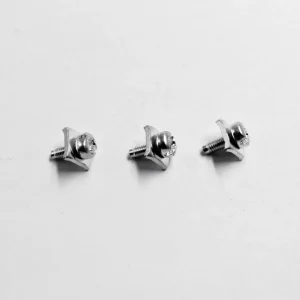
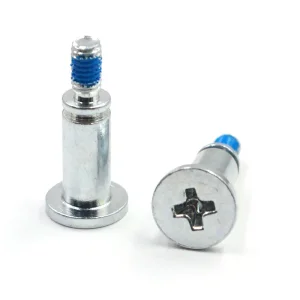
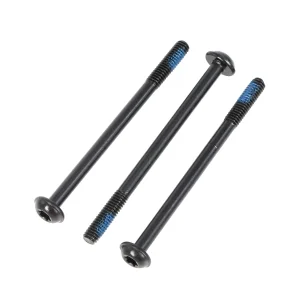
Under-hood sensors, ADAS radar brackets, and infotainment modules experience continuous harmonic vibration and broad thermal sweeps (-40°C to +125°C). Incorporating integrated conical spring SEMS washers or blue locking patches prevents tension loss and backing-out during long warranty lifetimes.
Utilizing specialized PT thread forms (30° flank angle) on pan head blanks reduces internal radial burst pressure in glass-filled polyamides, polycarbonates, and ABS housings. Fasteners cut or form clean mating threads, preventing stripped bosses and line scrap in automated assembly.
Dimensional tolerances, metallurgical classifications, and standard cross-references for engineering selection.
| Dimensional Metric | Standard Metric Series | Automotive / Precision Spec | Testing & Inspection Norms |
|---|---|---|---|
| Nominal Shank Diameters | M1.2, M1.6, M2.0, M2.5, M3.0, M4.0, M5.0, M6.0, M8.0 | Custom micro-steps (e.g., M1.4, M2.2) available upon request | ISO 1502 Thread Gauge Go/No-Go Verification |
| Head Design & Drive Recess | DIN 7985 / ISO 7045 / JIS B 1111 Pan Head Phillips (Cross Recess) | Deep Recess Type H, Phillips-Slot Combo, Torx/Phillips Hybrid | Phillips Recess Penetration Depth Gauge (ISO 4757) |
| Base Raw Materials | Carbon Steel (1018, 1022A, 10B21), Stainless Steel (SUS302, 304, 316) | SCM435 Alloy Steel, Brass (H62/H65), Aluminum 6061-T6 | Spectrometric Chemical Analysis & Tensile Pull Test |
| Mechanical Property Classes | Class 4.8, 8.8, 10.9 (Carbon) / A2-70, A4-70, A4-80 (Stainless) | Core Case Hardening (HV 450-750 for Self-Tapping PT types) | Vickers Hardness (HV0.3 - HV10) & Torsional Torque Strength |
| Surface Protection Options | Bright Zinc (Cr3+), Nickel, Black Oxide, Passivation, Dacromet | Trivalent Zinc-Nickel + Sealant, E-Coating, Geomet 500, PTFE | ASTM B117 Neutral Salt Spray Testing (24 hrs to 1500+ hrs) |
| Secondary Value-Add Integrations | Pre-applied Microencapsulated Threadlocker, Blue Nylon Patch | Integrated SEMS Flat/Spring/Tooth Washers, IP67 Rubber O-Ring | DIN 267-27 Chemical Locking & DIN 267-28 Prevailing Torque |
How Yu-Huang Fasteners mitigates risk, accelerates DFM, and guarantees line continuity for Tier-1 multinationals.
Our application engineering unit reviews OEM CAD drawings within 24 hours. We evaluate cold-heading upset ratios, grain directional lines, and tool impact angles to prevent stress concentrations between shank and head fillet, cutting prototype delivery cycles down to 7-10 working days.
Robotic assembly rejects parts with even microscopic burrs or slight head tilt. Our manufacturing plant operates fleets of automated multi-glass-dial optical sorting machines, inspecting pitch, head runout, recess depth, and plating defects at speeds of up to 800 pieces per minute.
Operating 20,000 m² across Dongguan, Shaoguan, and Wuhan facilities guarantees zero production interruption during regional logistics bottlenecks. We offer Vendor-Managed Inventory (VMI) and Kanban buffer storage for long-term contracted clients across Europe, the US, and Asia.
Pioneering lightweight alloys, closed-loop carbon accounting, and smart-torque traceability.
Global ESG policies mandate measurable carbon footprint reductions across every structural hardware element. Yu-Huang is migrating wire rod procurement toward electric arc furnace (EAF) low-carbon recycled steels and eliminating petroleum-derived thread drawing lubricants in favor of biodegradable, water-soluble synthetic emulsions.
Continuous mesh-belt heat treatment lines are equipped with waste heat recuperators and real-time oxygen probe monitors, cutting per-ton gas consumption while eliminating hydrogen embrittlement hazards in high-tensile 10.9-grade cold-headed screws.
As assembly robots hit cycle speeds exceeding 1,200 RPM, traditional Phillips profiles are evolving into modified hybrid geometries (Phillips/Square and Phillips/Torx combo recesses). These advanced drives offer dual benefits: universal manual field servicing with a standard household Phillips driver, alongside zero-cam-out, ultra-high-torque robot bit engagement on primary factory lines.
Our R&D center continuously tests friction coefficients (µ total, µ thread, µ under-head) via Schatz torque-tension testing equipment, delivering verified tightening torque windows to OEM design engineers.
Direct, highly-detailed engineering answers addressing common procurement and dimensional questions.
Explore sealing, captive, shoulder, socket head, and thread-forming hardware engineered for zero downtime.