Precision cold-headed fasteners manufactured from certified carbon steel and austenitic stainless steel wire rod, tailored for high-speed automated assembly, thin-sheet metal enclosures, and multi-substrate industrial applications.
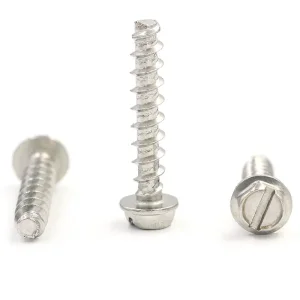
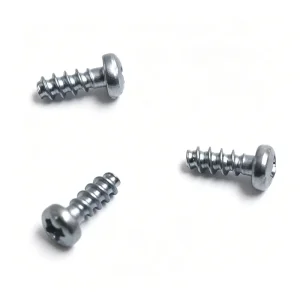
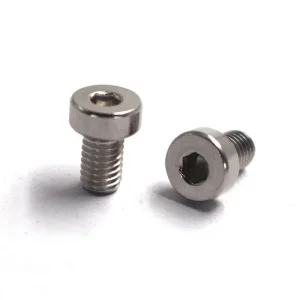
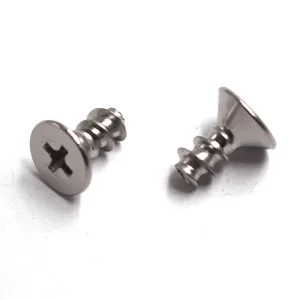
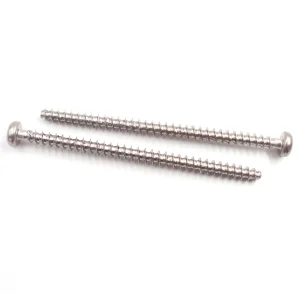
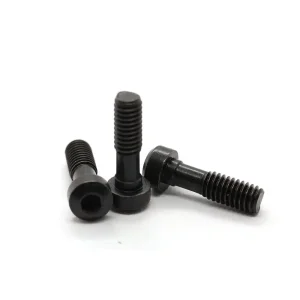
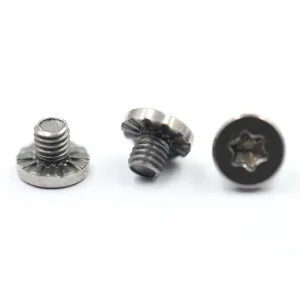
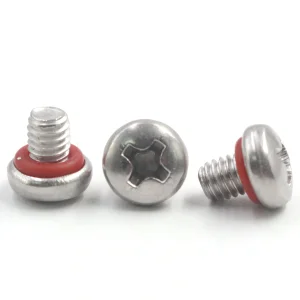
As global manufacturing accelerates toward lightweight structures, modular electronics, and robotic automation, the technical performance expected from metal sheet self-tapping screws has transformed dramatically.
Modern EV battery enclosures, chassis shields, and consumer electronics rely on cold-rolled steel and aluminum sheets thinned down to 0.5mm–0.8mm. Standard coarse self-tapping threads tend to strip out or buckle the sheet metal before reaching clamp load. Modern engineering mandates optimized pitch-to-depth ratios and trilobular thread geometry that displace rather than sever metallurgical grain, expanding the engagement surface area by up to 38%.
High-speed robotic fastening cells in smart factories demand tighter dimensional tolerances on screw heads and drive recesses. Traditional cross recesses (Phillips Type H) suffer from cam-out forces under high torque, scattering metallic debris over sensitive circuit boards. The industry migration toward Torx (Six-Lobe ISO 10664) and tamper-resistant Torx Plus profiles allows higher driving torque, prolonged driver bit lifespan, and 100% seating repeatability.
The intersection of stainless steel fasteners with galvanized or aluminum panels often causes severe galvanic corrosion if surface treatments are not engineered properly. Global standards now require multi-layer organo-metallic coatings, Dacromet/Geomet flake treatments, or high-purity Austenitic 304/316 alloys with passivated matrices capable of surviving 1,000+ hours in ASTM B117 salt spray testing without red rust or zinc white blooming.
Sourcing high-volume sheet metal fasteners is no longer a race to the lowest unit price. Engineering managers and tier-1 procurement directors recognize that fastening failures cost millions in assembly downtime and field recalls.
The primary mechanical challenge during thin metal sheet assembly is the narrow window between driving torque ($T_d$) and stripping torque ($T_s$). If the ratio ($T_s / T_d$) is below 3.0, automated robotic screwdrivers easily overdrive the screw, stripping the newly formed internal thread in the sheet. YH Fastener engineers precision thread pitch, lead taper angles, and thread reliefs to maximize this safety margin, ensuring rapid thread tapping with superior final clamp force.
Case-hardened carbon steel fasteners (e.g., C1022A) subjected to electro-galvanizing are vulnerable to atomic hydrogen penetration during acid pickling and electroplating. Untreated hydrogen causes catastrophic delayed fracture under sustained tensile stress. Our process strictly implements a 4-hour window from plating to de-embrittlement baking at 200°C–220°C for 4 to 8 hours, certified under ASTM F1941 and DIN EN ISO 4042 protocols.
Automotive and high-reliability industrial programs require full batch traceability from the raw steel coil to heat treatment furnace records. YH Fastener provides PPAP Level 3 documentation, including raw material chemical spectrometry, Rockwell/Vickers micro-hardness depth profiles (HV 0.3), dimensional full-gauge inspection reports, torque-angle performance curves, and salt spray chamber validation test data.
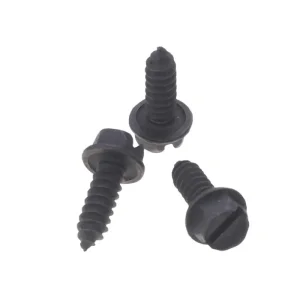
Thread-forming screws (DIN 7981, Type AB / Type B) deform the sheet metal plastically without creating metal swarf or chips, making them mandatory inside sealed electronic enclosures, telecom chassis, and battery modules. In contrast, thread-cutting screws (Type F / Type BT) feature fluted cutting edges designed for thicker ductile castings or structural plastics where lower driving torque is necessary to prevent boss bursting.
Over 30 years of continuous growth, Yu-Huang Electronics has evolved from a traditional heading workshop into an integrated multi-plant industrial complex across Dongguan, Shaoguan, and Wuhan.
Located at the core of the Pearl River Delta precision hardware cluster, our Dongguan headquarters houses ultra-high-speed multi-station cold-heading machines, computerized thread-rolling systems, micro-screw precision lines, and international logistics operations. Dongguan provides instantaneous tooling turnaround, rapid CAD/CAM prototyping within 24 hours, and custom drawing verification.
Our Shaoguan branch serves as the heavy-duty raw material drawing, continuous annealing, and specialized heat treatment foundry. By controlling wire rod drawing, spheroidizing annealing, and mesh-belt continuous quenching in-house, we eliminate external supplier bottlenecks and maintain microscopic grain structure stability across high-tonnage monthly runs.
Positioned along Central China's automotive corridor, the Wuhan plant is dedicated to IATF 16949-grade automotive fasteners, new energy busbar screws, and regional rail transit assemblies. Equipped with clean-room sorting cells and advanced laser vision sorting machines, Wuhan delivers JIT (Just-In-Time) inventory to automotive Tier-1 assembly lines.
Select the precise metal sheet self-tapping fastener configuration based on joint substrate hardness, vibration amplitude, operating temperature, and salt spray exposure parameters.
| Screw Classification | Standard Reference | Base Metallurgy | Case / Core Hardness | Surface Finish Options | Target Substrates |
|---|---|---|---|---|---|
| Thread-Forming Type AB | DIN 7981 / ISO 14585 | AISI C1022A Carbon Steel | Case: HV 450–600 Core: HV 270–390 |
Zinc Trivalent / Black Zinc | Sheet steel 0.5mm–1.5mm, punched/pierced pilot holes |
| Austenitic Stainless | ISO 7049 / DIN 7982 | AISI 304 (A2) / 316 (A4) | Work hardened (HV 220–320) | Passivated / Electropolished | Aluminum alloys, stainless enclosures, outdoor electrical boxes |
| Trilobular Thread-Rolling | DIN 7500 / Taptite Equivalent | Alloy Steel 10B21 / C1022A | Case: HV 550–700 Core: HV 320–400 |
Zinc-Nickel (12-15% Ni) | Extruded aluminum, ductile metals, automotive structural panels |
| Low-Stress PT Thread | Custom PT / WN 1451 | C1022A / Stainless 302HQ | Case: HV 480–620 Core: HV 280–380 |
Black Oxide / Fluoropolymer | Hybrid metal-to-thermoplastic brackets, electronics housings |
| Sealing Self-Tapper | DIN 7981 + EPDM / O-Ring | AISI 316 / Carbon Class 8.8 | HV 280–350 | Dacromet / Geomet Flake | IP67/IP68 enclosures, outdoor telecom, solar junction boxes |
Engineered for extreme performance across demanding global industrial ecosystems.
Securing thin-gauge aluminum heat shields, wiring harness clips, module top-cover assemblies, and battery management unit (BMU) brackets. Our high-torque Torx pan head self-tapping screws withstand relentless road vibrations and thermal cycles (-40°C to +125°C) without loss of clamping pre-load.
Server chassis, 19-inch rack sub-assemblies, and power supply cages demand zero metallic flaking or shavings that cause micro-short circuits on circuit boards. Our thread-forming screws utilize specialized low-friction coatings and clean roll-formed threads to secure electro-galvanized (SECC/SGCC) sheets seamlessly.
Rooftop inverter housings, ductwork flanges, and outdoor combiner boxes are subjected to UV degradation, heavy rain, and industrial pollution. Using AISI 316 stainless steel self-tapping screws paired with vulcanized EPDM backing washers guarantees leak-proof IP67 weather sealing and 25-year structural resilience.
Get direct answers from our fastener metallurgical specialists regarding hole sizing, torque dynamics, plating specifications, and custom OEM manufacturing.
Type A features a coarse thread with a gimlet point, historically used for light wood and thin sheet metal. Type B has a blunt point with finer pitch threads, ideal for heavier sheet metal (up to 2.5mm) and non-ferrous castings. Type AB combines the best of both: a gimlet point for easy self-alignment paired with the finer thread pitch of Type B, making it the premier global standard for automated sheet metal assembly.
The optimum pilot hole diameter depends on the nominal screw size, sheet metal thickness, and substrate tensile strength. Generally, the hole diameter should equal the pitch diameter (the midpoint between major and minor diameter) of the self-tapping screw. For extruded or punched plunging holes (which double the effective engagement depth in thin sheets), the pilot hole can be slightly smaller to facilitate upward material flow.
No, austenitic stainless steel alloys (such as AISI 304 and 316) cannot be case-hardened by standard heat treatment; their surface hardness remains around HV 200–320. Attempting to drive them directly into structural carbon steel sheets will strip or gall the screw threads. For steel sheets, case-hardened carbon steel screws or bi-metal fasteners (austenitic body with a welded hardened carbon steel drilling/tapping point) are required.
We operate a strict, sensor-monitored protocol for all fasteners case-hardened above HV 390. Parts must enter our continuous circulating-air de-embrittlement ovens within four hours of acid pickling or electroplating. Baking is maintained at 200°C–220°C for 4 to 8 hours depending on nominal diameter, followed by mandatory sustained-load stress rupture testing per ASTM F606 to verify metallurgical safety.
For customized geometries requiring dedicated heading dies or specialized thread-rolling tooling, our internal tooling shop completes die manufacturing within 5 to 7 working days. First-article inspection samples (FAIR) with CMM measurement reports are dispatched in 7 to 10 days. Mass production runs (500,000+ pieces) typically ship within 18 to 22 business days via Shenzhen or Hong Kong ports.
Yes. We specialize in micro cold-heading down to M0.8 diameter with precision thread pitches. These micro screws are widely integrated into smartphone camera modules, smart wearable frames, laptop hinge brackets, and medical optics. We offer specialized wafer head, ultra-low profile head, and pre-applied anti-vibration nylon locking patches.
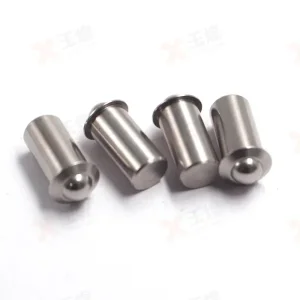
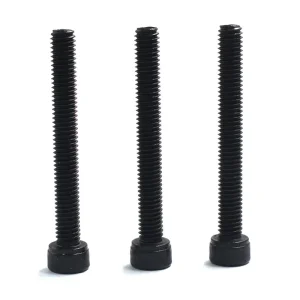
Explore our complementary array of precision machine screws, spring-loaded plungers, security drives, and anti-loosening fasteners built to international automotive and aerospace specifications.
Send your 2D engineering drawings (PDF/DXF), 3D CAD models (STEP/IGES), or target application parameters. Our chief application engineers will return a complete DFM review, torque analysis, and factory-direct volume pricing within 24 hours.
