Factory-direct industrial fasteners, vibration-resistant locking threads, and precision sealing hardware engineered for automated assembly lines.
An authoritative analysis of market trajectory, metallurgical transitions, and supply chain re-engineering across the global B2B industrial tooling ecosystem.
The global wholesale industrial hand tool and high-precision hardware manufacturing sector is undergoing a profound structural evolution. Driven by the accelerated expansion of automated manufacturing, electric vehicle (EV) gigafactories, aerospace maintenance infrastructure, and renewable energy installations, global procurement requirements have shifted from basic utilitarian hand tools toward micro-engineered, torque-verified, and vibration-resistant assembly solutions. Modern industrial hand tools and matching fasteners are no longer commoditized consumables; they represent critical variables in the Total Cost of Ownership (TCO) equation, directly impacting line-side ergonomics, joint integrity, and zero-defect quality thresholds.
Modern industrial hand tool factories and fastener OEMs are replacing legacy carbon steel alloys with high-grade chromium-vanadium (Cr-V), chromium-molybdenum (Cr-Mo), S2 tool steel, and SS316 marine-grade austenitic alloys. Advanced thermal treatments—including multi-stage vacuum carburizing and cryogenic tempering—are implemented to achieve precise Rockwell C hardness (HRC 58-62) without sacrificing ductility or fracture toughness. Simultaneously, surface engineering has expanded beyond conventional electro-zinc plating toward multi-layer zinc-nickel flakes, pre-applied polyamide (nylon) locking patches, and micro-encapsulated chemical threadlockers compliant with DIN 267-27 standard benchmarks.
How concentrated industrial clusters in Dongguan, Shaoguan, and Wuhan deliver unmatched scale economies, engineering responsiveness, and cost optimization.
Utilizing advanced 5-station and 6-station high-speed cold heading machinery, Chinese factories process raw wire rod directly into complex head geometries and drive recesses at speeds exceeding 300 pieces per minute per machine, drastically slashing unit manufacturing costs.
Integrated automated optical inspection (AOI) laser sorting technology scans 360 degrees of every manufactured screw and tool bit. Thread pitch, head diameter, drive depth, and plating uniformity are validated to guarantee defect rates below 15 PPM (Parts Per Million).
From 3D CAD modeling and finite element analysis (FEA) stress testing to custom cold-heading die fabrication, Chinese engineering centers compress prototype lead times from standard 8-week industrial benchmarks down to 7 business days.
The industrial hardware manufacturing ecosystem in China—specifically centered in Dongguan and the Guangdong industrial corridor—possesses an unmatched density of specialized supply chain nodes. Within a 30-kilometer radius, cold-heading plants maintain direct partnerships with specialized wire-drawing mills, automated heat treatment plants, surface finishing laboratories, and custom tool-and-die maker hubs. This geographic co-location enables continuous production flow, zero logistics latency, and complete traceability from raw billet wire to export-ready boxed product.
Tailored fastening solutions and ergonomic hand tool systems deployed across extreme industrial operating environments globally.
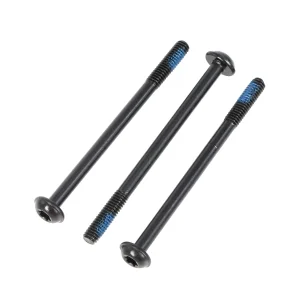
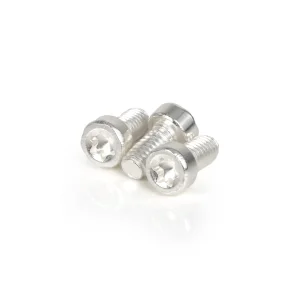
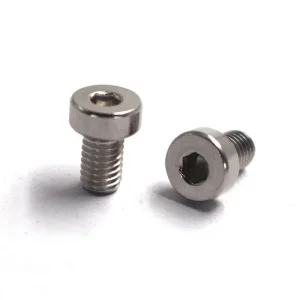
EV battery enclosures and high-voltage power distribution units require absolute IP67 waterproof sealing and immunity to severe chassis road vibration. OEM hex socket sealing screws with pre-installed fluoroelastomer O-rings and micro-encapsulated polyamide locking patches ensure dynamic joint integrity while preventing moisture ingress and catastrophic electrical shorts.
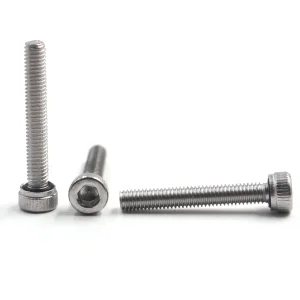
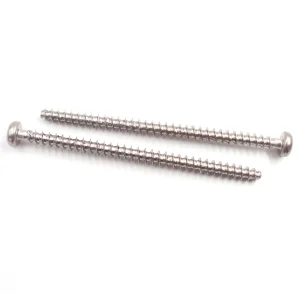
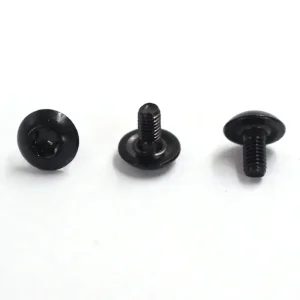
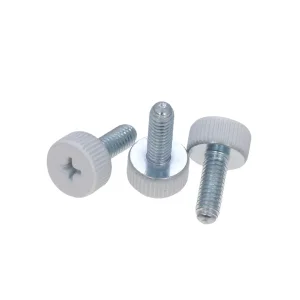
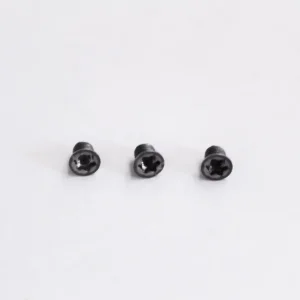
Outdoor 5G base stations, radar equipment, and marine electronics demand maximum corrosion protection in high-salinity coastal environments. Stainless steel 316 knurled thumb screws, PT thread-forming screws for thermoplastics, and anti-tamper Torx pin flange screws prevent corrosion degradation and unauthorized equipment access.
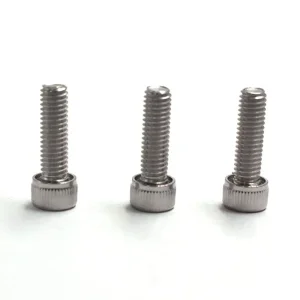
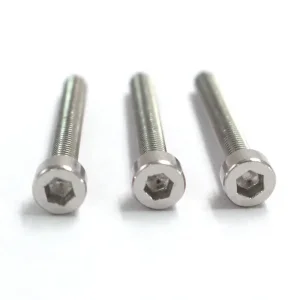
High-speed robotic end-effectors and heavy CNC machine tool beds experience continuous cyclic shear forces. Grade 10.9 and 12.9 alloy steel hex head machine screws combined with hardened L-key hex wrenches provide exact torque delivery without cam-out or socket rounding.
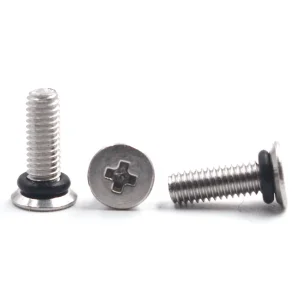
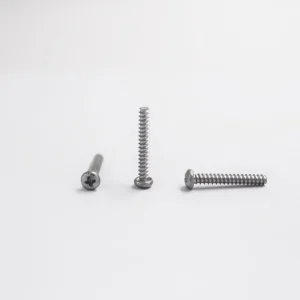
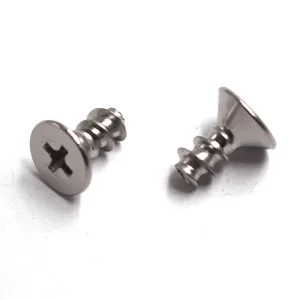
Miniaturized electronic housings, smart wearables, and surgical equipment require micro-screws ranging from M1.2 to M3. Low-stress self-tapping screws and Phillips pan head fasteners manufactured with ultra-tight tolerance thresholds ensure precise clamping without damaging delicate printed circuit boards (PCBs).
Technological imperatives shaping the future of industrial hand tool manufacturing, smart fasteners, and green metallurgy.
Industrial hand tools are rapidly integrating IoT-enabled strain gauges, digital torque sensors, and Bluetooth telemetry. Modern assembly plants mandate real-time logging of tightening torque and angle data to cloud Quality Management Systems (QMS), establishing end-to-end auditability for every critical joint.
Global environmental regulations (PFAS bans, REACH Annex XVII) are accelerating the phase-out of hexavalent chromium and fluorinated lubricants. Leading factories are adopting chrome-free zinc flake coatings, eco-friendly passivation chemistry, and solar-powered heat treatment lines to minimize carbon footprints.
Progressive hardware factories are combining 3D metal printing for rapid tooling dies with high-volume cold heading. This hybrid methodology allows toolmaker engineers to mold internal cooling channels into forming dies, extending die lifespans by 40% and enabling custom fastener geometry prototyping within days.
Strategic decision framework for procurement directors and supply chain engineers evaluating offshore hand tool and hardware factories.
When sourcing industrial hand tools and precision screws from overseas factories, evaluating suppliers based purely on unit price introduces extreme quality risks. Professional B2B buyers must implement a multi-tiered vendor qualification matrix covering quality management certifications, metallurgical verification, capacity stability, and engineering support capabilities.
Direct answers from senior application engineers regarding product specs, customization workflows, and global delivery standards.
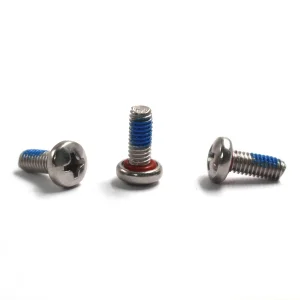
Pre-applied nylon patches (polyamide coatings) create a permanent prevailing torque friction lock when the external male thread engages the internal female thread. As the nylon material compresses into the thread clearance gap, it exerts radial resilient pressure, preventing thread back-off caused by continuous transverse vibration, thermal shock, or dynamic impact load—without requiring manual liquid threadlocker application.
When equipped with engineered silicone, EPDM, or fluoroelastomer (FKM) under-head O-rings or pre-assembled washers, our sealing screws reliably achieve IP67 and IP68 ingress protection ratings. The head groove is precision-machined to control O-ring compression volume, forming a airtight seal against liquids, gas, dust, and pressure differentials up to 100 PSI.
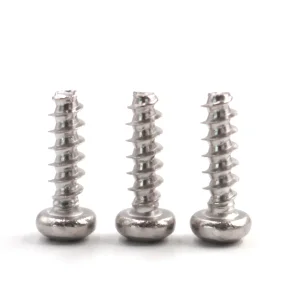
PT screws feature an optimized 30-degree narrow thread angle profile compared to standard 60-degree self-tapping screws. This geometry reduces radial displacement force during insertion into thermoplastic bosses, drastically minimizing internal material stress, preventing boss burst, and maximizing pull-out strength and vibration resistance over repeated temperature cycles.
For custom non-standard fasteners built from 2D/3D engineering drawings or physical samples, technical feasibility reviews are completed within 24 hours. Initial prototype samples (10–50 pieces) produced via quick-turn tooling are delivered in 7 to 10 business days. Full production run manufacturing lead times range from 15 to 25 days depending on secondary plating and patching requirements.
While both are austenitic stainless steel alloys, SS316 contains 2–3% Molybdenum, which dramatically increases its resistance to pitting corrosion and crevice corrosion in high-chloride marine environments, salt spray exposure, and chemical processing plants. SS304 provides cost-effective corrosion resistance for standard industrial, automotive interior, and consumer electronics applications.
Standard catalog machine screws and self-tapping fasteners maintain flexible MOQs starting at 10,000 pieces per batch. For custom OEM micro-screws, special alloy formulations, or customized hand tool drive socket production, MOQs depend on raw wire rod drawing minimums—typically ranging between 20,000 and 50,000 pieces depending on part volume.
Explore our complete OEM/ODM product portfolio including captive flange screws, sealing washers, knurled thumb screws, and specialized machinery bolts.
Partner directly with certified Chinese manufacturing facilities. Submit your 2D/3D engineering drawings or technical specifications today for a comprehensive feasibility report and factory-direct quotation within 24 hours.
Request Engineering Review & Quote