Engineered for rapid automated feeding, zero-cam-out engagement, and superior tensile endurance across demanding metallic and polymer substrates.
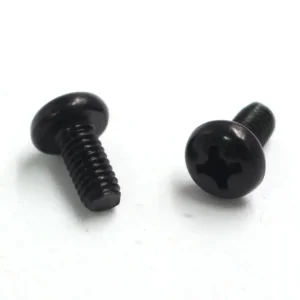
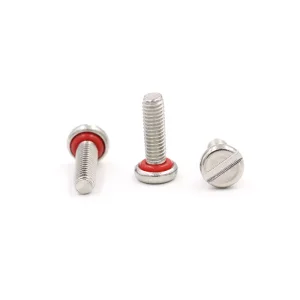
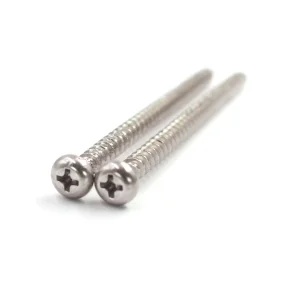
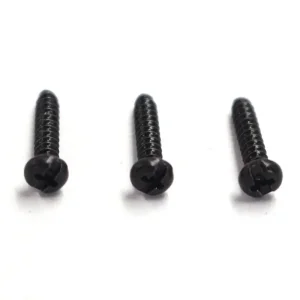
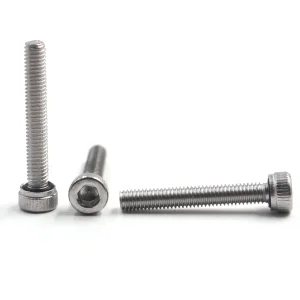
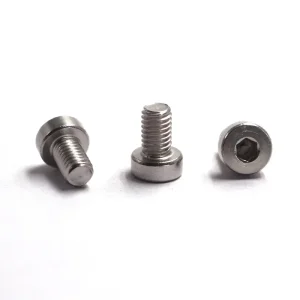
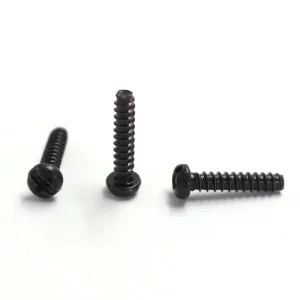
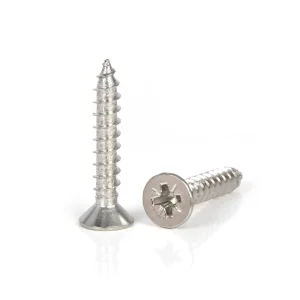
A rigorous examination into torque-tension transfer, friction coefficients, thread-forming geometry, and mechanical integrity in automated industrial screwdriving applications.
Unlike standard thread-cutting fasteners that generate particulate contaminants through chip production, high-speed thread-forming fasteners utilize trilobular or profiled crests that plastically displace host material without shearing. This process work-hardens the internal mating threads, augmenting retention force, enhancing pull-out loads by up to 32%, and preventing particulate contamination inside sensitive electrical enclosures.
Under automated assembly lines rotating at speeds from 1,200 to 3,500 RPM, heat dissipation and dynamic friction coefficients (μk) dictate clamping security. Our proprietary micro-layer lubricants and organo-metallic sealants maintain constant friction within narrow bands (μ = 0.10 – 0.16). This avoids thermal galling in stainless steel joints while guaranteeing repeatable clamp loads without structural relaxation.
In high-speed robotic screwdriving, sudden torque spikes can trigger destructive head sheer or thread stripping. By balancing surface case hardening (550–650 HV0.3) with core ductileness (320–400 HV10), our wholesale tapping fasteners withstand severe axial shocks. The resulting broad margin between driving torque (Td) and stripping torque (Ts) prevents catastrophic line downtime and joint failure.
How global system integrators deploy high speed tapping fasteners to overcome localized material constraints, thermal stresses, and environmental exposure.
Modern electric vehicles (EVs) require lightweight die-cast aluminum (AlSi10Mg) and magnesium alloys for battery pack structures and ECU housings. High-speed tapping fasteners eliminate secondary tapping stations, reducing machining oil residue and saving cycle time. Equipped with specialized sealing under-head washers, they fulfill IP67 and IP69K ingress ratings, sealing against high-pressure coolant ingress across extreme operating thermal spans (-40°C to +125°C).
Inside 5G remote radio heads (RRH), fiber optical transmission units, and micro-PCB mounting setups, space constraints demand micro-fasteners (M1.2 – M2.5). Using Torx and Torx Plus 6-lobe drives, automated magnetic suction feeders seat screws at up to 2,500 RPM with zero bit-slippage. The fine metric threads ensure robust mechanical grip in thin sheet metal stamped brackets without stripping or deformation.
Assembly of ABS, PC/PBT, and polyamide (PA66-GF30) components often suffers from matrix cracking due to excessive radial hoop stress. Our PT-type self-tapping profile features a 30° flank profile (compared to conventional 60° threads), drastically reducing radial bursting stress while allowing maximum core plastic displacement. This secures outdoor utility meters, sensors, and consumer electronics against long-term creep and micro-loosening under vibration.
Comprehensive comparative criteria designed to assist fastening engineers and procurement managers in drafting accurate component requests for quotation (RFQ).
| Fastener Classification | Core Metallurgy | Drive Geometry | Surface Hardness | Friction Coeff (μtot) | Primary Industrial Utility |
|---|---|---|---|---|---|
| PT Thread-Forming Fastener | 1022A Case-Hardened Steel | Phillips / Torx T10-T30 | 560 – 680 HV0.3 | 0.11 – 0.15 | Engineered Thermoplastics, Filled Polyamides |
| Trilobular Metal Tapping Screws | SCM435 Alloy / 10B21 | Torx Plus / Hex Washer | 600 – 720 HV0.3 | 0.10 – 0.14 | Light Alloys (Al, Mg), Steel Sheets ≤ 6mm |
| Austenitic Stainless (A2/A4) | SUS304 / SUS316 Cold-Drawn | Torx / Security Tamper-Proof | 350 – 420 HV (Cold Worked) | 0.14 – 0.18 (Lubed) | Medical Devices, Marine Inverters, Photovoltaics |
| Integrated Elastomer Sealing Screw | Class 8.8 / 10.9 Alloy Steel | Hex Socket / Flanged Torx | 450 – 540 HV0.3 | 0.12 – 0.16 | IP68/IP69K Enclosures, Automotive ECUs |
| Micro-Precision Machine Tappers | SUS304 / SWCH18A Wire Rod | Phillips #00, #0 / Torx T3-T6 | 480 – 580 HV0.3 | 0.12 – 0.15 | Smartphones, Wearables, Optics, Micro-Drives |
How concentrated industrial clusters in the Pearl River and Yangtze River basins yield unrivaled lead times, agile tooling fabrication, and global cost leadership.
Our centralized manufacturing footprint incorporates in-house tungsten carbide cold-heading die carving, EDM wire cutting, and punch profiling. Tooling iterations that take 4 to 6 weeks in Western ecosystems are concluded within 7 to 10 days, enabling swift prototyping and accelerated start-of-production (SOP) schedules.
Direct supply contracts with domestic metallurgical leaders (Baosteel, Shasteel) ensure zero wire rod availability bottlenecks. We retain extensive warehouse stockpiles of tested SWCH, SCM435, and austenitic SUS304/SUS316 alloys, shielding our enterprise clients from spot commodity price spikes.
Equipped with high-resolution multi-camera optical laser sorting machines, each batch undergoes 360-degree profile, recess, and pitch verification at 800 parts per minute. This automated inspection gate ensures defective parts are purged down to less than 10 PPM prior to packing.
Facilities positioned near major deep-water ports (Shenzhen, Guangzhou, Ningbo) grant direct maritime routes to European, North American, and Southeast Asian ports. Backed by automated bonded warehousing, standard containers depart factory gates within 48 hours of lot clearance.
Evaluating the transition from manual bolting to autonomous multi-axis robot fastening in European, American, and Asian high-throughput production lines.
Assembly line operators are systematically replacing manual air screwdrivers with collaborative 6-axis articulated robots. These cobots require fasteners engineered with strict dimensional concentricity (≤ 0.03 mm) and optimized lead-in guide tips to prevent misalignment during high-speed feeder tube ejection and robotic seating.
Automakers face intensifying regulatory pressure to cut body-in-white (BIW) mass. Flow-drill and thread-forming tapping screws facilitate mechanical joins between dissimilar metals—such as sheet aluminum to ultra-high-strength steel (UHSS)—completely eliminating expensive rivets, spot-welding smoke, and pre-drilled alignment errors.
While standard machine screws require pre-tapped holes, thread checking, and separate lock washers, advanced tapping fasteners combine these steps into one single actuation. By removing nut installation, thread cleaning, and assembly cycle stages, Tier-1 manufacturing facilities lower total joint cost by 35% to 50% across vehicle platforms.
Uncompromising compliance architecture meeting automotive, aerospace, environmental, and international trade governance requirements.
Our quality management infrastructure is certified to IATF 16949 and ISO 9001. We provide standard PPAP Level 3 documentation, including Process FMEA, Control Plans, Gage R&R, Material Test Reports (MTR), and complete IMDS (International Material Data System) submission entries.
Every plating and passivation process—from trivalent zinc and zinc-nickel (Zn-Ni) to electro-deposited e-coats—is strictly free from hexavalent chromium (Cr6+), cadmium, lead, and mercury, ensuring complete conformance with EU Directives 2011/65/EU (RoHS 2.0) and EC 1907/2006 (REACH SVHC).
Global clients benefit from local engineering support. Our fastener specialists offer on-site screwdriving analysis, pilot hole dimension optimization, and torque tightening curve calibration to eliminate joint strip-out and drive bit wear before launching full-scale serial production.
Anticipating structural engineering shifts toward circular disassembly, ultra-high-strength micro-materials, and embedded sensory tracking.
Transitioning from wet oil lubricants to solvent-free, UV-cured microencapsulated dry lubricants that ensure consistent friction while keeping automated feeding tracks pristine.
Innovating symmetric thread profiles that enable multiple maintenance re-insertions into thermoplastics without stripping previously formed internal resin grooves.
Developing low-alloy boron steel compositions resistant to hydrogen embrittlement during acid pickling, achieving tensile ratings exceeding 1,220 MPa.
Implementing microscopic data-matrix codes on fastener heads down to M3 size, allowing automated assembly cameras to trace heat-treat lot numbers in real time.
Comprehensive engineering clarifications addressing automated feeding, torque window configuration, corrosion prevention, and customized tooling.
Thread-cutting screws feature integrated cutting flutes that carve material out of the host substrate, creating tiny metal or plastic swarf particles that can short-circuit electronic boards. In contrast, thread-forming screws exert radial displacement force, smoothly reshaping the host material grain structure around the screw crests without creating chips, resulting in zero debris and superior joint pull-out resistance.
For automated robotic assembly cells, an engineering safety ratio (Ts / Td) of at least 3.0:1 is considered acceptable, but our thread designs target a robust 4.5:1 to 5.0:1 ratio. This wider operational window enables screwdriving motors running at 2,000+ RPM to reliably reach final seating torque without risking thread strip-out or driver bit cam-out.
High-strength carbon steels (≥ 380 HV / Class 10.9) can absorb atomic hydrogen during electroplating and pickling. We prevent hydrogen-induced delayed fracture by using ultrasonic neutral cleaning bath lines, eco-friendly zinc-flake non-electrolytic coatings, and mandatory dehydrogenation baking in calibrated ovens at 200°C–220°C for a minimum of 4 to 8 hours immediately post-plating.
Yes. Our tooling engineering division produces custom heading punches directly from STEP, IGES, or 2D DWG engineering models. We regularly manufacture custom flange diameters, low-profile pancake heads, tamper-resistant security drives, and captive sems assemblies tailored to exact customer enclosure tolerances.
For demanding outdoor marine, telecommunication, and automotive underbody environments, we provide multi-layer zinc-nickel alloy plating with iridescent or black passivations, consistently exceeding 1,000 to 1,500 hours of neutral salt spray (ASTM B117) testing before red rust onset. Alternatively, austenitic 304 and 316 stainless series offer permanent corrosion protection.
Pneumatic blow-feed screwdriving systems are sensitive to head burrs, foreign matter, and dimensional variations. We apply rigorous 100% optical laser eddy-current sorting to ensure precise head-to-shank concentricity, exact overall length (±0.05 mm), and thorough de-burring, ensuring continuous feed operation below 10 PPM defect rates.
Specialized high-speed machine screws, anti-vibration sealing fasteners, and precision alignment bolts for mission-critical automation.