Pre-engineered structural fasteners, self-sealing interfaces, and high-tensile locking assemblies designed to replace redundant part numbers with versatile, certified hardware.
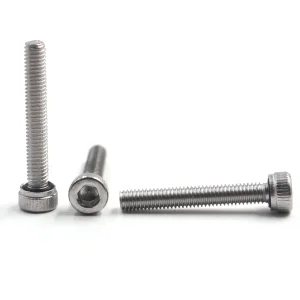
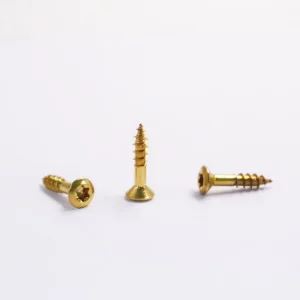
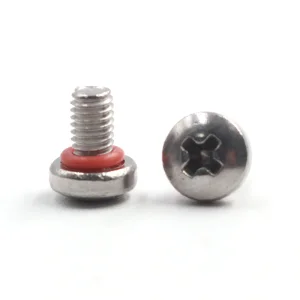
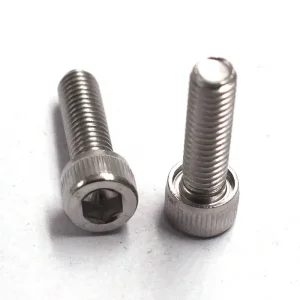
In modern manufacturing, SKU proliferations inflate total cost of ownership (TCO) across warehousing, quality assurance, tooling changeovers, and procurement overhead.
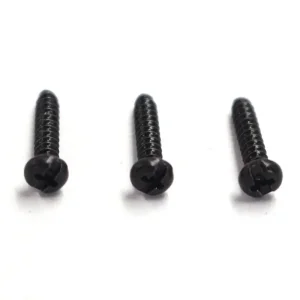
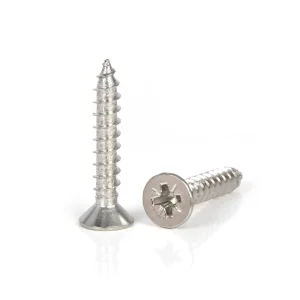
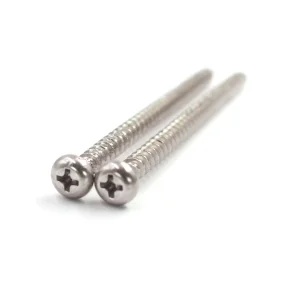
By engineering multi-material thread profiles (such as trilobular PT screws) and integrated SEMS washer components, engineering teams eliminate discrete secondary washers, separate nuts, and specialized tapping runs, compressing structural part counts by up to 34%.
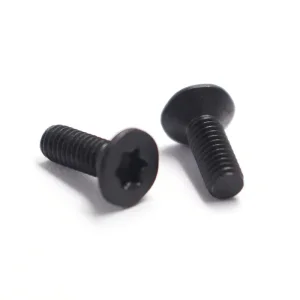
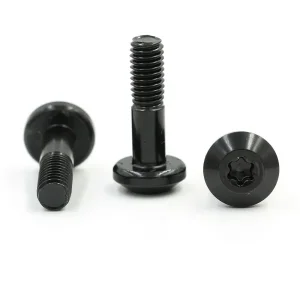
Disparate drive designs and uncalibrated tolerances cause automated bowl feeders to jam on high-speed SMT and robotic assembly lines. Standardizing on Torx or deep-socket Allen geometries guarantees high-torque engagement without cam-out or line downtime.
Sourcing from uncoordinated sub-tier suppliers multiplies supply chain volatility. Consolidating fastening procurement with an IATF 16949-certified producer ensures unified PPAP Level 3 documentation, full material traceability, and continuous zero-defect PPM control.
A technical treatise on addressing fastener fragmentation within Automotive (NEV), Robotics, and Industrial Enclosures through advanced cold heading and design for assembly (DFA).
In high-throughput sectors such as New Energy Vehicle (NEV) battery pack fabrication, cleanroom electronic enclosures, and robotics, the fastener Bill of Materials (BOM) is often treated as an afterthought during early-stage prototyping. Product designers frequently select bespoke head styles, minor length variations, and inconsistent drive geometries to solve hyper-localized fastening requirements. By the time mass production commences, an industrial OEM's ERP system can contain hundreds of active fastener SKUs from multiple disjointed suppliers.
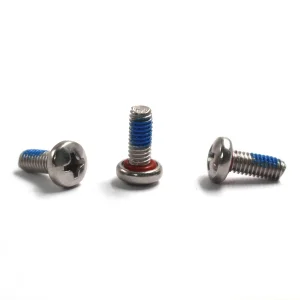
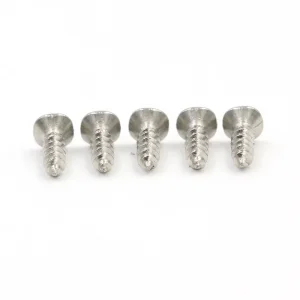
This fragmentation results in profound hidden operational expenses: bloated inventory carrying charges, frequent setup adjustments on automated assembly cells, divergent quality management audits, and vulnerabilities to line shut-downs caused by micro-component shortages. Wholesale engineering partnerships allow tier-1 manufacturers to audit their CAD assemblies, identify redundant geometries, and substitute custom multi-functional fasteners—such as pre-assembled EPDM sealing assemblies, nylon-patch locking fasteners, or high-tensile PT screws—replacing 3 to 5 standalone bill-of-materials line items with a single optimized part.
BOM optimization cannot come at the expense of tensile strength, fatigue resistance, or cyclic vibration durability. Machined screws, while flexible for small prototyping batches, fracture continuous material grain boundaries, creating stress concentrations along the thread roots and the head-to-shank transition radius. High-capacity manufacturing relies on automated multi-station cold heading combined with precision high-speed thread rolling.
During cold heading, high-grade carbon alloy or austenitic stainless steel (such as 304 and 316) wire rod undergoes controlled plastic deformation, causing internal grain lines to follow the exterior contours of the fastener head, shoulder, and drive pocket. Rolled threads displace rather than remove metal, inducing beneficial compressive stresses on the thread roots. When coupled with advanced inline optical sorters capable of detecting 360-degree dimensional variances down to ±0.01 mm, manufacturing clients achieve direct-to-line integration, bypassing secondary receiving inspection protocols entirely.
Anticipating next-generation manufacturing needs through smart traceability, circular alloys, and surface nanotechnology.
Displacing tapped inserts in lightweight magnesium and composite vehicle battery casings to eliminate secondary thread preparation.
High-durability Geomet and zinc-nickel electrolytic passivation exceeding 1,500 hours neutral salt spray without hydrogen embrittlement.
Pioneering smart fastener preload monitoring for critical aerospace and structural robotic joints under intense thermal oscillation.
End-to-end digital material passports detailing scrap ratios, cold heading energy expenditure, and closed-loop recyclability profiles.
Ensuring cross-border engineering continuity through harmonized dimensional compliance, strict metallurgical validation, and seamless logistics execution.
Every manufacturing lot conforms rigorously with EU RoHS Directive 2011/65/EU, REACH (EC 1907/2006) SVHC declarations, and Dodd-Frank conflict mineral audits, safeguarding export viability for global electronic and automotive systems.
Operating dedicated manufacturing and engineering facilities across Dongguan, Shaoguan, and Wuhan delivers continuous capacity allocation, minimizing exposure to regional labor or supply chain interruptions while lowering freight lead times.
We provide forward-deployed buffer inventory, barcoded packaging, and EDI integration for Vendor-Managed Inventory (VMI) frameworks, assuring that multi-tier assemblers retain continuous access to critical hardware with minimal working capital lockup.
In-depth responses to fundamental questions posed by procurement directors, quality auditors, and chief mechanical engineers.
Consolidating fastener specifications drastically minimizes assembly overhead through three direct mechanisms: tooling unification, error elimination, and purchasing scale. When robotic screwdriving stations operate using uniform drive sockets (such as Torx T20 or Hex 3mm across the entire unit chassis), automated line changeovers are reduced or eliminated entirely. Furthermore, line operators avoid incorrect fastener insertions that cause internal thread stripping or warranty failures. Finally, aggregate procurement volume drops unit purchase price and simplifies enterprise ERP administration.
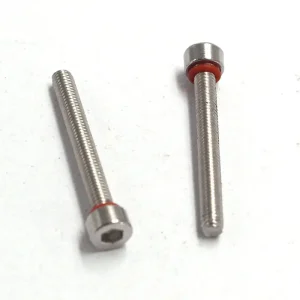
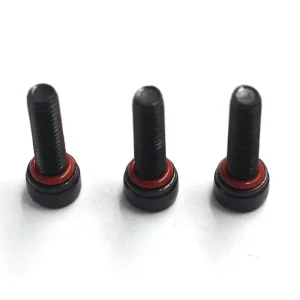
Yes, engineered SEMS screws (featuring captive flat, spring, or toothed lock washers) and molded under-head O-ring screws guarantee exact seating compression on every installation. Manual application of separate washers or fluid sealants introduces human variation, risk of dropped components inside sensitive electronics, and uneven torque absorption. Pre-assembled fasteners provide guaranteed concentricity, maintain hermetic IP67/IP68 sealing, and streamline the assembly sequence by eliminating secondary manual processing steps.
Our IATF 16949-accredited quality assurance process supports complete Production Part Approval Process (PPAP) Level 3 submissions. This comprehensive validation includes Design Records, Process Flow Diagrams, Process Failure Mode and Effects Analysis (PFMEA), Control Plans, Measurement System Analysis (MSA) studies, Dimensional Results covering entire inspection drawing ball-outs, Initial Material & Mill Test Reports, IMDS submission entries, and formal Part Submission Warrants (PSW).
The customization workflow begins with a technical Design-for-Manufacturability (DFM) review of your 2D engineering drawings or native 3D CAD files (STEP/IGES) within 24 hours. Our application engineers analyze material selections, head geometry, thread pitch, drive tolerances, and surface treatments. Following tooling simulations, heading dies and roll dies are manufactured in-house. Initial pilot samples undergo complete mechanical, salt spray, and optical dimension checks prior to full mass-production sign-off.
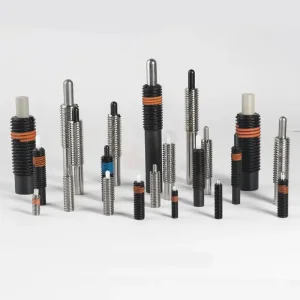
Explore high-performance machine screws, multi-point tamper-resistant fasteners, and spring-loaded positioning plungers fabricated for direct mechanical integration.