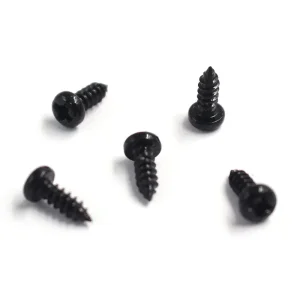
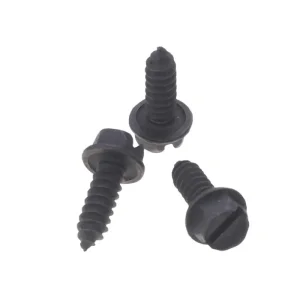
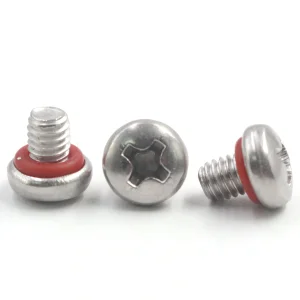
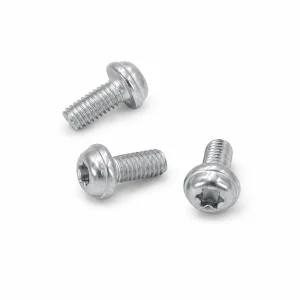
Explore our certified cold-headed machine and tapping fastener portfolio, designed for tight-tolerance automated joining across multi-material substrates.
An in-depth metallurgical and macro-economic evaluation of modern mechanical fastening dynamics in residential, commercial, and modular architectural furniture production.
Global supply chains are shifting toward regionalized high-throughput manufacturing hubs. With automated flat-pack assembly plants demanding sub-millimeter tolerances, furniture self-tapping screws have transitioned from generic commodities into precision-engineered components with rigorous pull-out strength metrics and zero-defect sorting guarantees.
The industry wide adoption of Medium-Density Fiberboard (MDF), High-Density Fiberboard (HDF), engineered cross-laminated timber, and polymeric composite cores has rendered conventional wood screws obsolete. Modern tapping fasteners must introduce optimized thread crest angles (typically 30° to 40°) to cut fibers cleanly without radial casing fractures.
Cross-border commercial installations demand surface chemistry capable of enduring humidified coastal environments, volatile organic compounds (VOC) leaching from binders, and aggressive cyclic loads. Multi-stage electro-zinc plating, organic trivalent passivations, and mechanical zinc alloy coatings now serve as minimum baseline requirements.
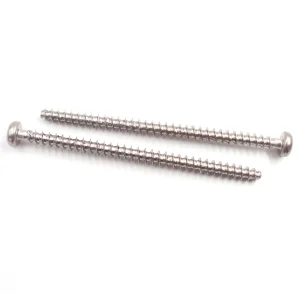
In low-density particleboards (PB) and laminated veneers, traditional 60° thread angles exert excessive radial outward force, resulting in core delamination. Our specialized furniture tapping screws leverage asymmetrical thread profiles (45°/10° pressure angles) paired with deep root diameters, concentrating compressive stress along the axial plane to elevate static pull-out capacity by up to 34%.
Comparing metallurgical grades, heat treatment protocols, and thread geometries across high-volume industrial cabinetry and ready-to-assemble (RTA) furniture platforms.
| Material Grade | Core Hardness | Surface Case Depth | Optimal Joint Substrate | Corrosion Resistance |
|---|---|---|---|---|
| C1022A Case-Hardened Carbon Steel | HRC 28 - 38 | 0.08 - 0.20 mm (HV 550 min) | MDF, HDF, Hardwoods, Particleboard | Up to 240 hrs Neutral Salt Spray (Zinc Cr3+) |
| SUS 304 (A2-70 Austenitic Stainless) | HRB 85 - 95 | Through-Hardened via Cold Working | Outdoor Teak, Compact Laminates, Marine Joinery | 1,000+ hrs Salt Spray (Immune to oxidation) |
| SUS 316 (A4-80 Marine Stainless) | HRB 90 - 100 | High-Tensile Cold Worked Annealed | Hospitality Coastal Modular Units, Laboratory Furniture | 2,000+ hrs Salt Spray (Acid & Chloride Resistant) |
| PT Thread Low-Stress Alloy 10B21 | HRC 32 - 40 | 0.10 - 0.25 mm (HV 600 min) | Thermoplastic Injected Joints, Structural Nylon Blocks | 480 - 720 hrs (Zinc-Nickel / Ruspert Coated) |
How digital factories, Industry 4.0 production lines, and high-speed robotic drive systems are transforming fastener geometries.
Automated screw-driving cells operating at 1,200 to 2,500 RPM require fasteners with concentric drive tolerances within ±0.03 mm. Torx (6-lobe) and deep-recess Pozi drives with tapered lead-in points eliminate cam-out, bit slippage, and downtime on multi-axis robotic assembly centers.
Global environmental mandates including RoHS 3.0, REACH, and EPA SVHC guidelines have triggered the total phase-out of hexavalent chromium (Cr6+). Our facilities produce zinc-nickel, trivalent chrome passivations, and low-bake organo-metallic finishes with zero solvent outgassing inside living spaces.
The push for circular furniture design requires fasteners that maintain thread structural integrity through repeated assembly and disassembly cycles. Dual-thread designs cut defined internal mating paths without shearing fibrous core structures upon extraction and re-insertion.
Specific fastening challenges solved through custom cold-heading and custom thread configurations.
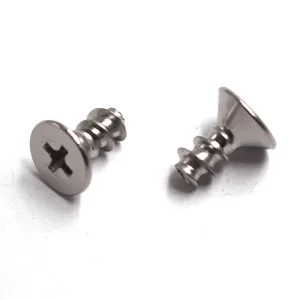
Utilizing nibbed countersunk heads that self-flush into melamine facings without pre-drilling or surface tearing, maximizing end-user installation satisfaction.
Deep serrated cutting flutes combined with wax coatings dramatically reduce insertion torque in exotic dense hardwoods such as oak, ash, and walnut.
Low-profile wafer and truss head tapping fasteners secure drawer slides, concealed European hinges, and push-to-open latches with zero head protrusion.
Joining structural cold-rolled steel channels to composite acoustical boards using thread-forming screws that eliminate stripped tap holes under vibration.
Full cold-heading, heat-treating, passivating, and optical sorting operations running across three certified Chinese manufacturing hubs.
Consolidated Facility Area
Precision Cold-Heading Expertise
Optical Sensor & Laser Sorting
Global Export Destination Markets
Comprehensive engineering clarifications addressing specification, tooling, and supply chain logistics.
Furniture tapping screws incorporate a distinctly wider thread pitch (coarser spacing) and a sharper, more aggressive thread angle (typically 30° to 45° versus 60° on sheet metal screws). Because engineered woods like particleboard and MDF consist of compressed wood chips or fibers bound by synthetic resins, standard sheet metal screws crush the material and create low-shear dust. Our specialized furniture thread configurations displace fewer fibers, creating cleaner inter-locking threads that maximize both pull-out resistance and shear holding capacity without inducing radial splitting.
We execute multi-stage cold heading using premium Japanese wire rod (C1022A / 10B21) with strict chemical consistency. Thread rolling is followed by continuous mesh-belt atmosphere heat treatment to maintain a balanced metallurgical profile: surface case-hardening reaches 550 to 650 HV to cut threads effortlessly, while the internal core hardness remains tempered at 28 to 38 HRC to absorb extreme torsional bending stress without head break-off.
Yes. Our engineering division works directly from 2D component drawings (DWG/PDF), 3D CAD step files, or physical production samples. We engineer custom head styles (including ribbed countersunk, thin pan, flange hex, and low-profile truss), custom drive recesses (Torx, Torx Plus, Pozi, Square, Tamper-proof), and specialized shank cuts (Type 17 auger points, thread-cutting slots, and serrated threads).
Our plants operate under ISO 9001, ISO 14001, and automotive-level IATF 16949 quality management systems. Every manufactured batch is accompanied by comprehensive inspection documentation upon request: Mill Test Certificates (MTC / EN 10204 3.1), Salt Spray Testing Reports, Case/Core Hardness Profiles, Plating Thickness Measurement, Torque-to-Failure Analysis, and Dimensional Full-Dimension Inspection Reports verified by automated laser vision sorters.
For standard metric and imperial furniture fasteners with existing tooling, our minimum production run starts at 50,000 to 100,000 units depending on size. For custom OEM parts requiring dedicated header dies and thread rolling plates, tooling setup spans 10 to 15 business days, followed by sample verification. Mass volume production is generally fulfilled within 20 to 30 days, backed by our streamlined multi-plant network in Dongguan, Shaoguan, and Wuhan.
Complete your Bill of Materials (BOM) with precision-machined, multi-material, and locking fasteners built to international DIN, ISO, ANSI, and JIS tolerances.