Explore high-integrity precision hardware manufactured to microscopic tolerances in our IATF 16949 and ISO 9001 certified facilities.
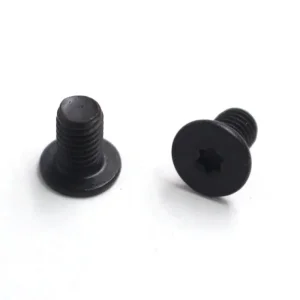
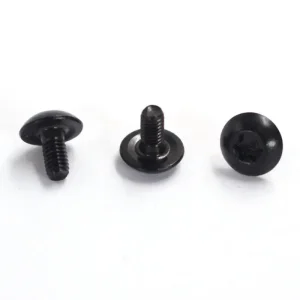
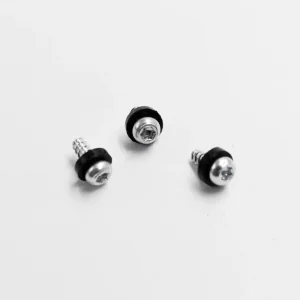
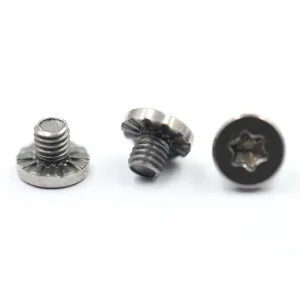
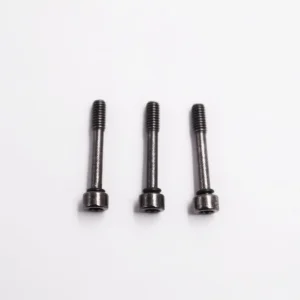
In high-stakes mechanical fastening, unauthorized disassembly presents significant corporate liability, warranty breach hazards, intellectual property theft, and critical safety hazards. A tamper-resistant cap screw (frequently specified as a security socket head cap screw, pin-in-hex, or security Torx) combines the high clamping preload of a standard cylindrical or button-head cap screw with an engineered, non-standard drive geometry designed to resist engagement by conventional tools.
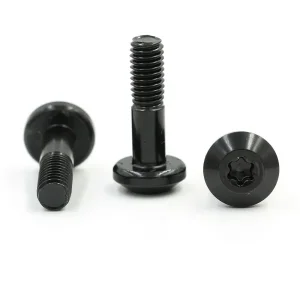
Unlike standard metric or imperial socket cap screws that accept off-the-shelf Allen wrenches or slotted drivers, security cap screws integrate physical barriers within the drive recess. These barriers typically feature a centralized solid steel pin or an asymmetric radial slot geometry that prevents conventional driver bits from achieving radial contact. Consequently, torque transfer requires dedicated, tightly toleranced mating security tooling.
A persistent technical challenge in custom security fastener design is optimizing the trade-off between anti-tamper security and torque transfer efficiency. Conventional cross-recess or slotted tamper-proof screws are notoriously vulnerable to cam-out under the high installation torques typical of automated assembly lines. Our engineered drive systems resolve this via optimized drive wall angles:
| Security Drive Profile | Standard Identification | Torque Efficiency (%) | Cam-Out Resistance | Primary Application Environment |
|---|---|---|---|---|
| Pin-in-Torx (Torx Security) | ISO 10664 Equivalent / TR | 95% – 98% | Exceptional (Zero Vertical Thrust) | EV Battery Systems, Telecom Enclosures, Smart Grid |
| Pin-in-Hex (Socket Security) | DIN 912 Compatible Profile | 80% – 85% | Moderate to High | Industrial Machine Panels, Prison & Institutional Jigs |
| 5-Lobe Tamper-Proof Post | Proprietary Security Recess | 90% – 94% | Superior | High-End Consumer Electronics, Medical Diagnostics |
| Spanner / Snake Eyes | Two-Hole Drive System | 50% – 60% | Low (Prone to Slip under Over-Torque) | Architectural Fixtures, Public Transit, Vandal Prone Trim |
| One-Way / Slotted Tamper-Proof | Permanent Anti-Theft | 70% Installation Only | Cam-Out by Design on Reverse | License Plates, Prison Hardware, Perimeter Security |
Across high-tech industrial environments, fastening failures lead to catastrophic downtime, field warranty liability, and compliance penalties. We deliver sector-specific custom cold-formed solutions tailored to exact operational environments.
Electric mobility applications demand absolute electrical enclosure integrity. Tamper-resistant cap screws prevent unqualified maintenance personnel from contacting dangerous 400V–800V high-voltage busbars and module trays.
Outdoor base transceiver stations (BTS), remote radio heads (RRH), and edge computing enclosures are permanently exposed to harsh weather conditions and public vandalism.
Medical equipment enclosures require tamper exclusion to maintain FDA Title 21 CFR Part 820 quality compliance and eliminate patient safety liabilities.
High-volume smart device OEMs implement microscopic tamper-resistant screws (M0.8 to M2.5) to protect proprietary internal hardware architectures from uncertified repair shops.
High-security public fixtures—including automated ticketing turnstiles, high-speed rail passenger displays, and correction facility hardware—require robust vandal protection.
Vibrational loosening and unauthorized factory floor setting modifications lead to robot misalignment, expensive downtime, and product line rejects.
A premier wholesale supplier of custom tamper-resistant cap screws must bridge the gap between engineering theory and high-volume manufacturing feasibility. Our facilities in Dongguan, Shaoguan, and Wuhan operate an advanced Industry 4.0 ecosystem designed for high efficiency, complete material traceability, and minimal dimensional variance.
Many suppliers machine security drive screws via multi-axis CNC lathe turning due to lower initial tooling costs. However, CNC machining inherently cuts through the metal's natural crystalline grain boundaries, creating microscopic stress concentrations at the head-to-shank junction. Under cyclic dynamic fatigue, CNC-turned security screws are prone to brittle failure at the drive recess base or head junction.
In contrast, YH Fastener utilizes multi-station high-speed cold-heading machines. Under immense progressive hydraulic die pressures, the metallurgical grain structure is continuously contoured along the external geometry of the cap screw head, recess, and shank. This cold-working process delivers significant structural advantages:
In accordance with ISO and DIN standards, all external thread profiles are generated using circular die or flat die thread-rolling machines. Thread rolling work-hardens the root and crest radii, introducing compressive residual stresses that dramatically mitigate fatigue micro-cracking under heavy tensile loading.
For automated assembly lines, a single defective screw with a deformed security pin can jam robotic feeder bowls, halting entire factory operations. Our facility implements 100% automated high-speed optical laser sorting. Every manufactured cap screw passes through high-resolution 360-degree optical cameras to inspect critical parameters:
Procuring custom anti-tamper fasteners requires careful technical diligence to balance security levels, structural performance, and assembly costs. Engineering and purchasing teams should specify the following six key parameters in their design drawings.
Specify the required core mechanical strength according to ISO 898-1 or ASTM standards:
Tailor the head style to your mechanical clearances and anti-tamper requirements:
Select surface treatments calibrated to the operational environment:
Operating a global supply chain requires strict adherence to international trade laws, technical standards, and material compliance. As an experienced direct manufacturing exporter, YH Fastener provides full traceability and compliance certification for cross-border OEM integration:
Every shipment is accompanied by comprehensive compliance dossiers, including:
Our quality management systems are certified to rigorous automotive and industrial standards:
We work directly with OEM mechanical engineering teams to simulate and confirm joint preload:
The industrial fastening sector is undergoing rapid technological advancement. Looking toward the next decade, security screws are evolving beyond passive mechanical interlocks into intelligent, traceable, and smart physical-digital security components.
To combat the global spread of counterfeit replacement parts, high-end aerospace and automotive OEMs are integrating microscopic 2D DataMatrix codes directly onto the heads of security screws. These microscopic markings, etched with sub-nanosecond ultraviolet laser equipment, allow automated optical scanners to verify component authenticity, production batch provenance, and maintenance authorization in real time.
Using computational finite element analysis (FEA), the next generation of security drives will move beyond symmetric radial pins. Machine-learning algorithms now generate non-linear, asymmetrically splined drive walls that maximize torque delivery while neutralizing standard extraction picks. By varying drive patterns dynamically across discrete client production batches, OEMs can enforce proprietary security standards across regional global networks.
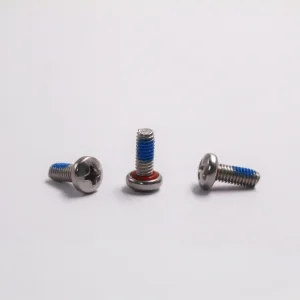
In step with global carbon neutrality and circular economy initiatives, pre-applied anti-vibration patches are shifting toward solvent-free, bio-derived polyamides. Furthermore, dry-to-the-touch microencapsulated adhesives now offer extended shelf lives (over 4 years) while facilitating controlled, torque-managed disassembly at authorized end-of-life recycling centers.
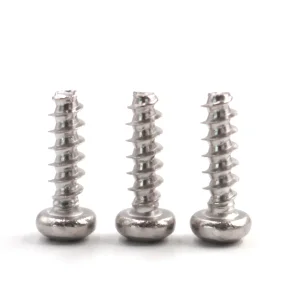
Complete your Bill of Materials (BOM) with our specialized cold-headed fasteners, thread-forming screws, vibration-dampening components, and environmental sealing hardware.
In-depth engineering answers to common technical, metallurgical, and supply chain questions encountered by procurement professionals and mechanical design teams.