Optimized cold-formed geometry configured to minimize boss hoop stress and prevent stripped radial threads in delicate polymeric housings.
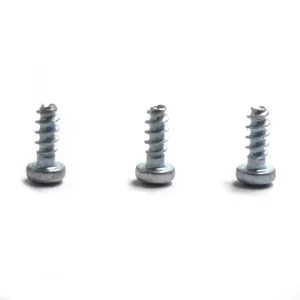
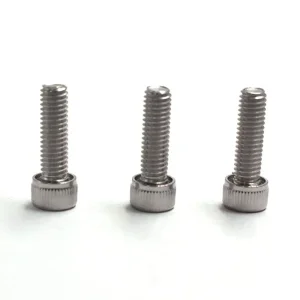
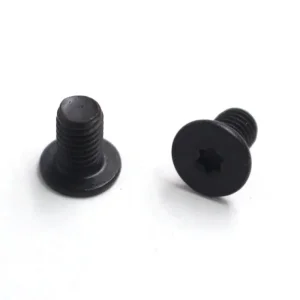
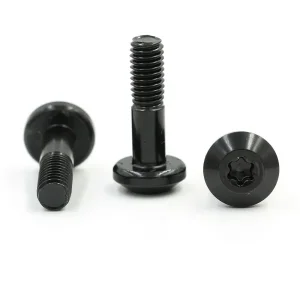
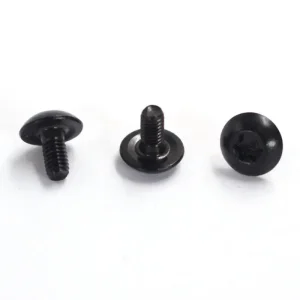
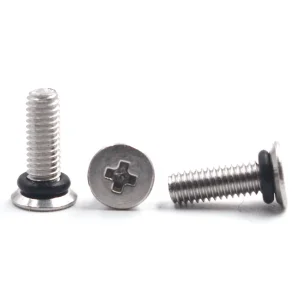
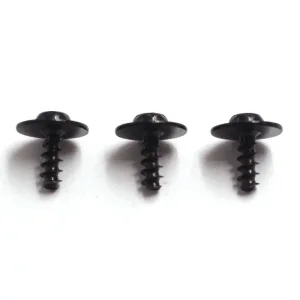
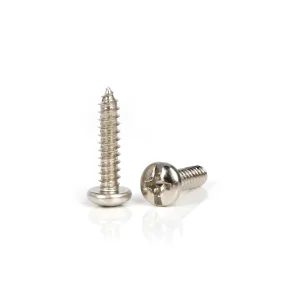
In modern automated manufacturing, assembling components into engineered polymers requires precise thread dynamics rather than conventional mechanical clamping.
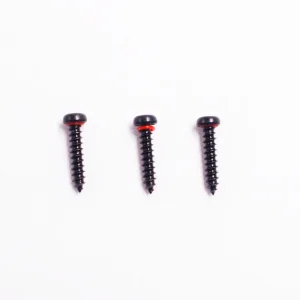
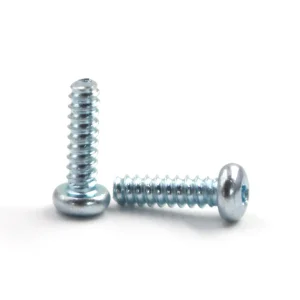
Traditional tapping screws designed for sheet metal cause excessive radial hoop stress when driven into solid plastics, inducing micro-cracks, boss dilation, and premature mechanical failure. Advanced plastic thread-forming fasteners leverage proprietary 30° or 48° flank angles to gently displace ductile resin into designated thread roots without severing crystalline polymeric chains.
The global shift toward structural composites (PA66-GF30, PEEK, ABS-PC blends) in automotive architectures demands specialized cold-headed fasteners. Direct plastic-tapping fasteners eradicate the necessity for costly brass ultrasonic inserts, reducing assembly cycle times by over 42% and saving up to 65% in joint mass across structural dashboard enclosures and EV battery trays.
Modern smart factories operate high-speed automated robotic screwdrivers that cannot tolerate dimensional variances or unstable seating torques. OEM manufacturers like Yu-Huang maintain Cpk > 1.67 on critical thread metrics, pairing precision Torx, Phillips, and triangular drives to eliminate wobbling, cam-out, and plastic shavings during high-RPM robotic assembly.
Data-driven analysis of stress distribution, thermal relaxation, and retention mechanics inside structural thermoplastic bosses.
| Evaluation Parameter | Standard Type AB / B Sheet Metal Screws | Engineered 30° PT Thread-Forming Screws | Tri-Lobular Delta PT High-Performance Fasteners |
|---|---|---|---|
| Included Thread Angle | 60° Standard Metric Profile | 30° Sharp Narrow Profile | 30° Flank with Flank Crest Transitions |
| Radial Boss Stress (Hoop Stress) | Severe (High Risk of Boss Splitting) | Reduced by ~55% through linear displacement | Minimized by controlled tri-lobular flow vectors |
| Drive-to-Strip Torque Margin | Narrow (Typically 1.5:1, easily stripped) | Wide (Typically 3.5:1, safe for air tools) | Optimal (> 5.0:1, suited for high-speed robotic spindles) |
| Pull-Out Retention Force | Sub-optimal (Polymer shear damage) | High (Maximum shear area engaged) | Maximum (Resists high dynamic vibration & creep) |
| Multi-Cycle Re-Screwability | Poor (Cuts cross threads during maintenance) | Fair (3–5 cycles if driven with care) | High (Self-tracking mating threads preserve host core) |
Where microscopic dimensional consistency and exact torque tolerances dictate operational longevity and field reliability.
Applied within BMS (Battery Management System) flame-retardant enclosures, lidar/radar radomes, instrument consoles, and charging inlet assemblies requiring zero thermal relaxation and vibration resilience.
Micro M0.8 to M2.0 PT screws are deployed in smartphone inner chassis, drone gimbal stabilization modules, and smart wearable frames where boss wall thicknesses are restricted below 0.6mm.
Fabricated using passivated 316 stainless steel to eliminate galvanic oxidation and particulate contamination inside handheld dialysis equipment, fluid manifold blocks, and sterile pump housings.
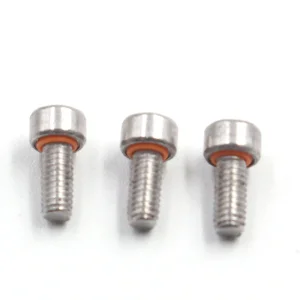
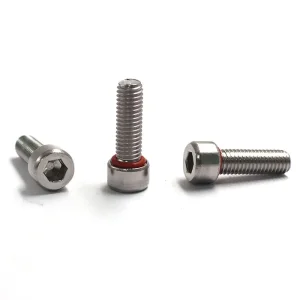
Integrated with under-head elastomer seals or pre-applied locking elements to yield IP67/IP68 weather resistance on solar junction boxes and wind turbine sensor arrays exposed to heavy UV and thermal swings.
How cold heading, predictive multi-physics FEA, and functional nano-coatings are transforming assembly reliability in harsh environments.
Integration of piezoelectric force transducers on header punches allows real-time load signature verification. Every single screw heading cycle is inspected at the millisecond scale to discover internal micro-fissures before thread rolling occurs.
Replacing legacy trivalent chromates with hybrid organic-inorganic zinc flake systems and nano-silica sealers. These coatings provide up to 1,500 hours salt spray resistance without inducing hydrogen embrittlement in high-strength carbon steels.
Formulating customized pitch-to-diameter equations calibrated against cyclic thermal conditions (-40°C to +125°C). Finite Element Analysis simulates viscous relaxation in continuous polymer chains, ensuring steady clamp preload over 15-year life cycles.
Direct answers from our senior fastener application team on pilot hole dimensions, boss designs, materials, and automated driving parameters.
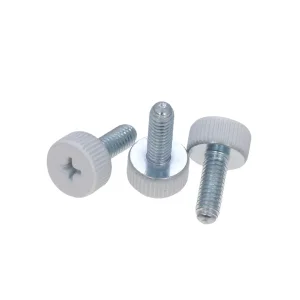
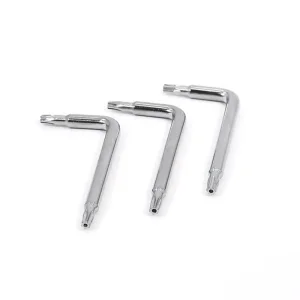
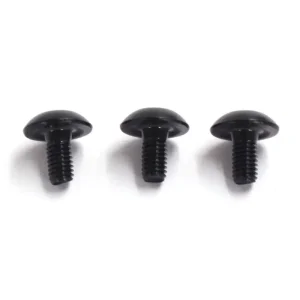
High-strength stainless steel alloys, vibration-damping sealing screws, customized thumb screws, and tooling designed for reliable OEM assembly.