Specialty cold-formed screws, self-tapping systems, and positioning components manufactured under strict IATF 16949 / ISO 9001 quality validation gates.
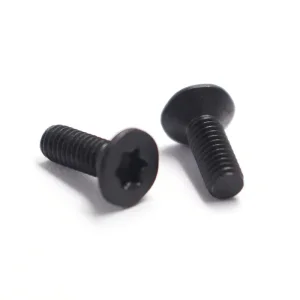
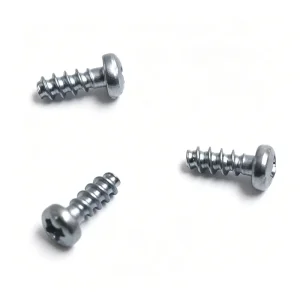
Beyond off-the-shelf security screws: how custom ODM tooling, precise head geometry, and metallurgical cold forging construct an unbreachable physical security perimeter.
In high-stakes industrial assembly, consumer electronics, and municipal utilities, standard drive geometries (Phillips, Slotted, conventional Hex Socket) present an unacceptable failure mode: vulnerability to unauthorized disassembly, theft, warranty tampering, and hazardous vandalism. An ODM (Original Design Manufacturer) tamper-proof screw factory operates as a specialized engineering extension of the customer’s design team, moving far beyond catalogue fasteners into custom-engineered security architecture.
Tamper-resistant fastening mechanics rely on three distinct lines of physical defense: non-standard recess geometries (e.g., Pin-in-Torx, Tri-Wing, Spanner Snake-Eye, One-Way Slotted, Ultra-Torq, and proprietary polygonal splines); controlled cam-out dynamics that prevent non-calibrated extraction tools from generating reverse torque; and high shear head designs (such as break-away shear nuts and shear bolts) that leave behind a perfectly smooth, un-grippable hemispherical profile once the engineered installation torque threshold is reached.
A true high-volume ODM security fastener factory achieves dimensional tolerances of ±0.015 mm through multi-station progressive cold heading rather than reductive machining. Cold forming reorganizes the grain structure of carbon steel (10B21, SCM435) or austenitic stainless steel (SS304, SS316) along the contours of the tamper-proof recess. This continuous, unbroken grain flow increases shear fatigue resistance by up to 28% and head-to-shank tensile yield by over 32% compared to turned fasteners. The central security pin—the core feature of Pin-Torx or Pin-Hex drives—demands precise micro-punch carbide tooling to prevent pin shear during automated factory power-driving.
Combines high-torque transmission with a hardened central post. The 15-degree drive angle eliminates cam-out and radial tool stress, while the center pin blocks conventional Torx drivers. Suited for automated assembly lines.
Features dual drilled blind sockets that require a matched twin-prong drive bit. Eliminates drive debris accumulation and offers an aesthetically refined, smooth head profile for luxury electronics and architectural facades.
An asymmetrical or triangular recessed profile primarily utilized in aerospace, public transport, and gaming hardware. High cam-out resistance in clockwise drive combined with extreme resistance to flat-blade tool wedging.
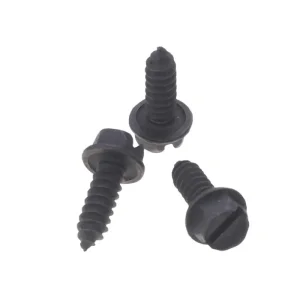
Slotted profile with angled cammed relief faces on the counter-clockwise edges. Allows conventional flat screwdriver installation but induces complete slip when unscrewing force is applied. Ideal for permanent municipal installations.
Engineered with a calibrated neck groove separating the driving hex head from a smooth countersunk or pan base. When the target torque is reached during tightening, the driving hex snaps off completely, leaving zero grip surface.
Fully customer-exclusive recess patterns designed in-house. Driver bits are never sold to the public or distributed to third parties; they are distributed only to certified OEM field technicians, ensuring 100% proprietary service protection.
The convergence of advanced multi-stage cold heading tooling, vertical heat treatment integration, and high-speed automated optical sorting creates unmatched cost-to-performance efficiency.
Chinese fastener clusters in Dongguan, Shaoguan, and Wuhan maintain full in-house wire-cut EDM and slow-feeding wire discharge systems, reducing custom carbide punch fabrication cycles from 6 weeks down to 5–7 days.
From raw wire drawing, spheroidizing annealing, multi-station cold heading, thread rolling, to continuous mesh-belt furnace heat treatment and hydrogen de-embrittlement baking under a single unified factory roof.
Unlike factories that only manufacture screws, advanced Chinese ODM plants co-develop the hardened driver bits (S2 steel, 58–62 HRC) simultaneously, guaranteeing precise fit and zero cam-out under factory-floor torques.
Every security fastener passes high-speed 360-degree laser and CCD vision sorting units. Inspects thread pitch, recess depth, pin concentricity, head flash, and plating thickness to satisfy 50 PPM automotive supply chain targets.
Examining how electrification, the Internet of Things (IoT), and lightweight materials are transforming anti-tamper engineering worldwide.
With smart wearables, AR optics, and edge AI compute devices minimizing PCB footprints, micro tamper-proof screws prevent unapproved disassembly without adding chassis mass or sacrificing clamp force.
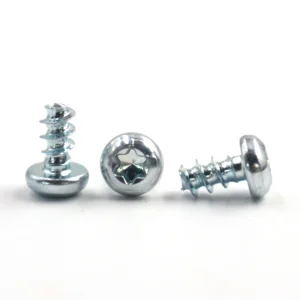
Modern engineering plastics (PBT, PA66-GF30) demand proprietary 30-degree flank angle threads (PT screw profile) to prevent radial boss cracking, combined with security recesses to safeguard embedded electronics.
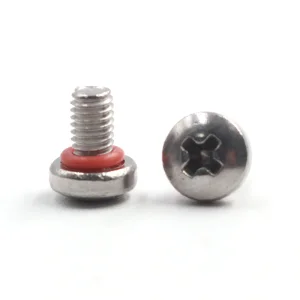
Fasteners must now double as environmental seals. Advanced cold forming recesses EPDM or fluorocarbon (Viton) O-rings beneath the fastener head to block water, salt fog, and hydrocarbon intrusion in outdoor telecom and EV junctions.
Global enterprises face complex threat environments that require standardized yet highly customized fastener solutions across diverse verticals:
Prevents untrained end-user intervention into high-voltage (800V+) lithium battery modules, mitigating electrical shock risks and preserving cell warranty seals under extreme vibration profiles.
Municipal power, gas, and water meters deploy one-way or customized security drives alongside wire-seal through-holes to eliminate utility revenue theft and bypass tampering globally.
Remote cellular towers and fiber-optic junction vaults rely on stainless steel 316 tamper-proof screws with anti-seize nylon coatings to protect critical transceivers from urban sabotage.
A comprehensive engineering comparison table detailing standard versus customized tamper-proof fastener configurations for industrial procurement managers.
| Drive / Security Type | Material Grades | Torque Capacity | Cam-Out Resistance | Reusable? | Common Applications |
|---|---|---|---|---|---|
| Pin-in-Torx (T6H – T50H) | AISI 304 / 316, 10B21 Boron Steel, SCM435 | Very High (Matched to ISO 14583) | Superior (0° Flank Angle) | Yes (With Security Bit) | Consumer Tech, Automotive Enclosures, Public Displays |
| Spanner (Snake-Eye #4 – 1/4") | A2-70, A4-80 Stainless Steel | Moderate (Controlled Torque) | Fair (Dual Post Engagement) | Yes (With Spanner Bit) | Elevator Panels, Medical Monitors, Architectural Hardware |
| Tri-Wing (#1 – #6) | 304 Stainless, Heat-Treated Carbon | High (Directional Asymmetric) | High (Anti-Reverse Cam) | Yes (Service Authorized) | Aerospace Cabin Interiors, Gaming Consoles, Mobile Electronics |
| One-Way Slotted (M3 – M10) | Case-Hardened Carbon, Zinc-Nickel Plated | Moderate (Installation Only) | Intentional 100% Reverse Slip | No (Permanent Assembly) | Prison Fixtures, License Plates, Street Signage, Utility Fencing |
| Break-Away Shear Bolt | Class 8.8 / 10.9 Steel, Marine Brass | Calibrated Snap-Off Torque | Not Applicable (Head Detaches) | No (Destructive Removal) | Substation Fencing, Automotive Steering Locks, Defense Enclosures |
| Proprietary Custom ODM Drive | Custom Specified Alloys (Titanium, Inconel) | Optimized to Assembly Automation | Engineered Zero-Clearance | Restricted (OEM Tooling Only) | Defense Electronics, Critical Data Servers, EV Batteries |
In-depth responses covering tooling feasibility, metallurgical integrity, bit matching, and anti-loosening technologies.
Proprietary geometries are governed under strict Non-Disclosure Agreements (NDAs). Cold-heading carbide dies and punch pins are ground and EDM-sparked in restricted tooling cells. Driving bits are serialized and distributed solely to verified client logistics facilities. No master CAD models or samples are shared with third-party catalog distributors.
Machining a center pin on a CNC lathe introduces micro-grooves and thermal stress risers at the pin-base radius. Under pneumatic tool impact, turned pins often fracture at low torque. Cold heading forms the central post through progressive plastic deformation, keeping the metal's internal grain boundary aligned and continuous, resulting in significantly higher shear strength.
Heavy, uneven hot-dip galvanizing fills up fine tamper-resistant recesses, preventing tool bit engagement. We recommend alkaline Zinc-Nickel electroplating (12–15% Ni) with trivalent passivation, delivering over 1,000 hours of neutral salt spray (ASTM B117) resistance while maintaining a controlled coating layer of just 5–8 microns to ensure smooth driver fit.
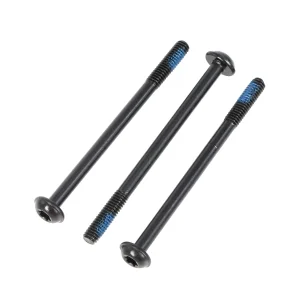
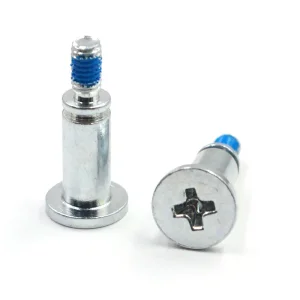
Because security screws cannot be retightened without specialized bits, vibration resistance is vital. We offer pre-applied blue or orange nylon locking patches (DIN 267-28), 360-degree micro-encapsulated chemical adhesives (e.g., precote, Loctite), and captive spring washer SEMS assemblies that maintain active joint clamp load under dynamic vibration.
Every production run includes comprehensive Mill Test Certificates (EN 10204 3.1), Rockwell/Vickers hardness test data, coating thickness XRF measurements, salt spray test reports, and dimensional inspection sheets. For automotive Tier-1 programs, full PPAP Level 3 documentation (including PFMEA, Control Plans, and IMDS submissions) is provided.
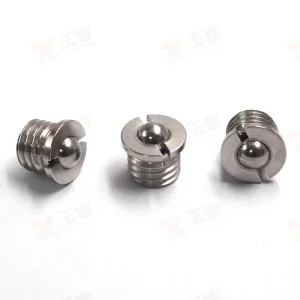
Explore our specialized range of anti-loosening shoulder screws, IP67 sealing fasteners, knurled thumb screws, and precision positioning plungers.