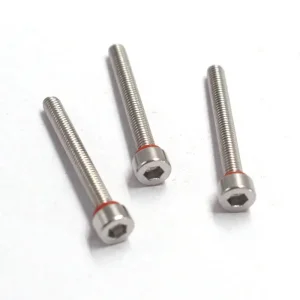
Direct factory-engineered fasteners built for clean mechanical mating, structural reliability, and micro-tolerance performance in high-speed automated feeding.
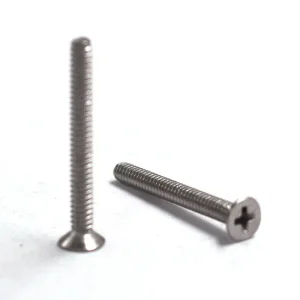
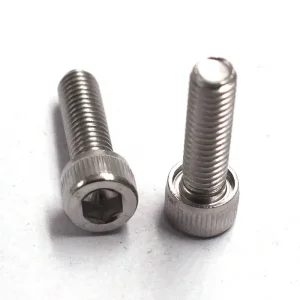
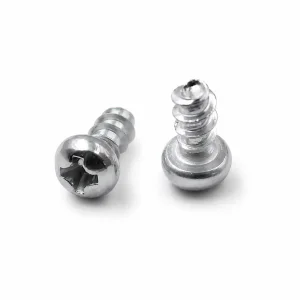
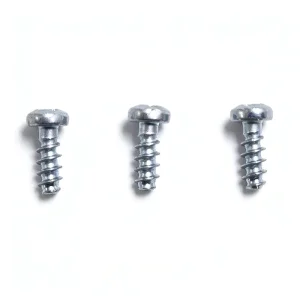
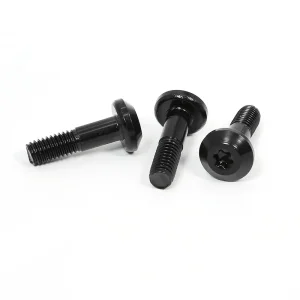
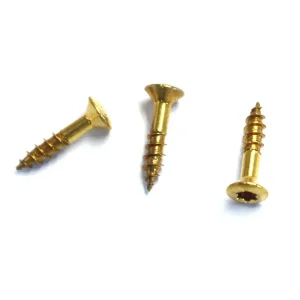
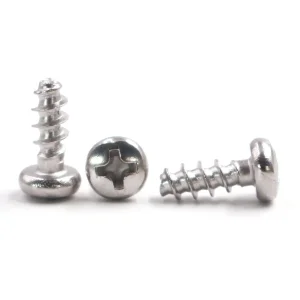
In modern precision manufacturing, fasteners are no longer treated as commoditized C-class consumables. In high-density electronics, electric vehicle (EV) battery systems, and automated industrial architectures, the pan head tapping fastener operates as a critical load-bearing joint that defines fatigue life, galvanic insulation, and structural envelope limits.
The global transition away from secondary pre-tapping operations has made self-tapping (DIN 7981 / ISO 7049) and thread-forming (PT / trilobular) geometries mandatory. By forming or cutting an internal mating thread in virgin thermoplastic, aluminum die-castings, or thin gauge sheet metals, assembly cycle times decrease by 32% while eliminating swarf-induced short circuits.
Pan head fasteners feature a low-profile dome profile combined with an expansive, flat under-head bearing surface. This distributes clamp load across delicate composite substrates and thin PCBs without localized micro-cracking, countersink preparation, or surface deformation under excessive seating torque.
Today’s high-vibration applications demand strict metallurgical equilibrium: austenitic stainless steels (304 / 316) passivated for zero-pitting resistance, or case-hardened alloy steels maintaining core ductile toughness (>32 HRC) paired with an ultra-hard surface case (>550 HV0.3) for rapid thread cutting without head shear failure.
For senior global supply chain directors and mechanical engineering procurement leads, qualifying a pan head tapping fastener manufacturer requires rigorous auditing beyond pricing quotes. The true cost of fastening lies in automated line uptime, assembly yield rates, and zero field recalls.
Micro-defects in heading punch dies cause irregular cross-recess or Torx geometries. High-speed automated screwdrivers will experience bit slip, stripped recesses, or premature cam-out if recess depth tolerance exceeds ±0.03 mm. Certified factories deploy carbide heading inserts with verified tool wear logs.
In automated robotics lines, a single bent shank, burred thread, or unslotted head shuts down an entire production cell. Sourcing standards require 360-degree high-speed glass plate laser sorting equipment providing sub-50 PPM (parts per million) failure thresholds, transitioning to zero-defect targets.
Electroplated carbon steel tapping screws with hardness >320 HV are acutely susceptible to catastrophic delayed hydrogen embrittlement. Certified factories implement monitored de-embrittlement baking (minimum 200°C for 4 to 8 hours) within 4 hours immediately post-electroplating.
Enterprise procurement requires complete heats-and-lots traceability directly back to the primary wire rod mill certificate (EN 10204 3.1). Optical emission spectrometry verifies chemical composition, ensuring low sulfur and phosphorus to avoid cold-heading shear micro-fractures.
Selecting the proper fastener profile is an exact mechanical science governed by substrate modulus, expected thermal cycling, clamp tension targets, and service maintenance expectations.
| Thread Classification | Mating Substrates | Engagement Mechanics | Assembly Torque Dynamics | Vibration Resistance Index |
|---|---|---|---|---|
| Type AB Tapping Thread | Sheet metals (≤1.5mm), plywood, structural plastics | Gimlet point with fine pitch thread forming and displacement | Low driving torque, high stripping threshold | Moderate (recommended with under-head serration) |
| Type B Blunt Point Thread | Thicker sheet metals (up to 3.0mm), non-ferrous castings | Blunt tip, spaced thread pitch to accommodate dense flow | Linear torque rise with balanced clamp retention | High (tight radial interference fit) |
| PT® 30° / 40° Asymmetric Thread | Thermoplastics (ABS, Polycarbonate, Polyamide) | Narrow thread profile minimizes radial bursting stress in bosses | Extremely wide torque window ($T_{strip} / T_{drive} > 4:1$) | Superior (deep shear flank retention) |
| Trilobular (Taptite Style) | Ductile metals, cast aluminum alloys, zinc castings | Tri-roundular cross section burns thread by cold work-hardening | Lowest driving torque; eliminates chip creation entirely | Maximum (100% circumferential self-locking engagement) |
| Type F / Type 23 Cutting Thread | Heavy steel sheets, cast iron, brittle thermoset plastics | Milled flutes cut precise internal threads via cutting action | Requires steady alignment torque; creates minor swarf | Standard machine screw mating characteristics |
For assemblies subjected to relentless harmonic excitation (such as internal combustion peripherals, compressors, or automotive suspension controllers), mechanical underhead friction is insufficient. Micro-encapsulated acrylic or anaerobic resins pre-applied to the tapping threads burst during driving, filling helical voids to create a cross-linked anti-loosening barrier.
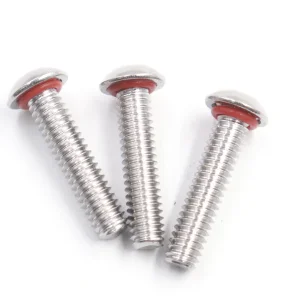
When fastening enclosures to IP67, IP68, or IP69K waterproof ratings, relying on liquid gasket sealant introduces messy manual variance. Direct integration of vulcanized under-head EPDM, Fluorosilicone, or molded Buna-N O-rings within a precision undercut creates an immediate hydrostatic barrier resistant to 10 bar fluid pressure.
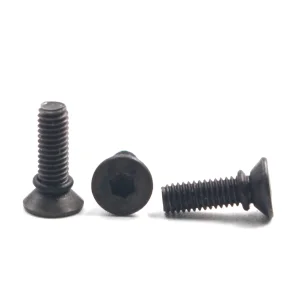
While Phillips (cross-recess) drives remain standard in light-duty consumer goods, modern manufacturing heavily prioritizes Six-Lobe (Torx) and Tamper-Resistant Pin-in-Torx drives. The 15° drive angle transfers driving torque radially rather than axially, preventing driver bit cam-out and reducing operator ergonomic fatigue.
Operating across three dedicated manufacturing sites spanning over 20,000 square meters in Dongguan, Shaoguan, and Wuhan, Yu-Huang Electronics (YH Fastener) functions with an integrated Quality Management Architecture audited to the highest global standards.
Tier-1 automotive production demands strict compliance with IATF 16949. Production part approval processes (PPAP Level 3), Design of Experiments (DOE), Statistical Process Control (SPC), and Failure Mode and Effects Analysis (FMEA) form the baseline of every manufacturing run.
Every fastener formulation, electroplating bath, and surface passivation is verified to comply fully with EU RoHS Directive 2011/65/EU (and amendment 2015/863), REACH (SVHC) chemical inventories, and recorded in the International Material Data System (IMDS) for rapid automotive reporting.
Equipped with Fischerscope X-ray fluorescence plating thickness analyzers, Salt Fog Corrosion chambers (up to 1,500 hours ASTM B117), digital Vickers micro-hardness testers, torsion analyzers, and optical coordinate measuring machines (CMM) delivering exact data validation.
Global logistics support spans 60+ countries across North America, Europe, and the Asia-Pacific basin. Factory applications engineers provide rapid 24-hour drawing reviews, customized pilot hole sizing calculations, and prototype sample runs within 5-7 business days.
As consumer electronics miniaturize, EV drivetrains operate at higher voltages, and sustainable manufacturing mandates decarbonization, fastener engineering is undergoing fundamental breakthroughs in alloy science and manufacturing automation.
Next-generation wearable medical devices, optics modules, and flexible displays require sub-millimeter pan head tapping fasteners (down to M0.6 and M0.8). Precision multi-station cold headers form head, drive recess, and micro-thread pitch at high volume while eliminating head-to-shank concentricity errors.
Sustainable initiatives demand the total phasing out of heavy metals and high-carbon surface finishes. New thin-film zinc-nickel alloy platings paired with trivalent chromium passivations and nano-ceramic sealers achieve over 1,000 hours of neutral salt spray performance at less than 8 microns coating thickness.
The manufacturing floor of tomorrow integrates AI-driven neural vision models directly inside cold headers and thread rollers. High-speed multi-angle cameras detect thread pitch micro-imperfections, tool chip marks, and heading recess burrs in real time, auto-adjusting wire feed pressure to prevent out-of-spec batches.
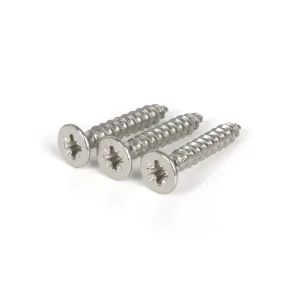
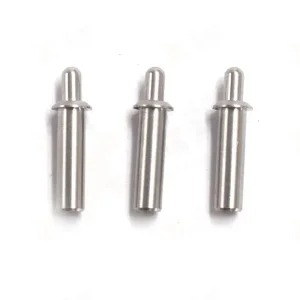
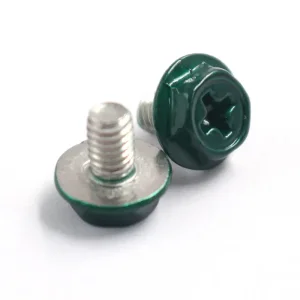
Engineered specialty hardware including hermetic sealing screws, high-strength thread-cutting fasteners, spring detent plungers, and non-standard custom machine parts.
Comprehensive engineering answers for mechanical designers, production engineers, and quality assurance inspectors resolving joint failures and optimizing automated fastening.