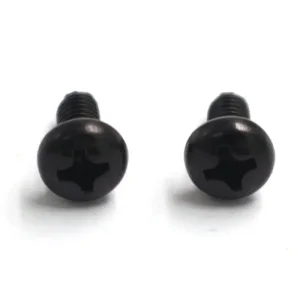
Engineered cold-headed fasteners matched with captured washers, sealing systems, and anti-loosening features.
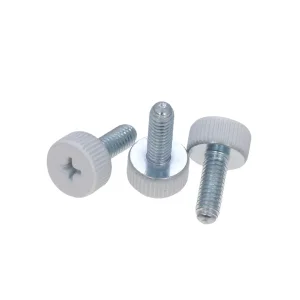
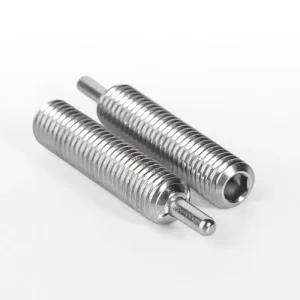
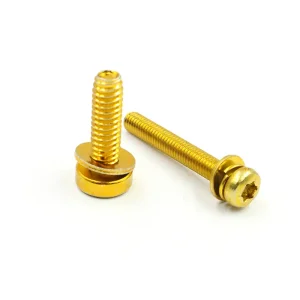
A technical assessment of pre-assembled washer screw engineering, cold-heading thread roll locks, and clamp force optimization across M3, M4, M5, and M6 diameters.
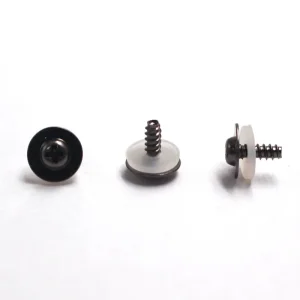
SEMS screws (originating from "pre-assembled" fasteners) feature a permanently captured washer—such as a split helical spring, conical Belleville, internal/external tooth, or plain flat washer—that is threaded on a cold-headed blank prior to the thread rolling process. Because the major thread diameter expands beyond the inner washer hole during die deformation, the washer is mechanically trapped without inhibiting its rotational freedom.
Across metric architectures (M3, M4, M5, M6), SEMS technology addresses critical micro-vibration issues, provides uniform surface load distribution over delicate substrates, and prevents operator errors caused by misplaced, inverted, or missing washers.
In high-vibration applications—such as automotive powertrain brackets, industrial inverter terminal blocks, and robotic manipulators—transverse cyclical shear induces the Junker effect, leading to fast torque relaxation. SEMS screws combine continuous clamping force with elastic energy storage.
Modern automated robotic screwing spindles and bowl feed systems jam easily when loose washers snag during feeding. Integrated M3-M6 SEMS configurations eliminate secondary loose components entirely, enabling seamless pneumatic pick-and-place assembly lines.
Standardizing on captive washer screws slashes line downtime by up to 88% and guarantees 100% washer compliance on safety-critical automotive electronics and consumer appliances.
Why Tier-1 automotive and global technology leaders concentrate their customized SEMS fastener procurement in our integrated Dongguan manufacturing facilities.
Unlike regional distributors who outsource heading, washer insertion, heat treatment, and electroplating to separate third parties, our Dongguan plant operates an interconnected 20,000 m² ecosystem. Cold-heading multi-die machines feed directly into inline washer assembly and high-speed rotary thread rolling tables.
This closed loop prevents hydrogen embrittlement through immediate de-embrittlement baking, guarantees uniform case-hardening depth, and ensures rigorous traceability down to raw wire heat numbers.
Automated assembly mandates zero foreign material, zero thread cross-pitch faults, and zero missing washers. Our factory leverages multi-camera AI optical sorting machines inspecting 1,200 parts per minute across 360 degrees:
Where Western manufacturing lead times for non-standard tooling reach 12 to 16 weeks, our in-house EDM and CNC tool-making shop develops bespoke cold-heading dies, custom washer blanking tools, and thread rolling blocks within 7 to 10 working days.
From initial 3D CAD stress simulations to PPAP Level 3 document submissions, we condense the design validation window dramatically for fast-paced consumer tech and EV production lines.
Comprehensive standard and customization parameters available across our primary production lines.
| Nominal Size | Pitch (Metric) | Common Head Geometries | Drive Recesses | Integrated Washer Configurations | Tensile Strengths / Grades |
|---|---|---|---|---|---|
| M3 | 0.50 mm | Pan, Button, Flat Countersunk, Truss | Phillips, Torx (T10), Slot, Comb-Drive | Single Flat, Spring Lock, External Tooth, Double Washer | Class 4.8, 8.8, 10.9; SS 304, SS 316 |
| M4 | 0.70 mm | Pan, Hex Flange, Binding, Cheese | Phillips, Torx (T20), Hex Socket (3mm) | Square Cone (Terminal), Wave, Belleville, Plain Flat | Class 8.8, 10.9, 12.9; SS 304, Brass H62 |
| M5 | 0.80 mm | Hex Indented, Pan, Truss Head | Torx (T25), Phillips, Slotted Hex | Double SEMS (Flat + Split Spring), Conical Serrated | Class 8.8, 10.9; Stainless 316, Carbon Steel |
| M6 | 1.00 mm | Hex Head, Socket Cap, Large Flange | Hex Socket (5mm), Torx (T30), Hex Drive | Heavy-Duty Ribbed Disc, Large OD Flat, Belleville High-Load | Class 8.8, 10.9, 12.9; A2-70, A4-80 Stainless |
Specific field implementations demonstrating how M3, M4, M5, and M6 SEMS assemblies solve critical mechanical challenges.
Within Electric Vehicle (EV) battery management systems (BMS), high-voltage distribution units (PDU), and inverter busbars, vibration and thermal expansion cycle continuously. M5 and M6 SEMS screws equipped with Belleville conical washers and silver/tin-plated contact pads maintain active joint tension against cold-flow in copper/aluminum lugs, eliminating micro-arcing and fire risks.
Data center blade servers, 5G active antenna units (AAU), and power supplies utilize M3 and M4 pan-head SEMS fasteners with serrated external tooth washers. When tightened down into grounded chassis sheet metal, the teeth pierce thin powder coatings and natural anodized barriers to guarantee low-impedance electrical grounding and robust EMI/RFI shielding.
Industrial robotic arms, stepper motor housings, and servo gearboxes experience constant multi-axis inertial shocks. Our Class 10.9 and 12.9 high-tensile Double-Washer SEMS combinations (hardened flat washer + high-deflection split spring washer) deliver an exact balance of surface load distribution across soft magnesium/aluminum alloys without joint loosening.
Key strategic considerations for strategic sourcing executives, quality assurance directors, and supply chain managers.
Global procurement teams are systematically transitioning separate screw and washer listings into unified SEMS part numbers. Consolidating the bill of materials yields measurable cost advantages:
With tightening environmental regulations (RoHS, REACH, and California Proposition 65), conventional hexavalent chromate passivations are obsolete. Our lines provide cutting-edge finishes:
Modern assembly plants monitor screwdriving torque angle curves in real time. SEMS fasteners must provide an exceptionally consistent friction coefficient (μ-factor). Through precisely calibrated lubricant sealers and torque nylok patches, our factory controls seating torques within ±5% tolerance windows.
Authoritative answers directly from our senior fastener application and quality engineers.
The manufacturing process begins by cold heading the unthreaded screw blank. The blank's shank diameter is held strictly to the pitch diameter dimension. Next, a specialized feed track automatically nests the manufactured washer over the blank. Finally, the assembly passes between flat or cylindrical thread-rolling dies. As the dies displace the cold steel to raise the crest of the thread, the outer major thread diameter expands significantly beyond the internal bore of the washer. This mechanically captures the washer between the screw head and the threaded shank forever, while maintaining full free rotation.
Yes. We frequently engineer hybrid assemblies. For example, in sensitive electronic enclosures, an M3 or M4 stainless steel screw can be assembled with a non-conductive, vibration-absorbing plastic or nylon washer combined with a metal backing disc. In electrical terminal switches, copper or phosphor-bronze square cone clamping washers are married to high-strength carbon steel zinc-plated screws to provide electrical conductivity alongside structural joint clamp force.
Fasteners with core or surface hardness exceeding 320 HV (such as Class 8.8, 10.9, 12.9, or case-hardened thread-forming screws) are vulnerable to atomic hydrogen absorption during acid pickling and electroplating. We mitigate this through strictly monitored protocols: (1) using mechanical shot-blasting or flash-acid pickling with inhibitors, and (2) transferring the screws into specialized baking ovens within 1 to 4 hours after electroplating. Screws are de-embrittled at 200°C–220°C for 4 to 24 hours depending on strength class and customer specification.
A single washer SEMS typically contains either a flat washer (to distribute bearing load over oversized holes) or a split spring lock washer (to resist loose vibration). A double washer SEMS captures both a helical spring washer and a flat washer adjacent to one another. The flat washer rests directly against the soft component surface (such as plastic or aluminum) preventing surface galling, while the spring washer maintains elastic preload tension underneath the bolt head.
Under our IATF 16949 quality system, every production batch is shipped with complete traceability documentation. Standard deliverables include: EN 10204 3.1 Material Test Reports (chemical composition & tensile verification), Plating Thickness & Salt Spray Test Reports, Full Dimensional Inspection Reports (Cpk data on critical dimensions), and PPAP (Production Part Approval Process) Level 1 through 3 packages upon OEM project qualification.
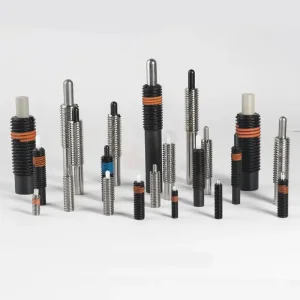
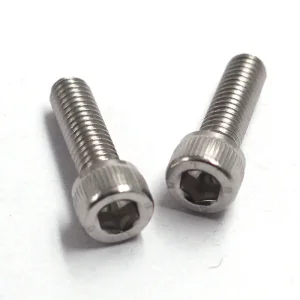
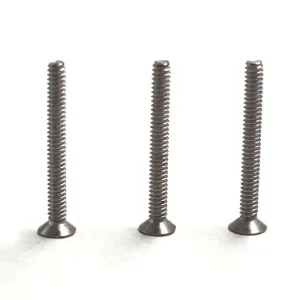
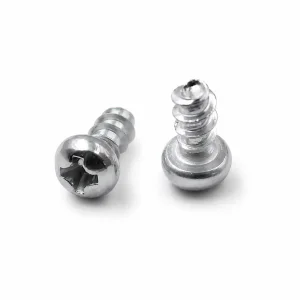
Explore additional high-precision machine screws, spring plungers, hex drive hardware, and micro fasteners.