In-house cold heading and thread-rolling systems meeting IATF 16949 / ISO 9001 compliance for high-stress industrial applications.
Continuous optimization in cold heading tooling & thread profile R&D.
Integrated multi-plant infrastructure in Dongguan, Shaoguan, and Wuhan.
Full optical sorting and automated torque auditing before export packing.
Supplying critical hardware to North American, European, and Asian OEMs.
A granular look at the mechanics behind 30° flank angle geometries, displacement balance, and cyclic joint integrity.
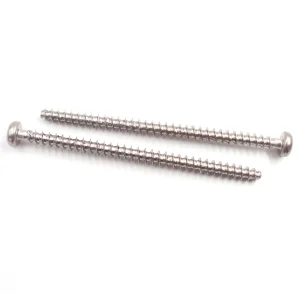
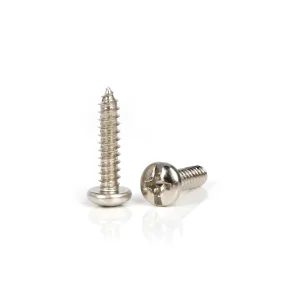
Standard self-tapping fasteners rely on 60° triangular thread geometries that exert massive radial expansion forces against boss walls. Our custom anti-cracking tapping screws incorporate an acute 30° profile (PT-style thread) that redirects internal vector stresses axially, virtually eliminating bursting hoop stresses in sensitive PC, ABS, and PBT thermoplastics.
Fastener-induced boss fracture happens when the plastic volume displaced by thread crests exceeds the material's elastic recovery limit. By calibrating the core-to-crest ratio and introducing a parabolic thread root, our designs ensure displaced polymers flow smoothly into the root reservoir without building up residual internal tensile stresses.
Engineering resins creep over operating thermal cycles, resulting in clamp load deterioration. The specialized pitch lead of our anti-cracking screws maximizes shear area engagement, expanding stripping-to-drive torque ratios up to 4:1. This gives high-speed robotic screwdrivers a wider installation window while preventing stripped threads.
How our Dongguan manufacturing campus delivers unmatched lead-time agility, chemical consistency, and cost-to-performance ratios.
Spread across Dongguan (primary R&D and custom production), Shaoguan, and Wuhan, our three plants aggregate high-speed cold-heading machines, automatic thread-rolling lines, and continuous mesh-belt carburizing heat treatment. This ensures complete end-to-end traceability without third-party transit risks.
Every anti-cracking thread profile requires ultra-precise cold heading dies and thread-rolling plates. Our in-house mold tooling shop utilizes slow-wire EDM and mirror-polishing systems to grind customized dies within ±0.005mm tolerances, enabling standard sample production in as fast as 5 to 7 days.
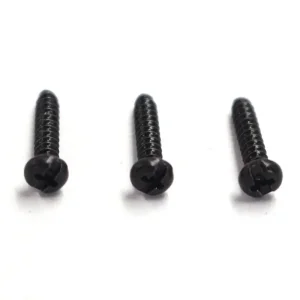
Sourced from tier-one steel mills, our raw wire rods undergo spectroscopic verification. We offer specialized surface treatments including eco-friendly trivalent blue/yellow zinc, black zinc, Dacromet, nickel-plating, and salt-spray-resistant passivation that withstands over 1,000 hours of neutral salt spray (NSS).
From micro-scale consumer wearables to high-vibration automotive power distribution units.
Modern electrical junction boxes, EV battery enclosure telemetry sensors, and external automotive lighting assemblies utilize fiber-reinforced glass thermoplastics (PA66-GF30, PBT-GF20). Our anti-cracking fasteners offer high strip-out resistance under wide thermal shock cycling (-40°C to +150°C), preventing micro-fractures in structural plastic mounts.
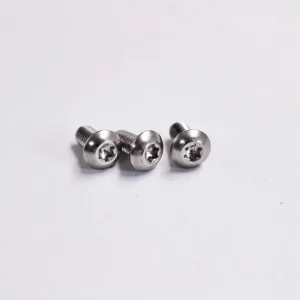
Thin-walled smart devices, TWS audio cases, and handheld drones leave minimal boss wall thickness (often < 0.6mm). Combining miniature thread sizes (down to M0.8 / M1.2) with sharp 30° thread profiles, our micro PT screws prevent weld-line fractures and boss swelling, maintaining IP67 sealing integrity across drop impacts.
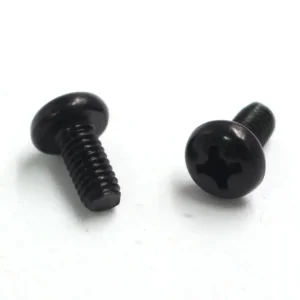
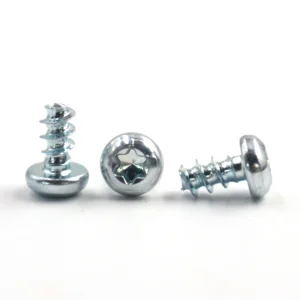
Fully compatible with automated high-speed blow-feed and vacuum-feed torque drivers. Our custom anti-cracking screws feature stable head concentrics, chamfered entry pilot points, and deep Torx / Phillips recesses that suppress cam-out and head wobbling on high-volume production lines.
We tailor core geometries, thread pitch, surface friction chemistry, and drive recesses around your assembly's polymer properties and structural wall limits.
Request Custom Tolerance Review| Thread Geometries | PT 30° flank angle, Delta PT profile, High-Low alternate thread, Trilobular low-stress forming. |
|---|---|
| Size Envelope | Nominal diameters M0.8 through M10; Length: 1.5mm to 120mm; Drawing-based special stepped shanks. |
| Base Materials | AISI 1018/1022 Carbon Steel (case-hardened), 304, 316 Austenitic Stainless Steel, Brass, Titanium Alloy. |
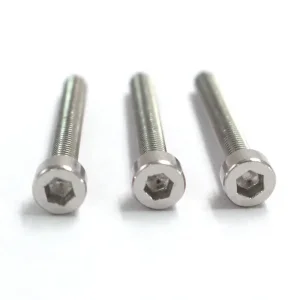
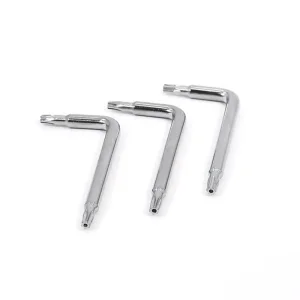
| Drive Recesses | Torx (T1-T50), Torx Plus, Tamper Security Pin-Torx, Phillips, Pozidriv, Hex Socket, Custom Anti-tamper. |
| Surface Finish | Trivalent Clear/Yellow Zinc, Black Zinc, Mechanical Galvanizing, Dacromet, Geomet, Electroless Nickel, Passivation. |
| Quality Standard | IATF 16949 / ISO 9001 / ISO 14001, full PPAP Level III documentation support. |
Strategic perspectives for global procurement directors, quality engineers, and international sourcing teams.
Global consumer product designers continuously reduce housing wall thicknesses to cut resin weight and carbon footprints. As wall sections drop below 1mm, standard self-tapping screws cause structural bulges or crazing cracks. International buyers now mandate engineered anti-cracking fasteners to maintain structural integrity while using thinner plastic walls.
Tier-1 automotive and multinational industrial procurement managers demand defect levels below 50 PPM (Parts Per Million), moving toward zero-defect targets. Meeting this bar requires multi-camera automated laser sorting machines to inspect 100% of thread pitches, head concentricities, and drive recesses before export shipping.
Beyond dimensional conformity, global contracts require material traceability. At YH Fastener, we supply complete chemical mill analysis, heat treatment Vickers core/case hardness documentation, torque-angle performance test curves, and international IMDS/RoHS/REACH declarations directly from our laboratory.
Clear engineering answers on boss hole calculations, stripping-to-drive torque ratios, and tooling parameters.
Explore complementary OEM assembly hardware manufactured within our 20,000m² industrial facilities.