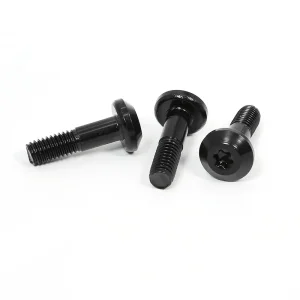
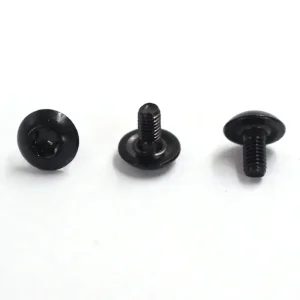
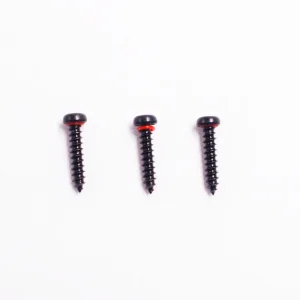
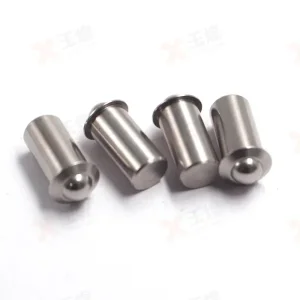
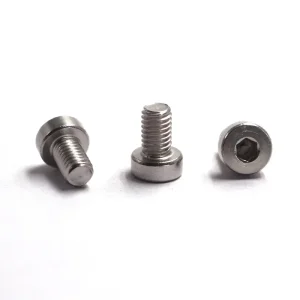
Direct-from-factory cold-headed and CNC engineered sealing fasteners. Each assembly is designed to eliminate leak paths under severe vibration and internal fluid pressure.
Modern industrial machinery, electric mobility platforms, and sealed electronic enclosures demand fasteners that perform dual functions: high clamping preload retention and bi-directional fluid barrier containment.
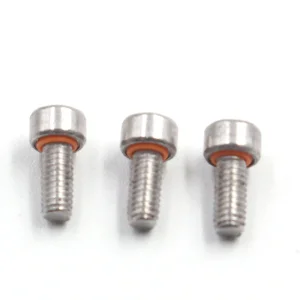
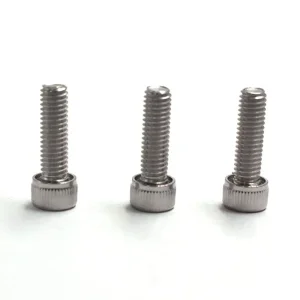
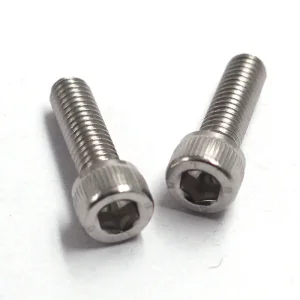
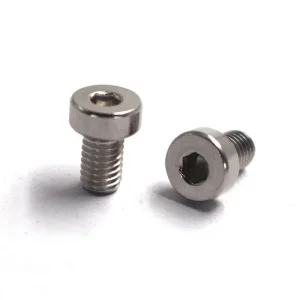
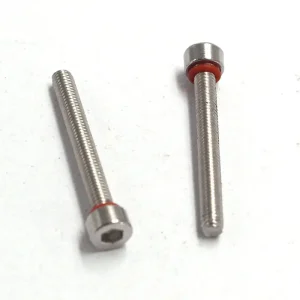
Traditional flat washers and liquid sealants suffer from chemical degradation and uneven human application. Stainless steel socket cap sealing screws feature a precision undercut beneath the head, seating an elastomeric O-ring (Silicone, Viton, EPDM) that maintains 360-degree containment without extruding under specified tightening torque.
Standard carbon steel screws are prone to galvanic corrosion when paired with aluminum housings. Our high-grade austenitic alloys (SS304, SS316, and SS316L) undergo passivated surface treatment to ensure complete resistance against saltwater spray, industrial acids, and thermal shock cycles ranging from -60°C to +200°C.
Engineered for hydraulic pumps, subsea instrumentation, and high-vacuum chambers, our captive sealing fasteners resist pressures exceeding 6,000 PSI. The metal-to-metal contact engineered outside the O-ring groove acts as a solid mechanical stop, protecting the elastomer from shear-induced destruction.
Yu-Huang Electronics integrates raw material validation, intelligent multi-station cold heading, high-speed thread rolling, and automated laser sorting to ensure zero-defect deliveries across global OEM assembly lines.
By forming the socket cap and undercut groove via high-speed, continuous multi-station cold heading rather than secondary CNC turning, grain boundary directionality is maintained throughout the head-to-shank junction. This increases tensile fatigue resistance by up to 28% while reducing raw-material waste.
Manual O-ring assembly leads to seal twists and micro-abrasions that compromise vacuum integrity. Our Dongguan intelligent factory utilizes custom multi-axis robotic insertion lines that expand, seat, and verify elastomer placement via machine-vision cameras at speeds exceeding 120 parts per minute.
Every production lot is fully traceable back to the raw wire spool. In-house optical sorting equipment checks dimensions including pitch diameter, head concentricity, and groove depth at 50 PPM defect tolerances, accompanied by PPAP Level 3 documentation upon request.
| Performance Specification | YH Fastener Manufacturing Standard | Industry Average / Standard CNC |
|---|---|---|
| Dimensional Precision | ISO 4762 / DIN 912 Class 6g / 4h Tolerancing | Class 6g Rough Cut / Class 7e |
| Groove Concentricity | Within 0.03 mm TIR (Total Indicator Reading) | 0.08 mm – 0.12 mm (causes uneven seal squeeze) |
| Tensile & Proof Load | A2-70 (700 MPa) / A4-80 (800 MPa) Work-Hardened | A2-50 Annealed / Commercial uncertified bar |
| Sealing Rating Capability | Submersible IP67, IP68 (Up to 10 Bar hydrostatic) | Uncertified or splash-proof IP54 only |
| Pre-Applied Anti-Loosening | DIN 267-28 Polyamide patch or microencapsulated chemical | Manual liquid threadlocker required at installation |
Where failure is not an option: our stainless steel socket cap sealing fasteners safeguard sensitive components across demanding industrial and electronic verticals.
Preventing electrolyte moisture ingress and coolant channel leakage in automotive battery enclosures. High thermal cycling resistance keeps clamping torque stable across cold-crank and maximum discharge cycles.
High dynamic multi-axis vibrations lead to fluid loss in joint gearboxes. Cap sealing screws maintain oil retention and block atmospheric dust entry in robotic paint cells and cleanroom pick-and-place arms.
Dialysis machinery, surgical peristaltic pumps, and autoclaves require sterilization-grade sealing. SS316 fasteners paired with FDA-compliant USP Class VI silicone rings guarantee safety against aggressive cleaning disinfectants.
Offshore wind farm junction boxes and subsea optical repeater units demand total protection against chloride stress corrosion cracking (SCC). Our passivated A4-80 cap screws prevent water ingress even when fully submerged.
Pole-mounted micro-stations and luminaire heat sinks face continuous rain, ultraviolet solar degradation, and wind buffet. Captive O-ring socket caps ensure hermetic protection for internal RF circuits without maintenance downtime.
Drastic altitude pressure differentials generate condensation hazards within avionics enclosures. Precision cap sealing fasteners maintain positive cabin seal limits while preventing thread fretting under rapid decompression cycles.
Direct answers from our Senior Application Engineering team regarding material selection, torque limits, elastomeric degradation, and factory-direct volume supply.
Our socket cap heads are cold-formed with a precisely calibrated dovetail or radiused channel. The groove volume is engineered to be 15% to 20% larger than the cross-sectional volume of the O-ring. When tightened to specification, the fastener's flat outer ring lands firmly against the mating surface (metal-to-metal contact), achieving optimal 25% elastomer deflection while preventing outward extrusion.
For standard environmental water, dust, and mild weather protection (-40°C to +120°C), Nitrile (NBR) is cost-effective and dependable. For petroleum fuels, lubricants, and high temperatures up to +200°C, Viton (FKM) is specified. In pure chemical, food handling, or medical equipment, Silicone or Fluorosilicone provides broad non-reactive stability across deep thermal ranges.
Yes. Because the O-ring is mechanically captive inside the under-head groove, it retracts cleanly with the fastener during disassembly. As long as the joint has not exceeded the designated seating torque or operated beyond the chemical/thermal limits of the elastomeric polymer, the screw can be re-torqued multiple times while retaining IP67 integrity.
Galling is common when stainless male threads engage stainless tapped holes under high clamping loads. We counteract this through precision-rolled thread finishes that reduce micro-asperities, pre-applied dry anti-friction lubricants (wax/PTFE coatings), or by supplying microencapsulated anti-loosening nylon patches that simultaneously dampen vibration and prevent galling.
Every batch shipped by Yu-Huang Electronics includes EN 10204 3.1 chemical and mechanical mill analysis, ROHS & REACH compliance declarations, torque-to-yield and pull-off tensile test records, salt-spray chamber reports, and full dimensional inspection sheets generated by automated optical laser inspection systems.
For custom non-standard head profiles, security drives (such as Pin-Torx or Tri-Wing), or specialized groove dimensions, tooling design and fabrication takes 7 to 10 working days. Pre-production functional samples are typically dispatched for customer lab validation within 12 to 14 days, with full production ramp-up following immediate approval.
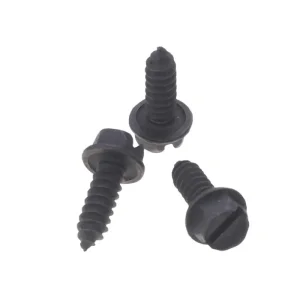
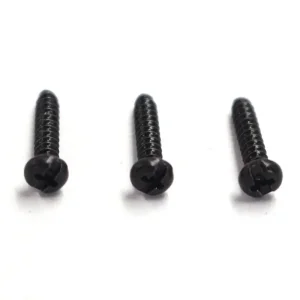
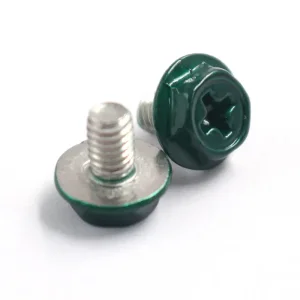
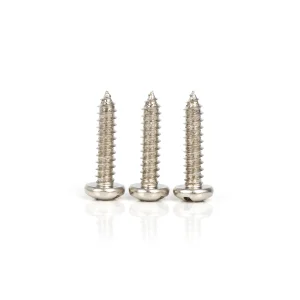
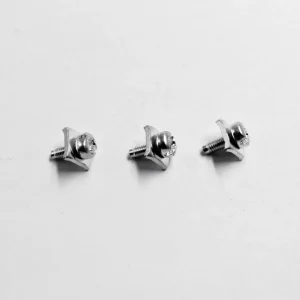
Explore our extended industrial fastener catalog, including self-tapping, washer-assembled SEMS, deep-recess anti-camout, and custom-coated machine screws.