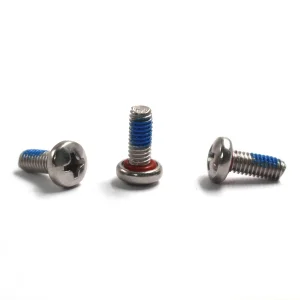
Direct factory supply of certified countersunk screws, sealing assemblies, and precision self-tapping solutions manufactured to DIN, ISO, and ANSI industrial standards.
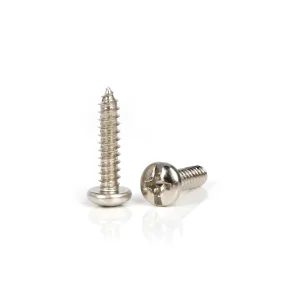
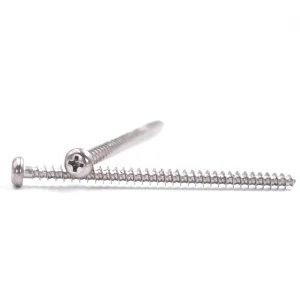
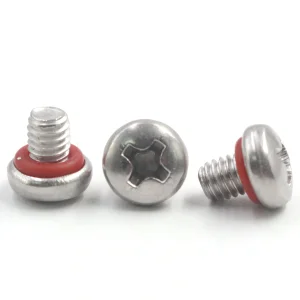
Analyzing structural engineering standards, countersunk angle specifications, and metallurgical transitions in mission-critical hardware.
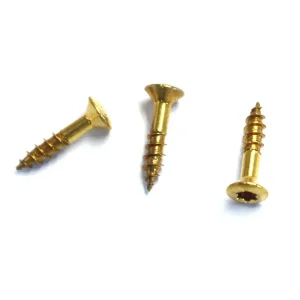
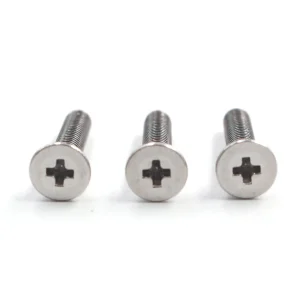
Flat countersunk machine screws are designed to sit flush or sub-flush with mating surfaces, eliminating clearance issues in moving mechanisms and aerodynamic drag in aerospace bodies. While metric systems under DIN 965 and ISO 7046 mandate a strict 90-degree cone angle, imperial fasteners governed by ASME B18.6.3 adopt an 82-degree countersink geometry. Selecting the exact angle avoids stress concentration points and micro-cracking across precision CNC milled chamfers.
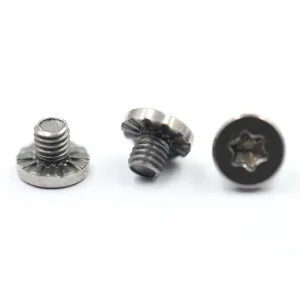
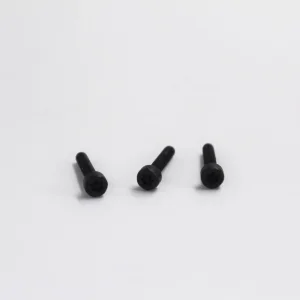
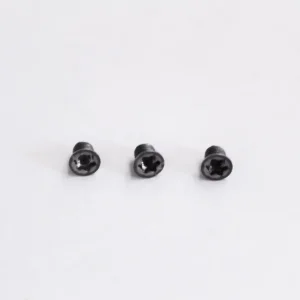
Modern automated assembly is aggressively migrating away from legacy slotted and standard Phillips (Type H) drives toward six-lobe Torx (ISO 10664) and tamper-resistant security pin drives. Torx geometries provide near-zero cam-out, eliminating axial thrust requirements on assembly robotics. This reduces operator fatigue, prolongs tool life, and prevents head stripping under controlled high-torque electric screwdriver cycles.
Environmental standards (RoHS, REACH, and ELV) have revolutionized fastener surface treatments. Traditional hexavalent chromate has been superseded by trivalent zinc, zinc-nickel alloys offering >1,000 hours of neutral salt spray resistance (ASTM B117), and micro-layered Geomet/Dacromet flakes. For mission-critical electronics and medical hardware, vacuum-applied PVD and passivated 304/316 austenitic stainless steel prevent galvanic corrosion in harsh saline operating environments.
How Chinese high-precision fastener manufacturing delivers stability, cost efficiency, and total quality traceability for enterprise tier-1 supply chains.
Unlike machined screws produced via chip removal, cold-headed fasteners maintain uninterrupted metallurgical grain flow along the transition radius between the countersunk head and the threaded shank. Our facilities utilize multi-station progressive cold heading machinery from Taiwan and Japan, achieving dimensional tolerances down to ±0.02 mm. Threads are subsequent cold-rolled, work-hardening the root and flank to yield exceptional shear and tensile performance under continuous dynamic stress.
Quality reliability is enforced across raw material entry, forming, continuous mesh-belt furnace heat treatment, and sorting. Utilizing AI-assisted multi-camera optical laser screening tables, we inspect 100% of critical dimensions—including total head runout, recess concentricity, thread pitch, and plating thickness (X-Ray Fluorescence). Parts are systematically checked against automotive PPAP Level 3 documentation, CPK evaluations, and IMDS material declarations.
| Engineering Parameter | Standard Capability | High-Precision Custom Spec |
|---|---|---|
| Thread Diameter Range | M1.0 to M12 (Metric) / #00 to 1/2" (UNC/UNF) | Micro-screws from M0.6 for wearables & medical optics |
| Materials & Grades | Carbon Steel (Class 4.8, 8.8, 10.9, 12.9), SS304, SS316 | Titanium Grade 2/5, Brass C3604, Aluminum 7075, Inconel 718 |
| Manufacturing Norms | DIN 965, DIN 7991, ISO 7046, ISO 14581, ASME B18.6.3 | Fully custom build-to-print OEM blueprints (2D PDF / 3D STEP) |
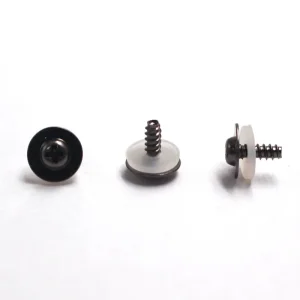
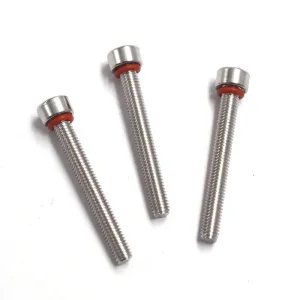
| Thread Functional Additions | Plain thread, pre-applied threadlocker patch (Blue/Red Nylon) | IP67/IP68 Under-head silicone O-ring, Dri-Loc microencapsulation |
| Surface Protection | Bright Zinc, Black Oxide, Nickel, Passivation | Electroless Nickel, Geomet, Dacromet, DLC, Zinc-Nickel Alloy |
Real-world integration of countersunk machine screws across global manufacturing sectors demanding absolute precision and zero aesthetic interference.
Electric vehicle battery packs and power electronics require completely flat structural cover joints to avoid interfering with internal cell arrays and thermal barriers. Countersunk machine screws paired with pre-applied nylon patches or integrated elastomeric seals prevent vibration-induced loosening caused by chassis road harmonics, while stopping moisture and electrolytes from entering the battery pack under IP67 standards.
In thin smart terminals, tablets, and medical monitoring devices, micro countersunk machine screws (M0.8 to M2.0) anchor hinge mechanisms, chassis frame structures, and internal motherboard mounts. Sitting completely flush within CNC-anodized aluminum or magnesium-alloy chassis, they allow designers to maximize battery cavity volumes and maintain clean exterior aesthetics without protrusions.
Factory automation, pick-and-place gantry arms, and CNC slide rails depend on Grade 10.9 and 12.9 high-tensile countersunk screws to secure precision linear guides. Flush installation ensures that bearings, linear blocks, and sensor brackets travel along the rail pathway without mechanical interference, sustaining operational uptime across multi-million cycle shifts.
Detailed technical answers addressing design tolerances, countersinking mechanics, international standards, and global logistical fulfillment.
While all three represent flat countersunk machine screws, their geometric specifications differ significantly. DIN 965 and ISO 7046 are metric standards utilizing a 90-degree head countersink angle. ISO 7046 generally mandates tighter head diameter tolerances and specifically defines mechanical properties under ISO 898-1. In contrast, ASME B18.6.3 is an imperial standard specifying an 82-degree cone angle (with an optional 100-degree configuration for soft plastics and aerospace skins). Pairing an 82-degree screw with a 90-degree countersunk hole creates point-load stress at the top rim of the hole, risking fastener loosening and material yielding under fatigue.
Countersinking depth must account for both the screw head height and the material chamfer tolerance. We recommend drilling the countersink diameter slightly larger than the maximum head diameter (typically +0.2 mm to +0.4 mm) so the top of the screw sits between 0.00 mm (dead flush) and 0.10 mm below the surface. Over-countersinking reduces sheet metal joint thickness, weakening shear strength, whereas under-countersinking leaves the screw head proud of the workpiece, interfering with adjacent moving plates or seals.
Cold heading is substantially superior for high-volume manufacturing in both material strength and cost efficiency. CNC turning cuts through the metal's grain structure, creating potential micro-fracture planes at the critical junction between the head and shank. Cold heading deforms the wire rod plastically under high pressure, maintaining uninterrupted metallurgical grain flow along the transition radius and increasing tensile strength by up to 20-30% through work hardening. Furthermore, cold heading produces virtually zero scrap material compared to high-loss subtractive turning, yielding significant unit-cost savings on orders exceeding 50,000 pieces.
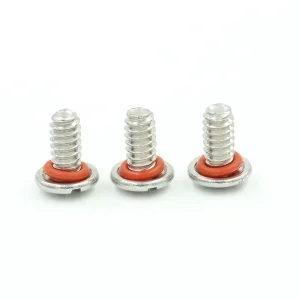
Because countersunk screws lack an external exposed head, traditional spring or split lock washers cannot be used. We solve vibration loosening through three primary methods: First, pre-applied chemical microencapsulated threadlockers (such as 3M or Loctite compounds) that activate upon torque engagement. Second, 180° or 360° fused blue nylon patches providing resilient prevailing torque per IFI-124 specifications. Third, for sealing requirements, we engineer specialized under-head elastomer O-rings situated within a precision-formed annular groove below the countersunk bevel.
Our plants operate under ISO 9001, ISO 14001, and IATF 16949 automotive certifications. With each production batch, we can furnish comprehensive quality documentation including EN 10204 3.1 Material Test Reports (chemical composition and mechanical testing), dimensional inspection logs from optical laser sorters, salt spray corrosion test certifications, Rockwell/Vickers hardness validation, and RoHS/REACH compliance declarations. For Tier-1 automotive programs, complete PPAP Level 3 documentation packages are routinely submitted.
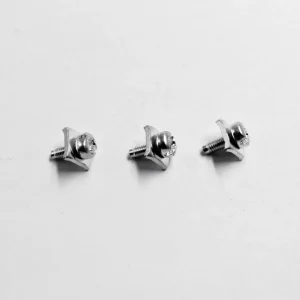
Explore specialized industrial fastener lines including Torx-drive security assemblies, SEMS combination washers, and miniature battery compartment sealing screws.