Explore our core series of cold-forged and surface-engineered machine screws, self-tapping fasteners, waterproof sealing screws, and precision spring detent assemblies.
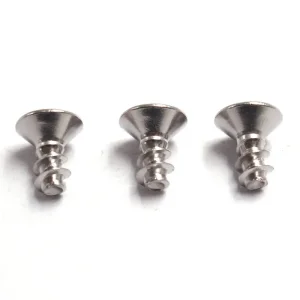
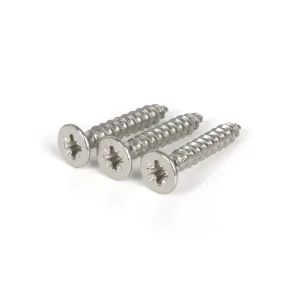
In modern industrial design, mechanical joints are no longer treated as standard commodities. They are precision load-bearing components engineered to eliminate structural failure under cyclic stress, harmonic vibration, and aggressive operating environments.
The global mechanical fastener market exceeds $92 Billion USD, with the custom machine screw segment expanding at an annual rate above 5.8%. Original Equipment Manufacturers (OEMs) in North America, Western Europe, and East Asia are shifting rapidly from catalog DIN/ISO standards to custom-engineered drawing components.
This shift is driven by strict space constraints, multi-material stack-ups (carbon fiber reinforced polymers combined with cast aluminum), and automated high-speed torque assembly stations that require zero-defect tolerances.
China has transitioned decisively from producing low-cost commoditized hardware to becoming an advanced high-precision cold-forging powerhouse. Concentrated in sophisticated manufacturing clusters like Dongguan, Shaoguan, and Wuhan, advanced factories deploy multi-station high-speed progressive cold-heading machines.
These advanced production units maintain critical tolerances within ±0.01 mm, achieving high metallurgical grain structure continuity that CNC lathe turning cannot replicate.
Modern international supply chains demand end-to-end traceability from raw wire rod coil to packed crate. Certified compliance with IATF 16949 (Automotive), ISO 9001, and environmental frameworks (RoHS, REACH, IMDS) is essential.
Factories must guarantee lot-specific chemical analysis, tensile testing, shear strength certification, and hydrogen embrittlement relief verification records for every production batch.
A machine screw must maintain joint integrity under severe thermal fluctuations, high shear forces, dynamic vibration, and corrosive chemical exposures.
Transverse vibration causes traditional bolted joints to lose clamp preload via rotational back-off. Under the DIN 65151 Junker Vibration Test, standard untreated metric machine screws can lose up to 80% of initial clamping tension within 300 cycles.
Our engineering mitigates this via three proven methods: (1) Pre-applied microencapsulated chemical adhesives (DIN 267-27) that activate upon thread engagement, (2) 180° / 360° Polyamide nylon locking patches (DIN 267-28) providing reusable prevailing torque, and (3) Integral SEMS split-lock and Belleville conical spring washers designed to maintain active elastic spring reserves.
In electronic control units (ECUs) and lithium-ion battery modules, liquid or dust ingress causes disastrous short-circuits. Standard mechanical threads maintain natural helical clearance paths that admit moisture under differential pressure.
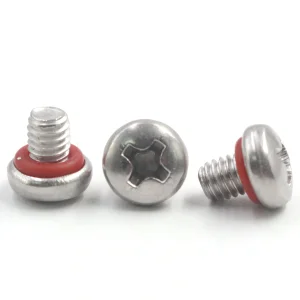
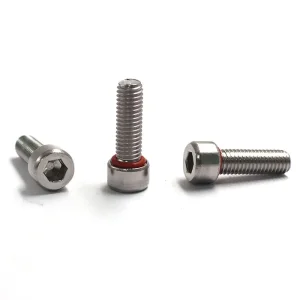
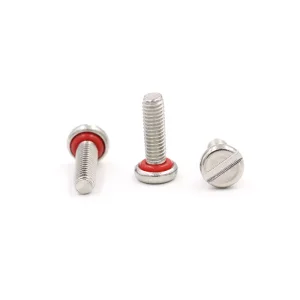
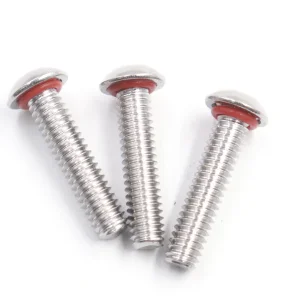
We manufacture custom sealing screws featuring a precision-undercut head groove fitted with molded silicone, fluorocarbon (FKM/Viton), or ethylene propylene (EPDM) O-rings. When torqued, the elastomeric element compresses 25–35% into the engineered groove without extruding or rupturing, creating a dependable seal tested up to 1.5 MPa hydraulic pressure.
High-tensile fasteners (Property Class 8.8, 10.9, 12.9) manufactured from alloy steels are susceptible to catastrophic Delayed Hydride Cracking after acid pickling and electroplating processes.
Our strict quality protocol enforces mandatory thermal de-embrittlement baking at 200°C–220°C for a minimum of 4 to 8 hours within 1 hour after electroplating (in compliance with ISO 4042 and ASTM F1941). Routine sustained-load stress durability tests verify zero brittle failure across batch lots.
Joining dissimilar metals—such as stainless steel screws anchored into magnesium or 6061-T6 aluminum housings—creates aggressive galvanic cells in humid environments.
We apply specialized barrier coatings, including Zinc-Nickel alloy (12–16% Ni) delivering >1,000 hours of Neutral Salt Spray (NSS per ASTM B117) without red rust, non-electrolytic zinc flake coatings (Geomet, Delta Protekt) preventing hydrogen risks, and PTFE/fluoropolymer topcoats configured for ultra-stable torque friction coefficients (μ = 0.10–0.15).
From high-voltage automotive battery packs to micro-optics and autonomous industrial robots, our custom machine screws provide tailored fastening solutions for mission-critical assemblies.
Operating Challenge: High thermal expansion deltas, structural battery pack sealing, and electrical conductivity isolation inside module cooling plates.
Engineered Solution: Stainless steel 304/316 self-sealing machine screws with bonded HNBR/Silicone gaskets, integrated into aluminum die-cast housings. Non-conductive thread coatings prevent short-circuit arcing while guaranteeing hermetic IP68 enclosures throughout thermal cycling from -40°C to +125°C.
Operating Challenge: Relentless multi-axis dynamic shear stress, micro-vibrations, and rapid acceleration curves in robotic joints and end-effectors.
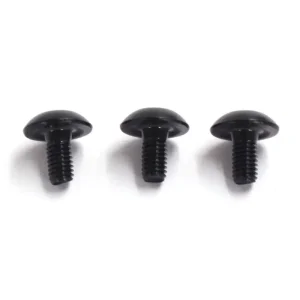
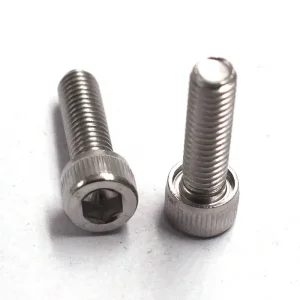
Engineered Solution: Alloy steel Grade 10.9/12.9 Torx (Six-Lobe) pan and socket head machine screws with micro-rolled root radii. Rolled root radii eliminate stress concentrations, boosting fatigue cycle thresholds by >45% compared to conventionally cut threads.
Operating Challenge: Ultra-miniaturized form factors (M0.8, M1.2, M1.6), delicate PCB substrates, and zero tolerance for metal burrs or magnetic interference.
Engineered Solution: Non-magnetic austenitic stainless steel (SUS304/SUS316/A2-70) ultra-low-profile wafer head screws. Chemical de-burring and ultrasonic cleanroom cleaning ensure clean automated vacuum-pickup assembly without particulate shedding on sensitive optical sensors.
Review our comprehensive manufacturing boundaries across cold heading, thread forming, drive profiles, materials, and plating options.
| Engineering Parameter | Cold Heading Capability | Precision CNC Lathe Turning | Quality Standards Compliance |
|---|---|---|---|
| Diameter Range | M0.8 to M16 (Metric) / #000 to 5/8" (Imperial) | M1.0 to M32 (Metric) | DIN, ISO, ANSI, ASME, JIS, GB |
| Length Range | 1.5 mm to 150 mm (0.059" to 5.9") | 2.0 mm to 300 mm (0.078" to 11.8") | Custom lengths to drawing |
| Dimensional Tolerances | Shaft: ±0.02 mm / Head: ±0.05 mm | Critical features down to ±0.005 mm | ISO 2768-m / ISO 2768-f |
| Material Selections | Carbon Steel (1018, 1022, 10B21), Stainless Steel (302, 304, 316, 410), Alloy Steel (4140, 4340), Brass, Copper | Titanium Gr2/Gr5, Aluminum 6061/7075, Inconel 718, Phosphor Bronze | ASTM A307, ASTM A574, ISO 898-1, ISO 3506-1 |
| Drive Recesses | Phillips, Slotted, Combination, Hex Socket, Torx (6-Lobe), Torx Plus, Tamper-Resistant Pin, Tri-Wing, Pozi | Milled slots, Broached internal hex & multi-spline profiles | ISO 10664, DIN 7985, DIN 965, ASME B18.6.3 |
| Property / Strength Classes | Class 4.8, 6.8, 8.8, 10.9, 12.9 / Grade 2, 5, 8 / A2-70, A4-80 | Class 8.8 to 12.9 / Custom cryogenic/high-temp alloys | ISO 898-1, SAE J429 |
| Surface Finishes | Cr3+ Clear/Yellow Zinc, Black Zinc, Nickel, Black Oxide, Passivation, Dacromet, Geomet, Nylon Patch, Pre-applied Epoxy | Electropolishing, Anodizing (Type II/III), Gold/Silver Flash, Micro-arc Oxidation | ASTM B117, ISO 9227, RoHS, REACH |
| Defect Control & Sorting | Automated High-Speed Optical CCD Laser Sorter (1,200 ppm) | 100% CMM, Optical Profile Projector, Vision Check | Zero defect aim; AQL 0.15 / <50 PPM verified |
The boundary between traditional manufacturing and smart factories is disappearing. Discover the technologies powering our next-generation fastener production lines.
Modern multi-station cold headers integrate piezoelectric strain sensors directly into punch and die blocks. By measuring forming tonnage curves at 300 strokes per minute, the system detects wire feed inconsistencies, tool micro-chipping, or metallurgical voiding in real time, auto-ejecting suspect units before threading begins.
Unlike metal-cutting processes that sever raw grain fibers, planetary and circular cylindrical thread-rolling dies plastically deform grain boundaries along thread flanks. This cold-working deformation increases surface hardness by up to 20% and significantly enhances thread root shear strength and fatigue life.
To eliminate manual inspection variance, our export packing cells deploy multi-camera automated vision sorting machines. Glass turntable systems verify 18 dimensional criteria simultaneously—including thread pitch, recess depth, head runout, and plating coverage—at speeds up to 1,200 parts/min with true zero-defect consistency.
Detailed engineering, manufacturing, and supply chain answers to assist procurement teams and design engineers in project specifications.
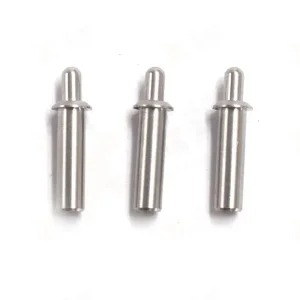
We manufacture a comprehensive portfolio including precision machine screws, thread-forming and self-tapping screws, IP67/IP68 elastomeric sealing screws, shoulder/pivot screws, captive panel screws, anti-tamper security fasteners, SEMS washer assemblies, and reusable nylon patch screws. In addition, we produce matched hardened hex keys, Torx keys, and stainless steel spring and ball plunger positioning mechanisms.
Yes. Custom engineering represents over 65% of our total production. Our engineering group reviews STEP, IGES, DWG, and PDF drawings to confirm material grade, head volume cold-heading feasibility, drive recess depth, thread tolerance limits (e.g., 6g/6h or 2A/3A), and surface coating parameters. Custom heading dies, trimming tools, and thread-rolling tooling are engineered in-house.
Our quality management infrastructure operates under full compliance with ISO 9001 (Quality Management System), ISO 14001 (Environmental Systems), and IATF 16949 (Automotive Quality Management System). Every production lot receives dimensional verification, torque failure testing, plating thickness measurement via X-ray fluorescence (XRF), and salt spray corrosion validation with full material mill certificates provided.
We tailor anti-loosening engineering to assembly requirements: (1) Reusable 180° or 360° pre-applied nylon patches (DIN 267-28) providing controlled prevailing torque across multiple service cycles; (2) Microencapsulated threadlockers (DIN 267-27) that cure anaerobically to fill all thread clearance gaps; (3) SEMS screws with captive spring lock, serrated, or Belleville washers that maintain active clamping preload.
Cold heading is an ultra-high-speed plastic deformation process that produces zero raw material swarf, significantly reducing cost on medium-to-high volume orders. Metallurgically, cold forming preserves continuous internal grain flow lines around the head-to-shank junction, delivering higher tensile and fatigue resistance than cut metal while matching dimensional tolerances within ±0.02 mm.
YH Fastener exports directly to Tier-1 OEMs, industrial distributors, and contract manufacturers across more than 60 countries in North America, Europe, and the Asia-Pacific region. Standard tooling evaluation samples are prepared in 7 to 12 working days, with volume mass production batches delivered in 3 to 4 weeks supported by full DDP/FOB logistics and PPAP Level 3 documentation.
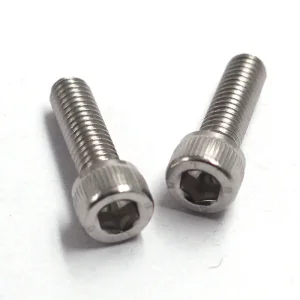
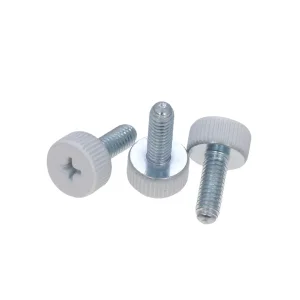
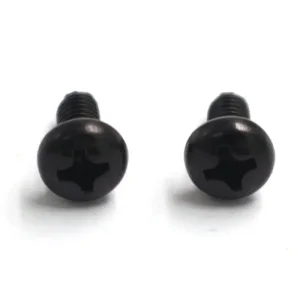
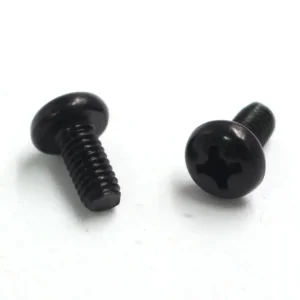
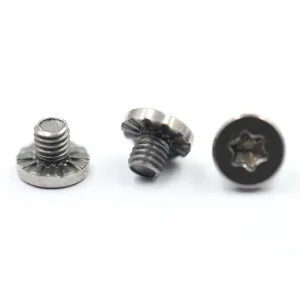
Review our specialized high-performance lineup of EV robotic screws, thumb screws, custom parallel-thread fasteners, and anti-camout Torx drive systems.
Submit your 2D engineering drawings (PDF/DWG) or 3D CAD files (STEP/IGES). Our senior cold heading application engineers will return a complete feasibility review, material assessment, and quote within 24 hours.
