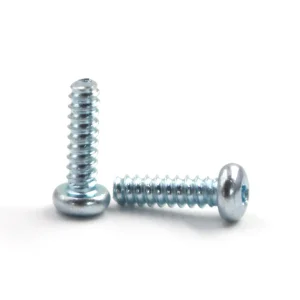
Pre-assembled fastener solutions designed to resist continuous harmonic resonance, thermal expansion shifts, and dynamic lateral shearing across critical industrial joints.
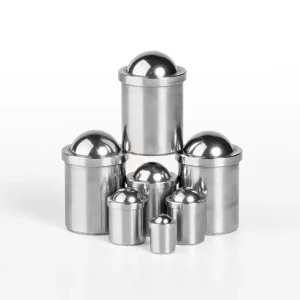
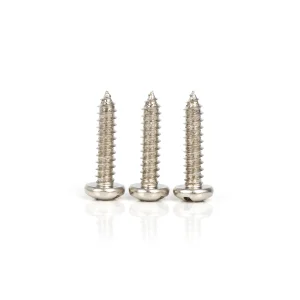
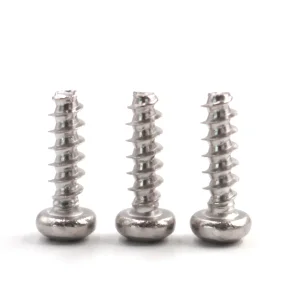
Understanding transverse joint displacement, self-loosening mechanisms, and the empirical superiorities of captive washer architectures.
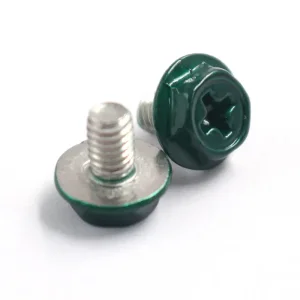
Standard fasteners rely on manual placement of spring, conical (Belleville), or serrated tooth washers. SEMS combination screws roll threads directly after inserting free-spinning captive washers. Under lateral vibrational shearing, captive conical Belleville elements exert continuous axial spring tension, compensating for relaxation caused by thermal expansion mismatches or joint embedding.
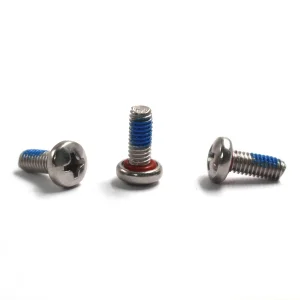
For critical assemblies where mechanical washers are restricted by tight envelope clearances, engineered anti-vibration combination screws integrate micro-encapsulated polyamide patches or reactive anaerobics (DIN 267-27/28). The polymer acts as a 360-degree radial wedge within mating threads, delivering consistent prevailing breakout torque without damaging internal female mating threads.
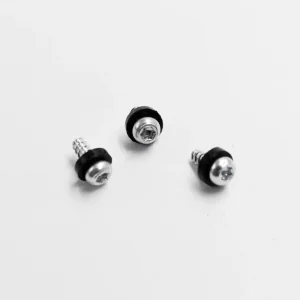
By pairing precision cold-headed under-head profiles with fluorocarbon, EPDM, or nitrile O-rings, combination screws provide combined mechanical locking and environmental sealing. The elastomer absorbs micro-frequency resonant energy while maintaining an IP67/IP68 hermetic barrier, protecting structural electronics against moisture and chemical degradation.
Strategic deployment of vibration-resistant combination hardware across mission-critical systems and evolving operational parameters.
Battery pack enclosures, inverter housings, and suspension sensors subject to continuous ISO 16750 road vibration profiles. Combination screws prevent clamp load decay while cutting automated assembly cycle time by 40%.
High-torque servo actuators, collaborative robotic arms, and drone motor mounts. Miniaturized M1.2 to M3 captive Belleville washer assemblies resist structural shock and ultrasonic motor hum.
Solar tracker pivot points and wind turbine nacelle instrumentation subjected to cyclic buffeting and thermal shocks (-40°C to +125°C). Utilizing Geomet & Dacromet coatings exceeding 1,500 hours of neutral salt spray.
Cloud datacenters, vibration-damped fan trays, and modular blade retention brackets. Eliminates loose internal metallic washers falling onto energized server motherboards during hot-swap routines.
Combining vertically integrated cold-heading matrices with automated optical sorting to deliver reliable zero-defect fastening solutions globally.
| Manufacturing Stage | Process Technologies Deployed | Quality Verification & Statistical Tolerancing | Operational Value Delivered |
|---|---|---|---|
| Raw Material Control | Multi-station wire rod annealing, Eddy Current testing, strict chemical spheroidization validation. | Optical emission spectrometry (OES) analysis per coil heat number; 100% tensile verification. | Elimination of internal material micro-cracking during cold heading and washer assembly. |
| Cold Heading & SEMS Rolling | High-speed multi-station headers integrated with synchronized washer feeder stations. | In-line acoustic sensor monitoring for tooling wear; digital die-cavity control. | Unbroken metallic grain flow across head-shank transition; permanent washer captivity. |
| Controlled Heat Treatment | Continuous mesh-belt atmosphere-controlled furnaces; precise carbon potential regulation. | Core and surface micro-Vickers hardness profiling (HV0.3/HV1); torque-tension bench auditing. | Elimination of hydrogen embrittlement hazards, ensuring optimal property classes (8.8, 10.9, 12.9). |
| Optical Sorting & Packaging | 360-degree glass-disk multi-camera laser sorting platforms running real-time AI defect detection. | Dimensional inspection down to ±0.005mm; missing-washer detection at PPM < 1 defect rates. | Guaranteed compatibility with robotic auto-feed screwdriving systems without line stoppages. |
Explore custom thread-rolling profiles, sealing combinations, metric parallel-thread machine screws, and anti-loosening hardware directly from our production plants.
Providing Tier-1 OEMs with complete documentation, material trace validation, and environmental safety assurances.
Full Production Part Approval Process (PPAP Level 3) packages provided, including Process FMEA, Control Plans, Dimensional Results, and material declarations submitted directly via the International Material Data System (IMDS).
Complete compliance with EU RoHS Directive 2011/65/EU, REACH SVHC candidate lists, and Dodd-Frank Section 1502 guidelines. Surface finishes are entirely Cr6+ hexavalent-chromium-free with neutral salt spray performance validated up to 2,000 hours.
Vendor-Managed Inventory (VMI) services tailored for global assembly hubs in Europe, North America, and Southeast Asia. We maintain 60 to 90 days of dynamic safety stock to insulate supply lines against regional shipping volatility.
In-depth responses covering technical, production, and lifecycle specifications for combination anti-vibration screws.
Extensive DIN 65151 Junker transverse vibration testing proves conventional split helical spring washers can actually accelerate joint loosening once clamp load drops, as split edges can act as ramps under lateral force. In contrast, SEMS combination screws with captive conical or double Belleville washers maintain positive elastic clamping force throughout dynamic transverse cycles without splitting or scarring seating surfaces.
Drawing feasibility reviews and engineering sign-offs are completed within 24 hours. Cold-heading and washer assembly tooling design typically requires 10 to 14 working days, followed by initial sample delivery (PPAP samples) within 5 to 7 days. Full-scale production lots ship within 20 to 25 business days from approval.
Yes. SEMS assemblies featuring mechanical conical washers retain their spring characteristics across multiple re-torquing cycles without degrading preload capacity. When chemical anti-loosening coatings are utilized, polyamide prevailing-torque patches allow up to 3 to 5 re-use cycles (IFI-124), whereas micro-encapsulated reactive adhesives provide a single-use bond requiring thread recoating upon joint rebuild.
We employ a multi-tiered inspection protocol. Mechanical feed tracks feature mechanical reject gates during heading, followed by 100% automated high-speed glass-disk optical inspection. Optical sensors verify washer presence, correct concave orientation, head recess geometry, and thread pitch, maintaining an overall field PPM of less than 1.