Engineered cold-formed drive interfaces, tight-tolerance L-keys, and mating self-tapping components designed to eliminate assembly line micro-cam-out in automated production environments.
A macroeconomic and micro-engineering examination of tooling demands across Bratislava, Trnava, Žilina, Nitra, and Košice.
The Slovak Republic occupies an unprecedented position in global manufacturing: it is the world’s largest producer of passenger vehicles per capita, regularly exceeding one million vehicles produced annually. Anchored by major manufacturing sites including Volkswagen in Bratislava, Stellantis in Trnava, Kia in Žilina, Jaguar Land Rover in Nitra, and the state-of-the-art Volvo Cars electric vehicle facility under development at Valaliky near Košice, Slovakia’s industrial fabric requires an exceptionally disciplined tooling supply chain. High-volume automotive assembly lines cannot tolerate down-time induced by tool wear, inaccurate hex or Torx broaching, or surface galling in critical assembly workstations.
Furthermore, Slovakia's industrial footprint extends well beyond vehicle assembly into Tier-1 powertrain engineering, heavy structural machinery, railway component manufacture in Poprad, precision electrotechnical plants in Nové Mesto nad Váhom, and specialized defense mechanics along the Váh Valley (Považie region). These sectors require professional hand tools—most notably industrial-grade hexagonal L-keys, Star/Torx wrenches, and high-tensile calibrated bits—manufactured under certified quality systems such as IATF 16949 and ISO 9001. A wrench is never merely a piece of bent steel; it is a critical instrument of torque transmission that directly governs joint integrity, worker ergonomics, and manufacturing reliability.
Tooling consumption across Slovakia is distinctly stratified by industrial district and mechanical loading criteria:
1. Western Slovak Automotive Cluster (Bratislava – Senec – Trnava – Lozorno): This corridor focuses predominantly on precision vehicle sub-assembly, instrument panels, battery chassis installation, and interior trimming. The primary demand here is for non-magnetic, corrosion-resistant stainless steel Torx wrenches, ball-end hex keys that allow up to 30-degree entry angles in confined spaces, and color-coded ergonomic tools that prevent foreign object damage (FOD) and cross-line contamination.
2. Central & Northern Slovakia Machinery Hubs (Žilina – Martin – Považská Bystrica): Historically celebrated for heavy engineering and metallurgical prowess, this corridor demands high-torque Cr-V and S2 alloy steel tools capable of surviving extreme torsional cycles. Heavy machine building, hydraulic valves, and commercial drivetrain systems require L-keys and impact sockets certified to DIN ISO 2936 and DIN 911 standards with high yield strength to prevent catastrophic ductile shearing.
3. Eastern Slovakia High-Tech & E-Mobility Cluster (Košice – Prešov – Michalovce): The transformation toward electric mobility and battery component production requires specialized non-sparking, insulated (IEC 60900 compliant), and ultra-clean surface-treated tools. As battery pack lines ramp up, any micro-debris, chrome flaking, or zinc embrittlement presents severe short-circuit risks in 800V DC environments.
A rigorous examination of raw alloy chemistry, continuous heat-treating cycles, and precise recess engagement kinetics.
Utilizing high-purity Chromium-Vanadium (59Cr-V-4), Chromium-Molybdenum (8660), and specialized S2 shock-resistant tool steel. The resulting grain structure balances extreme surface hardness (58–62 HRC) with deep core ductility to absorb continuous rotational torque spikes.
Every hex flat and Torx lobe is formed via multi-station progressive stamping or high-precision EDM broaching. Micro-chamfered entry edges ensure immediate screw recess seating, decreasing worker cycle times and completely eliminating head deformation.
Electrolytically plated and phosphate-coated hand tools and fasteners undergo systematic post-plating de-embrittlement baking at 200°C–230°C for 4 to 12 hours. This process guarantees complete relief of trapped interstitial hydrogen, preventing delayed brittle fracture under load.
The selection of tool steel dictates not only the maximum permissible torque without permanent yield, but also the longevity of driving tips subjected to thousands of dynamic engagement cycles in manufacturing plants.
| Steel Grade Designation | Hardness Spectrum | Tensile Strength (MPa) | Yield Point (MPa) | Primary Industrial Application in Slovakia |
|---|---|---|---|---|
| S2 Shock-Resistant Steel | 58 - 62 HRC | 2,150 - 2,300 | 1,950 | Automated bit inserts, high-torque Torx security keys for robotic and manual chassis lines |
| 6150 Cr-V (Chromium-Vanadium) | 52 - 56 HRC | 1,800 - 1,950 | 1,650 | Standard workshop hex keys, mechanics L-wrenches, assembly maintenance kits (DIN ISO 2936) |
| 8660 Ni-Cr-Mo Alloy | 56 - 60 HRC | 2,000 - 2,180 | 1,820 | Ball-end hex keys requiring extreme shear tolerance at steep 25°–30° entry angles |
| AISI 304 / 316 Stainless Steel | 28 - 35 HRC (Work-hardened) | 850 - 1,100 | 700 | Cleanroom assembly, medical machinery, battery module pack enclosure bolting (Anti-Galling) |
Overcoming supply chain vulnerability, total-cost-of-ownership (TCO) creep, and fastener-wrench mating mismatches.
In modern industrial engineering, procuring screws from one vendor and tightening tools from another is an outdated and costly procurement model. When hand wrenches and screw recesses are manufactured by disparate suppliers with conflicting unilateral tolerance zones, assembly line failures occur: loose fitments cause rapid tool rounding, premature bit stripping, and non-conforming clamping loads.
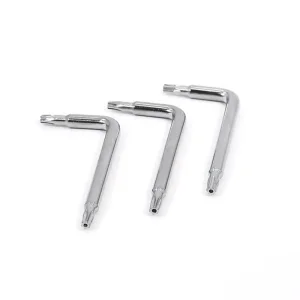
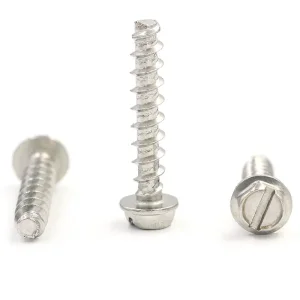
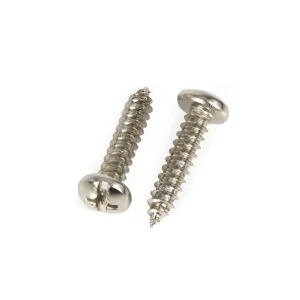
The Matched Interface Advantage: As a dedicated manufacturer of both industrial fasteners and specialized hand wrenches, YH Fastener provides a fully synchronized mating system. Our Torx keys (ISO 10664 compliant) and Hex keys (DIN ISO 2936 compliant) are checked against the exact internal recesses of our machine screws and self-tapping screws. This engineering synergy ensures zero clearance error, maximal drive contact area, reduced operator axial pressure, and elimination of paint/plating shearing during line assembly.
To support Slovak OEMs and Tier suppliers operating under rigorous Just-In-Time (JIT) and Just-In-Sequence (JIS) frameworks, we offer comprehensive procurement architectures:
Submit your 2D engineering drawings, mechanical load parameters, or tooling specifications. Our engineering team returns full technical feasibility assessments and lot-pricing within 24 hours.
Full conformance to European Union directives, environmental sustainability, and automotive quality frameworks.
Complete Production Part Approval Process documentation including Design FMEA, Process FMEA, Control Plans, Gage R&R studies, and full dimensional inspection reports generated via automated optical measurement machines.
Full chemical compliance guaranteeing zero hazardous heavy metals (hexavalent chromium Cr6+, lead, mercury, cadmium). Fully verified by accredited independent third-party laboratories (SGS / TÜV Rheinland) with updated SVHC declarations.
Prepared for the European Union's Carbon Border Adjustment Mechanism (CBAM). We provide verified embedded emissions accounting covering Scope 1 and Scope 2 carbon intensity for metallurgical imports entering the Slovak Republic.
Anticipating the technical evolution of automated and manual tightening systems across Central European assembly lines through 2030.
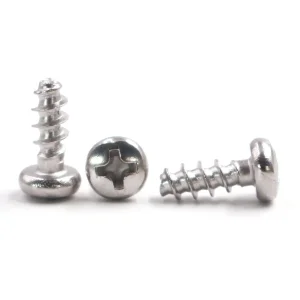
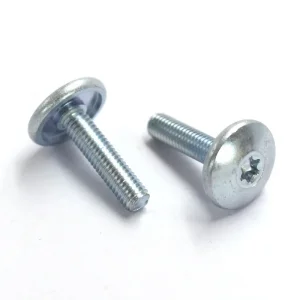
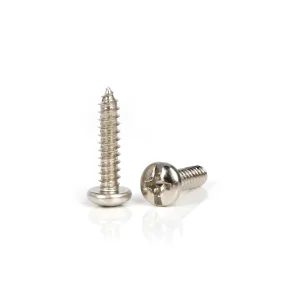
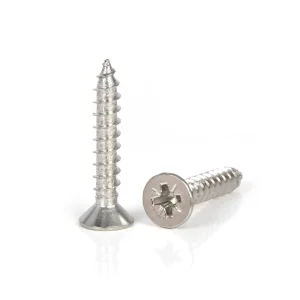
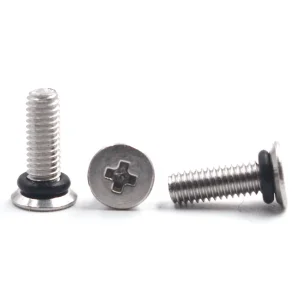
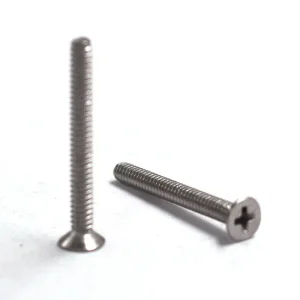
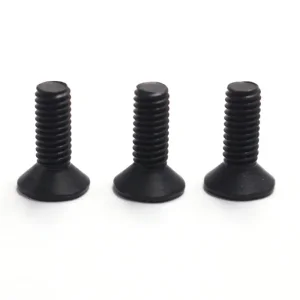
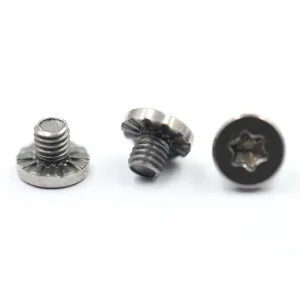
Engineered cold-headed fasteners fully calibrated for integration with our industrial hex keys, Torx tools, and automated assembly equipment.
Authoritative answers covering dimensional standards, customs logistics into the Slovak Republic, metallurgy, and PPAP validation.
All industrial hand wrenches and hex keys destined for Central European markets conform strictly to DIN ISO 2936 (formerly DIN 911) for metric hexagon socket screw keys, and ISO 10664 for hexalobular internal driving features (Torx). Calibrated torque wrenches are manufactured and verified under DIN EN ISO 6789-1:2017 Type II Class A specifications. We guarantee across-flats (AF) dimensional tolerances within ±0.012mm to guarantee secure engagement without clearance float.
We routinely supply comprehensive Production Part Approval Process (PPAP) Level 3 packages for automotive clients supplying plants like Volkswagen Bratislava, Stellantis Trnava, or Kia Žilina. Deliverables include 100% full-cavity/tooling dimensional layout sheets, raw material mill certificates showing steel chemistry and heat batch numbers, Process Flow Diagrams, Process Failure Mode and Effects Analysis (PFMEA), Gage R&R validation, and full 24-hour salt-spray corrosion chamber test reports.
For high-voltage electric vehicle battery packs, such as those produced in the Košice and Nitra regions, we recommend austenitic stainless steel (AISI 304 or 316) for hand keys and sealing screws to eliminate magnetic interference and corrosion risks. Where extreme mechanical torque is mandatory, we utilize S2 tool steel treated with non-conductive powder coatings, specialized electroless nickel plating, or zinc-nickel coatings that prevent the release of conductive metallic micro-particulates.
We provide multiple shipping routes to Slovak destinations: Air express freight via Vienna International Airport (VIE) or Budapest Ferenc Liszt (BUD) ensures delivery within 3 to 5 business days for urgent line-stoppage scenarios. Ocean freight containers route via major European container ports (Rotterdam, Hamburg, or Koper) with direct rail freight transfer into intermodal container terminals in Dunajská Streda or Bratislava, achieving transit times of 28 to 35 days under DDP/DAP Incoterms.
Yes. Our CNC bending and induction heat-treating lines allow complete customization of L-key short-arm and long-arm lengths, specialized 100° or 120° obtuse angles for tight engine bay service access, custom ball-end detent profiles, and integrated flag-style or T-handles. Minimum order quantities (MOQs) for custom tool configurations start as low as 1,000 units, with pre-series prototype samples delivered in 10 to 14 days.
In accordance with ISO 4042 and DIN 50969 standards, any fastener or tool hardened above 320 HV (approx. 32 HRC or Grade 10.9/12.9 equivalents) that undergoes acid pickling or electroplating (such as bright zinc or chrome plating) is transferred to continuous de-embrittlement baking ovens within 1 to 4 hours of plating. Parts are sustained at 200°C–220°C for up to 8 hours to fully diffuse trapped hydrogen from the steel matrix.
Connect directly with our senior hardware application engineers. Whether you need standard DIN ISO 2936 hex keys, custom tamper-proof Torx hand tools, or high-volume automotive precision screws, we deliver the engineering rigor and supply security your operations demand.
