
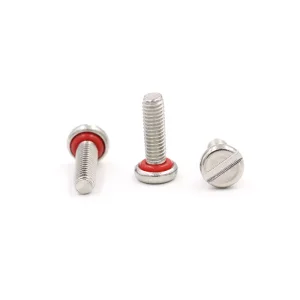
High-demand engineered self-sealing screws optimized for immediate integration into Pacific Northwest advanced manufacturing lines.
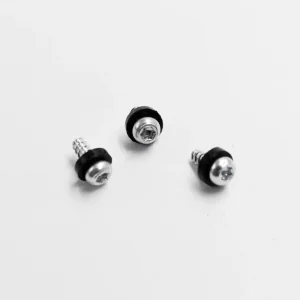
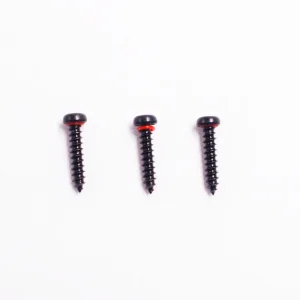
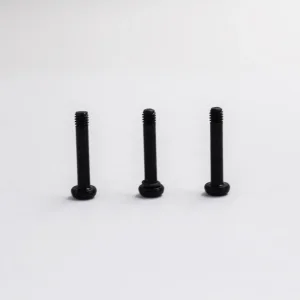
In modern industrial manufacturing, structural integrity is only as dependable as the smallest joint penetration. Fasteners are inherently designed to clamp components together under mechanical tension; however, every helical thread path creates a potential leak spiral for fluids, gases, and particulate contaminants under dynamic pressure differentials. For original equipment manufacturers (OEMs) operating across Greater Seattle, the Pacific Northwest, and global maritime networks, standard hardware paired with liquid sealants or secondary gaskets often yields unacceptable mean-time-between-failures (MTBF).
This whitepaper evaluates the mechanics of zero-leak self-sealing fasteners, analyzing the elastomeric deformation dynamics, surface finish micro-geometry, galvanic corrosion mitigation in coastal atmosphere, and local integration requirements for Seattle's flagship high-tech industries.
When a conventional machine screw is torqued into a tapped hole or blind nut plate, a micro-gap persists along the flank angles of the mating internal and external threads. Standard manufacturing tolerances (such as ASME B1.1 Class 2A/2B or ISO 965-2 Class 6g/6H) leave a pitch diameter clearance ranging from 20 to 80 micrometers. Under pressure—whether from marine subsea submersion, aircraft cabin altitude shifts, or thermal expansion within sealed server cold plates—liquids and gases migrate through three distinct leakage pathways:
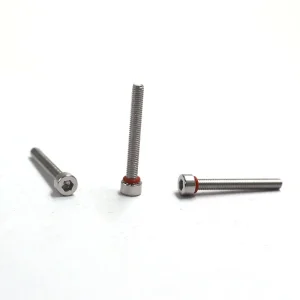
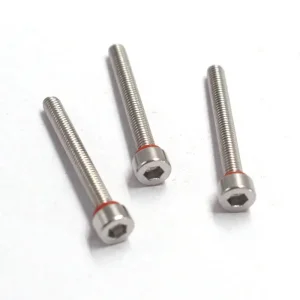
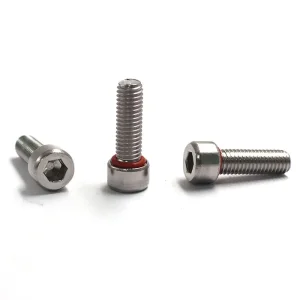
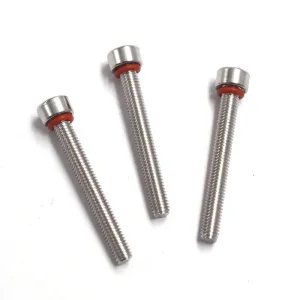
Engineering Core Principle: True self-sealing screws eliminate all three leakage pathways simultaneously by incorporating a cold-formed 360-degree under-head undercut groove that encapsulates an elastomeric O-ring. Upon tightening to calculated installation torque, the elastomer experiences controlled 20–30% volume displacement, creating a continuous 360° positive hermetic barrier against metal-to-metal surfaces while maintaining full physical contact for clamping preload.
The Seattle metropolitan area—spanning King, Snohomish, and Pierce counties—represents one of the world's most concentrated clusters of advanced engineering, aerospace innovation, maritime transportation, and cloud infrastructure. Each sector presents distinct environmental hazards that dictate specialized sealing screw design:
| Seattle Industrial Sector | Primary Application Environment | Dominant Stress Vector | Recommended Sealing Screw Architecture |
|---|---|---|---|
| Aerospace & Unmanned Aerial Systems (UAS) (Everett / Renton Corridor) | Avionics enclosures, fuel system access panels, wing-tip sensor housings | Rapid altitude/pressure changes (-55°C to +125°C), high vibration | 304/316 Stainless Steel or Titanium Screws with Fluorosilicone O-rings & Pre-applied Nylon Lock Patches |
| Maritime & Deep-Sea Robotics (Puget Sound / Elliott Bay) | Subsea ROV housings, marine sonar transducers, shipboard navigation radar | 3.5% NaCl salt spray, hydrostatic pressure up to 10,000 PSI | 316L Stainless Steel / Monel K500 Hex Socket Sealing Screws with Viton (FKM) O-rings |
| Cloud Datacenters & Edge Hardware (Seattle Tech Hub) | Direct-to-chip liquid cooling manifolds, sealed immersion server chassis | Dielectric fluid containment, thermal cycling, zero-drip maintenance | Passivated Stainless Steel Pan Head Torx Screws with EPDM or HNBR O-rings |
| Clean Energy & Hydroelectric Equipment (PNW Power Infrastructure) | Outdoor turbine control cabinets, smart grid sensing modules | Continuous high humidity, rain, UV exposure, ambient ozone | Zinc-Nickel Plated Carbon Steel or 304 Stainless Screws with Weatherable EPDM Seals |
Seattle's maritime marine climate subjects outdoor hardware to high atmospheric moisture levels paired with airborne sodium chloride fog blowing off Puget Sound. Conventional carbon steel screws with standard zinc plating experience sacrificial zinc degradation within 48 to 96 hours of salt-spray exposure (ASTM B117). When moisture penetrates the thread interface, galvanic corrosion between dissimilar metals (e.g., steel screws in aluminum housings) accelerates rapidly. Our self-sealing fasteners intended for Seattle region deployment incorporate high-passivation 316-grade stainless steel or proprietary Zinc-Nickel alloys (12-15% Ni) capable of exceeding 1,500 hours of salt spray exposure without red rust formation.
Selecting the correct elastomeric seal material is critical to achieving a seal life that matches or exceeds the product service lifecycle. The table below details engineering thresholds for primary sealing compounds used in our Seattle supply programs:
| Elastomer Compound | Durometer (Shore A) | Temp Range (°C) | Chemical Resistance Profile | Ideal Industry Application |
|---|---|---|---|---|
| Viton® (FKM) | 70 – 90 | -20 to +200 | Excellent resistance to petroleum, synthetic oils, hydraulic fluids, acids | Subsea marine, industrial hydraulic pumps, automotive powertrains |
| Fluorosilicone (FVMQ) | 60 – 80 | -60 to +175 | Superior fuel, jet-A oil, and solvent resistance with extreme low-temp flexibility | Seattle aerospace avionics, high-altitude UAV flight instruments |
| EPDM | 70 – 80 | -50 to +150 | Outstanding ozone, water, steam, and glycol resistance; poor oil resistance | Liquid cooling cold plates, HVAC, outdoor clean-tech enclosures |
| Buna-N (Nitrile / NBR) | 60 – 90 | -40 to +120 | Good general resistance to water, oils, and aliphatic hydrocarbons | Cost-effective general industrial machinery, indoor electronic housings |
| Silicone (VMQ) | 50 – 70 | -60 to +230 | Broad temperature envelope, medical biocompatibility, low compression set | Medical technology devices, food processing instrumentation |
A frequent failure mode in improvised sealing fastener attempts occurs when standard off-the-shelf O-rings are simply slipped onto standard machine screws. When torqued, the flat bearing surface of the screw head crushes and extrudes the rubber outward, pinching the polymer and destroying its structural elasticity.
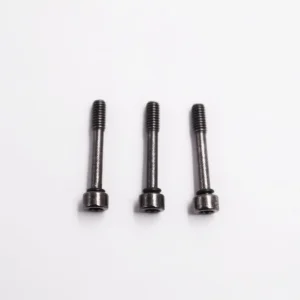
Our engineered self-sealing screws feature a precisely calculated cold-formed undercut groove built directly into the bearing face during the heading process:
Bridging high-capacity precision manufacturing with agile technical service tailored for Washington State manufacturers.
Full spectrum production utilizing 304, 316, 316L Stainless, Titanium Grade 2 & 5, Brass, A286 high-temp alloys, and Monel K500 for extreme chemical, aerospace, and marine environments across Puget Sound.
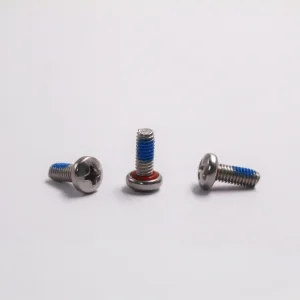
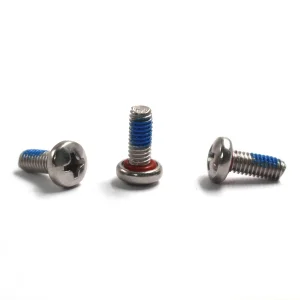
Combines under-head hermetic O-rings with pre-applied threadlocking patches (Nylon, 3M Scotch-Grip, or Dri-Loc) to deliver simultaneous fluid containment and 360-degree vibration resistance under severe shocks.
Direct logistical corridors to Sea-Tac Logistics Hub and Port of Seattle, backed by local buffer inventory stocking agreements (VMI / JIT) for qualified Seattle area OEM assembly facilities.
How emerging materials science and smart manufacturing are transforming hardware reliability for future PNW technologies.
Developing ultra-low molecular size permeability seals utilizing hydrogen-compatible elastomer matrices (e.g., modified peroxide-cured fluoroelastomers) to prevent micro-leakage in zero-emission transport programs.
Researching embedded micro-capacitive and colorimetric leak detection indicators within elastomer rings to provide autonomous real-time structural health monitoring for critical subsea and aerospace joints.
100% automated high-speed vision sorting systems checking thread lead pitch, under-head groove dimensions, and O-ring seating integrity to guarantee zero-defect PPM performance for automated assembly lines.
Engineered self-sealing solutions, anti-vibration screws, and security fasteners manufactured under IATF 16949 quality controls.
Direct answers regarding design specs, delivery lead times to Seattle, certification documentation, and engineering support.
For Pacific Northwest and Puget Sound applications, we recommend 316 or 316L grade stainless steel fasteners equipped with Fluorosilicone or Viton (FKM) O-rings. Standard 316 stainless provides exceptional resistance to chloride pitting corrosion in marine salt air. When paired with an encapsulated under-head seal, moisture is physically prevented from entering the internal thread cavity, completely inhibiting crevice corrosion and galvanic reaction between dissimilar metals.
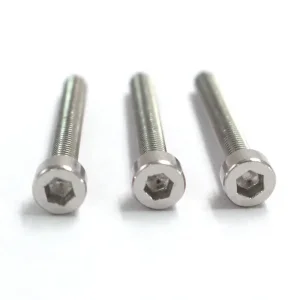
Yes. Our engineering department specializes in custom fastener manufacturing. We accept STEP, IGES, SolidWorks, and 2D PDF drawings. We can customize head geometries (Pan, Button, Flat, Hex, Torx, Security), drive recess profiles, thread pitch (Metric, UNC, UNF, Specialty ACME), undercut groove depth, and elastomer compounds to match your exact IP68 or vacuum enclosure requirements.
Our standard off-the-shelf self-sealing screws are rated for internal and external hydrostatic pressures up to 6,000 PSI (413 bar). Custom engineered deep-sea subsea hex socket screws can maintain hermetic integrity up to 10,000 PSI. For vacuum applications, our helium leak tested options achieve rates tighter than 1 x 10⁻⁹ mbar·l/s, meeting military NASM / MIL-FF-S-86 and industrial cleanroom standards.
Because our precision cold-formed under-head groove prevents the elastomer from being over-compressed or sheared during installation, the O-ring retains its memory elasticity. For routine maintenance, the screw can typically be removed and re-torqued multiple times while retaining its IP67/IP68 seal. For critical aerospace or subsea field service, we also supply replacement pre-installed seal assemblies.
Standard engineering samples and stock items ship within 24 to 48 hours. Custom production runs (drawing-based cold heading and custom O-ring molding) take 2 to 4 weeks depending on batch volume. Expedited air freight directly to Seattle-Tacoma International Airport (SEA) takes 3 to 5 business days, while ocean freight directly to the Port of Seattle takes 14 to 18 days.
Every production batch operates under certified IATF 16949 and ISO 9001 quality management systems. Shipments can include Material Test Reports (MTR / EN 10204 3.1), ROHS / REACH compliance declarations, Salt Spray Corrosion Test Certificates (ASTM B117), Dimensional Inspection Reports, and Helium Mass Spectrometer Leak Test Certificates upon request.
Submit your CAD drawings or technical specs today. Our application engineers will review your application requirements, recommend optimal elastomer and plating choices, and provide a competitive factory-direct quote within 24 hours.