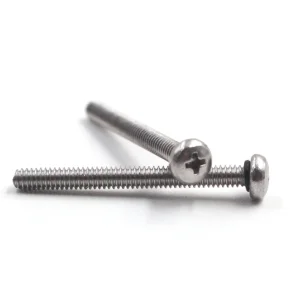
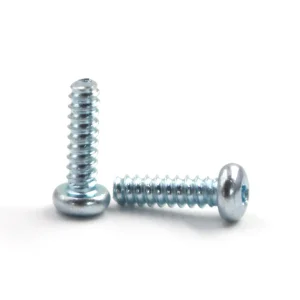
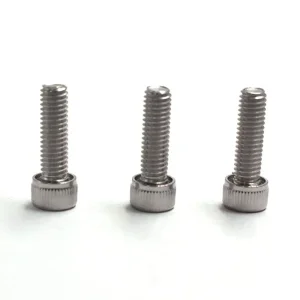
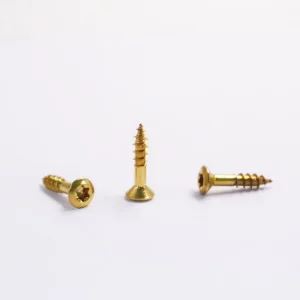
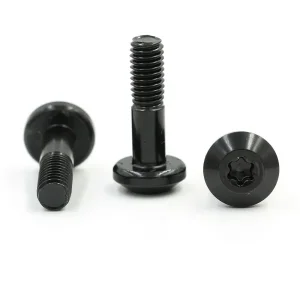
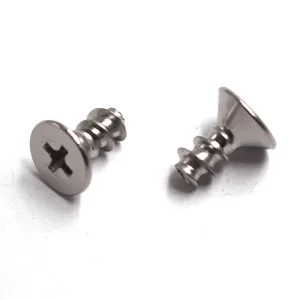
Engineered for high-vibration Japanese industrial standards, medical diagnostics, and robotic service access panels.
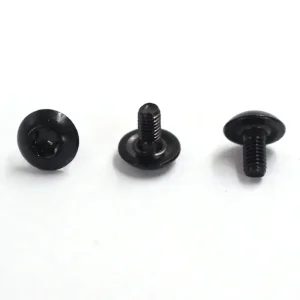
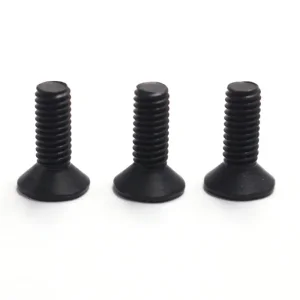
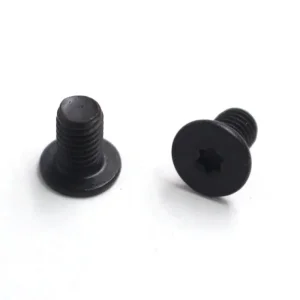
The Greater Tokyo Area, stretching through Tokyo proper, Kanagawa (Kawasaki, Yokohama), and Saitama, constitutes the highest concentration of high-complexity mechatronics, industrial robotics, precision optics, and advanced electronic sub-assemblies globally. Within these advanced sectors, mechanical design engineers are governed by an unwavering imperative: Zero Foreign Object Debris (FOD) risk, total operational safety, and streamlined maintenance accessibility.
Captive screws—specialized fasteners engineered to remain permanently anchored within a panel, housing, or chassis even when unthreaded from their mating component—have transitioned from a premium mechanical luxury to a strictly audited engineering standard across Tokyo's Tier-1 and Tier-2 manufacturers. Whether in the ultra-clean vacuum chambers of semiconductor fabrication equipment in Shinagawa or the dense electronic controller units (ECUs) developed in Kawasaki's automotive labs, captive hardware prevents loose hardware from falling into energized high-voltage circuits, spinning turbine assemblies, or delicate optical paths.
In the Japanese domestic and export machinery sectors, design guidelines increasingly mandate compliance with harmonized international standards, including ISO 14120 (Safety of machinery — Guards) and JIS B 9716. These directives explicitly dictate that fixing systems for removable safety guards and service inspection covers must remain attached to the guard or to the machine structure when the guard is removed. Utilizing non-retained, standard machine screws in these critical interfaces invites non-compliance, severe worker safety liability, and substantial field retrofit overheads.
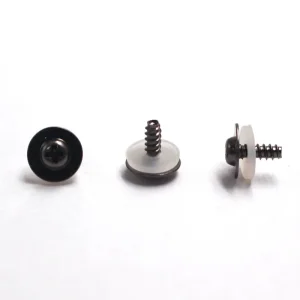
In high-payload multi-axis robotic arms fabricated across Kanto manufacturing sites, harmonic vibration frequencies often lead to micro-fretting and back-out of standard fasteners. Modern captive screws solve this challenge through custom engineered necked-down shanks (undercuts) coupled with Belleville conical spring washers or pre-applied micro-encapsulated polyamide retaining patches, ensuring structural integrity under severe G-force accelerations.
Achieving micron-level concentricity and dependable retention requires sophisticated cold-forming and thread-rolling metallurgical mastery.
The unthreaded shank diameter is engineered to be marginally smaller than the minor thread diameter. This provides a free-floating range of travel within the retaining ring or threaded panel hole while preventing complete disengagement.
Incorporates an internal miniature stainless compression spring enclosed within an outer ferrule. Upon unthreading, the screw automatically pops up, disengaging completely from the mating panel and indicating full unlock visually.
Equipped with knurled shoulders and displacement grooves designed to be cold-pressed into laser-cut or punched sheet metal panels (down to 0.8mm gauge) without requiring secondary tapping or brazing operations.
| Parameter | Traditional Lathe Turning (Domestic Tokyo) | Multi-Station Cold Heading (YH Fastener 4.0) | Operational Impact on Tokyo OEMs |
|---|---|---|---|
| Material Grain Flow | Cut interrupted grain lines; prone to micro-cracking at neck | Continuous unbroken grain alignment; superior fatigue threshold | High yield strength in cyclic shear & vibration environments |
| Production Cadence | Slow (15 to 45 seconds per unit on CNC Swiss Lathe) | Ultra-fast (120 to 300 pieces per minute per machine) | Guaranteed supply chain buffer against sudden demand surges |
| Dimensional Repeatability | ±0.02mm (tool wear dependent) | ±0.008mm (precision tungsten carbide dies) | Seamless robotic pick-and-place automated assembly |
| Cost per Million Units | Extremely high due to metal chip waste (up to 60% scrap) | Low net-shape forming (near zero material wastage) | Up to 38-52% reduction in Bill of Materials (BOM) expenditure |
Delivering high-reliability captive screws across four pillar industries powering Japan's export-driven technological leadership.
Cleanroom environments across Kanagawa fab plants require non-outgassing, electropolished SUS316L captive screws with vented shanks. These eliminate virtual leaks in high-vacuum processing chambers while safeguarding silicon wafers from accidental airborne metal debris during routine target changes.
Tokyo's precision robotics pioneers build collaborative robots (Cobots) requiring quick-swap joint actuators. Captive hex socket screws allow field service engineers to swap modular servomotors without risking screw loss into complex planetary gearboxes or internal wire harnesses.
In high-density datacenters located in Toyosu and Ariake, rapid hot-swapping of server blade modules demands toolless or thumb-turn captive screws. Spring-loaded retaining ferrules ensure immediate blind-mating alignment, reducing maintenance downtime from minutes to seconds.
Automotive R&D centers in Greater Tokyo engineering 800V silicon carbide (SiC) inverters specify anti-loosening captive screws with conductive chromate plating to ensure constant EMI/RFI shielding integrity while surviving harsh under-hood cyclic thermal shocks (-40°C to +150°C).
For decades, Tokyo engineering firms relied heavily on hyper-local artisan machine shops (known as Machi-Koba) scattered throughout Tokyo’s Ota Ward. However, Japan's domestic precision fastener base faces severe demographic contractions, aging skilled machinists, and soaring domestic operational costs. In response, global procurement managers at Japanese multinationals are re-architecting their fastener supply chains to partner with high-tier, automated China Industry 4.0 manufacturing powerhouses.
Located in the world’s premier precision hardware capital—Dongguan, China—YH Fastener (Yu-Huang Electronics Dongguan Co., Ltd.) bridges this critical gap. With over 30 years of specialized manufacturing experience, an expansive 20,000 m² modern manufacturing ecosystem, and facilities spanning Dongguan, Shaoguan, and Wuhan, YH Fastener integrates advanced German and Taiwanese multi-station cold heading systems with rigorous quality systems audited under IATF 16949 (Automotive), ISO 9001, and ISO 14001.
From raw metallurgical wire drawing, spheroidizing annealing, multi-stage cold forming, secondary neck-turning, to micro-thread rolling and robotic washer assembly—every step is housed under one roof, guaranteeing full lot traceability.
To satisfy the uncompromising quality thresholds of Tokyo automated assembly plants, 100% of finished captive hardware passes high-speed multi-camera laser & optical sorting stations. We verify critical tolerances, thread pitch, and unthreaded shank runout with zero manual error.
With Shenzhen and Hong Kong international air cargo terminals within two hours of our central hub, emergency pilot-run batches and scheduled Kanban production releases land at Tokyo Haneda (HND) or Narita (NRT) airports in as fast as 48 hours from factory release.
Technical considerations, design-for-manufacturing criteria, and delivery timelines for custom captive screws.
Standard and tailored fastener specifications manufactured under IATF 16949 certified quality systems.