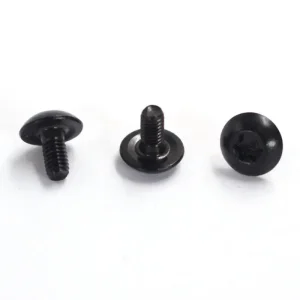
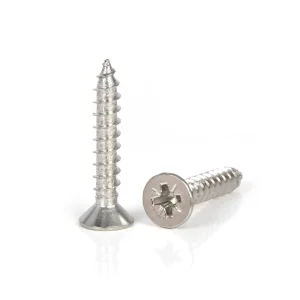
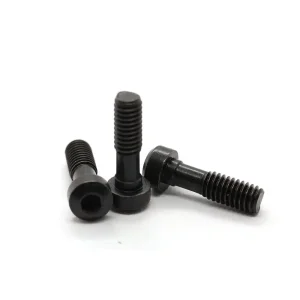
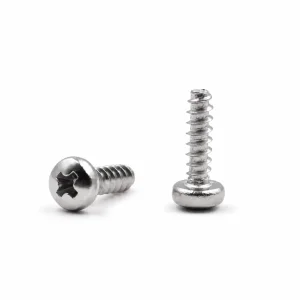
Industrial-grade cold-formed fasteners, certified under IATF 16949 and ISO 9001 frameworks for demanding joinery, structural cabinetry, and specialized housing assemblies.
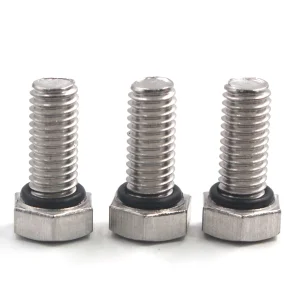
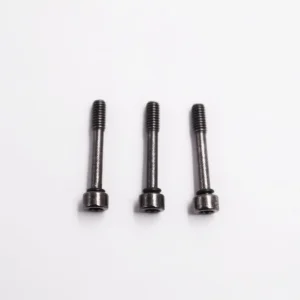
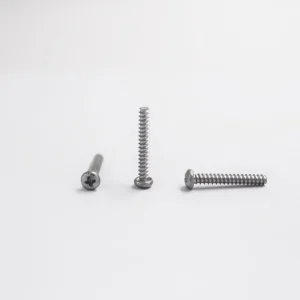
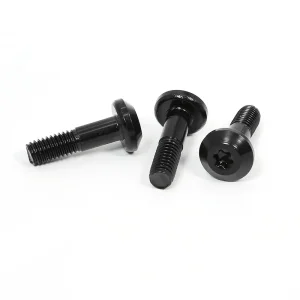
How advanced materials science, multi-axial automated feeding, and composite wood structures are redefining expectations for self-tapping mechanical joints.
Modern mass-produced furniture no longer relies entirely on natural softwoods or hardwoods. The widespread proliferation of high-density fiberboard (HDF), cross-laminated timber (CLT), particleboard with melamine facing, and hollow core lightweight honeycombs mandates revolutionary screw geometry.
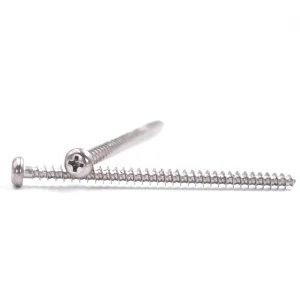
Standard coarse wood screws create high radial stress, causing micro-fracturing along composite layers. Advanced self-tapping wood screws utilize engineered serrated cutting threads, asymmetrical flank angles (30°/45°), and knurled shank cutters that shred localized wood chips rather than wedging fibers apart.
High-volume modular furniture assembly plants (RTA/Flat-pack ecosystems) operate robotic gantry systems operating at over 2,500 RPM. Fasteners with concentricity errors, burrs within the recess, or unstable drive engagement cause crippling production bottlenecks.
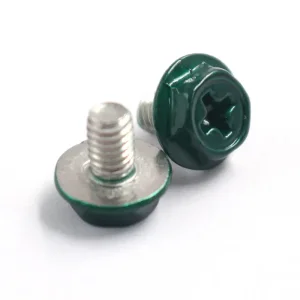
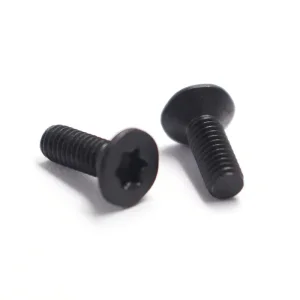
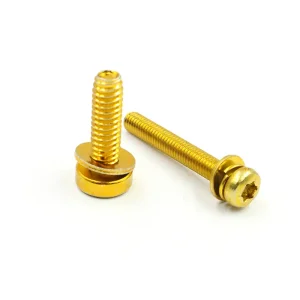
Our self-tapping furniture fasteners undergo optical sorting ensuring 100% sorting accuracy with less than 20 PPM defect rates. Featuring precision Torx (six-lobe) and Pozi-drive recesses, cam-out slippage is eradicated, preventing tool bit damage and protecting delicate lacquered wood veneers.
Tannic acid present in oak, walnut, and thermally modified timber aggressively attacks carbon steel fasteners, causing structural integrity loss and unsightly black chemical staining around countersunk holes.
Through advanced multilayer zinc-nickel alloy plating and organic fluoropolymer micro-coatings, our furniture screws comfortably withstand 500 to 1,500 hours of neutral salt spray testing (ASTM B117) without exhibiting red or white rust. All formulations are strictly compliant with RoHS 3, REACH SVHC, and international low-VOC mandates.
From Tier-1 global furniture conglomerates to custom architectural millwork shops, enterprise buyers demand risk mitigation, lot-level traceability, and engineering agility.
For high-tensile carbon steel case-hardened wood screws (Grade C1022A, 10B21), acid pickling and electro-galvanizing generate volatile atomic hydrogen diffusion. In unbaked or improperly heat-treated screws, sudden shear failure occurs under load days after installation.
YH Fastener executes computer-controlled baking de-embrittlement cycles within 4 hours of plating at calibrated temperatures (200°C–220°C for minimum 6 hours). Every batch is validated through torque-angle failure testing, metallurgical cross-section micro-hardness evaluation, and tension load stress tests.
Architectural wood projects and luxury modular office systems frequently require proprietary head styling—such as ultra-thin wafer truss heads, under-head ribs that clear burrs cleanly, or decorative countersunk shapes designed to marry concealed fittings.
Our Dongguan engineering headquarters maintains an in-house CNC wire-EDM die workshop. We take your 3D CAD files (.STEP, .IGES, 2D DWG) and produce production-grade cold-heading tooling and thread roll dies within 7 to 10 working days, slashing overall R&D cycle times by more than half.
Global supply chain volatility, customs delays, and container shortages threaten manufacturing uptime. For enterprise OEMs consuming millions of wood fasteners per quarter, stockouts can cause multi-million dollar plant shutdowns.
We provide Vendor Managed Inventory (VMI), safety buffer stock agreements, and barcode-integrated export packaging. With multiple production nodes in Dongguan, Shaoguan, and Wuhan, we provide geopolitical elasticity, multi-port redundancy (Shenzhen, Guangzhou, Hong Kong), and reliable shipping SLAs.
Full-spectrum parameters for custom engineered self-tapping wood screws and structural fasteners manufactured by Yu-Huang Electronics.
| Specification Parameter | Standard Range | High-Precision Custom Range | Applicable Standards & Testing |
|---|---|---|---|
| Nominal Diameter (d) | M2.0 to M8.0 (#4 to 5/16") | Micro M1.2 up to M12.0 Structural | DIN 7981, DIN 7982, ANSI B18.6.4 |
| Total Length (L) | 6mm to 120mm (1/4" to 4-3/4") | Extended lengths up to 300mm for timber | Optical Sorting Tolerances ±0.15mm |
| Base Alloys | AISI 1018, 1022A, 10B21 Boron Steel | Austenitic 304, 316, 410, Brass, Bronze | Mill Test Certificate (MTC) 3.1 Traceability |
| Drive Geometries | Phillips (PH), Pozi (PZ), Slotted | Torx (TX), Square (Robertson), Combo, Tamper-proof | Gauged to zero-cam-out DIN ISO tolerances |
| Thread Architectures | Twinfast, Coarse Wood, Hi-Lo Thread | Deep-thread Serrated Cut, PT-Thread, Type 17 Notch | Pull-out and Torsional Yield Tested (ASTM F543) |
| Head Typologies | Countersunk (Flat), Pan, Oval, Truss | Wafer Head, Under-head Nibbed, Double Countersunk | Precision flush seating with low wood tear-out |
| Surface Metallurgy | Bright Zinc, Yellow Zinc, Black Oxide | Zinc-Nickel, Ruspert, Dacromet, Eco-Wax, Teflon | Salt Spray ASTM B117 (96h to 1500h Red Rust) |
Protecting brand liability through rigorous audit compliance, zero hazardous substances, and documented eco-friendly supply chain transparency.
While many furniture hardware manufacturers operate basic workshops, YH Fastener operates our Dongguan and branch facilities strictly under automotive-level IATF 16949 and ISO 9001 frameworks. Every manufacturing run follows strict Advanced Product Quality Planning (APQP), Production Part Approval Process (PPAP Level 3), and Statistical Process Control (SPC) charting.
Furniture imported into Europe and North America faces stringent chemical oversight. Our surface electroplating lines operate with closed-loop de-ionized water recycling and completely avoid cadmium, lead, mercury, and hexavalent chromium (Cr6+). Formal test reports from SGS/TUV are updated annually and packaged with shipping documents.
To eliminate head burrs, foreign screw mix-ups, off-center recesses, and thread deformation, we deploy multi-camera automated optical inspection machines (CCD laser sorting). Parts roll along high-speed glass turntables measuring 12 critical dimensions concurrently at up to 1,200 parts/min before automatic packaging.
Our engineering division's prioritized initiatives designed to revolutionize joinery speed, structural circularity, and automated fastener feed efficiency.
Deploying bio-based, dry-to-the-touch wax topcoats that cut driving torque by 40% without compromising pull-out resistance, conserving battery life on assembly floors.
Developing quick-reverse self-tapping thread geometries facilitating rapid disassembly and recyclability for end-of-life furniture circularity under EU ecodesign directives.
Integrating acoustic emission and load monitoring sensors on every cold-heading header station to predict tool wear before dimensional drift exceeds ±0.02mm.
Pioneering patent-pending alloy drill tips capable of penetrating 2mm aluminum brackets and engineered timber blocks in one singular continuous driving step without pre-drilling.
Clear, technically accurate answers prepared by senior fastening applications engineers for global purchasing and technical directors.
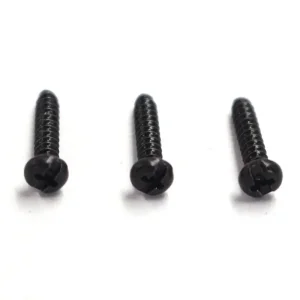
Machine screws possess straight, uniform threads designed to engage with a pre-tapped female thread or matching nut. Wood tapping screws feature a tapered or notched pilot point, wider thread pitches, and sharp knife-like cutting crests (such as Type 17 points) designed to cut or displace organic fibers and composite wood matrix chips directly, generating their own secure mating mechanical internal thread without secondary threading steps.
Particleboard and medium-density fiberboards (MDF) have lower internal bond strength than solid timber. Standard fine-pitch screws shear the compacted internal fibers during driving. A coarse thread pitch with deep exterior thread crests and a thinner root diameter displaces less core material while packing more timber matrix between the threads, increasing sheer pull-out resistance by 25% to 40%.
Phillips drives rely on an intentional cam-out angle originally designed to prevent overtightening in manual assembly. In automated multi-axis robotic assembly, cam-out causes bit wear, tool slippage, damaged cabinetry laminates, and unpredictable clamp load. Torx (6-lobe) drive profiles possess parallel drive walls with near zero degree drive angles, enabling 100% torque transfer with negligible operator push force.
Head detachment is typically caused by insufficient torsional shear yield strength combined with inadequate core case-hardening, or a root transition radius that is too sharp under the head. We resolve this by widening the under-head radius, implementing specialized stress-relief fillets, selecting boron-enhanced alloy wire (10B21), and applying automated computer-monitored tempering cycles to optimize core toughness.
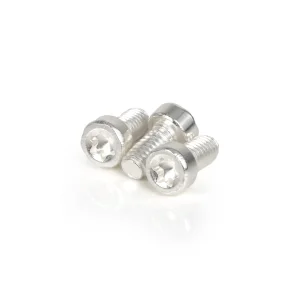
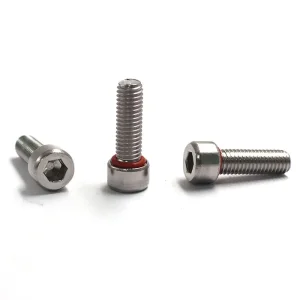
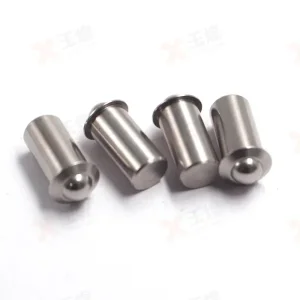
Complementary cold-forged screws, indexing spring plungers, and heavy-duty structural hardware available for global wholesale supply.