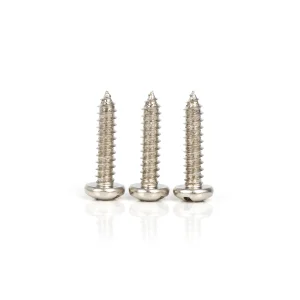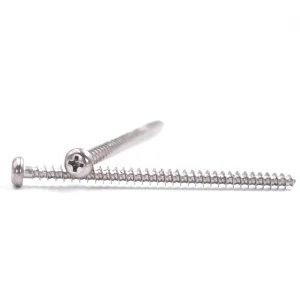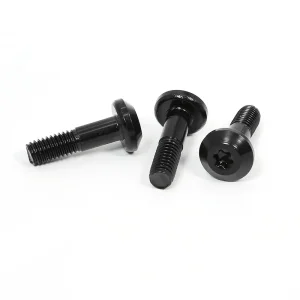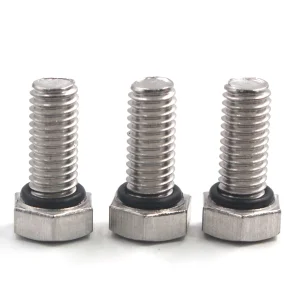
OEM Self Tapping Screws for Plastic and Sheet‑Metal Assembly Manufacturer, Factories
Explore precision-engineered captive, sealing, and machine fasteners formulated for high-vibration sheet-metal assemblies and automated sub-rack architectures.
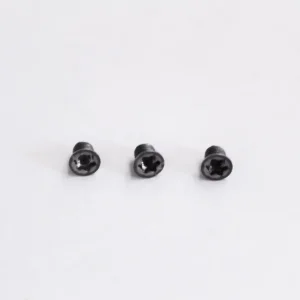
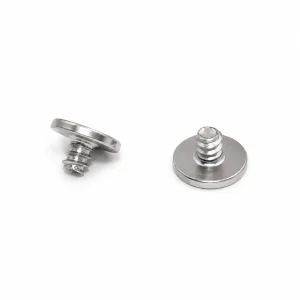
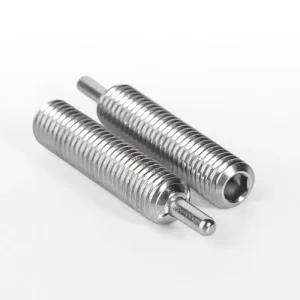
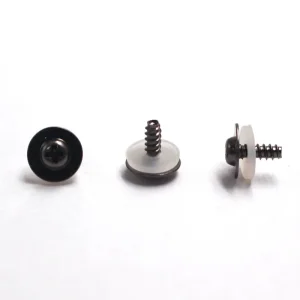
Captive screw engineering has transformed from standard hardware retention to mission-critical mechatronic fastening. As global electronics transition toward high-density modular architecture, the demand for captive hardware that prevents hardware drop-loss, streamlines field maintenance, and withstands repetitive dynamic shear has multiplied across mission-critical sectors.
Foreign Object Debris (FOD) generated by loose loose screws inside high-voltage battery enclosures, avionic racks, or data switchboards triggers catastrophic short circuits. Modern self-clinching captive screws remain permanently riveted into panels, fully nullifying drop hazard during maintenance intervals.
With compute blades packing more silicon than ever before, clearance envelopes are constrained. Next-generation low-profile captive fasteners utilize recessed internal drives (Torx/Tamper-resistant) and micro-spring geometries to ensure maximum clearance in dense multi-layer server chassis.
Electric vehicle (EV) charging control boxes and aerospace avionics face continuous thermal expansion divergence between steel screws and aluminum housings. Premium captive designs employ specialized austenitic stainless steel grades (304, 316, 400-series) and heat treatment recipes that prevent cold-flow embrittlement.
Tier-1 procurement organizations and systems architects do not purchase captive hardware based solely on nominal unit pricing. Sourcing managers evaluate suppliers through the lens of automated feedability, panel-clinching retention force, and metallurgical traceability.
| Captive Screw Engineering Parameters | |
|---|---|
| Body / Retainer Material | Carbon Steel, 303/304 Stainless Steel, Aluminum Alloy 6061 |
| Screw Shank Material | Grade 8.8 / 10.9 Alloy Steel, Austenitic 304/316, Hardened 410 |
| Panel Thickness (Min) | 0.8 mm (0.031 in) to 3.2 mm (0.125 in) sheet ranges |
| Panel Hardness Rating | HRB 70 (Aluminum), HRB 80 (Mild Steel), HRC 32 Max for specials |
| Drive Geometries | Phillips, Slotted, Torx, Six-Lobe Tamper-Proof, Knurled Thumb |
| Thread Form Standard | Metric (M2 to M8) & Imperial UNC/UNF (#2-56 to 5/16-18) |
Situated across Dongguan, Shaoguan, and Wuhan, YH Fastener’s advanced production architecture demonstrates why Chinese high-precision fastener manufacturing remains unmatched in scale, velocity, and metallurgical consistency.
From in-house wire rod spheroidizing and multi-station high-speed cold heading to precision thread rolling and optical sorting, our 20,000 m² facilities eliminate subcontractor delays. Single-roof manufacturing guarantees end-to-end process control under ISO 9001 and IATF 16949 standards.
Automated visual sorting machines evaluate threads, knurls, recesses, and run-out profiles at speeds surpassing 800 parts per minute. Defect escape rates are constrained within single-digit PPM (parts per million), qualifying shipments for direct-to-line production in North America and Europe.
By producing custom heading dies and punches through high-precision CNC tooling centers in-house, turnaround times for bespoke captive designs are reduced from industry-standard 8 weeks down to 10–14 days for functional qualification samples.
Captive self-clinching screws are applied across environments requiring rapid serviceability, structural integrity, and galvanic compatibility. Discover real-world deployments across critical global industries.
Deploying standard 19-inch rackmount chassis, switches, and server blade drawers requires captive spring-loaded thumbscrews for tool-less hot-swapping. Minimizes operational downtime and ensures field technicians cannot drop hardware across busbars.
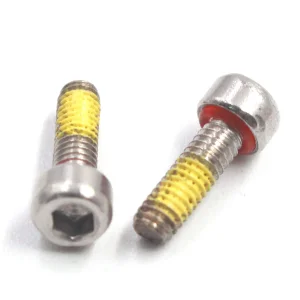
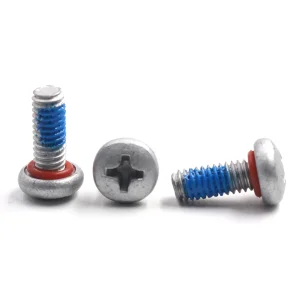
Automotive battery packs demand self-clinching captive screws equipped with micro-encapsulated threadlockers or captive rubber sealing rings to prevent moisture ingress (IP67/IP68) while enduring prolonged vehicle road vibration harmonics.
High strength-to-weight ratios are fulfilled using precipitation-hardened stainless steel and specialized aluminum alloys. Stringent passivated surfaces offer salt spray corrosion protection exceeding 1,000 hours per ASTM B117 specifications.
Factory automation control panels require constant routine maintenance and diagnostic probing. Anti-loosening captive assemblies prevent assembly screws from falling into high-speed robotic drive conveyors or pick-and-place lines.
Find deep technical clarifications regarding sheet metal ductility, clinching mechanics, tool configurations, and global supplier qualification protocols.
Explore high-torque thread-forming, waterproof sealing screws, and captive combination assemblies designed for long-term fatigue resilience.