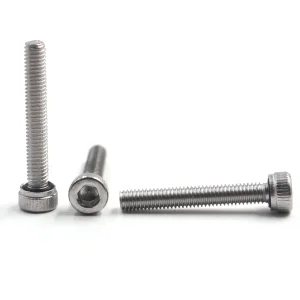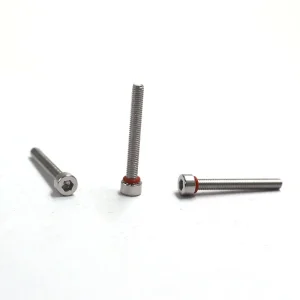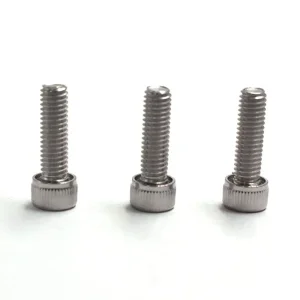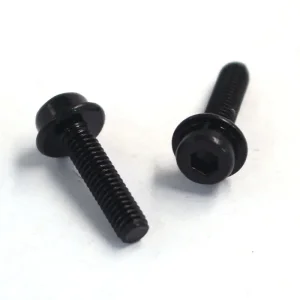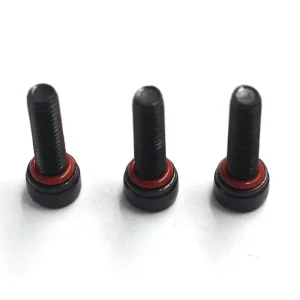
Engineered cold-formed assemblies featuring captive sealing elements, integrated Belleville lock sets, and proprietary friction-coefficient coatings.
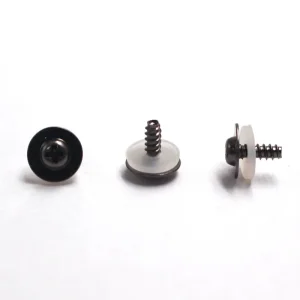
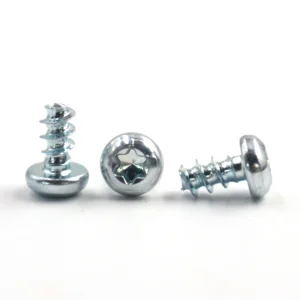
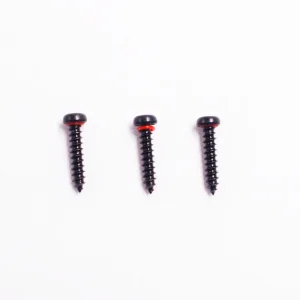
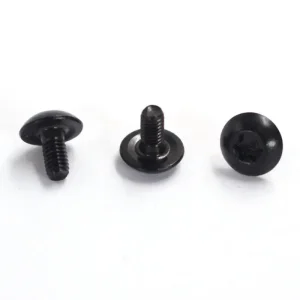
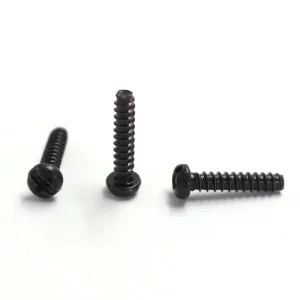
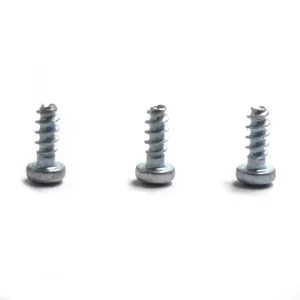
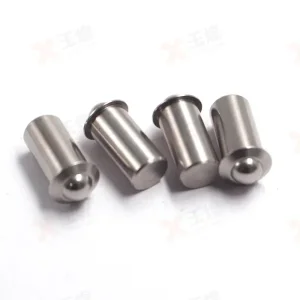
YH Fastener operates 20,000 m² of specialized cold heading, automated optical sorting, and electrolytic surface treatment capacity across Dongguan, Shaoguan, and Wuhan facilities.
In high-throughput automated assembly lines, secondary manual washer placement is the single largest bottleneck in mechanical joint fabrication. A custom hex sems fastener—a integrated screw-and-washer assembly rolled onto the blank prior to thread induction—permanently entraps single or multiple conical, flat, wave, or tooth lock washers onto the unthreaded under-head shank. By eliminating loose washer inventory, reducing fastener feeding jams, and preventing human error during structural assembly, cold-headed custom hex sems fasteners directly reduce automated assembly cycle times by up to 38%.
Bridging mechanical engineering requirements and global supply chain resilience across high-stakes industrial applications.
Electric vehicle battery enclosures, busbars, and inverter housings demand multi-washer combinations (conical spring + serrated contact) made of high-conductivity electrolytic copper or non-magnetic austenitic 304/316 stainless steel. Fasteners must deliver guaranteed clamping force retention under aggressive harmonic vibration while maintaining low electrical contact resistance without galvanic degradation.
Global procurement teams evaluate fasteners beyond FOB unit piece rates. Loose washers require separate procurement management, double bin replenishment, and individual feeder channels in robotic assembly cells. SEMS assemblies streamline the bill of materials (BOM), mitigate washer omission failure risks in field service, and reduce work-in-progress (WIP) overhead by consolidating two or three components into a single stock-keeping unit (SKU).
The global push away from hexavalent chromium (Cr6+) has triggered rigorous compliance demands for thin-film zinc-nickel coatings (Zn-Ni 12-15%) paired with nano-ceramic passivations and micro-encapsulated friction modifiers. Assemblies must routinely withstand 1,000 to 1,500 hours of neutral salt spray testing (ASTM B117) without red corrosion, completely eliminating the hazard of hydrogen embrittlement in Grade 8.8, 10.9, and 12.9 high-tensile steels.
Engineered joint designs resolving differential thermal expansion, dynamic fatigue load dissipation, and environmental ingress.
High-speed articulated robotic arms experience complex multiaxial stress. Our custom hex flanged SEMS fasteners combine heat-treated Belleville washers with micro-ribbed flange bases, ensuring clamping preload stability across millions of reversal stress cycles and preventing self-loosening from rotational inertia.
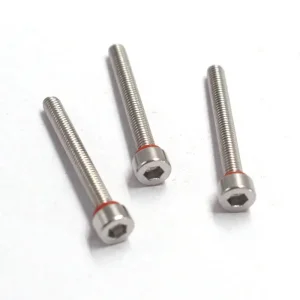
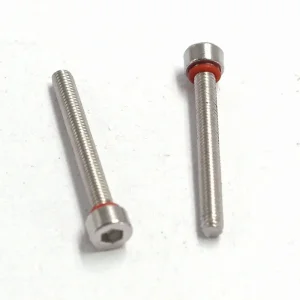
For 5G remote radio heads, solar junction housings, and harsh infrastructure, YH Fastener engineers dual-action SEMS screws featuring an entrapped vulcanized EPDM or fluoro-silicone ring seated inside a precision-machined under-head groove, achieving IP67/IP68 ingress protection without paste sealants.
Electrical control enclosures require stable low-resistance bonding paths. We manufacture custom hex sems screws with integrated conical external-tooth lock washers. During torquing, the hardened teeth bite through surface oxide films and powder coats on metal chassis panels, achieving verifiable, low-milliohm grounding integrity.
Comprehensive testing protocols engineered to guarantee reliability across critical supply chains.
Complete documentation packages for automotive and aerospace programs: Process Flow Diagrams, Process FMEA, Control Plans, Gage R&R, Dimensional Results, Material Certifications, and Part Submission Warrants (PSW).
For high-strength fasteners (≥1000 MPa tensile strength), parts undergo oven baking at 200°C–220°C within 4 hours of acid pickling and electroplating, eliminating hydrogen atom entrapment per ISO 9588 specifications.
Certified material compliance verifying zero hazardous substances (Cd, Pb, Hg, Cr6+, PBBs, PBDEs) via XRF analysis and wet chemical verification. Conflict-free sourcing guarantees for tantalum, tin, tungsten, and gold supply chains.
Barcoded raw wire rod coils traceable back to primary steel mills. Metallurgical grain structure, chemical composition (C, Mn, Cr, Mo), and decarburization depth are validated before tooling release.
Strategic R&D initiatives transforming cold heading and threaded fastener performance for Industry 4.0.
Integrating piezoelectric pressure transducers and acoustic emission sensors inside multi-station header tooling blocks. Micro-second force deviation analysis identifies material inconsistencies, internal void defects, and shear tool wear in real time, preventing defective parts from reaching the thread rolling stage.
Development of synthetic fluoropolymer and silicate micro-encapsulated topcoats that maintain ultra-narrow friction windows (µtot = 0.10–0.14) under automated high-RPM assembly conditions. This eliminates clamp-load scatter, prevents galling on stainless alloys, and optimizes automated torque-angle tightening.
Expanding cold-heading capabilities to aerospace-grade Ti-6Al-4V (Grade 5) and advanced aluminum alloys (7075-T6). Multi-layer cold-welded bi-metal studs engineered with high-strength steel threads and captive lightweight composite washers deliver structural weight reduction for unmanned aerial systems and premium EV platforms.
Engineering answers to complex mechanical assembly, material selection, and procurement questions.
The washer is placed onto the headed blank unthreaded shank prior to the thread-rolling operation. During the rolling process, the screw blank is compressed between reciprocating flat dies or cylindrical rotary dies. Cold plastic displacement expands the thread crests outward, making the finished major thread diameter (dmajor) larger than the washer's internal hole diameter, permanently capturing the washer while allowing free axial rotation.
Hydrogen embrittlement is avoided by eliminating prolonged acid pickling during pretreatment, using mechanical cleaning or controlled flash pickling with corrosion inhibitors. After electroplating (e.g., zinc or zinc-nickel), parts are transferred to industrial baking ovens within 1 to 4 hours. They undergo thermal dehydrogenation at 200°C–220°C for 8 to 24 hours (depending on property class and core hardness) to bake out trapped atomic hydrogen before molecular recombination occurs.
Yes. Non-metallic washers present distinct mechanical properties during thread rolling, as localized die heat and compression can deform elastomeric elements. YH Fastener uses specialized stepped-shank tooling, specialized automated feeding tracks, and cold-rolling cooling systems to assemble nylon, PTFE, vulcanized fiber, and metal-cased composite seal washers onto stainless or carbon steel screws without damaging the sealing lip.
For custom non-standard shank diameters, custom head geometries, or proprietary washer stamped designs, tooling fabrication and pilot sample extrusion typically require 15 to 20 working days. First Article Inspection (FAI) with full dimensional metrology reports is provided prior to volume manufacturing. Standard production runs have an MOQ of 50,000 units, with scalable wholesale production capacity exceeding 50 million pieces per month.
Engineered hardware components, sealing bolts, ball plungers, and socket fasteners designed for high-stress industrial applications.