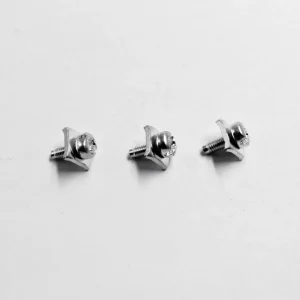
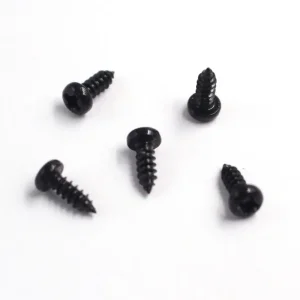
Explore high-precision custom fastening components manufactured in our IATF 16949-certified Dongguan and Shaoguan facilities, engineered for enhanced pull-out resistance, automated assembly compatibility, and robust cyclic vibration endurance.
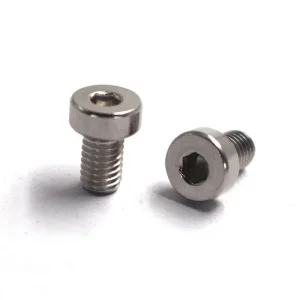
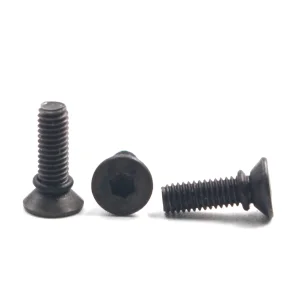
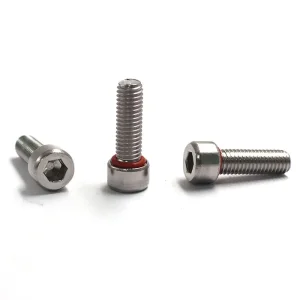
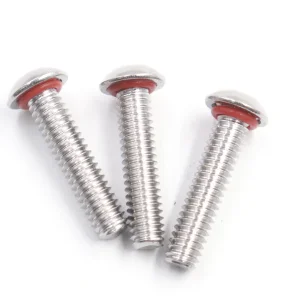
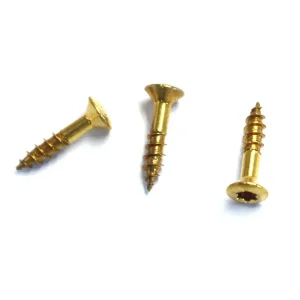
Unlike conventional machine threaded bolts requiring tapped female internal threads, self-tapping and thread-forming screws generate mating threads inside ductile metals, light alloys, engineering thermoplastics, or structural composites. Achieving consistent clamping torque while preventing stripped pilot holes requires holistic metallurgical and cold-heading precision.
Thread-forming screws (such as Trilobular or PT geometries) plastically deform adjacent substrate materials into crest and root engagement contours without cutting fibers or creating metal debris. In contrast, thread-cutting fasteners incorporate flutes to cleanly evacuate chips in brittle castings, die-cast zinc, or rigid phenolic resins.
A self-tapping screw must maintain a surface hardness distinctly higher than the mating material, balanced with core ductility to prevent catastrophic shear under bending stress. Through-hardening, continuous carburizing, or carbonitriding achieves precise case depths (typically 0.05 to 0.20 mm) while holding core hardness to specifications like HV 270–390.
The operational window between installation driving torque (Td) and failure stripping torque (Ts) defines assembly line efficiency. YH Fastener engineers customized thread crest profiles to achieve a generous ratio: Ts / Td ≥ 3.0, minimizing thread stripping risks during high-rpm automatic pneumatic screwdriving operations.
The Greater Bay Area industrial corridor—anchored by our 20,000 m² cold-heading workshops across Dongguan, Shaoguan, and Wuhan—provides an integrated fastener manufacturing ecosystem unmatched in supply speed, tooling agility, and cost-to-tolerance ratio.
From high-grade wire rod spheroidizing and cold-drawing to micro carbide die fabrication, heat treatment furnaces, and automated barrel plating, the entire production chain operates within a 30-kilometer logistics radius, cutting lead times by 60% compared to Western suppliers.
Equipped with internal CNC EDM wire cutting and mirror EDM spark machines, our mold fabrication engineers bring non-standard head shapes, unique security drives, and modified thread profiles from 3D CAD design to first-article samples in as few as 5 to 7 operational days.
Operating multi-station progression headers (up to 5-die 5-blow machines), our facilities cold-form intricate stepped shanks, deep Torx/Phillips recesses, and captive SEMS configurations without cutting metal fibers, ensuring maximum shear fatigue resilience.
To eliminate head cracks, missing threads, bent shanks, and plating burrs, each batch passes through continuous high-resolution optical image sorting machines, guaranteeing part defect levels below 15 PPM for automated robotic feeding bowls.
Modern manufacturing demands fasteners that adapt to lightweight alloys, fragile composite matrices, and harsh operating conditions. Here are the leading technological shifts currently dominating OEM fastening requirements.
Traditional 60° metric tapping screws generate excessive radial hoop stresses inside thermoplastic bosses, leading to micro-cracking and eventual joint creep. Modern PT-style 30° profiles displace plastic axially, lowering driving torque while boosting ultimate pull-out strength by up to 45% in materials such as PA66-GF30, PBT, and polycarbonates.
High-tensile case-hardened tapping fasteners (>350 HV) exposed to acid pickling and zinc electroplating are prone to catastrophic hydrogen embrittlement. YH Fastener employs strictly monitored continuous hydrogen relief de-embrittlement baking (minimum 200°C for 4 to 8 hours immediately post-electroplating) and zinc flake coatings (Geomet, Dacromet) to ensure zero delayed fractures.
Secondary liquid threadlockers introduce assembly inconsistencies, chemical fumes, and excess cycle times. Factory pre-applied microencapsulated chemical adhesives (e.g., DIN 267-27 locking patches) and under-head plastisol/silicone sealing beads activate instantly upon seating, delivering hermetic IP67/IP68 sealing and prevailing torque vibration immunity.
Fastener failure directly compromises equipment reliability, battery integrity, and brand reputation. Review our systematic engineering countermeasures for common industrial fastening issues.
| Target Sector | Common Failure Mode | Metallurgical / Geometric Cause | YH Fastener Countermeasure Specification | Verified Operational Impact |
|---|---|---|---|---|
| EV Battery Enclosures | Water ingress along thread flank & galvanic corrosion between screw & aluminum tray | Inadequate sealing under screw head; electrochemical potential disparity between carbon steel and 6061-T6 aluminum | Sealing Screw Custom A2/A4-70 stainless steel tapping screws with undercut collar and molded EPDM/Fluorosilicone O-ring; Geomet 500 Plus topcoat | Hermetic IP69K sealing under 5 bar pressure; exceeds 1,500 hours neutral salt spray testing without red rust |
| 5G Telecommunications | Stripped internal threads in thin zinc die-cast or sheet magnesium chassis | Over-tightening by high-speed assembly drivers; small engageable thread height ($<1.0 \times D$) | Trilobular Tapping Thread-rolling tri-roundular cross-section forming threads via 3 contact zones, creating work-hardened internal female threads | Installation torque reduced by 35%; stripping torque increased by 50%; zero metal shavings inside cavity |
| Automotive Sensors & ADAS | Vibration loosening and loss of calibration clamp load on bumpy terrains | Micro-transverse slip along thread pitch under resonant harmonic vibrations (DIN 65151 Junkers test failure) | SEMS & Nylon Patch Deep-recess Torx Pan head screw integrated with captive conical Belleville spring washer and 360° polyamide patch | Maintains >85% residual preload through 2,000 vibration cycles; zero fastener backout or loose rattles |
| Precision Medical Electronics | Driver cam-out, bit slippage, head shearing during micro assembly | Shallow Phillips or Slotted recesses failing under automated torque tools; high tool vertical force requirement | Torx / 6-Lobe Tamper-Proof Cold-headed internal 6-lobe Torx Plus drive with zero drive angle and straight sidewalls | Eliminates driver bit slippage; extends driver tool life by 400%; eliminates cosmetic scratches on clean enclosures |
Every OEM tapping screw batch manufactured by YH Fastener undergoes six rigorous quality control checkpoints, with full material heat trace documentation and complete PPAP Level 3 capability.
Incoming alloy wire (1018A, 1022A, SCM435, SUS304, SUS316) is spectrographically verified for chemical composition, tensile elongation, and grain spheroidization.
Heads, recesses, and specialized collars are cold-formed in multi-die headers. In-line laser sensors monitor critical head height, diameter, and recess depth.
Precision carbide flat or circular rolling dies form self-tapping threads at high speeds, cold-working the thread roots to ensure superior fatigue endurance.
Continuous mesh-belt furnaces execute carburizing and quenching under controlled protective atmospheres, followed by water or oil quenching and tempering.
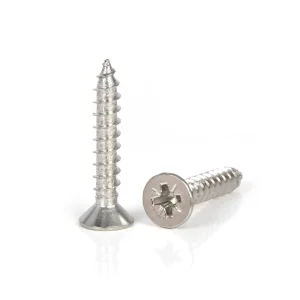
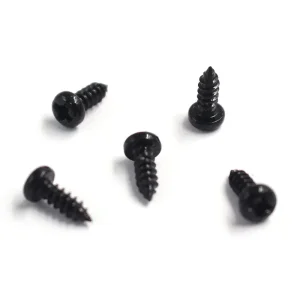
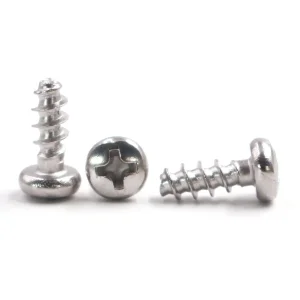
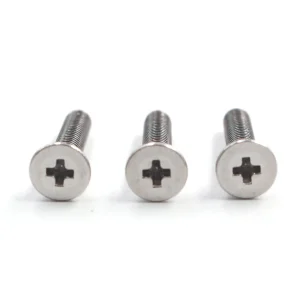
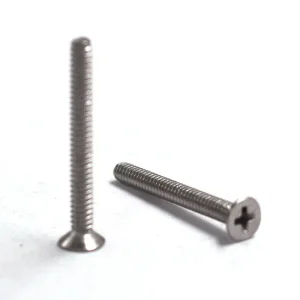
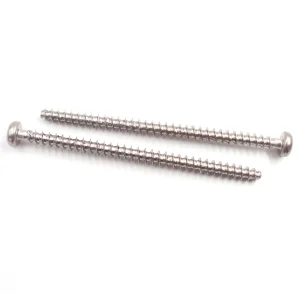
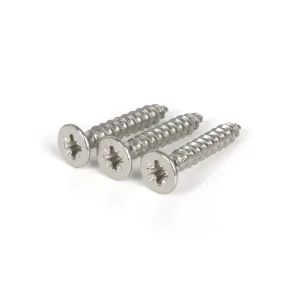
Discover specialized tapping products, countersunk flatheads, thread-cutting screws, and thermoplastic fasteners designed for clean flush-mounting, minimal boss stress, and dependable clamp retention.
International sourcing directors managing global multi-plant production require more than low piece prices. They need audited process stability, reliable raw material origins, and smooth cross-border customs execution.
Every custom drawing project includes comprehensive Production Part Approval Process (PPAP Level 3) packages: Design FMEA, Process Flow Chart, Control Plan, Initial Process Capability Studies (Cpk ≥ 1.67), Gage R&R, and full Material Certification test reports.
Operating multi-site manufacturing bases in Dongguan (Guangdong) alongside our Shaoguan and Wuhan plants ensures redundant production capacity, protecting global OEMs against local power fluctuations, regional logistics bottlenecks, or sudden production surges.
Your point of contact is an experienced fastener application engineer, not an intermediary trading rep. From 3D CAD modeling to alloy selection, driving torque recommendations, and pilot-hole hole sizing, we provide rapid engineering feedback within 24 hours.
Clear, technically detailed answers on pilot-hole dimensioning, thread geometries, surface coatings, and drawing-based OEM tooling.