Precision Thread-Forming Engineering for Thermoplastics, Electronics Enclosures, and High-Integrity Industrial Subassemblies
Engineered cold-headed fasteners manufactured under IATF 16949 / ISO 9001 certified precision systems for automotive, optical, and high-frequency communication modules.
Evaluating the mechanical imperatives driving the transition toward optimized 30° thread profiles in modern polymer assemblies.
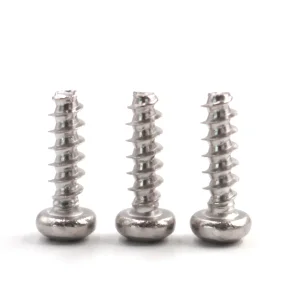
Traditional 60° machine threads or sheet metal tapping screws induce excessive radial expansion force, causing catastrophic boss burst in ductile polymers (ABS, PC, PBT). PT screws overcome this by optimizing thread flank geometry.
Eliminating brass heat-stake inserts or ultrasonic embedding procedures reduces component counts, capital tooling expenditure, cycle time, and energy overhead during automated high-speed housing assemblies.
High-pitch spacing accommodates deep polymer displacement between threads without thermal degradation, offering superior resistance against relaxation induced by continuous thermal cycling and cyclical vibration.
Strict parameter tolerances adhere to cold-forged micro-geometry standards to secure maximal installation strip-to-drive torque ratios.
| Dimensional Metric | Material Classifications | Thread Form & Angle | Hardness Profile | Surface Treatment Options |
|---|---|---|---|---|
| M1.2 – M6.0 Lengths: 3.0mm – 60mm |
AISI 1018, 1022A Carbon Steel; SUS304, SUS316 Austenitic SS |
PT® Profile, 30° Included Angle; Optimized Thread Core Ratio |
Case: HV 450–650 Core: HV 270–390 (Through-hardened) |
Cr3+ Clear/Yellow Zinc, Black Oxide, Nickel, Eco-Passivation |
| Driver Compliance | Structural Integrity | Boss Design Standard | Quality Gate System | Application Focus |
| Phillips (JIS / ISO / ANSI), Cross-recess No. 00 to No. 3 |
Tensile: >800 MPa; Shear Yield: >550 MPa |
Hole Dia: 0.75-0.85 d; Wall Thickness: ≥ 1.0 d |
Automated Optical Sorting; PPAP Level III, IATF 16949 |
Engine Enclosures, Medical Optics, Smart Consumer Gadgets |
Addressing distinct environmental constraints across automotive electrification, precision telecommunications, medical equipment, and consumer IoT.
Applied in EV lightweight battery management covers, sensor housings, and ECU plastic compartments resisting up to 105°C sustained continuous temperature swings.
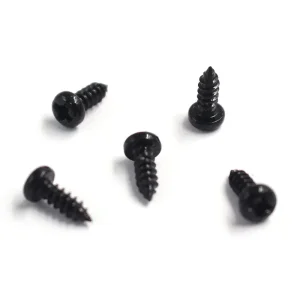
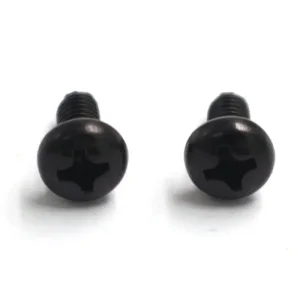
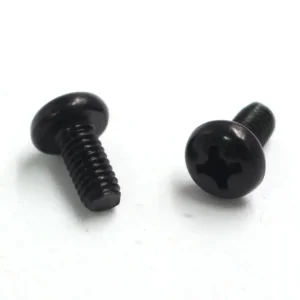
Micro-sized M1.2 to M2.0 Phillips PT fasteners engineered with ultra-thin pan heads avoid interfering with crowded flex cables, camera arrays, and acoustic diaphragms.
Cold-forged SUS316 stainless PT screws resist chemical exposure and repeated autoclave cycles in surgical tools, pump units, and diagnostic instrumentation shells.
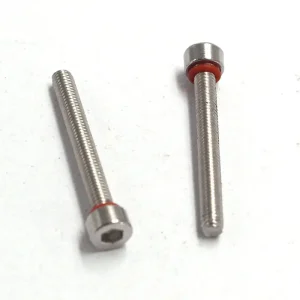
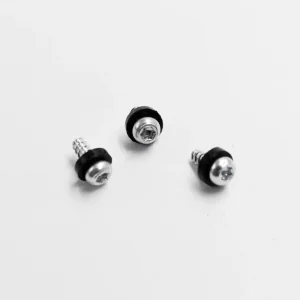
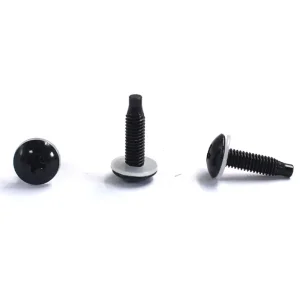
Integrated under-head rubber O-rings guarantee sealing up to IP67/IP68 standards in telecommunication junction boxes and industrial edge computing nodes.
Addressing next-generation composite resins, bio-plastics, and high-speed robotic inline assembly.
With engineering polymers transitioning to 30%-50% glass-fiber reinforcements, our cold-heading dies are tuned to introduce secondary flank micro-notches, dampening abrasive flank wear.
Deployment of fluoropolymer-infused organic zinc coatings reducing driving torque variance by 35%, ensuring uniform clamping force across multi-spindle automatic screwdriving cells.
Engineering customized thread pitches tailored to mechanically recycled post-consumer resins (PCR-ABS/PCR-PC), eliminating thread stripping caused by resin molecular chain degradation.
In-depth technical answers addressing tooling geometry, drive selection, and installation parameters.
Unlike standard tapping screws with a 60° thread angle, the PT profile uses a narrow 30° flank angle. This geometry significantly lowers radial outward force, prevents boss splitting in rigid plastics, and increases the shear volume of displaced material for higher pull-out resistance.
Phillips drives provide self-centering capability essential for ultra-high-speed manual or semi-automated electronics assembly lines. When calibrated screwdrivers are tuned properly, the cross-recess enables rapid bit engagement while eliminating premature bit slippage.
The standard guideline for thermoplastic pilot hole sizing is 0.75 to 0.85 times the nominal screw diameter. Softer plastics like PE/PP use lower ratios (~0.75), whereas glass-filled or brittle resins (PC, PPS) require ~0.85 times the diameter with a 5° lead-in counterbore chamfer.
Yes. The continuous thread profile creates a cleanly formed female mating thread without cutting or tearing the plastic. Field technicians can safely reuse the fastener 5 to 10 times by turning the screw counterclockwise until it drops into the existing thread lead before tightening.
Explore our comprehensive lineup of industrial machine screws, partial threads, sealing assemblies, and customized robotic fasteners directly from our manufacturing facilities.