Explore our cold-forged and precision-turned fasteners designed to eliminate fluid permeation and maintain clamp load under continuous structural vibration.
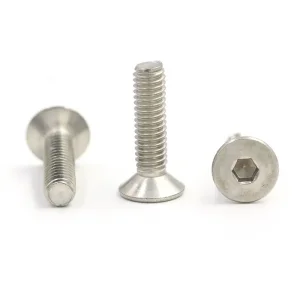
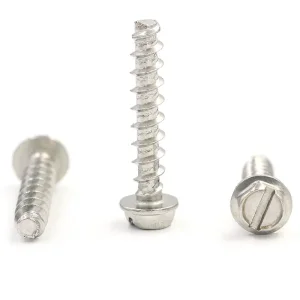
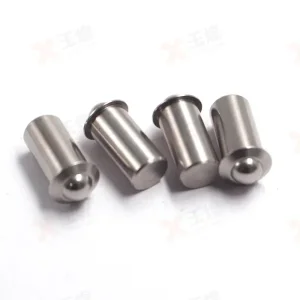
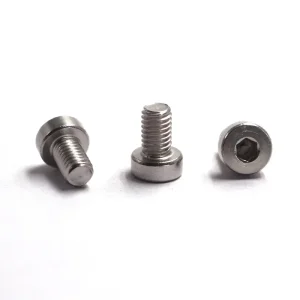
A systematic review of cold-headed groove geometries, controlled elastomeric deformation, and hydrostatic hermetic barriers under dynamic preload.
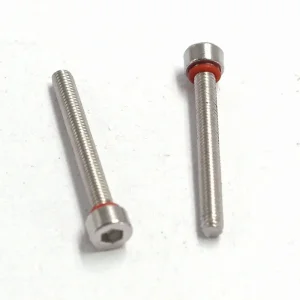
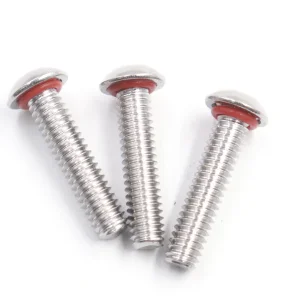
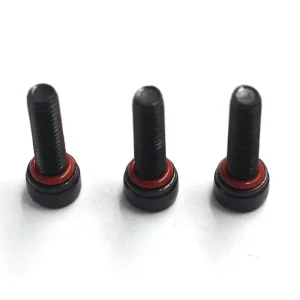
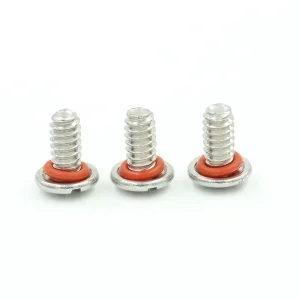
Traditional flat washers deform unpredictably under torque, inducing lateral extrusion and elastomer blow-out. Our ODM hex socket sealing screws incorporate a computer-optimized under-head undercut (dove-tail or precision rectangular channel). This containment cavity controls volumetric displacement, ensuring the O-ring compresses strictly within 25% to 32% of its cross-sectional diameter to guarantee zero fluid path migration.
Unlike elastomeric gaskets that suffer continuous mechanical creep and clamp-load relaxation, our proprietary under-head geometry preserves direct metal-to-metal contact between the screw head bearing shoulder and the mating surface. This design ensures that target tightening torque converts exclusively into axial tensile clamp force without risk of elastomer over-crushing or vibration-induced loosening.
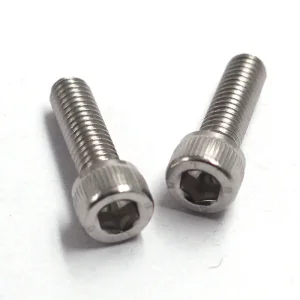
Fabricated strictly to DIN 912, ISO 4762, and ASME B18.3 tolerances, the deep hexagonal drive recess maximizes surface contact area with the driver bit. This geometry accommodates high seating torques required for pressure-retaining structural joints, completely eliminates driver cam-out common to cross-recess drives, and interfaces seamlessly with automated robotic torque-monitoring screwdrivers.
Upon reaching calibrated torque, the engineered O-ring elastomeric matrix is hydraulically displaced outward and downward simultaneously. The trapped air is vented via micro-clearances before full metal shoulder contact occurs. This forms a continuous, bi-directional 360-degree hermetic seal rated from ultra-high vacuum (10⁻⁸ Torr) up to 40 MPa hydrostatic pressure, preventing capillary fluid bridging under rapid thermal cycling (-50°C to +200°C).
Selecting matched alloy matrices and polymer durometers is mandatory to prevent galvanic oxidation and elastomeric degradation in harsh operational environments.
| Base Alloy Matrix | Tensile Strength (MPa) | Matched Elastomer Type | Thermal Window | Target Chemical Resistance |
|---|---|---|---|---|
| Austenitic Stainless Steel 316 / 316L | ≥ 700 (Cold-worked) | Fluorocarbon (FKM / Viton®) | -20°C to +205°C | Marine spray, battery electrolytes, diesel, hydraulic fluids |
| Austenitic Stainless Steel 304 / A2-70 | ≥ 700 | Silicone (VMQ / PVMQ) | -60°C to +230°C | Potable water, food contact (FDA), medical sanitizers, UV/Ozone |
| High-Tensile Alloy Steel (Gr 10.9 / 12.9) | 1040 – 1220 | Nitrile Butadiene (NBR / HNBR) | -40°C to +125°C | Petroleum lubricants, high cyclic mechanical shear, industrial coolants |
| Titanium Grade 5 (Ti-6Al-4V) | ≥ 895 | Perfluoroelastomer (FFKM) | -15°C to +320°C | Aggressive acids, aerospace fuels, rocket propellants, supercritical fluids |
| Naval Brass / CuZn39Pb3 | ≥ 440 | Ethylene Propylene (EPDM) | -50°C to +150°C | Glycol brake fluids, steam autoclaves, phosphate ester fluids |
To eliminate galling on stainless steel cold-headed threads and extend salt spray endurance beyond 1,500 hours, we apply engineered micro-coatings. Options include automated electroless nickel plating (high phosphorus content 10-14%), zinc-nickel electroplating (DIN 50979 compliant, 12-15% Ni) passivated with trivalent clear or black sealants, and microscopic PTFE topcoats that regulate friction coefficients strictly between µ = 0.10 and 0.15 for reproducible automatic screw assembly.
Depending on field repairability requirements, YH Fastener provides two core sealing topologies: mechanically captive O-rings pre-assembled into an engineered undercut that resists fallout during transit and hand assembly, and direct rubber-to-metal chemically bonded sealing systems. In chemically bonded variants, cross-linking primer agents bond the vulcanized silicone or fluorocarbon directly to the cold-forged steel shoulder, eliminating assembly errors on high-speed robotic integration lines.
How our vertically integrated Dongguan, Shaoguan, and Wuhan facilities deliver unmatched lead-time compression and cost efficiency without compromising micro-tolerances.
By producing our own carbide cold-heading punches, multi-die trimming blocks, and rolling dies internally, we cut new ODM tooling lead times from 6 weeks down to 7–10 working days, supporting agile prototyping for tier-1 OEMs.
We maintain rolling reserves of audited Baosteel and Yongxing stainless steel 304/316 and alloy wire rods. Raw material certs (EN 10204 3.1) verify exact chemical composition and mechanical grain orientation prior to cold transformation.
For custom non-standard heads requiring micro-fine surface finishes (Ra 0.4 µm) inside the undercut groove, our factory couples high-speed cold heading with secondary multi-axis Citizen Swiss CNC lathes for flawless elastomer seats.
Every critical batch passes high-resolution glass-plate optical laser sorters inspecting head dimensions, socket depth, thread pitch, and O-ring integrity at speeds up to 800 parts per minute, ensuring zero assembly line stoppages.
Purchasing directors and chief procurement officers face chronic supply disruptions, assembly bottlenecks, and field warranty claims when sourcing uncertified generic screws.
In standard manufacturing workflows, technicians manually fit separate flat copper or nylon washers over standard screws, or apply messy anaerobic liquid threadlockers (e.g., Loctite) and silicone RTV beads. This introduces human error, erratic curing times, and contamination of sensitive electronics. Adopting our integrated ODM hex socket sealing screws removes two BOM line items, saves up to 4.2 seconds per fastening point in cycle time, and cuts total production costs by 18% to 35%.
In applications such as electric vehicle battery packs, solar inverter enclosures, and underwater sonar housings, a single seal breach causes destructive catastrophic failure. Field warranty repairs, regulatory scrutiny, and brand devaluation can run into millions of dollars. Sourcing precision-engineered sealing screws manufactured under rigorous IATF 16949 control with 100% helium pressure screening converts fastener sourcing from a cost gamble into a verified risk-mitigation strategy.
Our application engineers analyze customer 3D models (STEP/IGES) within 24 hours. We evaluate clamping friction, torque-to-tension ratios, thread engagement depths, and seal squeeze ratios before steel tooling begins.
We provide full Production Part Approval Process (PPAP) documentation including Control Plans, Process Failure Mode Effects Analysis (PFMEA), Gage R&R studies, and dimensional balloon drawings matching optical CMM scans.
To insulate tier-1 manufacturers against freight rate swings and geopolitical shipping delays, we support Vendor Managed Inventory (VMI), safety buffer warehousing, and scheduled Kanban call-offs to North America, Europe, and ASEAN plants.
Full cross-border regulatory conformance tailored to meet stringent aerospace, automotive, medical, and environmental mandates worldwide.
Our quality management architecture is verified by international accredited registrars. Production runs operate under strict statistical process control (SPC) monitoring Cp and Cpk values with target thresholds ≥ 1.67 for high-tolerance undercut sealing grooves and socket recess dimensions.
Every shipment is accompanied by certified laboratory testing from SGS or TÜV. Materials are 100% compliant with EU RoHS Directive (EU 2015/863), REACH Regulation (EC 1907/2006) for Substances of Very High Concern (SVHC), and Dodd-Frank Act Section 1502 regarding conflict minerals.
Our in-house metrology center includes calibrated equipment for IP67/IP68 immersion tests, high-pressure IP69K thermal washdown chambers, helium mass spectrometer leak detectors (< 10⁻⁸ mbar·l/s), tensile pull-testers up to 500 kN, and neutral salt spray (NSS) corrosion testing chambers.
Where failure is not an option: how custom hex socket sealing fasteners safeguard state-of-the-art technological infrastructures.
EV battery packs and Energy Storage System (ESS) enclosures demand IP67/IP68 hermetic containment to prevent water ingress and thermal runaway. Our custom stainless steel sealing screws isolate internal cells against rain, road salt wash, and high-pressure underbody debris.
Pole-mounted and tower-mounted Remote Radio Units (RRUs) encounter extreme climatic thermal cycling, tropical humidity, and solar UV radiation. Hex socket sealing fasteners with VMQ silicone seals retain elasticity without hardening across decades of exposure.
Jointed 6-axis articulated robotic arms in machining and casting centers require internal pneumatic and hydraulic pressurization. Our 10.9-grade hex socket sealing screws lock motor covers firmly, sealing synthetic gear lubricants in and coolants out.
Operating under deep hydrostatic ocean pressures, autonomous underwater vehicles (AUVs) utilize our passivated 316L stainless steel and Grade 5 titanium sealing screws with FKM seals to withstand crushing pressures exceeding 300 bar without structural deflection.
Key technological advancements reshaping the design, automated assembly, and life-cycle validation of critical fastening systems.
With global adoption of green hydrogen and fuel-cell commercial mobility, micro-sealing fasteners must block hydrogen atoms from leaking through sub-microscopic crystal lattices. YH Fastener is pioneering nano-diamond composite coatings and ultra-dense FFKM compounds that eliminate embrittlement and reduce gas permeation rates by 99.4%.
Traceability 4.0 is integrating microscopic passive RFID chips inside the cold-headed drive recess of critical structural fasteners. This allows aerospace and rail maintenance crews to point an optical/RF scanner at each hex socket screw to verify torque history, metallurgical batch certs, and seal operational hours in real time.
Anticipating upcoming European Union restrictions on per- and polyfluoroalkyl substances (PFAS), our material laboratory is actively co-developing non-fluorinated, high-temperature elastomeric seals that equal Viton® endurance without persistent environmental bioaccumulation hazards.
Comprehensive engineering insights into torque control, reuse specifications, surface treatments, and custom factory tooling parameters.
Torque calculation requires balancing clamp-load generation against over-compression limits. Because our screws feature an engineered annular undercut with metal-to-metal seating shoulders, target torque is derived from standard VDI 2230 guidelines using thread pitch, bolt proof strength, and the friction coefficient of the plated thread. The elastomer volume is mathematically calibrated to completely fill 85% to 92% of the undercut recess precisely when the screw head contacts the parent metal. This prevents erratic rubber drag from distorting torque-angle readings.
Yes. If the screw has not been torqued past its yield limit, the elastomer in the undercut cavity typically exhibits a compression set of less than 15% after disassembly. However, for mission-critical assemblies—such as IP68 subsea chambers or automotive high-voltage battery enclosures—we recommend replacing the O-ring or utilizing a fresh fastener if the joint has undergone prolonged thermal aging above 120°C, to ensure full hermetic recovery.
Direct contact between austenitic stainless steel (A2/A4) and cast aluminum (e.g., ADC12 or 6061-T6) creates a galvanic potential difference exceeding 0.35V in saline environments. We prevent this by applying specialized non-conductive trivalent zinc-flake coatings, microscopic nylon or ceramic barrier topcoats to the fastener shank and bearing face, or by supplying cadmium-free zinc-nickel-plated steel with a passivation layer that acts as an electrochemical buffer.
For custom drawings requiring non-standard head styles, unique thread pitches, or special undercut profiles, our tooling setup turnaround is typically 7 to 10 working days. Sample prototypes are dispatched immediately for customer CMM and leak testing. Standard production runs usually carry an MOQ of 5,000 to 20,000 pieces depending on fastener diameter (M1.6 micro-screws up to M16 heavy-duty bolts), with production lead times averaging 3 to 4 weeks.
Absolutely. We frequently combine dual-locking technologies for extreme vibration environments. The under-head O-ring guarantees 100% fluid and gas sealing, while a microencapsulated chemical adhesive patch (such as 3M 2510, Scotch-Grip, or DIN 267-27 nylon patches) is pre-applied around the thread engagement area. The patch activates upon thread mating, preventing fastener back-out even under severe transverse vibrational shocks (DIN 65151 Junkers test validated).
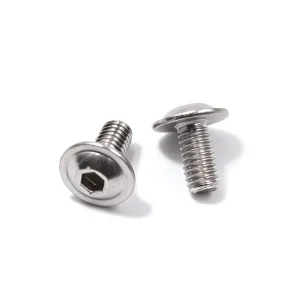
Precision machine components, ball plungers, and sealing hardware manufactured across our cold heading and precision Swiss lathe lines.
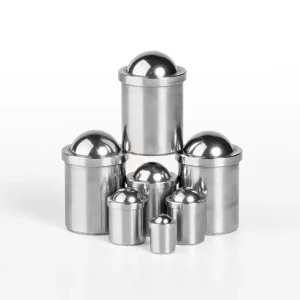
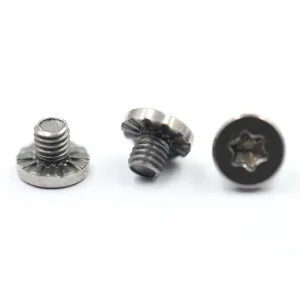
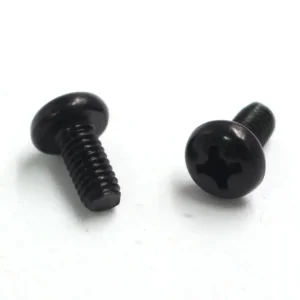
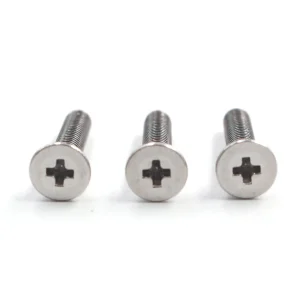
Send us your 2D drawings (PDF) or 3D models (STEP/IGES) along with operating temperature, chemical exposure parameters, and pressure requirements. Our technical sales engineers guarantee a comprehensive engineering response within 24 hours.
