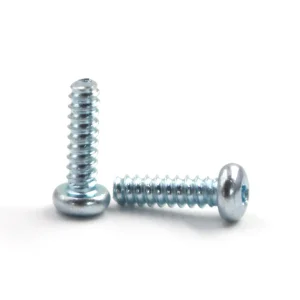
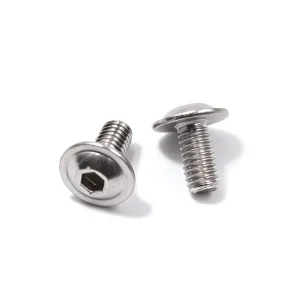
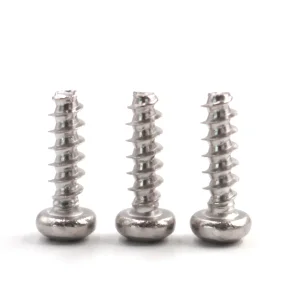
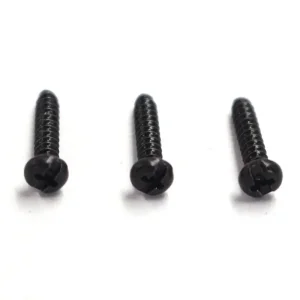
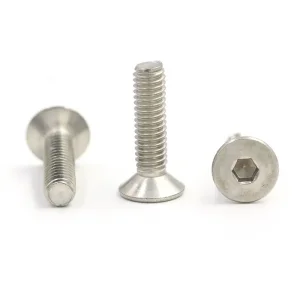
Browse our initial high-performance lineup of self-sealing fasteners, machine screws, and IP67/IP68 rated enclosure retention solutions manufactured under rigorous dimensional tolerances.
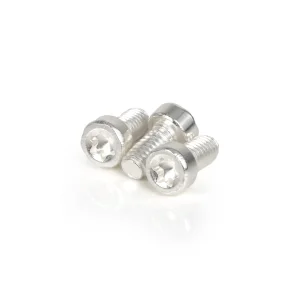
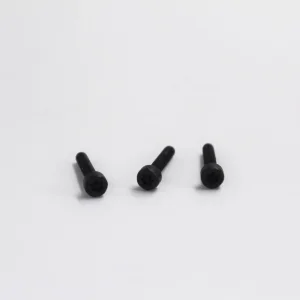
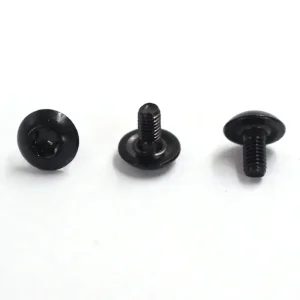
Modern micro-electronics, autonomous sensing arrays, and clean energy battery containment systems demand total defense against environmental contaminants. Standard threaded fasteners introduce helical capillary pathways where pressurized moisture, vapor, and corrosive liquids breach internal cavities.
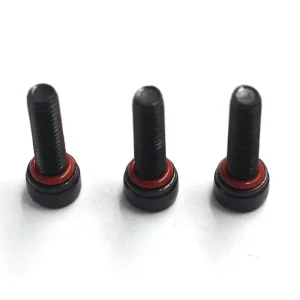
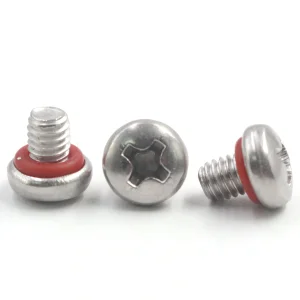
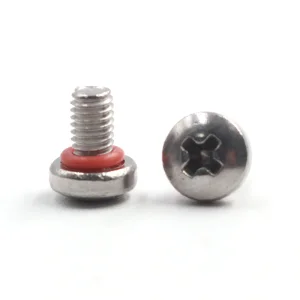
Electronic sealing screws (also recognized across OEM procurement manifests as self-sealing fasteners, captive O-ring screws, and hermetic assembly studs) represent an integrated structural-mechanical solution. Unlike conventional fastener assemblies requiring liquid adhesives, flat silicone gaskets, or auxiliary chemical sealants, our ODM sealing screws feature a precision cold-formed under-head annular groove into which an elastomer O-ring is seated. When torqued into an electronics chassis, the O-ring compresses uniformly in 360 degrees, filling micro-voids and sealing against pressures exceeding 1,500 PSI while simultaneously retaining metal-to-metal contact to establish clamp load.
In standard screw manufacturing, cold heading creates a fillet under the head. For hermetic electronic applications, YH Fastener incorporates custom-tooled cold-forming punches that construct an undercut recess or asymmetric dovetail groove. This architectural geometry serves three deterministic functions:
1. Controlled Volume Entrapment: The volumetric capacity of the annular groove is calibrated to roughly 90%–95% of the O-ring’s uncompressed volume. Under standard assembly torque, the elastomer deforms elastically without reaching hydraulic lock, preventing outward extrusion under the head perimeter.
2. Positive Metal-to-Metal Seat: The outer rim of the screw head comes into direct contact with the mating enclosure surface. This provides definitive torque repeatability, prevents thread loosening under cyclic vibration, and shields the O-ring from atmospheric UV degradation and direct abrasive exposure.
3. Bi-Directional Sealing Barrier: The compressed elastomer resists both internal pressure spikes (such as lithium-ion thermal outgassing) and external vacuum draws (such as high-altitude airborne electronic temperature shocks).
Engineered to prevent liquid penetration at submersion depths up to 5 meters. Prevents dust, vapor ingress, and capillary flow under extreme atmospheric pressure fluctuations.
Multi-axis camera-guided optical assembly eliminates manual O-ring stretching. Ensures concentric seating without micro-twists that jeopardize vacuum seals.
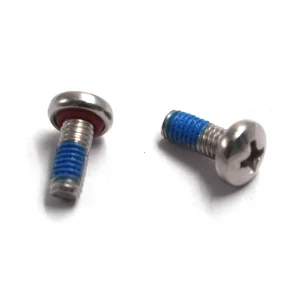
Optional pre-applied polyamide (nylon) patches or anaerobic locking coatings guarantee assembly retention under automotive MIL-STD-810G harmonic vibration test regimes.
Cold headed from Austenitic Stainless Steel (SUS304, SUS316, A2-70, A4-80), High-Tensile Carbon Steels (Class 8.8, 10.9, 12.9), and non-magnetic brass or titanium alloys.
Headquartered in the global electronics manufacturing epicenter of Dongguan, Yu-Huang Electronics (YH Fastener) synergizes three decades of toolmaking mastery with China’s integrated raw-material and tooling ecosystem.
Global procurement teams operating in Tier-1 automotive and multinational consumer electronics sectors encounter severe bottleneck risks when dealing with fragmented fastener suppliers who outsource wire annealing, heading, secondary slotting, plating, or O-ring mounting to disconnected third parties. YH Fastener’s 20,000+ m² footprint spanning Dongguan, Shaoguan, and Wuhan eliminates supply chain fragility through strict vertical integration.
• In-House Tooling and Die Workshop: Tool wear is the primary source of O-ring groove non-conformance. Our facility designs and wire-EDMs tungsten carbide heading dies and rolling plates in-house, enabling rapid design adjustments and prototyping within 3 to 5 business days.
• Integrated Heat Treatment & Surface Finishing: We maintain strict oversight over controlled-atmosphere continuous mesh-belt furnaces, guaranteeing consistent core and case hardness without hydrogen embrittlement. Electroplating lines offer Eco-friendly Cr3+ trivalent zinc, zinc-nickel alloys (exceeding 1,000 hours salt spray before red rust), black oxide, electroless nickel, and vacuum passivation.
• Automated 100% Optical Sorting (AOI): To meet automotive zero-defect mandates, our high-speed glass disk optical sorting machinery inspects every sealing screw at speeds up to 800 parts per minute, validating head diameter, thread pitch, recess depth, O-ring presence, and groove concentricity.
Supplying multinational hardware brands across North America, Europe, Japan, and Southeast Asia demands uncompromising regulatory documentation and localized on-demand engineering validation.
Every production lot adheres strictly to automotive APQP (Advanced Product Quality Planning) protocols, supported by full PPAP Level 3 documentation, IMDS filings, and comprehensive FMEA risk mitigation.
All metallic substrates, conversion coatings, and elastomeric polymers undergo strict XRF and ICP spectroscopic testing. Free from lead, cadmium, hexavalent chromium, PBDEs, and SVHC candidate list substances.
From raw wire coil to finished pallets, each batch carries distinct barcoded routing travelers. Raw material chemistry (EN 10204 3.1) and physical tension test reports accompany every outbound container.
For smart kitchen appliances and medical diagnostics, we offer high-purity medical-grade silicone and NSF/FDA approved elastomers that exhibit superior flame retardancy and physiological neutrality.
| Elastomer Material | Operating Temp Range | Hardness (Shore A) | Chemical & Environmental Resistance | Primary Electronic Applications |
|---|---|---|---|---|
| Silicone (VMQ) | -60°C to +200°C | 50 – 70 | Extreme heat, cold, UV, ozone, weather aging | Outdoor 5G telecom, LED lighting, consumer drones |
| Fluorocarbon (Viton / FKM) | -20°C to +220°C | 70 – 80 | Synthetic oils, hydrocarbons, aggressive acids, fuel | EV powertrain, aerospace sensors, battery packs |
| EPDM | -45°C to +140°C | 60 – 75 | Water, steam, glycols, brake fluid, outdoor weathering | Smart energy utility meters, outdoor junction panels |
| Nitrile (NBR / Buna-N) | -35°C to +110°C | 60 – 80 | Petroleum-based oils, water, mechanical wear resistance | Robotic servo drives, hydraulic machinery controllers |
| Fluorosilicone (FVMQ) | -60°C to +180°C | 60 – 70 | Aviation fuel, synthetic diesters, harsh thermal shock | Defense avionics, marine navigation computers |
Accelerated electrification, miniaturization, and IoT deployment are fundamentally reshaping fastening requirements across industrial ecosystems.
Battery management systems (BMS), inverter covers, and coolant manifolds operate under severe thermal cycling and moisture splash. Our 316 stainless steel sealing fasteners provide zero-leakage protection against water, salt fog, and conductive dielectric fluid ingress.
Tower-mounted transceivers and outdoor microwave modules face decades of harsh solar radiation, torrential rain, and hurricane wind loads. EPDM and silicone sealing screws preserve NEMA 4X and IP67 cabinet envelope integrity without maintenance.
Miniature micro-screws down to M1.2 and M1.6 with micro-molded sealing rings allow smartwatches, endoscopes, and handheld sensors to undergo IP68 water immersion and autoclave sterilization without internal circuit corrosion.
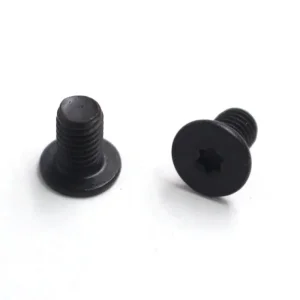
Servo motor joint enclosures and onboard marine sonar arrays require corrosion-proof fasteners capable of absorbing continuous multi-axial vibrations. Our Torx drive sealing machine screws prevent driver cam-out and stripping during automated line assembly.
As electronic packages undergo unprecedented power density increases, conventional thermal potting compounds are being replaced by modular, service-friendly sealed die-cast enclosures. This transition places four evolving requirements on ODM manufacturers:
1. Integration of Captive Retention: Demands for captive sealing screws that remain secured to enclosure faceplates during servicing to prevent foreign object debris (FOD) damage in critical EV or aviation modules.
2. Conductive & EMI Shielded Sealing: Integration of metal-filled silicone or nickel-graphite elastomeric O-rings to deliver simultaneous fluid sealing and Faraday-cage electromagnetic interference (EMI) continuity.
3. Sustainable Plating & Low-Carbon Metallurgies: Shifting to closed-loop zinc-nickel electro-deposition and audited, recycled-scrap stainless wire rods to minimize Scope 3 carbon footprint contributions for global conglomerates.
For procurement directors, vendor quality managers, and mechanical hardware leads sourcing from China, validating engineering rigor upfront is imperative to eliminate costly production stoppages.
When selecting an ODM manufacturer for electronic sealing screws, evaluate candidate factories against this critical 5-stage qualification benchmark:
1. Tooling Precision & Groove Concentricity (GD&T): Standard fastener cold headers operate with axial runout tolerances of ±0.15mm. For sealing screws, the under-head recess must maintain concentricity within ±0.03mm relative to the thread pitch diameter. Excess runout pinches the O-ring on one side while leaving a void on the opposite side, resulting in intermittent IP test failures.
2. Statistical Process Capability (Cpk / Ppk): Require documented Cpk metrics on critical features (head diameter, recess depth, O-ring groove diameter). Top-tier facilities like YH Fastener sustain Cpk > 1.67 across serial mass production batches, backed by digital optical comparator verification.
3. Elastomer Compression Set Testing: Cheap O-rings suffer from premature compression set, losing elasticity and relaxation force after continuous exposure to operating temperatures. Ensure your supplier certifies O-rings under ASTM D395 Method B, verifying compression set < 20% after 1,000 hours at rated temperatures.
4. Hydrogen Embrittlement Relief: For carbon steel fasteners hardened to Class 8.8 or higher, electroplating introduces monoatomic hydrogen that causes delayed catastrophic brittle fracture under stress. Verify that your ODM vendor incorporates mandatory de-embrittlement baking at 200°C–220°C for 4 to 8 hours immediately following acid pickling and electro-deposition.
5. Comprehensive PPAP Documentation: For OEM automotive or medical builds, confirm factory willingness to provide full Production Part Approval Process (PPAP Level 3) packages, including Process Flow Diagrams, Process FMEA, Control Plans, Gage R&R studies, and Material Certification.
Direct technical answers addressing mechanical design, sealing tolerances, torque specifications, and ODM manufacturing protocols.
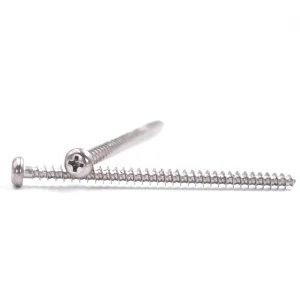
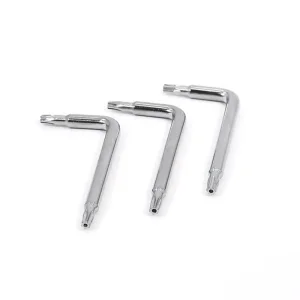
Explore our full engineering portfolio, featuring PT thread forming screws for engineering plastics, anti-loosening automotive hardware, DIN standard machine fasteners, and matched hardened drive tooling.