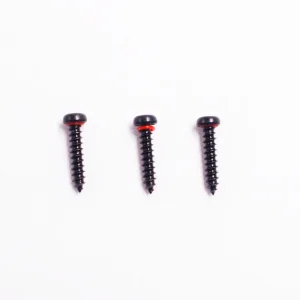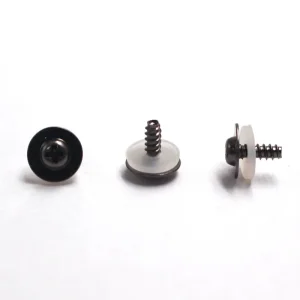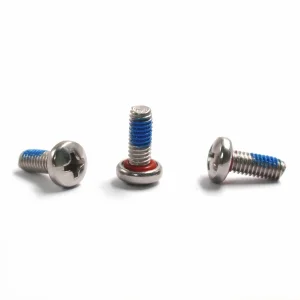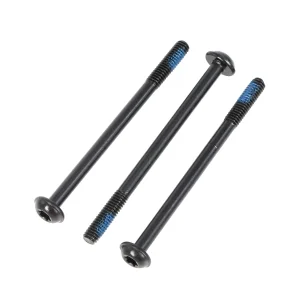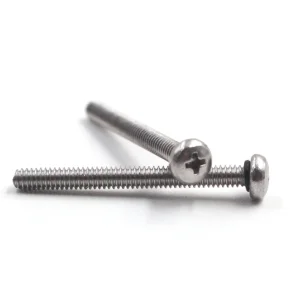
Explore custom OEM/ODM self-tapping, machine, and sealing fastener solutions engineered to strict geometric tolerances, dynamic torque retention, and high-tensile resistance.
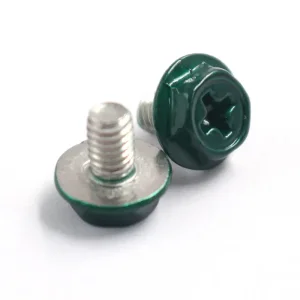
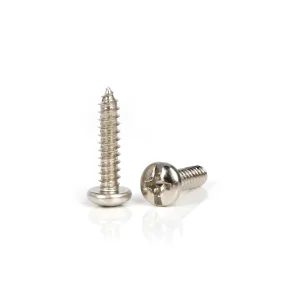
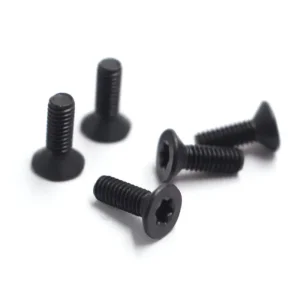
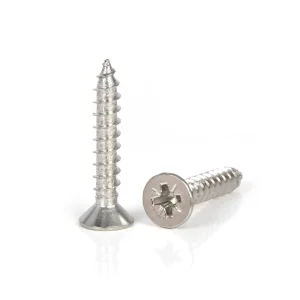
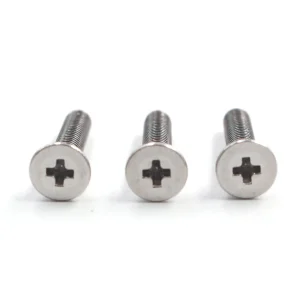
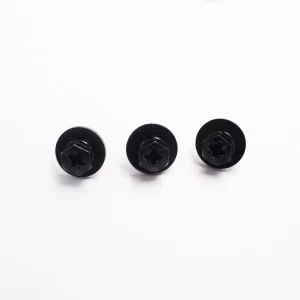
Comprehensive white-paper analysis on optimizing structural preload, eliminating cam-out risks, and ensuring zero-clearance surface transitions with custom countersunk self-tapping designs.
In modern industrial assembly—spanning automotive e-mobility battery packs, aerospace avionic chassis, smart consumer hardware, and structural photovoltaics—fasteners are no longer treated as commoditized C-parts. They are mission-critical mechanical components whose engineering determines overall structural integrity, automated cycle times, galvanic compatibility, and long-term joint relaxation. As a premier ODM countersunk self tapping screw supplier and direct factory, Yu-Huang Electronics Dongguan Co., Ltd. (YH Fastener) bridges the gap between mechanical design intent and high-volume cold-heading production.
Operating out of a 20,000 square meter integrated manufacturing footprint distributed across Dongguan, Shaoguan, and Wuhan, YH Fastener incorporates IATF 16949-audited quality gates across cold-heading, high-speed thread rolling, computerized heat treatment, specialized anti-corrosion barrier electroplating, and high-speed multi-camera optical laser sorting. Countersunk (flat-head) self-tapping screws present a unique mechanical engineering challenge: the interaction of the conical under-head seating face (typically 90° for DIN/ISO or 82° for ANSI/ASME) with the sheet metal or polymer countersink cavity dictates how driving torque translates into axial clamp load without causing localized material galling, head shearing, or premature thread stripping.
Navigating the convergence of lightweight composite materials, automated high-speed line feeding, and stringent supply chain traceability across international manufacturing hubs.
Global manufacturing is accelerating away from monolithic steel weldments toward multi-material hybrid designs incorporating magnesium-aluminum alloys, carbon-fiber composites, and engineering thermoplastics (PA66-GF30, PBT, Polycarbonate). Our ODM countersunk self-tapping geometry provides precise thread-forming and thread-cutting profiles that achieve maximum pull-out strength without requiring pre-tapped inserts or post-mold tapping operations.
Modern Industry 4.0 factories utilize robotic high-speed screwdriving spindles operating at cycle times under 1.2 seconds. Under-head burrs, drive recess runout, or thread pitch inconsistencies immediately trigger automated feed jams. Our proprietary tooling ensures concentricity under 0.05mm and drive recess depth tolerances controlled within ±0.03mm, completely eliminating automated line downtime.
Procuring pre-tapped stampings, nutserts, and lock washers significantly drives up Bills of Materials (BOM) complexity and manual touch-time. By implementing custom engineered countersunk self-tapping screws featuring trilobular thread-rolling profiles, OEMs cut secondary tapping, eliminate captive washer inventory, and gain up to 35% in overall structural fastening efficiency.
A rigorous examination of underhead taper angles, thread forming vs. thread cutting thermodynamics, and drive recess torque transmission physics.
| Dimensional Metric | DIN 7982 / ISO 7050 (Metric Standard) | ASME B18.6.3 (Inch Standard) | Custom ODM High-Load Variant (YH Fastener) |
|---|---|---|---|
| Included Head Angle | 90° (+0° / -2°) | 82° (+0° / -2°) | 100° Flush Ultra-Thin / 90° Engineered Radius |
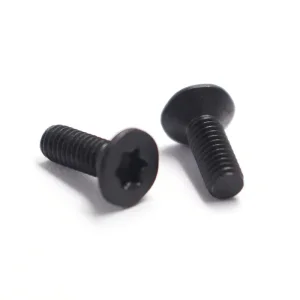
| Drive Recess Systems | Cross Recess (Type H / Phillips), Pozidriv (Type Z) | Phillips, Type 1A, Slotted | Torx (6-Lobe), Torx Plus, Tamper-Resistant Pin-in-Torx |
| Thread Profiles | Type C (Gimlet Point), Type F (Blunt Thread-Forming) | Type AB (Fine Pitch Spaced), Type B (Blunt) | Trilobular (Plastite / Taptite Equivalent), Hi-Lo Dual Crest |
| Underhead Transition | Standard straight shank junction | Abrupt taper termination | Compound stress-relief fillet (R 0.15 - 0.35 mm) |
| Tensile Strength Class | Case-hardened steel (HV 450 min surface) | SAE J933 Grade Carbon Steel | Austenitic A2-70, A4-80, 10.9 Equivalent Boron Steel |
Countersunk heads are inherently susceptible to shear failure at the junction where the angled head meets the cylindrical shank. In high-vibration applications, standard cold-formed heads crack under combined axial tension and bending moments. YH Fastener incorporates computer-optimized radiused neck transitions (compound under-head fillets) that distribute clamping stress evenly across the contact plane, increasing dynamic fatigue life by over 40%.
While traditional cross-recess (Phillips) drives are engineered to cam out to prevent over-torquing, in automated industrial screwdriving, cam-out causes metal burring, tool bit degradation, and operator slippage damage. Our ODM factory specializes in 6-lobe Torx and Torx Plus countersunk configurations. With a vertical sidewall profile (0° drive angle), driving torque is transmitted via direct radial shear rather than axial thrust, reducing required insertion force and bit wear tenfold.
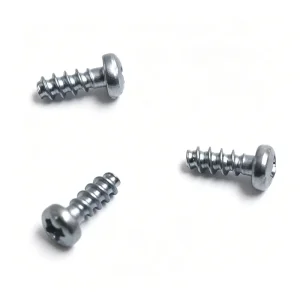
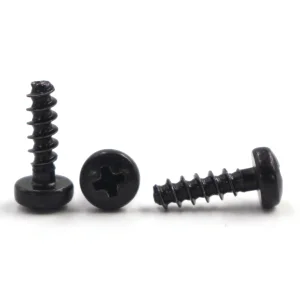
Joining thin sheet metals (0.5mm – 1.5mm) without structural deformation requires customized thread pitch-to-diameter ratios. Our specialized spaced-thread designs (Type AB and customized multi-lead variants) displace the base substrate into the thread valley rather than carving chips away. This cold-work hardening of the mating sheet metal increases stripped-to-drive torque safety margins, preventing stripped threads during high-speed installation.
Stringent furnace atmosphere control, case carburizing gradients, and multi-tier inorganic barrier coatings certified to ASTM and DIN specifications.
Because self-tapping screws must generate their own internal mating threads in unthreaded metal receiving members (such as mild steel, aluminum alloy, or brass), the screw's thread crest hardness must substantially exceed the core hardness of the mating component. For standard carbon steel fasteners (1022A, 10B21), YH Fastener utilizes continuous mesh-belt atmosphere-controlled carburizing and carbonitriding furnaces. We calibrate the metallurgical recipe to produce a surface case hardness of HV 450 to HV 700 (ensuring rapid thread formation) while maintaining a resilient, shock-absorbing core hardness of HV 270 to HV 390 (HRC 28 to 39) to prevent brittle catastrophic shearing under structural impact.
When high-hardness carbon steel fasteners are electroplated (such as zinc, black zinc, or nickel plating), acid pickling and electrodeposition introduce atomic hydrogen into the steel lattice. Under static tensile stress in the joint, this hydrogen migrates to high-stress regions (notably the countersunk under-head radius), triggering delayed catastrophic fracture—known industry-wide as Hydrogen Embrittlement (HE). At YH Fastener, every electroplated carbon steel fastener batch passes through an automated baking protocol at 200°C to 220°C for a minimum of 4 to 8 hours within one hour of plating, strictly compliant with ISO 4042 and ASTM F1941 standards.
12-15% nickel content electrodeposition delivering over 1,500 hours of neutral salt spray resistance (ASTM B117) to red rust. Excellent thermal resistance up to 300°C for under-hood automotive applications.
Non-electrolytic zinc/aluminum flake dip-spin coatings. Zero risk of hydrogen embrittlement since no chemical acid pickling or electrical currents are applied. Ultra-thin barrier with tightly controlled friction coefficients (μ = 0.12 - 0.18).
For chemical, marine, and medical environments, our precision-formed cold-headed stainless steel screws undergo nitric or citric acid chemical passivation to purge free surface iron, creating a uniform, non-reactive chromium oxide passive layer.
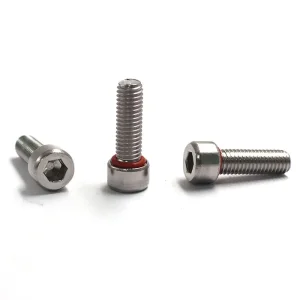
Eliminate loose washers and fluid ingress. We apply nylon locking patches for dynamic vibration retention (DIN 267-28) or microencapsulated chemical adhesives (3M Scotch-Grip / Precote) providing hermetic sealing against moisture and volatile gases.
Field-tested performance cases illustrating countersunk self-tapping fastener implementation across demanding industrial sectors.
Countersunk Torx flat screws mount battery cell retention retainers directly to aluminum die-cast cooling trays. The 100% flush head profile guarantees that overlying thermal gap pads and high-voltage busbars seat without mechanical interference or risk of dielectric puncture.
Micro-fasteners (M0.8 to M1.6) with shallow 90° countersunk heads secure internal shielding cans and haptic actuator brackets inside tightly packed consumer electronics enclosures where headroom clearance is measured in tens of microns.
Die-cast IP67/IP68 aluminum electrical inverter cabinets rely on countersunk self-sealing screws fitted with perimeter engineered Viton or Fluorosilicone O-rings, providing hermetic seal compression while retaining electrical chassis grounding continuity.
Vibration-exposed interior paneling and passenger safety door systems utilize our countersunk stainless steel self-tapping fasteners featuring custom polyamide locking patches, satisfying DIN EN 45545-2 fire hazard and vibration loosening criteria.
Full PPAP Level 3 documentation, IMDS submissions, and continuous laboratory testing ensuring uncompromised B2B supply chain integrity.
Tier-1 automotive procurement and high-reliability aerospace assemblers demand comprehensive verification. At YH Fastener, we operate a fully equipped, on-site metallurgical and metrological testing laboratory. Every custom production batch of countersunk self-tapping screws is verified against major global standards, including DIN 7982, ISO 7050, ASME B18.6.3, and JIS B 1122, alongside customer-specific CAD design envelopes.
Utilizing Mitutoyo optical profile projectors, Keyence 3D optical profilometers, and CNC coordinate measuring machines (CMM). Head angle tolerances are confirmed within ±0.5°, while shank runout and thread pitch errors are held to sub-micron standards.
Automated digital torque analyzers determine drive torque, thread-forming torque, and ultimate torsional breaking strength (in Newton-meters) to guarantee an operational safety margin of at least 3:1 between drive torque and strip-out torque.
Continuous neutral salt spray chambers (ASTM B117), micro-Vickers hardness indentation testers (ASTM E384), and X-ray fluorescence (XRF) coating thickness analyzers ensure complete adherence to global RoHS, REACH, and California Prop 65 environmental statutes.
Next-generation R&D initiatives underway at our Dongguan precision engineering labs targeting ultra-high strength, smart tracing, and zero-carbon coatings.
Transitioning 100% of industrial passivation and sealing processes away from traditional hexavalent or heavy trivalent chemistries to completely organic, bio-based barrier matrix polymers that yield zero hazardous effluent while matching salt spray ratings over 1,000 hours.
Developing ultra-fast sub-picosecond direct laser marking on countersunk screw head recesses as small as M2.5. Individual serialized DataMatrix codes allow aerospace and automotive OEMs to trace batch provenance, raw material heats, and installation torque down to individual joint units.
Expanding cold-heading forming envelopes into lightweight, ultra-tough Ti-6Al-4V titanium and aerospace 7075 aluminum wire stocks, providing extreme weight reduction (over 45% compared to steel) for next-generation eVTOL aircraft and high-payload drone platforms.
In-depth responses to the structural, mechanical, and logistical questions commonly posed by senior hardware engineers and procurement directors.
Explore heavy-duty, corrosion-proof, and micro-precision assembly fasteners manufactured to custom 2D/3D customer engineering specifications.