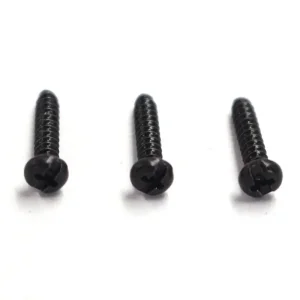
Factory-direct ODM cold-formed tapping screws and precision alignment hardware engineered to suppress material fatigue, ensure clamp force integrity, and withstand cyclic thermal stress.
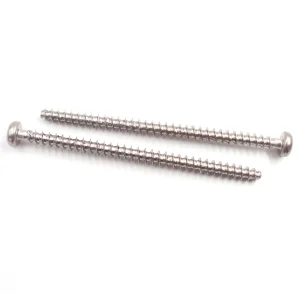
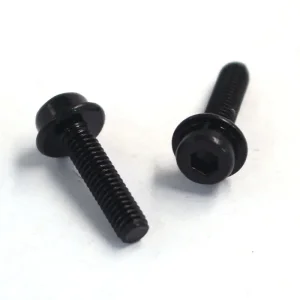
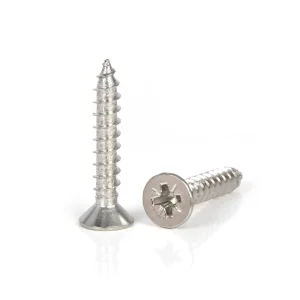
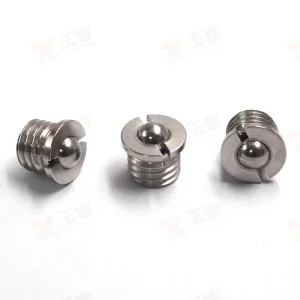
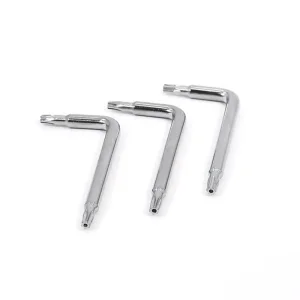
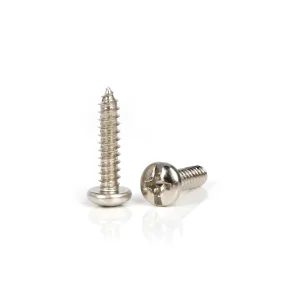
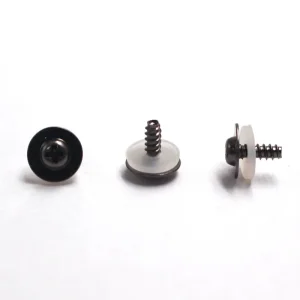
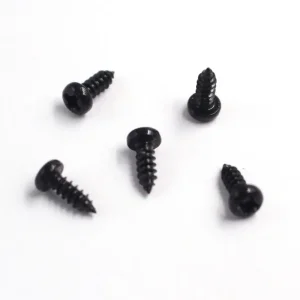
As structural engineering moves toward automated lightweight assembly, carbon steel tapping fasteners have evolved from rudimentary hardware into high-precision structural clamping solutions.
Traditional case-hardening often caused embrittlement or erratic surface hardness. Advanced atmospheric-controlled carbonitriding creates an ultra-durable outer skin (HV 560–650) to cut through unthreaded sheet metal, while preserving a ductile core (HV 290–390) that resists shear impact and dynamic shock.
Tri-lobular (thread-forming) profiles reduce drive torque requirements by up to 35% compared to conventional round-body tapping screws. This minimizes motor stress on automated screwdrivers while maximizing thread engagement, resistance to back-out, and overall vibrational stability.
Global environmental mandates (RoHS 3, REACH, SVHC) demand zero hexavalent chromium (Cr6+). Modern carbon steel fasteners now leverage thin-film organic zinc flake barriers, trivalent zinc-nickel electroplating, and fluoropolymer topcoats that deliver over 1,000 hours of neutral salt spray resistance (ASTM B117).
Fastener failure in automated lines costs thousands of dollars per hour. Our ODM carbon steel tapping screws meet rigorous dimensional tolerances and verified metallurgical parameters.
| Engineering Dimension | Standard Metric / Imperial Matrix | ODM Tailored Capability | Verification Standard |
|---|---|---|---|
| Base Raw Material | AISI 1018, 1022A, 10B21, SCM435 Boron-Alloy | Customized deoxidation, low-sulfur grain boundary control | ASTM A510 / GB/T 6478 Spark Spectrometry |
| Thread Profiles | Type AB, Type B, Type F, Thread Rolling (Tri-lobe / PT) | Dual-lead angles, anti-cross-threading lead chamfers | DIN 7970, ISO 1478, ASME B18.6.3 |
| Hardness Grading | Surface: HV 450–750 / Core: HV 270–390 (Class 8.8–10.9) | Precision gradient heat treat, targeted induction tip hardening | ASTM F606 / ISO 6507 Micro-Vickers |
| Protective Finishing | Clear/Yellow Trivalent Zinc, Black Zinc, Zinc Nickel Alloy | Multi-layer Zinc Flake (Geomet/Magni), Teflon, Dacromet | ASTM B117 (Salt Spray: 96h to 1500h white/red rust free) |
| Drive Recesses | Phillips, Torx (Six-Lobe), Pozi, Slotted, Hex Socket | Tamper-resistant pin-Torx, anti-camout deep engagement | ISO 10664 (Hexalobular) / ISO 4757 |
| Hydrogen Embrittlement | Mandatory 200°C–220°C de-embrittlement bake within 4h | Pre-baking and post-plating delayed failure test protocols | DIN 50969 / ASTM F1940 Process Control |
Every sector presents unique thermal, mechanical, and galvanic challenges. We engineer custom fasteners specifically for your assembly environment.
High-torque structural fastening for powertrain brackets, cockpit dashboards, and battery enclosure sub-frames. Features low-friction topcoats that ensure consistent torque-tension curves on high-speed robotic assembly lines.
Micro-diameter self-tapping screws (M1.2–M2.5) with narrow pitch threads designed specifically for ABS, PC, and reinforced thermoplastics. Eliminates internal boss cracking, plastic stripping, and micro-particle shedding in cleanroom assemblies.
Heavy-duty, weather-resistant self-drilling and self-tapping screws engineered to withstand extreme UV exposure, coastal salt fog, and wind shear. Zinc-nickel and inorganic coatings protect structural solar frames from galvanic reaction.
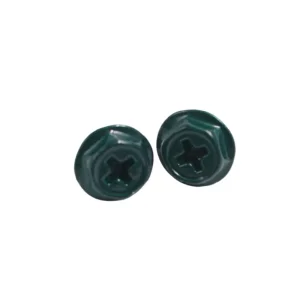
Specially engineered thread profiles that drive cleanly into pre-punched, unthreaded galvanized and stainless sheet metal without tapping chips. Flanged heads distribute load, eliminate washers, and speed up factory throughput.
Operating across Dongguan, Shaoguan, and Wuhan, YH Fastener maintains comprehensive in-house quality inspection from raw wire rod to final dispatch.
For automotive and mission-critical OEM clients, we provide full Production Part Approval Process (PPAP) documentation, including Process FMEA, Control Plans, Gage R&R studies, and dimensional layout inspection reports per batch.
To support high-yield automatic feeder machines, our multi-camera glass turntable optical sorting equipment checks head diameter, shank straightness, recess depth, and thread pitch, achieving zero-defect rates down to <20 PPM.
With direct exports to over 60 countries across the Americas, Europe, and Southeast Asia, we handle customs compliance, multimodal logistics (FCL, LCL, Air Express), and localized buffer stock agreements for regular clients.
Fastener engineering must stay ahead of tightening environmental regulations, advanced composite materials, and modern automated assembly systems.
Integrating real-time acoustic emission and piezoresistive load sensors into multi-station heading machines. This monitors stamping stress live, catching microscopic die wear before it affects fastener tolerances.
Developing next-generation organic barrier coatings that replace fluoropolymers (PFAS-free) with water-based nanosilicate formulations, reducing CO2 emissions during curing while improving lubricity consistency.
Specialized thread geometries designed for carbon-fiber reinforced plastics (CFRP) and sandwiched magnesium-aluminum alloys, preventing delamination and galvanic micro-cells.
Direct engineering answers to technical, manufacturing, and procurement inquiries encountered during fastener sourcing.
Thread-forming tapping screws (like PT or tri-lobular profiles) displace host material without generating swarf or chips, creating high clamp-load retention ideal for plastics and ductile metals. Thread-cutting tapping screws have milled cutting flutes that slice mating threads in brittle materials like cast aluminum or phenolic resins, generating small chips but reducing drive torque.
For case-hardened or high-tensile fasteners (Class 8.8 and above), pickling acid contact is strictly time-controlled. Immediately following electroplating (within 4 hours), screws undergo continuous de-embrittlement baking at 200°C–220°C for 4 to 8 hours depending on shank diameter, followed by mandatory sustained-load stress testing (ASTM F1940).
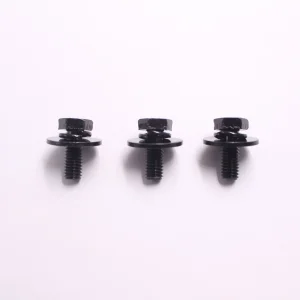
Yes. Our in-house tool and die workshop produces custom multi-station header dies and roll dies. We work directly with Step, IGES, and DWG files to manufacture custom head diameters, washer collars, captive SEMS features, or anti-tamper security drives with tolerances held down to ±0.03mm.
Custom ODM production runs generally start at 50,000 to 100,000 pieces depending on wire size and head style. Tooling lead times are typically 7 to 10 working days, with initial first-article inspection (FAI) samples provided for approval before bulk production runs of 15 to 25 days.
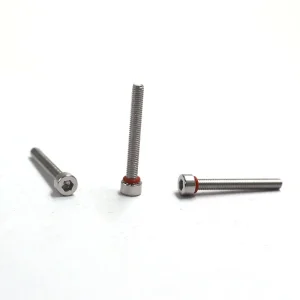
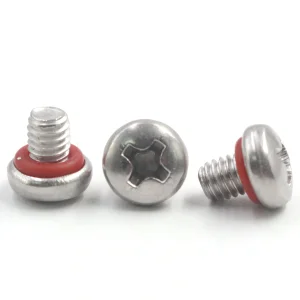
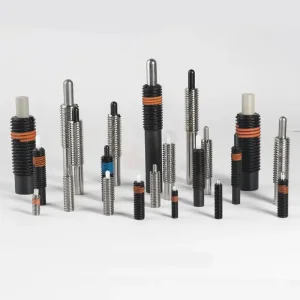
Explore additional specialized components from our 20,000 m² cold-heading lines, including multi-washer assemblies, IP67 sealing screws, and precision plungers.