Engineered hardware and Torx-compatible solutions designed for zero-cam-out engagement and maximum tensile performance.
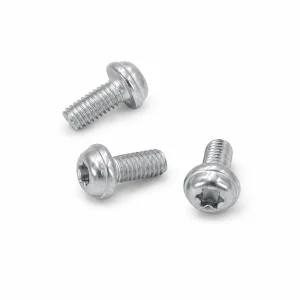
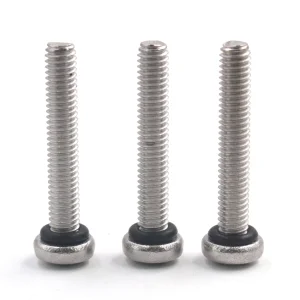
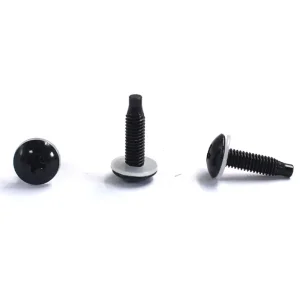
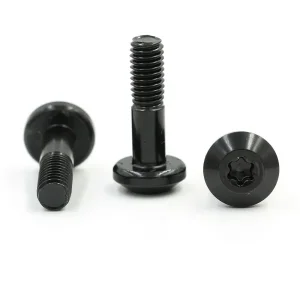
Examining macro supply chain dynamics, metallurgical transitions, and why high carbon steel (AISI 1060 / 1070 / C60E) continues to dominate high-speed industrial assembly operations.
Global procurement networks in North America and Western Europe have increasingly partnered with consolidated Asian precision manufacturers that operate direct cold-heading, heat-treatment, and surface-passivation facilities under one single corporate entity. The convergence of ISO 10664 dimensional accuracy with rigorous raw-material lot tracking eliminates tool failure during automated torque driver feeding.
The traditional Phillips and slotted drive configurations rely on intentional ramp angles to disengage under peak torque, a mechanism that induces micro-fissures, bit slippage, and surface burrs. High carbon steel Torx wrenches engineered with a 15-degree drive angle transfer 100% of the rotational force into radial drive, safeguarding sensitive electronics enclosures and EV battery covers.
While exotic high-alloy tools like S2 tool steel and Chrome-Silicon alloys offer exceptional impact resistance, custom-tempered high carbon steel provides the optimal cost-to-performance ratio for captive assembly toolkits and factory maintenance lines. When micro-alloyed with manganese and silicon, AISI 1070 provides superior torsional rigidity without brittle fracture under repetitive cyclical loading.
A granular technical comparison between standard carbon steel, high-carbon custom grades, and specialized tool alloys used in global wrench production.
| Steel Grade / Alloy Category | Carbon Content (C%) | Tensile Strength (MPa) | Achievable Hardness (HRC) | Torsional Fatigue Life (Cycles) | Corrosion Resistance Method | Typical Industrial Target |
|---|---|---|---|---|---|---|
| AISI 1045 Mid-Carbon Steel | 0.43 - 0.50% | 650 - 800 | 45 - 50 HRC | 12,000 @ 80% Max Torque | Zinc Electrophoresis / Phosphate | Consumer Furniture, Basic DIY Toolkits |
| AISI 1070 High Carbon Steel (YH Custom) | 0.65 - 0.75% | 980 - 1,220 | 54 - 58 HRC | 45,000 @ 85% Max Torque | Black Oxide, Zinc-Nickel, Dacromet | Automotive Line Maintenance, Telecom Racks |
| Chrome Vanadium (Cr-V 6150) | 0.48 - 0.53% | 1,100 - 1,350 | 52 - 56 HRC | 55,000 @ 85% Max Torque | Micro-Chrome, Satin Nickel | Professional Automotive Mechanics |
| S2 Modified Tool Steel | 0.65 - 0.70% | 1,450 - 1,800 | 58 - 62 HRC | 85,000 @ 90% Max Torque | Titanium Nitride (TiN), Manganese Phos | Aerospace Assembly, CNC Pneumatic Bits |
How certified high-carbon steel Torx wrench factories eliminate micro-cracking and lobe rounding through controlled thermodynamic cycling.
Continuous annealed wire rod is cold-drawn through carbide dies to establish uniform carbide dispersion, preventing split ends during cold heading.
High-speed automated header machines extrude the Torx lobe profile under 120-ton hydraulic forces, ensuring grain flow follows the drive profile.
Components undergo localized induction heating up to 860°C in an inert atmosphere, followed by rapid polymer quenching to lock martensitic structure.
Secondary sub-critical tempering at 240°C–320°C converts untempered brittle martensite to tempered martensite, conferring required torsional elasticity.
From robotic production cells to marine renewable installations, specialized Torx drive wrenches solve structural integrity challenges across key global markets.
Challenge: Battery module lids require uniform compression on sealing gaskets without introducing conductive metal slivers or stripping fastener heads.
Solution: Custom-tolerance AISI 1070 Torx L-wrenches with proprietary manganese phosphate coatings eliminate sliver shedding and maintain consistent break-away torque values across thousands of installation cycles.
Challenge: Ultra-miniature Torx profiles (T2 to T6) undergo intense shear stress during high-speed pneumatic screwdriver usage, leading to premature tip shearing.
Solution: Controlled micro-forging of high-carbon steel wire preserves dense crystalline grain boundaries at the narrow lobes, boosting torsional shear threshold by 28% over standard cut-profile keys.
Challenge: Coastal base stations and solar inverter frames require non-destructive maintenance using captive tools resistant to C4/C5 marine atmospheric corrosion.
Solution: Multilayer zinc-nickel electroplating combined with an organo-mineral passivate coat delivers over 720 hours of salt spray resistance (ASTM B117) without embrittling high-carbon tool steel substrate.
The convergence of computerized optical inspection, smart torque telemetry, and closed-loop metallurgical optimization across progressive industrial factories.
By implementing high-speed CCD laser cameras directly after cold heading, modern wrench manufacturers verify 360-degree hexalobular geometry at up to 1,200 parts per minute. Flaws such as flash burrs, center displacement, or dimensional drift exceeding ±0.01mm are pneumatically ejected prior to thermal quenching.
Standard Torx (ISO 10664) uses circular lobes. Progressive factory engineering lines are expanding support for Torx Plus (IP) and Torx Tapr profiles. These profiles flatten drive surfaces to create a genuine 0° drive angle, completely eliminating radial separating forces and increasing wrench service life under continuous industrial production by up to 100%.
Environmental standards in the European Union (CBAM) and North America necessitate clean tool fabrication. Our partner smelting sources use electric arc furnaces (EAF) powered by renewable hydroelectric energy, reducing the embodied carbon footprint per metric ton of cold-drawn steel wire by 62% compared to traditional blast furnace routes.
In-depth responses to critical engineering, quality validation, and supply chain questions from OEM procurement managers.
High Carbon Steel (containing 0.60% to 0.75% carbon) achieves exceptional surface hardness and compressive strength at an economical manufacturing cost, making it ideal for captive tool kits, electronics assembly, and consumer machinery maintenance. Chrome Vanadium contains chromium (0.8-1.1%) and vanadium (0.15-0.25%), providing higher yield strength and impact toughness under abusive dynamic loads. High carbon steel, when correctly spheroidized and tempered, provides comparable static torsional failure limits with tighter dimensional retention during cold extruding.
Because high-carbon steel reaches hardness levels exceeding 38 HRC, atomic hydrogen absorption during acid pickling and electroplating presents a critical risk of delayed brittle fracture. Our facility employs low-acid mechanical descaling and executes an immediate post-plating de-embrittlement baking cycle within 4 hours of plating. Wrenches are maintained at 200°C ± 10°C for 8 to 16 hours in convection ovens to diffuse trapped hydrogen atoms out of the crystalline lattice before QA release.
Yes. Our tooling workshop manufactures custom Torx keys including standard six-lobe (T1 through T100), Tamper-Resistant Security Torx (TR with center pin hole conforming to internal post tolerances), Torx Plus (IP/EP), and custom low-profile ball-end variants. Arm lengths for L-wrenches, flag drivers, and T-handle assemblies can be custom specified from stubby 15mm clearance bends up to 350mm extra-long reach for deep recessed industrial motor housings.
Every industrial production lot is accompanied by a full 3.1 Mill Test Certificate (MTC) detailing steel chemical composition, Rockwell HRC hardness verification reports across three sample points, optical comparator profile overlay traces (proving compliance with ISO 10664 go/no-go gauges), torsional torque destruction curves, and neutral salt spray (ASTM B117) corrosion verification sheets.
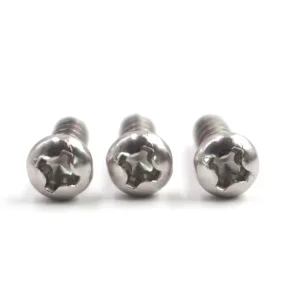
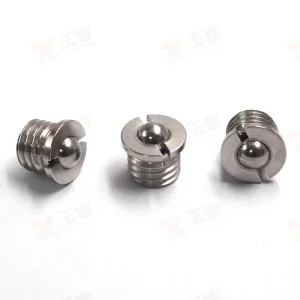
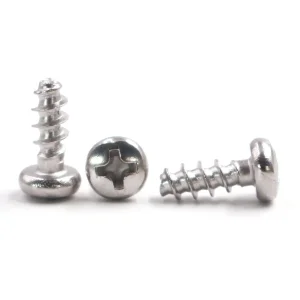
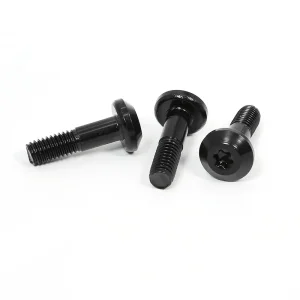
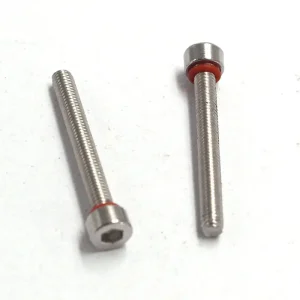
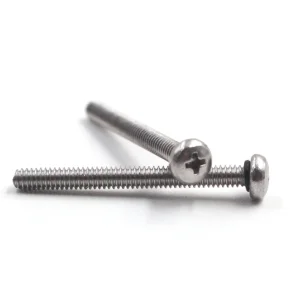
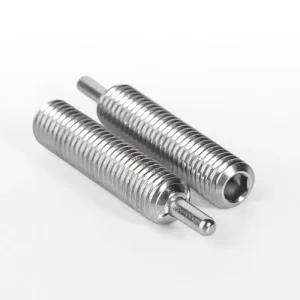
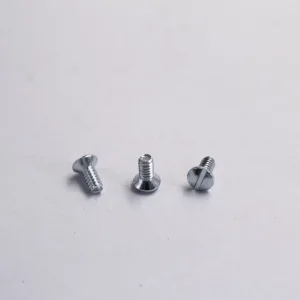
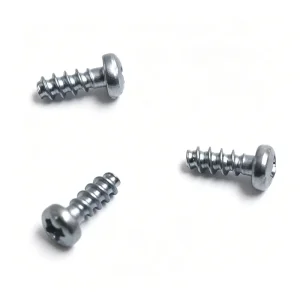
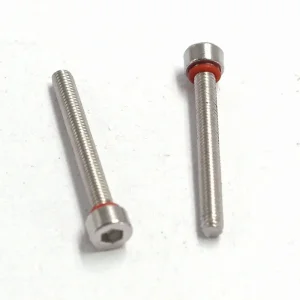
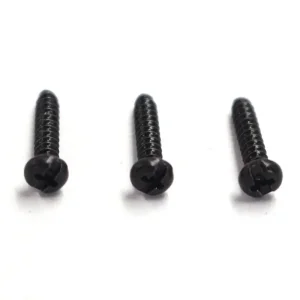
Complete assembly-line hardware portfolio matched to custom Torx and metric drive toolkits.
Send 2D CAD prints, 3D STEP models, or application torque criteria. Our senior metallurgical and tooling engineering team issues technical feasibility audits and quotation proposals within 24 hours.
